

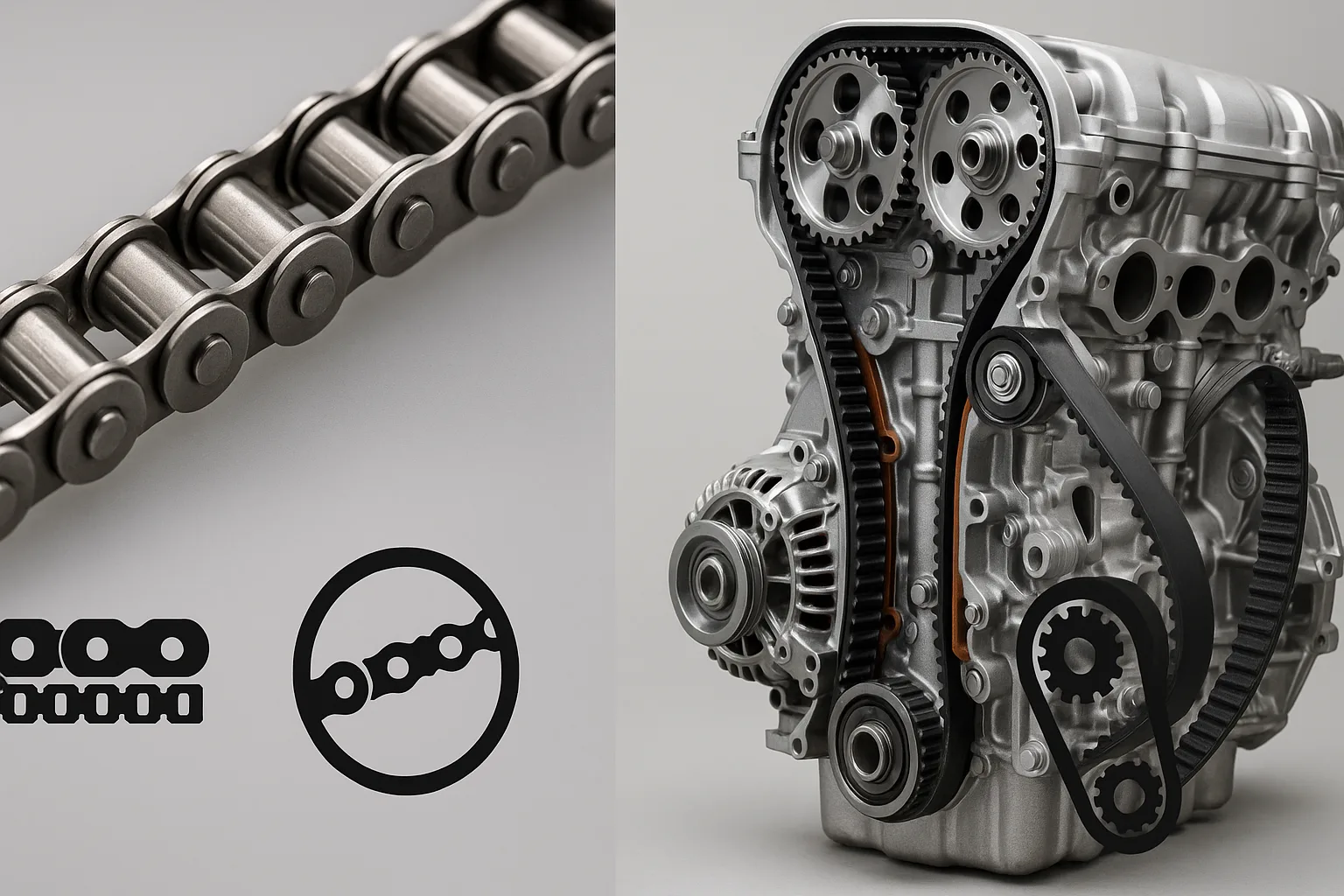
What the timing system really does
The timing belt or chain interval determines how long your engine stays in perfect synchronization.
The timing system links crankshaft and camshaft rotations, ensuring valves open and close exactly when pistons move.
A mistimed engine means bent valves, damaged pistons, or even a destroyed block — a catastrophic repair.
Timing chain – durable but not eternal
Despite marketing claims, a timing chain is not lifetime. It wears with oil degradation, tensioner fatigue, and harsh driving.
A noisy chain is the first warning.
Recommended realistic interval (Central & Eastern Europe):
-
Gasoline: 150,000–200,000 km or 8–10 years
-
Diesel: 180,000–250,000 km or 10 years
The BMW N47 engine (2007–2011) is a textbook case of early chain stretch; BMW issued service campaigns. Modern replacements and better oils help, but preventive replacement around 150,000 km remains wise.
Timing belt – replace it before it breaks
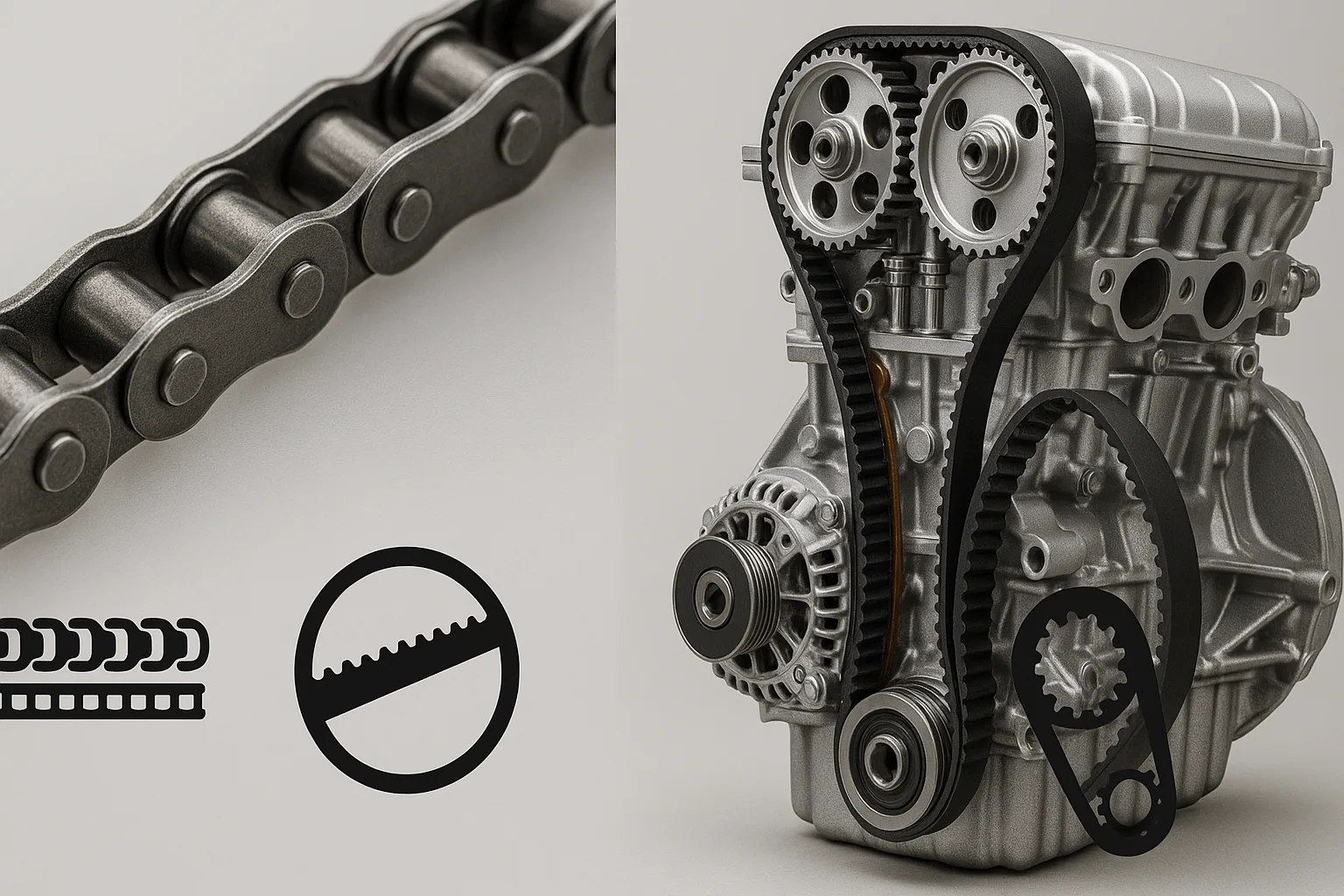
Rubber belts age from heat, dust, and time.
A snapped belt often destroys the engine.
Typical safe intervals:
-
First replacement: 90,000 km / 5 years
-
Next replacements: every 60,000–80,000 km / 4 years
-
Always replace the entire kit — belt, tensioners, idlers, water pump.
Some manufacturers (Ford, Nissan, Mercedes) list longer “ideal” intervals (up to 240,000 km), but under European city conditions, shorter is safer.
Warning signs to act early
For chains: cold-start rattle, metallic noise, increased fuel use, idle vibration.
For belts: visible cracks, oil on the cover, rough idle, or sudden stall.
If you hear anything unusual, schedule inspection before it becomes a rebuild.
Practical conclusion
The term Timing belt or chain interval isn’t just a number in the manual — it’s the lifespan of your engine’s heartbeat.
Changing on time saves thousands, and it’s the smartest insurance against engine failure.
💡 Good oil, clean filters, and a preventive mindset are your best allies.
Internal link: DiagnozaBAM – Tips & Guides
External source: Gates Technical Library – Belt Replacement Intervals
✍️ Author: Bejenaru Alexandru Ionut – [email protected]
✍️ Author: Bejenaru Alexandru Ionut – [email protected]
🔗 Internal link: https://diagnozabam.ro/sfaturi

