

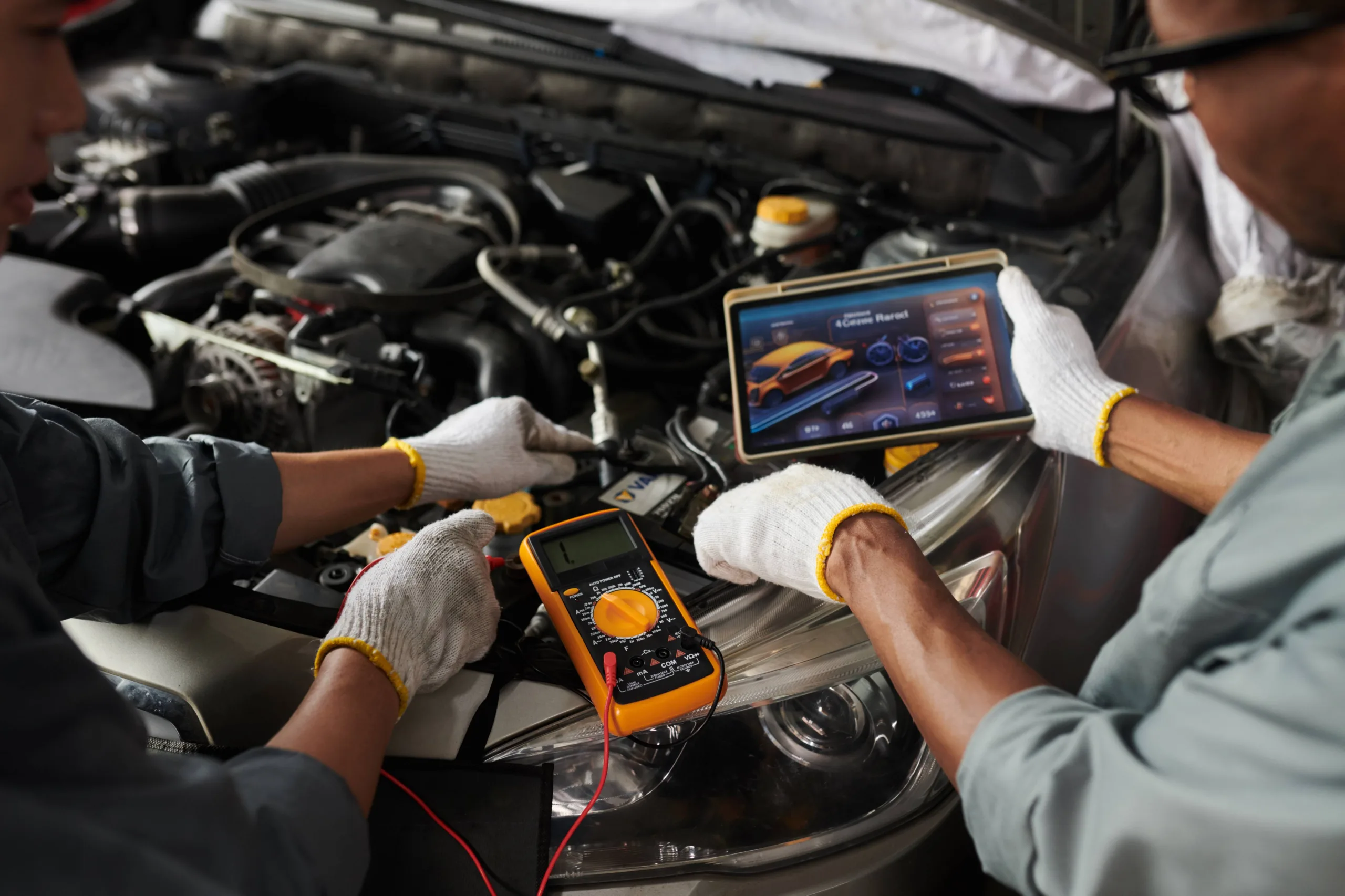
When the check engine light on message appears, many drivers fear immediate engine failure. However, this warning does not always mean catastrophic damage.
If the check engine light on indicator activates, the vehicle’s Engine Control Unit (ECU) has detected abnormal operating data. The severity depends on whether the light is steady or flashing.
Understanding what to do when the check engine light on condition occurs can prevent expensive mechanical damage.
What Triggers the Check Engine Light?
Modern vehicles continuously monitor:
-
Air intake flow
-
Fuel injection pressure
-
Ignition timing
-
Turbo boost pressure
-
Sensor voltage signals
If any value falls outside the programmed tolerance range, the ECU stores a diagnostic trouble code and activates the warning light.
Automotive control systems developed by companies such as Bosch and Denso rely heavily on sensor feedback to ensure engine efficiency and emissions compliance.
Steady vs Flashing Light
Steady Check Engine Light
Usually indicates:
-
Emissions-related issue
-
Sensor malfunction
-
Minor performance deviation
In many cases, the vehicle remains drivable for short distances.
Flashing Check Engine Light
Serious condition.
Often caused by:
-
Engine misfire
-
Unburned fuel entering catalytic converter
-
Severe combustion instability
A flashing light requires immediate attention.
Common Causes
-
Faulty oxygen sensor
-
MAF sensor failure
-
Turbo boost issues
-
Fuel pressure irregularities
-
Clogged DPF
-
Ignition coil malfunction
-
Loose fuel cap (in some cases)
What Should You Do?
-
Reduce speed immediately.
-
Avoid heavy acceleration.
-
Use an OBD2 scanner to retrieve codes.
-
Check for unusual noises or smoke.
Detailed fault explanations are available at:
https://diagnozabam.ro
For engineering references on automotive diagnostics:
https://www.sae.org
When Must You Stop Driving?
Stop immediately if:
-
The light flashes
-
The engine vibrates strongly
-
There is loud knocking
-
Coolant temperature rises
-
Thick smoke appears
Ignoring these signs can damage:
-
Catalytic converter
-
Turbocharger
-
Fuel injectors
-
Internal engine components
Estimated Repair Costs (EU)
-
Oxygen sensor: €80–€250
-
MAF sensor: €120–€300
-
Ignition coil: €50–€150
-
Turbo repair: €900–€2500
-
DPF replacement: €1000–€3000
Proper diagnosis prevents unnecessary expenses.
Final Verdict
If the check engine light on warning appears, do not panic — but do not ignore it either.
A steady light may indicate a minor issue. A flashing light signals urgent risk.
Scanning the vehicle and identifying the exact fault code is the only safe and logical first step.
✍️ Author: Bejenaru Alexandru Ionut – [email protected]
🔗 Internal link: https://diagnozabam.ro/sfaturi

