

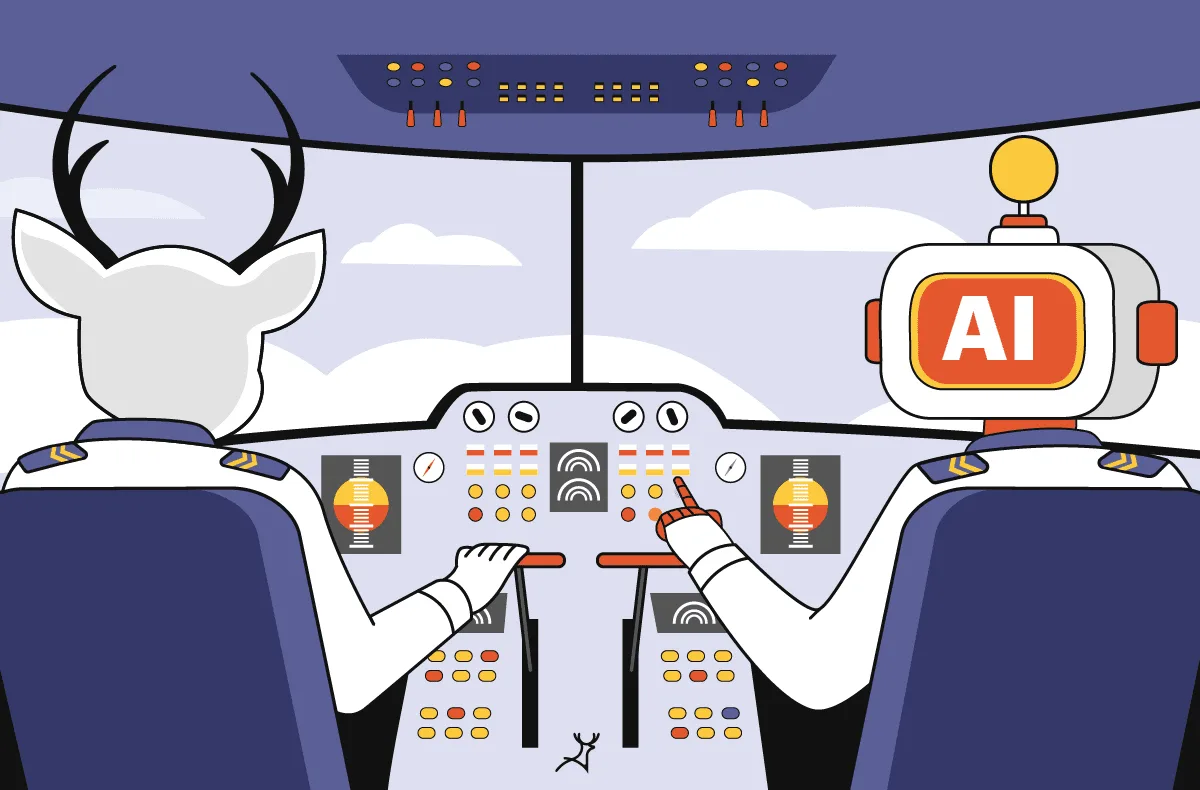
After exploring the risks of artificial intelligence — manipulation, hallucinations, loss of expertise, and accountability gaps — a practical question remains:
how can AI be used correctly without falling into the trap?
AI is unavoidable.
But misuse is not.
Core Principle: AI Is a Tool, Not an Authority
AI must remain:
-
an assistant
-
a support system
-
an accelerator
AI must never become:
-
a final authority
-
a substitute for judgment
-
a replacement for responsibility
This principle defines safe AI usage.
Rule 1: Use AI for Support, Not Decisions
AI excels at:
-
drafting
-
summarizing
-
idea generation
-
pattern recognition
AI must not:
-
decide outcomes
-
replace professionals
-
carry responsibility
Humans must remain decision-makers.
Rule 2: Verification Is Mandatory
Any critical AI output must be:
-
fact-checked
-
validated
-
questioned
Without verification, AI becomes an unchecked authority.
Rule 3: Do Not Use AI as a Sole Teacher
AI explains but does not:
-
recognize misunderstanding
-
correct intuition
-
build real experience
Learning requires effort, not just answers.
Rule 4: Ask for Reasoning, Not Just Results
Good AI usage focuses on:
-
explanations
-
limitations
-
alternatives
Results without reasoning create blind trust.
Rule 5: Keep Responsibility Human
If AI is involved:
-
responsibility remains human
-
accountability cannot be delegated
“There was an algorithm” is not an excuse.
Rule 6: Avoid Daily Dependency
If AI becomes mandatory for basic thinking, expertise erodes.
Healthy use means control, not reliance.
Rule 7: Define No-AI Zones
Clearly separate:
-
safe AI tasks
-
forbidden decision areas
Boundaries protect judgment.
Final Conclusion
How to use AI without falling into the trap is ultimately about discipline, not software.
👉 AI amplifies behavior.
👉 Human judgment determines direction.
Used wisely, AI is powerful.
Used blindly, AI is dangerous.
The Artificial Intelligence Trap Series:
✍️ Author: Bejenaru Alexandru Ionut – [email protected]
🔗 Internal link: https://diagnozabam.ro/sfaturi

