

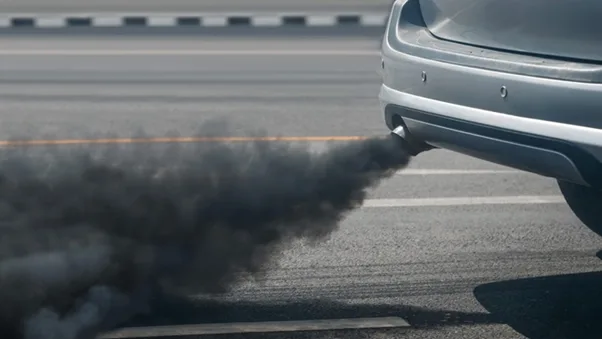
What Is the NOx vs Soot Trade-Off?
In diesel combustion, reducing one emission often increases the other.
-
NOx (Nitrogen Oxides) form at high combustion temperatures.
-
Soot (particulate matter) forms in fuel-rich, low-oxygen zones.
This creates a fundamental engineering compromise:
Every modern diesel engine must manage this balance.
Why NOx Forms
NOx formation increases when:
-
Combustion temperature is high
-
Oxygen concentration is high
-
Pressure is high
Advanced combustion phasing (early peak pressure) raises temperature and therefore NOx.
Why Soot Forms
Soot appears when:
-
Fuel does not mix perfectly with air
-
Local rich zones exist inside the cylinder
-
Combustion is incomplete
Late injection timing and cooler combustion increase soot formation.
The Role of Combustion Phasing
As discussed previously, combustion phasing controls peak pressure timing.
-
Advanced phasing → higher temperature → more NOx
-
Retarded phasing → lower temperature → more soot
Under European regulation EN 590, fuel quality (minimum cetane 51) stabilizes ignition delay, helping maintain predictable combustion phasing.
Stable phasing reduces uncontrolled emission spikes.
How Modern Engines Control the Trade-Off
Modern Euro 6 diesel engines use multiple strategies:
1️⃣ Exhaust Gas Recirculation (EGR)
-
Reduces oxygen concentration
-
Lowers combustion temperature
-
Reduces NOx
-
Increases soot risk
2️⃣ High Injection Pressure
-
Improves atomization
-
Enhances mixing
-
Reduces soot
3️⃣ Multiple Injection Events
-
Pilot injection smooths pressure rise
-
Post-injection supports DPF regeneration
4️⃣ Variable Geometry Turbo
-
Controls air mass flow
-
Maintains optimal air-fuel ratio
After-Treatment Systems
Because in-cylinder control alone is not enough, modern diesels use:
-
DPF (Diesel Particulate Filter) → removes soot
-
SCR (Selective Catalytic Reduction) → reduces NOx using AdBlue
-
DOC (Diesel Oxidation Catalyst)
This allows engine calibration to prioritize efficiency while exhaust systems handle emissions compliance.
Fuel Quality and Emissions Stability
Low cetane fuel increases ignition delay, which may:
-
Increase premixed combustion
-
Raise temperature spikes
-
Increase NOx variability
Poor atomization increases soot formation.
Consistent fuel meeting EN 590 ensures:
-
Stable combustion
-
Predictable emissions
-
Reduced after-treatment stress
Why Euro 6 Diesel Is So Complex
Euro 6 limits are extremely strict:
-
Very low particulate mass
-
Extremely low NOx output
To meet these targets, engine calibration constantly balances:
This is why modern diesel engines are electronically sophisticated.
What Happens If the Balance Fails?
Incorrect calibration or hardware faults can cause:
-
DPF clogging
-
Excessive AdBlue consumption
-
Increased fuel consumption
-
Engine warning lights
-
Limp mode activation
The NOx vs soot balance is continuously monitored by sensors.
Key Takeaways
-
NOx increases with higher combustion temperature.
-
Soot increases with poor air-fuel mixing.
-
Combustion phasing strongly influences both.
-
Modern diesel engines use EGR, high-pressure injection and SCR systems to balance emissions.
-
Fuel quality directly affects emission stability.
✍️ Author: Bejenaru Alexandru Ionut – [email protected]
🔗 Internal link: https://diagnozabam.ro/sfaturi

