

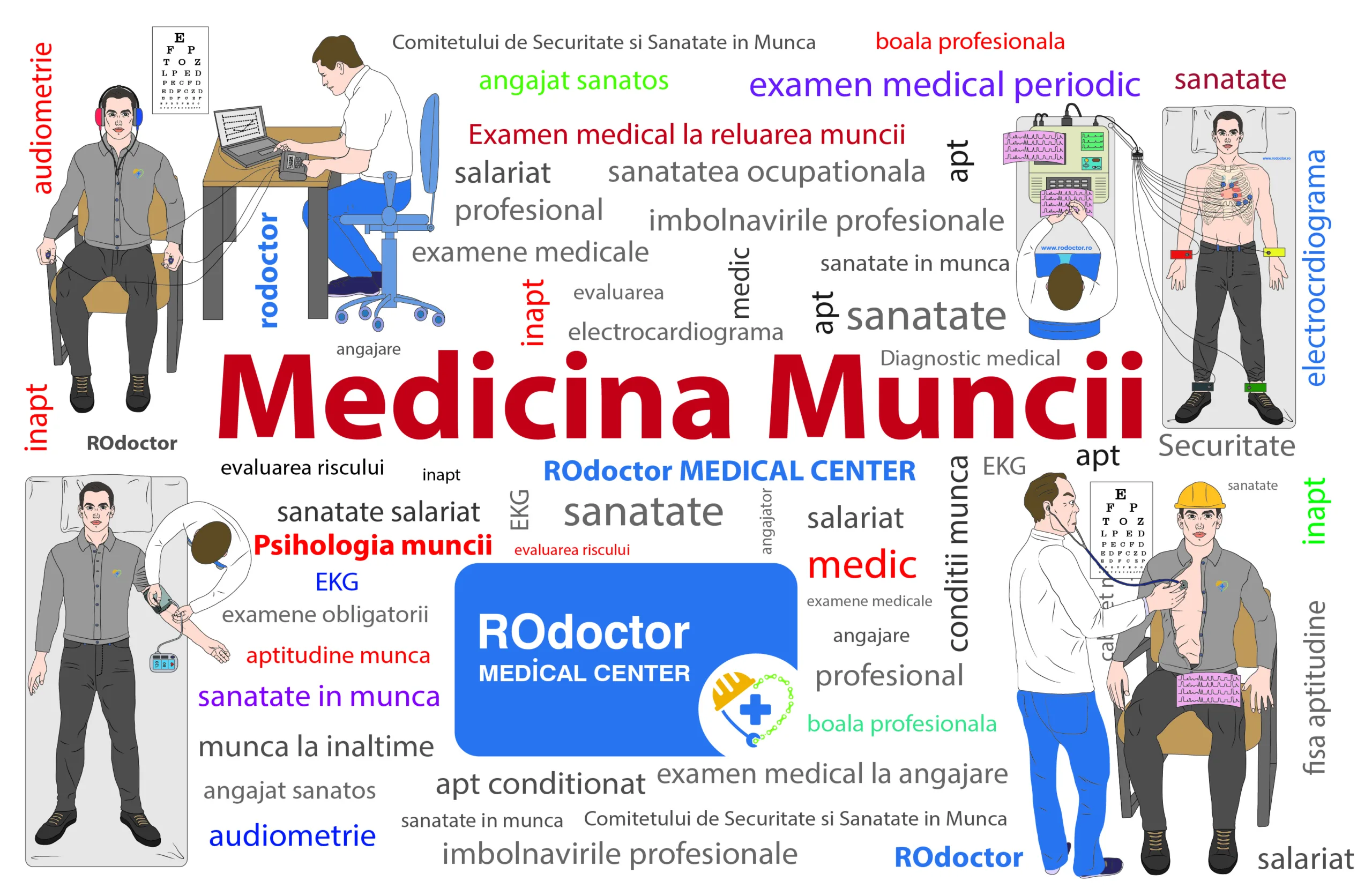
Periodic medical examination of employees is one of the most common causes of ITM (Labor Inspectorate) fines in 2026 – yet most employers treat it as unnecessary paperwork. “What, is my employee going to drop dead at the office?” – I’ve heard this hundreds of times in auto repair shops and IT companies. And then comes the ITM inspection: 8,000 RON fine, plus weeks of nightmare with files, lawyers, and employees declared unfit for work they’ve been doing for 5 years.
The reality is that periodic medical examination isn’t just a paper you check off to avoid ITM. It’s a legal instrument that protects you as an employer when an employee has a workplace accident, develops an occupational disease, or comes to you with damage claims because “work made them sick.” In January 2026, ITM Timișoara alone issued fines exceeding 15 MILLION RON – and occupational medicine is in the top 3 violations. In this guide, I’ll explain exactly what you need to know about periodic medical control: when it’s mandatory, what’s checked, how much it costs, what fines you risk if you don’t do it, and most importantly – how to protect yourself legally CORRECTLY, not just “check the box.”
What is periodic medical examination according to Romanian law?
Periodic medical examination is a MANDATORY medical check that the employer must ensure for ALL employees, at regular intervals established by the occupational health physician. It’s not optional. It doesn’t depend on “the company budget.” You can’t say “we’ll skip it this year.” It’s MANDATORY, period.
Legal basis:
Labor Code, art. 27 para. (1):
“A person can only be employed based on a medical certificate stating that the person is fit for that work.”
Law 319/2006 (Occupational Safety and Health Law), art. 13 lit. j):
“Employers are obliged to employ only persons who, following medical examination and, where appropriate, psychological aptitude testing, correspond to the work task they will perform and to ensure periodic medical control.”
GD 355/2007:
Regulates the entire procedure for health surveillance of workers, including what exams are done and at what intervals.
What does this mean in PRACTICE?
Every employee must have:
- PRE-EMPLOYMENT medical exam – before starting work
- PERIODIC medical exam – at 6-12 month intervals (depends on risk factors)
- RETURN TO WORK medical exam – after sick leave >30 days
- JOB CHANGE medical exam – if new position has different risk factors
All these exams are FREE for the employee – you as employer pay for them. All are kept with the occupational health physician in the form of a CONFIDENTIAL medical file.
The difference between pre-employment vs periodic medical examination
Many employers confuse these two types of exams. Here are the ESSENTIAL differences:
Pre-Employment Medical Examination
When: BEFORE starting work (contract without exam is NULL)
Purpose: To establish if the future employee is FIT for the specific position
What’s checked:
- Anamnesis (complete medical history)
- General clinical examination
- Position-specific tests (e.g., if driver – ophthalmological test, audiometry)
- Risk factors from job description
Result: Fitness certificate with one of the opinions:
- FIT – can work without restrictions
- CONDITIONALLY FIT – can work BUT with measures (e.g., “wear glasses”, “breaks every 2 hours”)
- TEMPORARILY UNFIT – cannot work now (e.g., recovering from illness)
- PERMANENTLY UNFIT – can never work in that position
Cost: 100-250 RON/employee (depends on necessary tests)
Periodic Medical Examination
When: At regular intervals (6-12 months), according to occupational health physician’s schedule
Purpose: To monitor if employee HAS MAINTAINED fitness and if work hasn’t affected their health
What’s checked:
- Changes since last control
- Exposure to risk factors (noise, chemicals, physical effort)
- New symptoms that might indicate occupational disease
- Risk factor-specific tests (e.g., spirometry if working with paints)
Frequency:
- Annual (12 months) – most employees
- Biannual (6 months) – high-risk positions (food service, healthcare, professional drivers, etc.)
- More often – if physician recommends or symptoms appear
Cost: 80-200 RON/employee (usually cheaper than pre-employment)
IMPORTANT: Even if the employee has been with the company for 10 years, they must undergo periodic medical examination on time. “But we checked them when hired!” – doesn’t matter. The law says PERIODIC = at REGULAR intervals.
When is periodic medical examination mandatory? (With CONCRETE examples)
Short answer: ALWAYS. For ALL employees. WITHOUT EXCEPTION.
Long answer (with concrete situations):
1. Auto Repair Shop / Mechanical Workshop
Affected employees: Auto mechanic, auto electrician, body worker, painter, service manager
Risk factors:
- Noise (grinding, compressor)
- Vibrations (grinders, pneumatic wrench)
- Chemicals (paint, thinner, diesel, oils)
- Physical effort (lifting wheels, heavy parts)
- Forced positions (working under car)
Examination frequency: 12 months (annual)
Mandatory tests:
- Audiogram (noise)
- Spirometry (paint, volatile substances)
- Orthopedic examination (physical effort)
- Ophthalmological test (precision work)
- Blood tests (chemical substance exposure)
Estimated cost: ~150-200 RON/employee/year
2. IT Office / Programmers / Administrative
Affected employees: Programmers, accountants, HR, secretaries, managers
Risk factors:
- Computer work >4 hours/day
- Prolonged static positions
- Stress
- Visual effort
Examination frequency: 12 months (annual)
Mandatory tests:
- Ophthalmological test (mandatory for >4h computer!)
- General physical examination
- BP, pulse (stress)
- Spinal evaluation
Estimated cost: ~100-150 RON/employee/year
ATTENTION: Even if working remotely (from home), periodic medical examination is still required!
3. Food Service / HoReCa / Catering
Affected employees: Cooks, waiters, bartenders, food warehouse workers
Risk factors:
- Food contact
- Risk of infectious disease transmission
- Humidity, temperature (kitchen)
Examination frequency: 6 MONTHS (BIANNUAL – strictest!)
Mandatory tests:
- Stool cultures (salmonella, shigella screening)
- Hepatitis A carrier test
- Dermatological examination (hand lesions)
- Updated health certificate
Estimated cost: ~150-250 RON/employee/6 months = ~300-500 RON/year
4. Transport / Professional Drivers
Affected employees: Truck drivers, couriers, taxi, Uber, freight transport
Risk factors:
- Prolonged static positions (sitting)
- Stress (traffic, deadlines)
- Vibrations (steering wheel, seat)
- Irregular schedule
Examination frequency: 6-12 months (depends on license category)
Mandatory tests:
- COMPLETE ophthalmological test (vision, visual field, night vision)
- Audiogram
- ECG (cardiovascular risk)
- Psychological evaluation (for passenger/hazardous material transport)
- Diabetes test (metabolic syndrome risk)
Estimated cost: ~200-300 RON/employee/year
Conclusion: Occupational health – investment, not expense
Periodic medical examination isn’t a “useless paper” you do to check a box. It’s a LEGAL instrument that protects you as an employer from:
- ITM fines (4,000-64,000 RON)
- Criminal cases (when employee has accident and you don’t have valid medical control)
- Labor lawsuits (employee sues you for damages)
- Reputation damage (unfit employee works and has serious accident)
REAL cost:
- IT company 10 employees: 100 RON/month (1,200 RON/year)
- Auto repair shop 7 employees: 95 RON/month (1,140 RON/year)
- Restaurant 12 employees: 350 RON/month (4,200 RON/year)
vs Cost of FINES + legal problems:
- One ITM fine: 16,000-64,000 RON
- One lost labor lawsuit: 50,000-200,000 RON (damages + costs)
- One criminal case: 1-3 years imprisonment + criminal record
Mathematically, occupational medicine is the cheapest insurance you can have as an employer!
WHAT TO DO NOW (concrete steps):
- Check when your employees’ controls expired (Excel with all data)
- Make contract with occupational health service (this week!)
- Schedule URGENT expired controls
- Set automatic reminders for next controls
- Archive files CORRECTLY (physical + digital)
- At ITM inspection → present EVERYTHING organized = ZERO fine
Questions about occupational health for your employees? Write in comments with your specific situation (how many employees, what field) and I’ll help with a personalized answer!
P.S.: Save this article – you’ll need it when ITM inspection comes! 😉
✍️ Author: Bejenaru Alexandru Ionut – [email protected]
🔗 Internal link: https://diagnozabam.ro/sfaturi

