

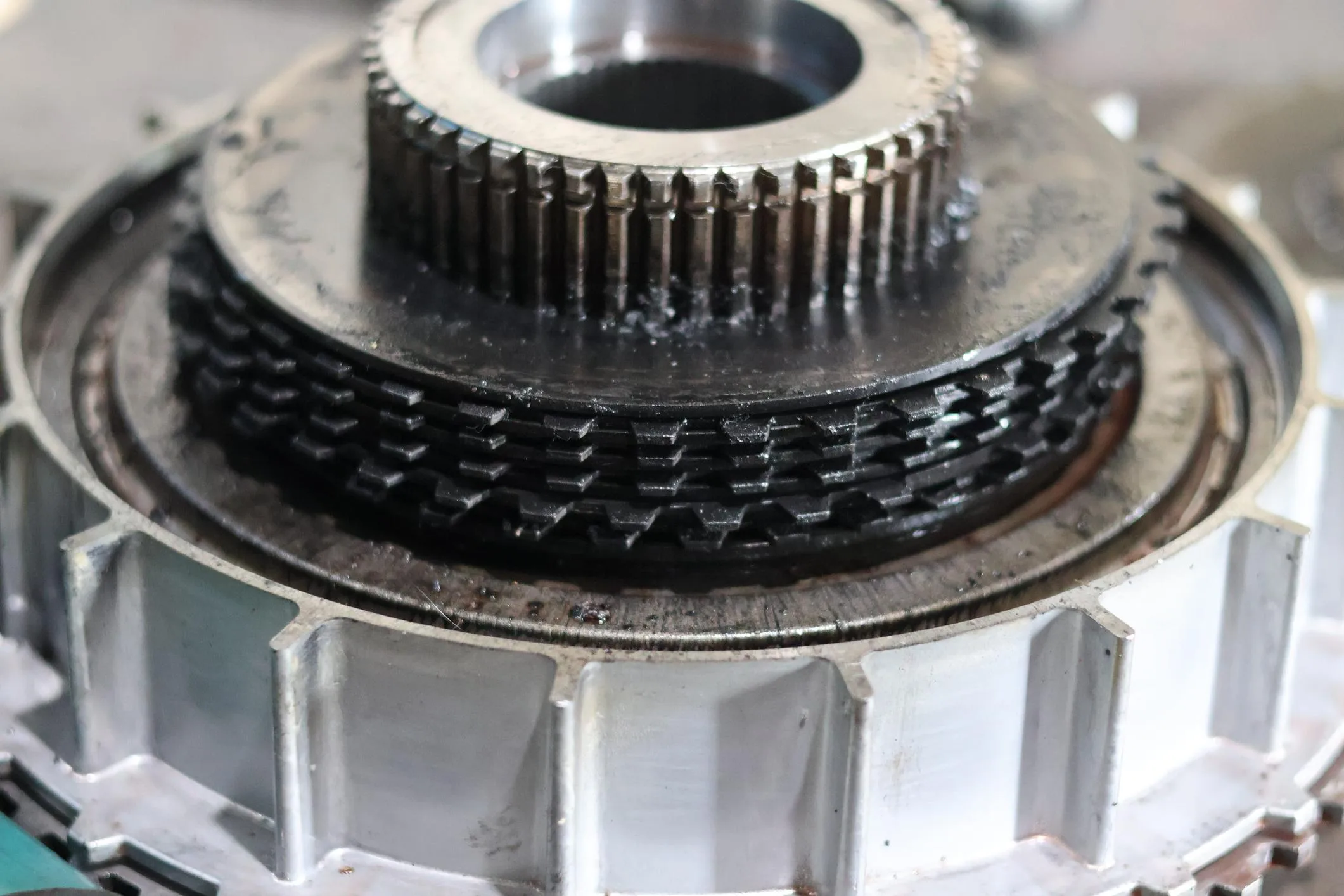
Transmission overheating symptoms are often ignored until it’s too late. Unlike engine overheating, transmission heat buildup happens quietly — without dramatic steam or visible smoke.
By the time drivers realize something is wrong, internal clutch packs may already be burning.
In the United States, especially among SUV and truck owners who tow trailers, transmission overheating symptoms are one of the leading causes of premature automatic gearbox failure.
Let’s break this down clearly and professionally.
Why Transmission Overheating Is So Dangerous
Automatic transmissions rely on fluid for:
-
Lubrication
-
Hydraulic pressure
-
Cooling
-
Friction control
When temperature exceeds safe limits (typically above 220°F / 104°C):
-
Fluid breaks down
-
Clutch material burns
-
Seals harden
-
Internal wear accelerates
Heat is the number one killer of automatic transmissions.
Most Common Transmission Overheating Symptoms
1️⃣ Burning Smell
One of the earliest transmission overheating symptoms is a burnt odor.
Transmission fluid smells sharp and chemical when overheated.
If you notice this smell after highway driving or towing, stop immediately.
2️⃣ Delayed or Slipping Shifts
Overheated fluid loses hydraulic efficiency.
You may notice:
-
Hesitation when shifting
-
RPM spikes between gears
-
Rough gear engagement
This often appears during heavy acceleration.
3️⃣ Warning Light on Dashboard
Many modern vehicles display:
-
Transmission temperature warning
-
Check engine light
-
“Transmission Hot – Idle Engine” message
According to the National Highway Traffic Safety Administration, overheating drivetrain components can compromise vehicle safety and lead to mechanical failure.
External source: https://www.nhtsa.gov
4️⃣ Fluid Leaks
Overheating increases internal pressure.
That pressure can force fluid past seals, causing leaks.
Red or dark brown fluid under your vehicle is a serious sign.
5️⃣ Vehicle Enters Limp Mode
Severe transmission overheating symptoms can trigger limp mode.
The transmission may:
-
Lock into one gear
-
Limit speed
-
Disable manual shifting
This is a protective response.
What Causes Transmission Overheating?
Low Transmission Fluid
Most common cause.
Low fluid = reduced cooling capacity.
Old or Contaminated Fluid
Transmission fluid should be replaced every 30,000–60,000 miles (depending on vehicle).
Dark brown or burnt-smelling fluid is already degraded.
Towing Heavy Loads
SUVs and trucks towing beyond recommended limits generate extreme heat.
Without an auxiliary transmission cooler, overheating risk increases.
Clogged Transmission Cooler
The radiator-integrated cooler can become restricted, reducing heat dissipation.
Internal Mechanical Wear
Worn clutch packs generate excessive friction, raising temperature.
How Hot Is Too Hot?
Normal operating temperature: 175–200°F
Warning zone: 220°F
Danger zone: 240°F+
At 250°F, transmission fluid life expectancy drops dramatically.
At 300°F, internal damage can occur quickly.
Can You Continue Driving?
If you notice mild transmission overheating symptoms, reduce load immediately:
-
Turn off towing mode
-
Avoid aggressive acceleration
-
Pull over safely
If warning light appears, stop driving.
Continuing can:
-
Burn clutch packs
-
Warp valve body
-
Require full rebuild
Repair Costs in the United States (2026)
-
Fluid flush and service: $200–$400
-
Transmission cooler replacement: $300–$900
-
Valve body repair: $800–$1,500
-
Full rebuild: $3,000–$6,000
Early intervention saves thousands.
For deeper transmission diagnostics:
👉 https://diagnozabam.ro
How to Prevent Transmission Overheating
-
Replace fluid on schedule
-
Install auxiliary cooler for towing
-
Check fluid level regularly
-
Avoid aggressive driving when hot
-
Fix slipping issues immediately
Heat control is transmission survival.
Early vs Late Repair Comparison
| Issue | Early Cost | Late Cost |
|---|---|---|
| Fluid service | $300 | $4,000 rebuild |
| Cooler issue | $600 | $5,000 transmission |
| Minor slip | $500 | Total failure |
Delay multiplies cost exponentially.
Final Verdict: Heat Is the Silent Killer
Transmission overheating symptoms are not cosmetic.
They are mechanical emergency warnings.
Unlike engine overheating, transmission damage happens quietly.
By the time severe slipping appears, internal components may already be damaged.
If you smell burning fluid or notice delayed shifts, act immediately.
Cooling your transmission today prevents rebuilding it tomorrow.
✍️ Author: Bejenaru Alexandru Ionut – [email protected]
🔗 Internal link: https://diagnozabam.ro/sfaturi

