

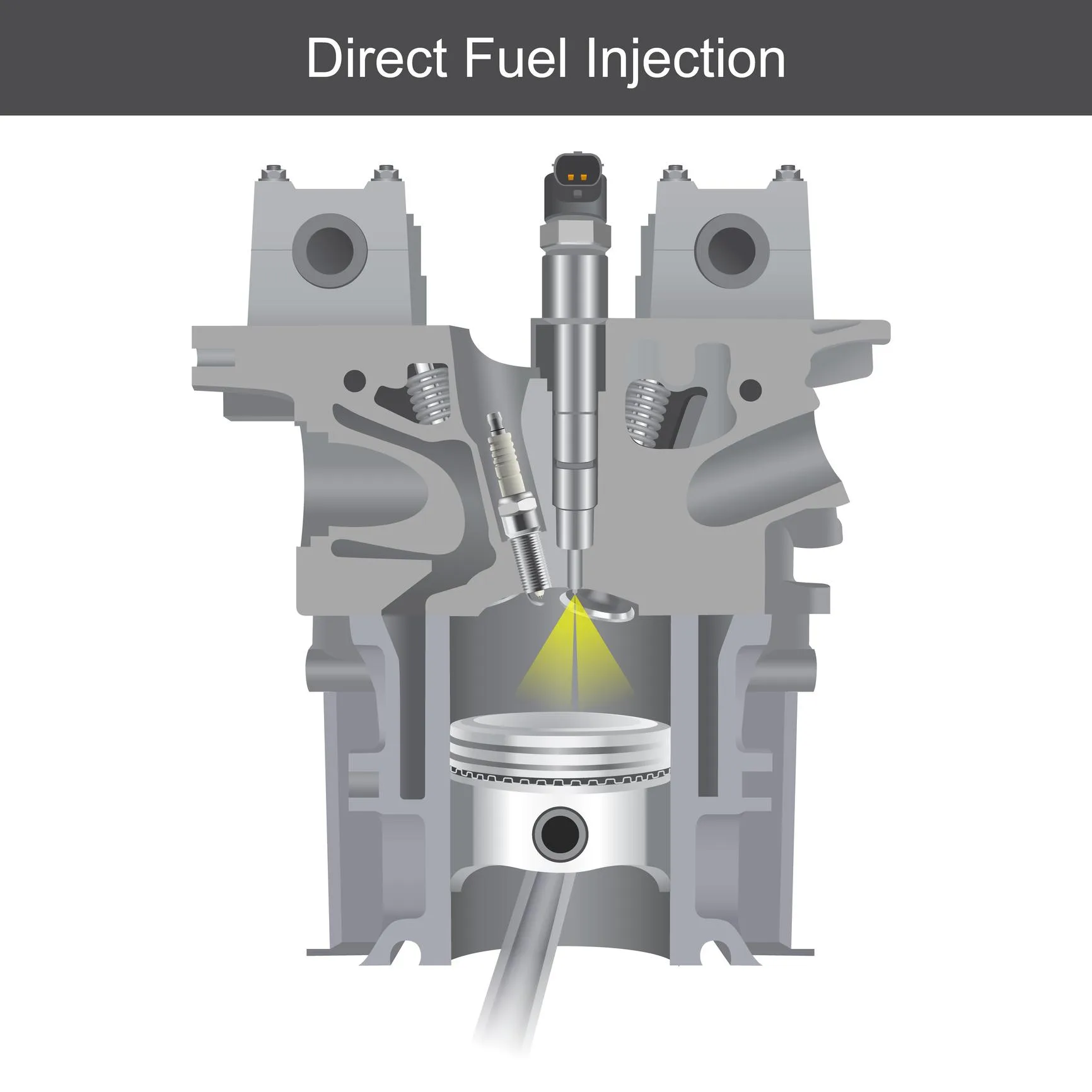
What Is Pilot Injection in Diesel Engines?
Pilot injection is a small amount of fuel injected into the combustion chamber before the main injection event.
Modern diesel engines no longer inject fuel in a single burst. Instead, they use:
-
Pilot injection (pre-injection)
-
Main injection
-
Sometimes post-injection
This strategy improves combustion control and reduces diesel knock.
Why Pilot Injection Is Necessary
In older diesel engines, fuel was injected in one single event. This caused:
-
Long ignition delay
-
Sudden pressure spike
-
Loud combustion noise
Pilot injection changes this completely.
By injecting a very small amount of fuel first:
-
A small controlled combustion begins.
-
Cylinder temperature rises gradually.
-
Ignition delay for the main injection becomes shorter.
-
Pressure rise becomes smoother.
Result: quieter and more efficient combustion.
The Connection With Diesel Knock
As explained in previous articles, diesel knock is caused by excessive ignition delay.
Under European fuel regulations such as EN 590, diesel fuel must have a minimum cetane number of 51 to limit ignition delay.
Even with proper fuel quality, pilot injection is necessary because:
-
Modern engines run higher compression ratios
-
Injection pressures exceed 2000 bar
-
Emission standards are stricter
Pilot injection ensures controlled pressure rise regardless of small fuel variations.
How Pilot Injection Works in Common Rail Systems
Modern common rail systems allow:
-
Extremely precise injection timing
-
Multiple injection pulses per cycle
-
Microsecond-level electronic control
The injector can open and close several times within one combustion cycle.
Typical sequence:
1️⃣ First pilot injection (very small quantity)
2️⃣ Second pilot injection (optional in some engines)
3️⃣ Main injection
4️⃣ Post-injection (for DPF regeneration or emission control)
This flexibility was impossible in mechanical diesel pumps.
Benefits of Pilot Injection
1️⃣ Reduced Engine Noise
Smooth pressure rise reduces metallic combustion sound.
2️⃣ Lower Mechanical Stress
Gradual pressure increase protects pistons and bearings.
3️⃣ Improved Emission Control
Better combustion phasing reduces:
4️⃣ Better Cold Start Behavior
Especially important in winter conditions.
What Happens If Pilot Injection Fails?
If injectors malfunction or ECU calibration is incorrect:
-
Combustion becomes harsh
-
Diesel knock increases
-
Fuel consumption rises
-
Emissions increase
-
Idle becomes unstable
Faulty injectors or poor atomization directly affect pilot injection precision.
Pilot Injection and Fuel Quality
Fuel properties influence pilot injection effectiveness:
-
Viscosity
-
Lubricity
-
Spray atomization quality
Low cetane fuel increases ignition delay, forcing ECU correction through advanced injection timing.
Consistent fuel quality ensures stable combustion phasing.
Modern Diesel Strategy: Multiple Injections
Some modern engines use up to 5–7 injection events per cycle.
Why?
-
Noise reduction
-
Emission control
-
Turbocharger response optimization
-
DPF regeneration support
This is one reason why modern diesel engines are significantly quieter than those from the 1990s.
Key Takeaways
-
Pilot injection is a small pre-injection before the main fuel event.
-
It reduces ignition delay and smooths combustion.
-
It minimizes diesel knock and mechanical stress.
-
Modern common rail systems allow multiple injection events.
-
Fuel quality directly influences injection control efficiency.
✍️ Author: Bejenaru Alexandru Ionut – [email protected]
🔗 Internal link: https://diagnozabam.ro/sfaturi

