
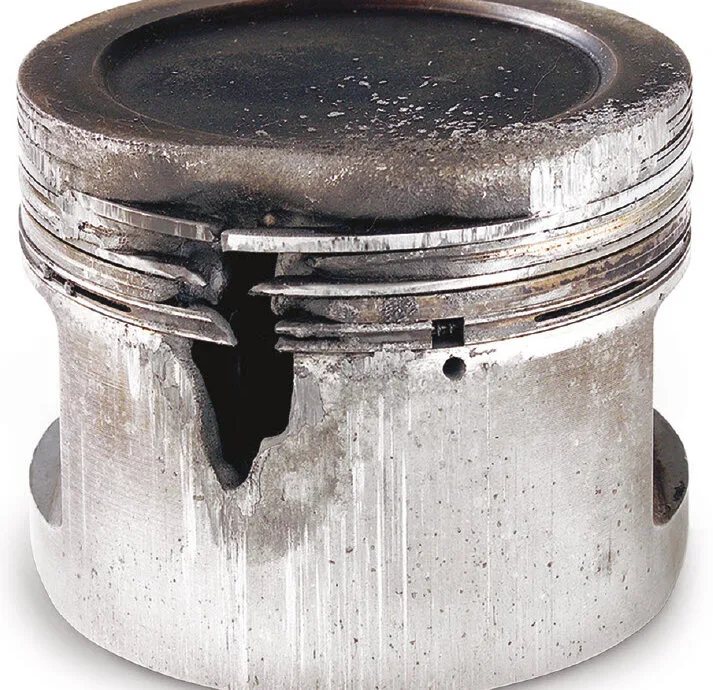
What Is Diesel Knock?
Diesel knock is the sharp metallic sound produced during abnormal combustion in a compression-ignition engine.
Unlike gasoline knock (detonation), diesel knock is mainly caused by excessive ignition delay.
It occurs when:
-
Fuel is injected.
-
Ignition is delayed.
-
Too much fuel accumulates.
-
Sudden combustion causes a rapid pressure spike.
That pressure spike creates the knocking sound.
The Role of Ignition Delay
Ignition delay is the time between injection and combustion start.
If ignition delay is:
-
Short → smooth pressure rise
-
Long → sudden pressure explosion
This is directly linked to cetane number. Lower cetane fuel increases ignition delay.
Under European regulation EN 590, diesel must have a minimum cetane number of 51 to reduce this risk.
Why Diesel Knock Happens
Several factors increase diesel knock:
1️⃣ Low Cetane Fuel
Longer ignition delay → more premixed fuel → violent combustion.
2️⃣ Cold Engine
Lower cylinder temperature delays auto-ignition.
3️⃣ High Altitude
Reduced air density affects combustion stability.
4️⃣ Injector Problems
Poor atomization causes uneven fuel distribution.
5️⃣ Incorrect Injection Timing
Too advanced timing can increase pressure rise rate.
Pressure Rise and Mechanical Stress
During normal combustion, cylinder pressure increases progressively.
With diesel knock:
-
Pressure rises too quickly.
-
Mechanical stress increases.
-
Pistons and bearings experience shock loading.
Repeated knock can contribute to:
-
Premature wear
-
Crankshaft stress
-
Increased vibration
Modern ECUs actively adjust injection timing to reduce knock intensity.
Diesel Knock vs Gasoline Knock
| Diesel Knock | Gasoline Knock |
|---|---|
| Caused by ignition delay | Caused by uncontrolled auto-ignition |
| Linked to low cetane | Linked to low octane |
| Happens in compression ignition engines | Happens in spark ignition engines |
| Sharp metallic noise | Pinging / rattling |
They are not the same phenomenon.
Modern Common Rail and Knock Control
Common-rail systems reduce knock by:
-
Pilot injection (small pre-injection event)
-
Multiple injection events
-
Precise injection timing
-
Optimized spray atomization
Pilot injection pre-burns a small amount of fuel to reduce the main pressure spike.
This significantly improves:
-
Noise level
-
Combustion smoothness
-
Emission control
How to Reduce Diesel Knock
Practical measures:
-
Use quality diesel meeting EN 590
-
Avoid very low cetane imported fuel
-
Maintain injectors properly
-
Replace worn glow plugs
-
Ensure correct injection timing
Fuel additives claiming large cetane increases should be used cautiously.
Key Takeaways
-
Diesel knock is caused by excessive ignition delay.
-
Low cetane fuel increases knock risk.
-
Rapid pressure rise creates metallic noise.
-
Modern injection systems minimize knock using pilot injection.
-
Fuel quality directly affects combustion smoothness.
✍️ Author: Bejenaru Alexandru Ionut – [email protected]
🔗 Internal link: https://diagnozabam.ro/sfaturi

Recommendation: Looking for a professional bi-directional diagnostic tool with full system coverage? Use code DIAGNOZABAM for 10% off.
Transparency note: Affiliate link. Purchasing through it costs you nothing extra. View Thinkcar Deal →
