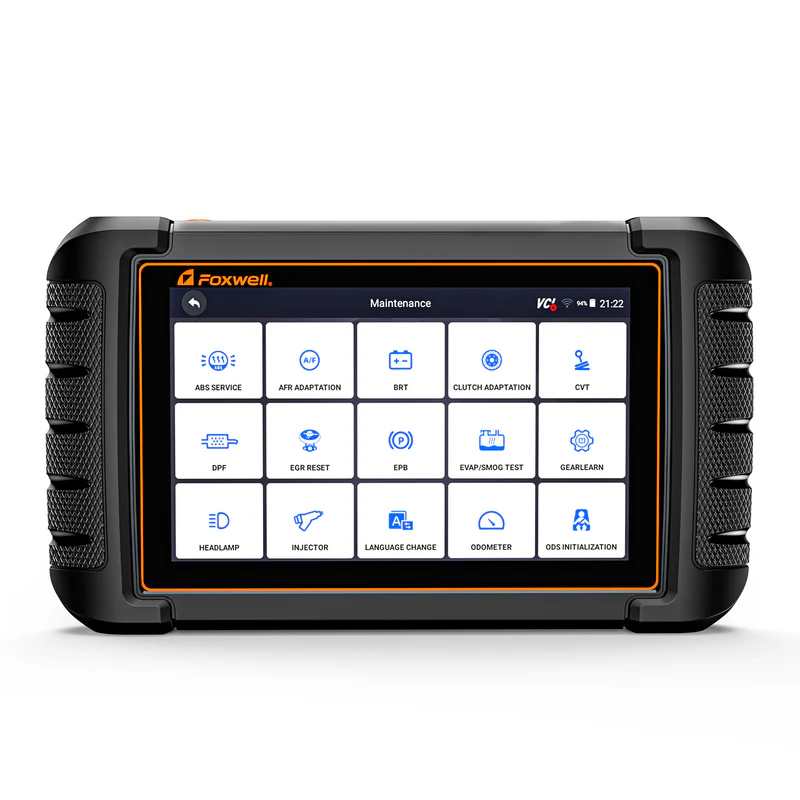
Foxwell NT1009 Review: Everything You Need to Know Before Buying This Scanner
The OBD2 scanner market is crowded — from $30 code readers to $5,000 dealer tools. The Foxwell NT1009 positions itself in the space between: a full-system professional tablet that handles the majority of what a dealer tool can do, at a fraction of the cost and without the subscription model most OEM platforms require.
But no scanner is a universal answer, and the NT1009 has specific strengths and specific hard limits that every buyer needs to understand before committing. This guide answers every relevant question — from hardware specs to real-world workflow, from what “bidirectional control” actually means to exactly which functions it cannot perform.
→ See the Foxwell NT1009 on foxwelldiag.com
What Is the Foxwell NT1009 — And Is It Just a Code Reader?
The NT1009 is a full-system diagnostic tablet, not a code reader. The distinction matters more than most buyers initially realize.
A basic code reader accesses the OBD2 port and reads generic fault codes from the engine management system — that is all. The NT1009 goes significantly further:
- Full-system scan: accesses every control module in the vehicle — engine, transmission, ABS, SRS, BCM, TPMS, climate, suspension, ADAS and more
- Bidirectional active tests: sends commands to components to test their operation directly, without disassembly
- ECU coding and matching: adapts replacement modules to the vehicle’s existing configuration
- 38+ service reset functions: covers the maintenance operations that generate warning lights and require recalibration after repairs
- Live data streams: monitors real-time sensor data across all accessible systems simultaneously
The combination of these capabilities is what places it at the professional end of the aftermarket scanner market.
ℹ️ Technical Note: The NT1009 handles the diagnostic and calibration layer of vehicle electronics — reading, testing, coding, resetting. It does not perform online ECU programming (firmware flashing/reflashing). If a repair requires rewriting a module’s base firmware after hardware replacement, OEM-specific tools remain necessary for that step.
https://diagnozabam.ro/sfaturi/blog/next-gen-audi-q7-review-design-specs-audi-q9/
Hardware Specifications
Understanding the hardware explains why the NT1009 performs differently from handheld pocket scanners:
| Component | Specification |
|---|---|
| Display | 10.1-inch HD touchscreen |
| Operating system | Android 9.0 |
| RAM | 2GB |
| Internal storage | 64GB |
| Battery | 8,000 mAh |
| Vehicle connection | Wireless VCI (Bluetooth/Wi-Fi) |
| Protocols supported | CAN-FD, DoIP, KWP, standard OBD2 |
| Update method | Wi-Fi over-the-air |
The 10.1-inch screen is practically significant: topology maps showing all vehicle modules and their communication status require real display area to be usable. On a 3.5-inch handheld scanner, the same data is either absent or unreadable. The 8,000 mAh battery provides full-day workshop autonomy without needing to manage cables or power sources during diagnostics.
The wireless VCI deserves a specific mention. The tablet communicates with the vehicle through a Bluetooth/Wi-Fi-enabled diagnostic connector, not a direct cable to the tablet. This means the technician can move freely around the vehicle — performing test drives, checking components under the hood, observing brake behaviour — while the scanner continues to capture live data. For active tests in particular, this mobility changes the workflow substantially.
Vehicle Compatibility: What It Actually Covers
The Core Coverage
The NT1009 supports 120+ global vehicle brands across the mainstream segments:
American manufacturers: Ford, GM (Chevrolet, GMC, Buick, Cadillac), Chrysler, Dodge, Jeep, Ram — including 2018+ FCA models with SGW gateway support via the 12+8 adapter
European manufacturers: VW, Audi, BMW, Mercedes-Benz, Porsche, Skoda, SEAT, Alfa Romeo, Fiat, Volvo, Renault, Peugeot, Citroën, Opel/Vauxhall
Asian manufacturers: Toyota, Honda, Nissan, Hyundai, Kia, Mazda, Subaru, Mitsubishi, Isuzu
New energy vehicles: 28+ EV and hybrid brands including Tesla, BYD, Nio, and other NEV manufacturers
Over 100,000 vehicle models are covered in the database across all body types: cars, SUVs, minivans, and light-duty trucks.
The OBD1 Limitation
The NT1009 is built for 1996+ OBD2 vehicles only. Pre-1996 OBD1 vehicles require separate manufacturer-specific adapters and receive only partial function support at best. If your work regularly involves pre-1996 vehicles, the NT1009 is not the right primary tool.
The FCA SGW Gateway (2018+ Jeep, Ram, Dodge)
From 2018 onward, FCA vehicles (Jeep, Ram, Dodge, Chrysler) implement a Secure Gateway Module (SGW) that blocks third-party access to advanced OBD functions by default. Full diagnostic access to these vehicles requires:
- The 12+8 FCA SGW adapter (available separately)
- Or dealer-level gateway authorization
The NT1009 supports FCA SGW bypass with the adapter — but this is a separate purchase. If a significant portion of your work involves 2018+ FCA platforms, factor the adapter cost into the purchase decision.
Luxury and Ultra-Luxury Brands
The NT1009 includes diagnostic database coverage for ultra-luxury brands including Maserati. For standard diagnostic functions — DTC reading, live data, active tests — coverage is comprehensive on most models. For brand-specific programming functions (air suspension calibration, new key programming on certain models), compatibility varies significantly by model year. Provide a VIN for verification before assuming coverage on a specific vehicle.
What Bidirectional Control Actually Means in Practice
“Bidirectional control” is one of the most misunderstood terms in the scanner market. Here is what it means operationally:
A standard scanner can ask a vehicle’s ECU for information — it reads data going one direction (vehicle → scanner). Bidirectional control adds the return path: the scanner can send commands to the vehicle and trigger components to operate on demand.
Standard OBD2 scanner:
  Scanner  ──────────►  ECU  (request)
  Scanner  ◄──────────  ECU  (data: "fuel injector #3 firing rate")

Bidirectional (NT1009):
  Scanner  ──────────►  ECU  ──────────►  Component
  (command: "activate fuel injector #3 for 5 seconds")
               ↓
  Technician observes component behaviour directly
What this enables in practice:
- Activate a fuel pump to confirm it runs before condemning it
- Cycle ABS solenoids individually to verify operation before an ABS module replacement
- Command a cooling fan to run at maximum speed to verify the fan motor and relay independently of temperature sensors
- Trigger individual fuel injectors to isolate a misfire by cylinder
- Test EGR valve operation by commanding it open and closed while monitoring live data
- Command EPB calipers to retract for brake pad replacement
The practical consequence: fewer unnecessary parts replacements. A common diagnostic error is replacing a component because a fault code points to it — without verifying whether the component itself is actually defective or whether the fault is upstream in the circuit. Bidirectional testing answers that question directly, before any parts are ordered.
The 38+ Service Reset Functions: What They Cover
Reset and calibration functions are the other category that separates a diagnostic tool from a code reader. These are the functions that generate warning lights after maintenance — and that cannot be cleared by simply deleting a fault code.
The NT1009 covers:
- Oil service reset — resets service interval counter after oil change
- EPB (Electronic Parking Brake) — retracts calipers for pad replacement; sets running-in procedure after replacement
- ABS bleeding — activates ABS pump and solenoids sequentially for proper bleeding after brake fluid change
- SAS (Steering Angle Sensor) calibration — required after alignment, steering component replacement or battery disconnect
- DPF regeneration — initiates forced regen cycle for diesel particulate filter cleaning
- TPMS reset — relearns tyre pressure sensor IDs after tyre rotation or sensor replacement
- Injector coding — programs new injector calibration values into the ECU after injector replacement
- Throttle body alignment (TPS/TBA) — resets throttle position after cleaning or replacement
- Battery configuration (BRT) — registers new battery to BCM to maintain correct charge management
- AdBlue reset — resets SCR system after fluid refill
- Transmission adaptation — recalibrates shift points after transmission service
- NOx sensor reset — required after sensor replacement on Euro 6 diesel systems
- CVT and gear learning — recalibrates automatic gearbox after service
- Crankshaft position sensor relearn — required after replacement on many GM and Chrysler engines
- Immobilizer (IMMO) key matching — programs new keys on supported vehicles
⚠️ Important: The availability of specific service functions depends on the vehicle make, model, and year. Not every function listed above is available on every supported vehicle. For critical procedures — crankshaft relearn, IMMO key programming, transmission adaptation — verify coverage via VIN before performing the repair.
ECU Coding and Key Programming: The Real Scope
ECU Coding
The NT1009 supports offline ECU coding — adapting module parameters, activating hidden functions, and matching replacement modules to existing vehicle configurations. This is distinct from online ECU flashing (firmware rewriting), which it does not support.
Practical examples of what offline coding covers:
- Coding a replacement BCM to the vehicle’s existing configuration
- Activating optional equipment features already present in the ECU software
- Injector coding after replacing injectors on diesel engines
- ECU offline reset for BMW E/F chassis
Key Programming (IMMO)
Key programming capability on the NT1009 is vehicle-specific, not universal. The determining factor is the openness of the vehicle’s immobilizer protocol:
Key programming compatibility — general guidance:

Higher compatibility:
  ● Older Japanese models (pre-2018 Toyota, Honda, Nissan)
  ● Many American models (Ford, GM, Chrysler pre-gateway)

Limited / verify by VIN:
  ● Modern European vehicles with encrypted IMMO systems
    (BMW, Mercedes, VW/Audi post-2015 with complex anti-theft)
  ● 2018+ FCA models (SGW gateway issue, separate from IMMO)
  ● Ultra-luxury brands with proprietary systems
For any key programming task on a modern European vehicle, run a VIN check with Foxwell technical support before committing to the NT1009 as the tool for that job.
Topology Mapping: The Function Most Scanners Miss
Topology mapping is one of the NT1009’s most practically useful features for diagnosing complex electrical faults — and one that most competing scanners in its price range do not offer.
The function presents all vehicle control modules in a visual network diagram, showing which modules are communicating normally, which are offline, and which are generating faults. For CAN bus communication issues — where a single faulty node can generate dozens of seemingly unrelated fault codes across the vehicle — topology mapping shows the network structure immediately.
Example — topology map after a CAN bus fault:

  [BCM] ──● communication OK
  [ECM] ──● communication OK
  [TCM] ──✗ no response
  [ABS] ──✗ no response  ← both downstream of TCM on same bus
  [SRS] ──● communication OK

Interpretation: TCM offline → downstream modules appear offline
               → fault is likely at TCM or the CAN segment between
                 BCM and TCM, not at ABS or other downstream modules
Without topology mapping, a technician would see ABS and TCM fault codes and might investigate both separately. The topology map makes the communication hierarchy immediately visible, directing diagnosis to the correct point on the network.
Updates: Cost, Duration and What Happens When They Expire
This is an area where the NT1009’s model differs from many competitor products and deserves a clear explanation:
Included: 3 years of free Wi-Fi updates from the date of activation. These cover new vehicle models (including releases up to 2025), expanded EV/NEV database additions, and ECU database updates.
After the free period: Updates are optional, not required for continued operation.
| Update subscription | Cost |
|---|---|
| 1 year | $360 |
| 2 years | $600 |
| 3 years | $800 |
Critical point: The NT1009 does not stop working when the free update period ends. All existing diagnostic functions, bidirectional tests, coding capabilities, and service resets remain fully operational indefinitely. Updates only extend coverage to newer vehicle models released after your current software version.
For a workshop that primarily services vehicles from the current generation and below, the tool remains 100% capable without any paid subscription. The update subscription is relevant if you need to service the latest model years as they are released.
2027 Jetour Freedom 7 Plus: New Off-Road Giant Leaks Online!
DIY User vs. Professional Technician: Who Gets More Value
The NT1009 serves both audiences — but differently.
For advanced DIY users, the primary value comes from:
- Reading and clearing all fault codes across every system, not just engine
- Performing maintenance resets at home (oil service, TPMS, EPB) without paying dealer service rates
- Accessing live data to understand what a vehicle is actually doing rather than guessing based on symptoms
- Gradually expanding into more complex diagnostics as familiarity grows
For professional technicians, the decisive capabilities are:
- Bidirectional active testing to verify components before replacement — the biggest time and parts-cost saving
- Topology mapping for rapid CAN bus fault isolation
- ECU coding for module replacement and adaptation
- Comprehensive coverage across all brands in a single tool — reducing the number of separate tools needed for a multi-brand workshop
The NT1009 is notable for being a tool that grows with its user. Many buyers who initially purchased it for basic fault code management report progressively expanding their use to live data analysis, active testing, and more complex calibration work as their diagnostic confidence develops.
Real Diagnostic Workflow: How the NT1009 Is Used Step by Step
Step 1 — Vehicle Identification
  Auto VIN detection (broadcast from ECU) or manual entry
  → confirms vehicle database match before proceeding

Step 2 — Full System Scan
  Automatic scan across all accessible modules
  → generates complete fault code list with module locations

Step 3 — Topology Map Review
  Visual network diagram of module communication status
  → identifies offline modules and bus faults immediately

Step 4 — DTC Analysis
  Read and interpret fault codes per system
  → cross-reference with live data for context

Step 5 — Live Data Monitoring
  Real-time sensor data under operating conditions
  → confirms or eliminates suspected component failures

Step 6 — Active Tests (Bidirectional)
  Direct component activation to verify operation
  → confirms fault location before parts ordering

Step 7 — Repair + Service Reset
  Perform the repair; execute required calibrations and resets
  → clears fault conditions and restores system calibration

Step 8 — Post-Repair Verification
  Re-scan all systems; confirm clean result
  → generate and save diagnostic report for records
Known Limitations: What the NT1009 Cannot Do
A balanced evaluation requires stating the hard limits clearly:
- No online ECU firmware flashing. Module replacement requiring base firmware rewrite still needs OEM tools.
- 2018+ FCA gateway requires the 12+8 SGW adapter (separate purchase) for full access.
- OBD1 vehicles (pre-1996) are not supported.
- Key programming on modern European encrypted IMMO systems is limited — verify by VIN before relying on this for a specific vehicle.
- Function availability varies by VIN. Not every function works on every supported vehicle. Coverage varies by make, model, and year.
- Not a standalone programming tool for dealer-exclusive module programming or online authentication procedures.
Verdict: Where the NT1009 Sits in the Market
The Foxwell NT1009 occupies a well-defined position: it delivers the diagnostic functions that make up approximately 85–90% of professional workshop needs — full-system scanning, bidirectional active tests, ECU coding, topology mapping, and comprehensive service resets — in a single wireless tablet, with a three-year update period included and no mandatory subscription for ongoing operation.
The 10–15% it does not cover is the territory of OEM-specific online programming, advanced dealer-exclusive functions on high-security encrypted systems, and pre-1996 OBD1 vehicles. For a workshop that primarily performs diagnosis, maintenance, and component-level repair rather than module reprogramming, those limitations are rarely encountered in daily workflow.
→ Full specifications and ordering: foxwelldiag.com/products/foxwell-nt1009
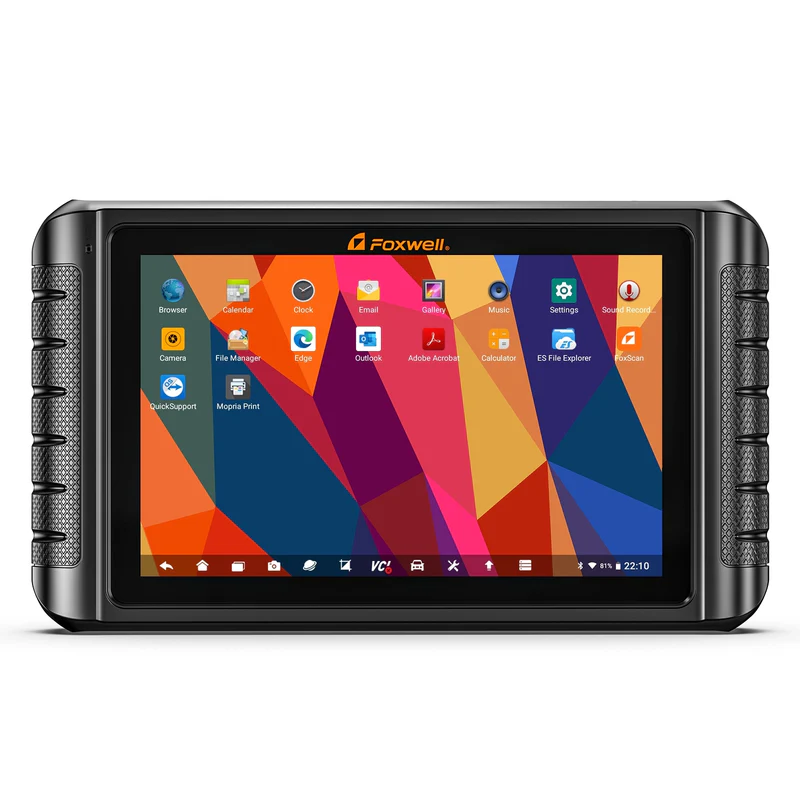
Source: Foxwell NT1009 FAQs: Everything You Want To Know
✍️ Author: Bejenaru Alexandru Ionut – [email protected]
🔗 Internal link: https://diagnozabam.ro/sfaturi
A fast Android tablet, ideal for 4 vital systems diagnostic with lifetime free updates and a durable touchscreen:
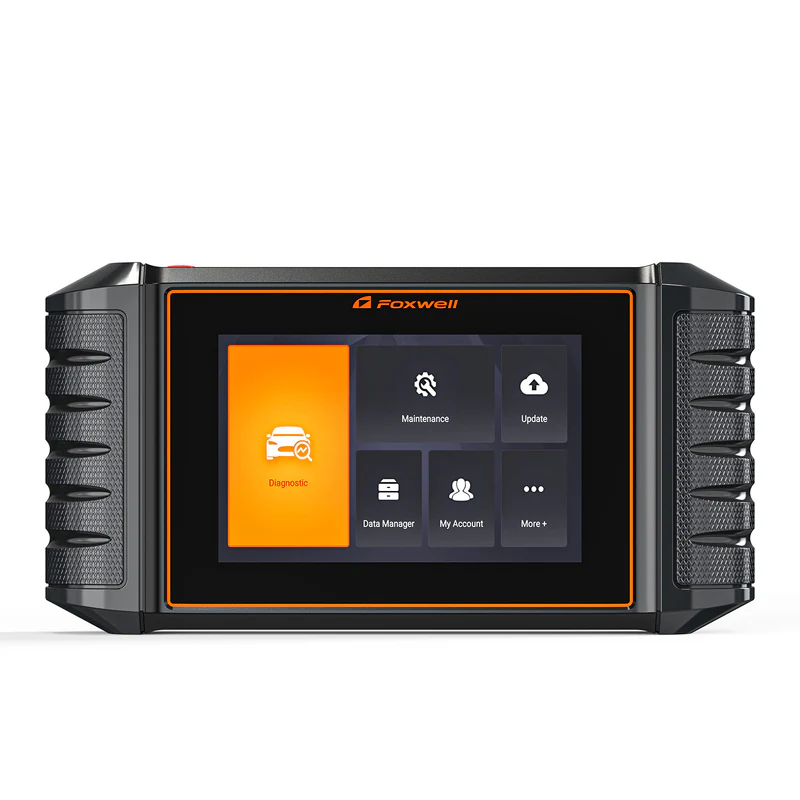
🔗 Affiliate link — we may earn a commission, at no extra cost to you.
Total wireless freedom: Full All-System diagnostics on a fast Android tablet with over 30+ service reset functions included: