
BYD’s Fang Cheng Bao Shifts Gears: The 1,000 HP “Formula S” Performance Sedan Takes the Stage
BEIJING, China – For the past few years, BYD’s premium sub-brand, Fang Cheng Bao (literally “Leopard Equation”), has been synonymous with rugged, “go-anywhere” luxury SUVs. Vehicles like the Leopard 5 and Leopard 8 established the brand as a formidable force in the off-road segment, blending brute force with electrification. However, at the Beijing Auto Show 2026, the brand proved it is no longer content with staying off the beaten path.
Entering the high-stakes arena of elite electric performance, Fang Cheng Bao officially unveiled the Formula S. This isn’t just a new model; it is the flagship of the brand’s new “Formula” series, a line dedicated to purely asphalt-focused, high-performance vehicles. With a tri-motor powertrain pushing 1,000 HP and a technical suite that reads like a futurist’s wishlist, the Formula S is aiming its sights directly at the Tesla Model S Plaid and the Porsche Taycan Turbo GT.
Dodge Challenger Cedează Teren în fața Ford Mustang în Ultimul An de Vânzări
1. A Strategic Pivot: From Off-Road to the Racetrack
The launch of the Formula S marks a pivotal moment in BYD’s overarching strategy. Until now, BYD had its “bread-and-butter” Dynasty and Ocean series for the masses, Yangwang for the ultra-luxury hyper-tech segment, and Fang Cheng Bao for the off-road enthusiast. By introducing a performance sedan under the “Formula” banner, BYD is filling the gap between a daily driver and an multi-million-euro hypercar.
The “Formula” name is a deliberate nod to precision, engineering, and speed. While the “Leopard” SUVs were about overcoming nature, the Formula S is about mastering the laws of physics on the tarmac. It signals a move toward a more diversified portfolio that can compete on equal footing with European heritage brands in the categories they traditionally dominate: aerodynamics, chassis dynamics, and visceral driving emotion.
2. Exterior Design: The “Aero-Aggressor”
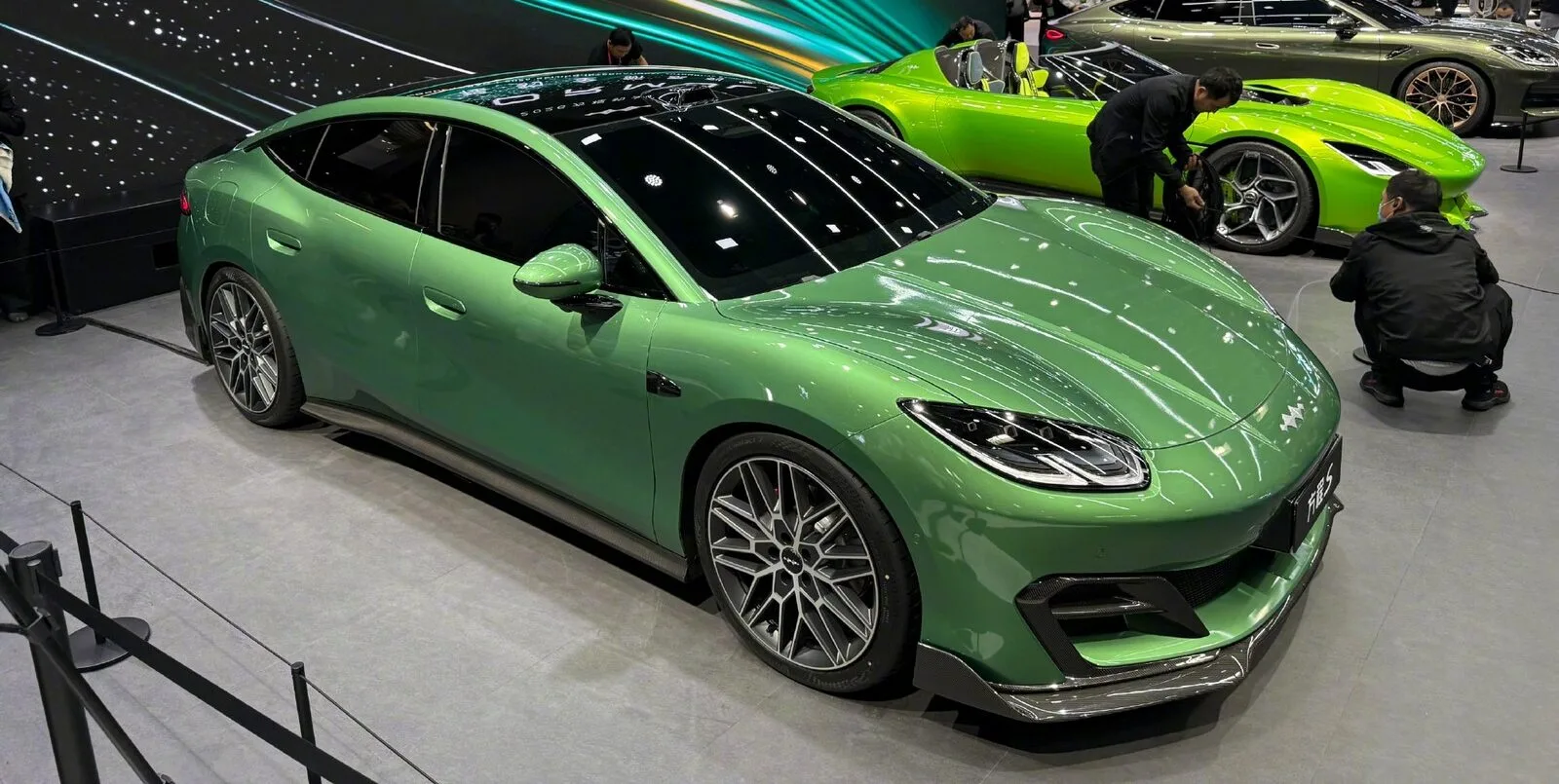
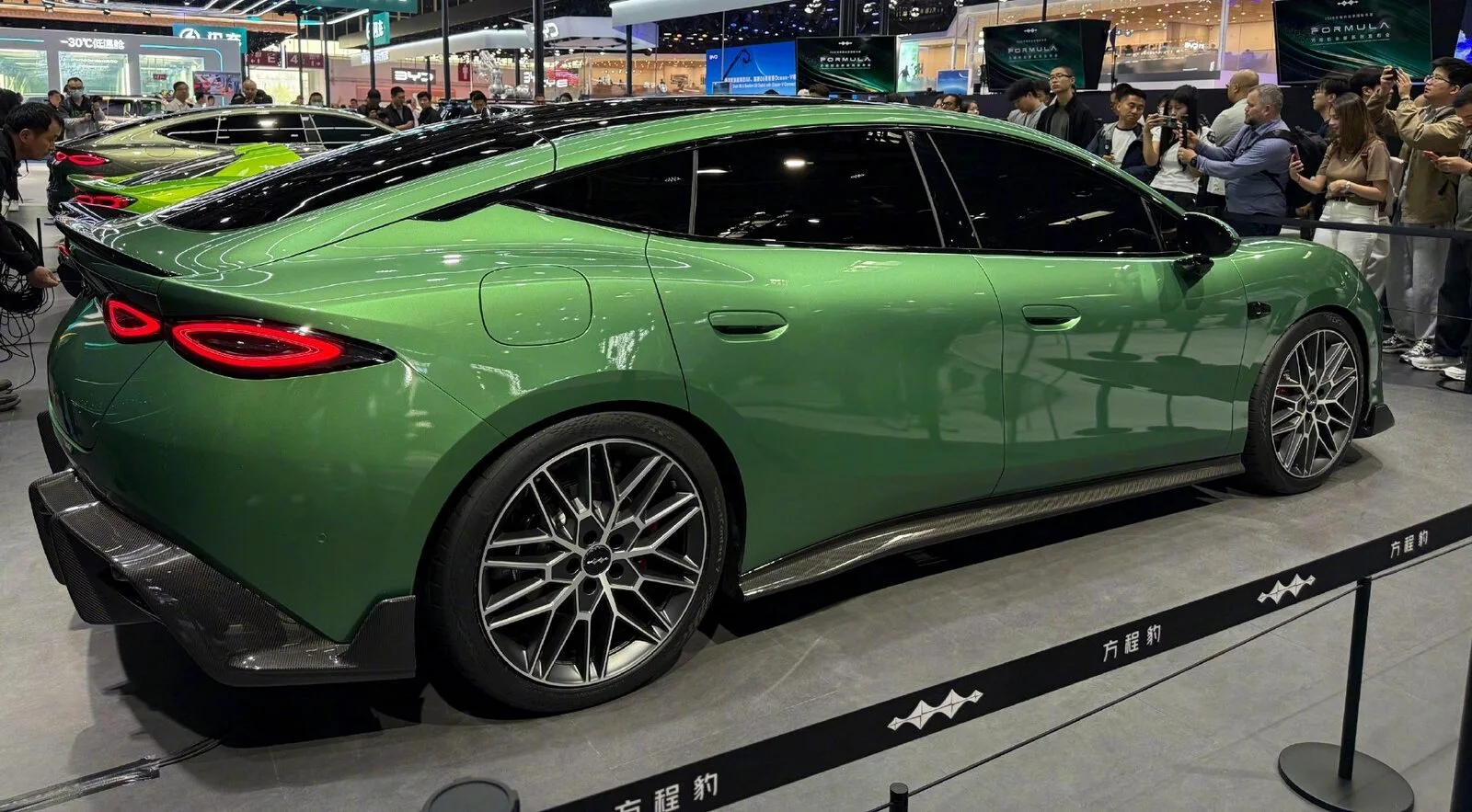
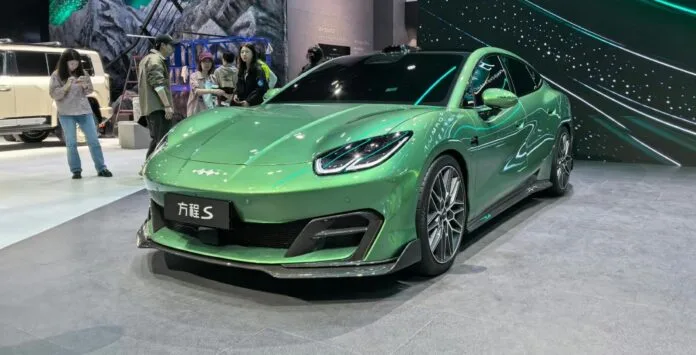
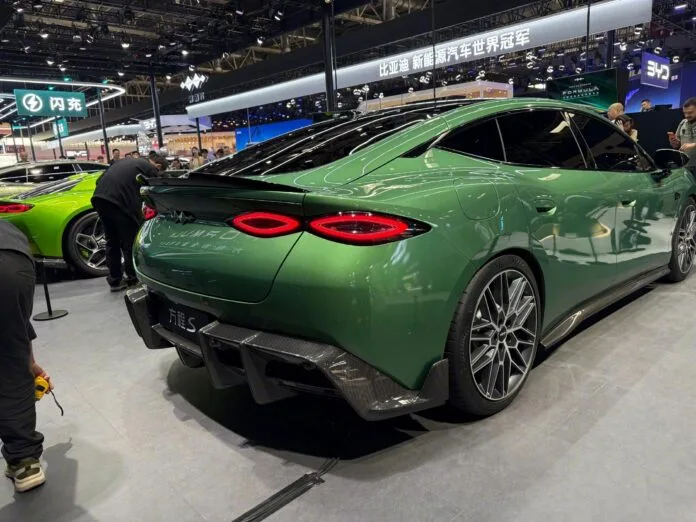
Visually, the Formula S is a departure from the boxy, upright silhouettes we’ve come to expect from the brand. It is an exercise in extreme aerodynamics, looking every bit like a high-speed projectile.
Dezvăluire Exclusivă: Prima Imagine Oficială a Noului Skoda Octavia Facelift
Proportions and Stance
Measuring over 5 meters in length and featuring a staggering 3.1-meter wheelbase, the Formula S possesses the “long and low” proportions of a classic grand tourer.
-
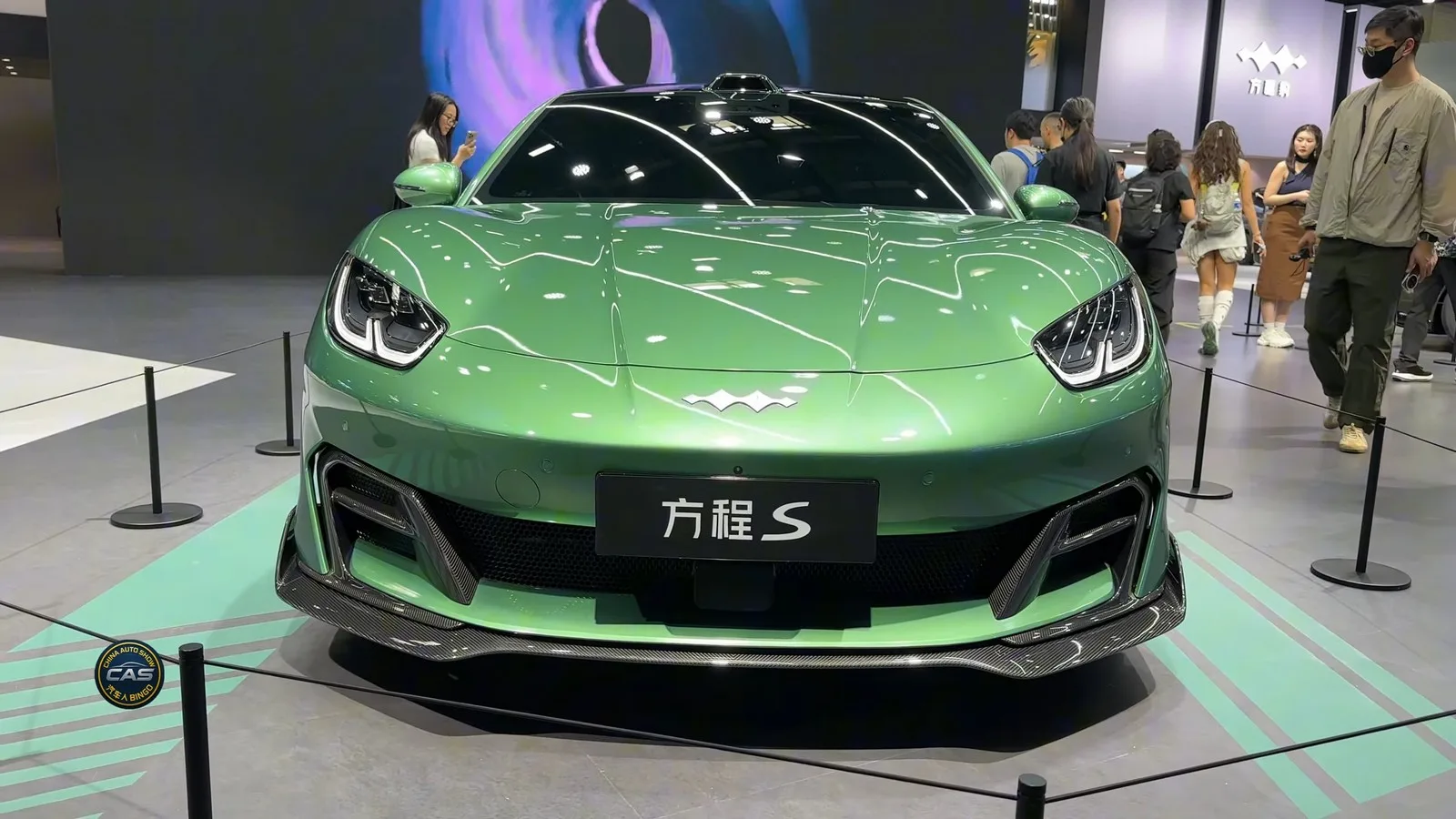
The Front End: The face of the Formula S is defined by aggressive, “frowning” LED headlight signatures that give the car a predatory look. Massive functional air curtains are integrated into the lower fascia to channel air around the front wheels and cool the high-performance braking system.
-
The Silhouette: From the side, the car features a “fastback” roofline that flows seamlessly into a short, muscular rear deck. Flush door handles and mirror-less camera systems (in markets where legal) contribute to a drag coefficient that is rumored to be among the lowest in the industry.
-
The Rear: A full-width light bar with a complex internal “matrix” pattern provides a futuristic light signature. An active rear diffuser and a deployable spoiler adjust their positions based on speed, ensuring the car remains glued to the road at high velocities.
LiDAR Integration
Eagle-eyed observers will notice a subtle “bump” at the top of the windshield. This is the LiDAR housing, which, combined with several high-resolution cameras and millimeter-wave radars, forms the backbone of the car’s autonomous driving and safety suites. Unlike many brands that try to hide their sensors, Fang Cheng Bao has integrated the LiDAR into a design element that looks like a miniature air scoop, blending tech with aesthetics.
BMW Prezintă Jocuri în Mașină, Parcare cu Valet Automatizat și Alte Tehnologii Noi la CES.
3. The Power of 1,000: Tri-Motor Performance
The headline figure for the Formula S is, without a doubt, the power output. Utilizing BYD’s latest evolution of the e4 platform technology, the sedan features a Tri-Motor All-Wheel Drive system.
Drivetrain Architecture
The configuration likely consists of one motor on the front axle and two independent motors on the rear. This setup allows for Active Torque Vectoring of the highest order. By precisely controlling the power to each rear wheel, the car can “rotate” through corners with agility that belies its 5-meter length.
-
Total Output: 735 kW (equivalent to 1,000 HP).
-
Acceleration: While official 0-100 km/h times are still under wraps, insiders suggest a figure in the 2.1 to 2.3-second range, placing it firmly in the “hyper-sedan” category.
-
Top Speed: To compete with the Europeans, the Formula S is expected to have a top speed electronically limited to 280 km/h (174 mph), or potentially higher with a “Track Pack” option.
800V Architecture and Flash-Charge
Power is nothing without the ability to manage it. The Formula S is built on a modern 800-Volt high-voltage platform. This high-voltage system reduces heat build-up during intense performance driving and enables “Flash-Charge” technology.
-
Charging Speed: While specific kilowatt ratings haven’t been finalized, the target is clear: adding 300 km of range in roughly 10-12 minutes. For a car designed for long-distance grand touring, this charging speed is a critical convenience factor.
4. DiSus-M: Magnetorheological Mastery
One of the most impressive technical features of the Formula S is its suspension system. Drawing from BYD’s high-end chassis tech, the Formula S uses DiSus-M.
The “M” stands for Magnetorheological, referring to the dampers’ ability to change their stiffness almost instantaneously. These dampers contain a specialized fluid with metallic particles that react to a magnetic field.
-
Reactive Handling: Sensors read the road surface and the driver’s steering inputs thousands of times per second. If the car detects a sharp turn, the magnetic field is increased, “stiffening” the dampers to prevent body roll.
-
The Best of Both Worlds: In “Comfort” mode, the system allows the Formula S to glide over imperfections like a luxury limousine. In “Race” or “Drift” mode, the suspension becomes rock-hard, providing the feedback and stability required for track work.
5. The “Battle Cockpit”: Gaming Meets Luxury
Step inside the Formula S, and the atmosphere changes from “sleek executive” to “high-tech fighter jet.” Fang Cheng Bao calls this layout the “Battle Cockpit.”
User Interface (UI)
The dashboard is dominated by a massive, high-definition central touchscreen that can pivot between landscape and portrait orientations—a signature BYD feature. However, unlike the “screen-only” approach of Tesla, the Formula S retains a row of tactile, physical switches on the center console. These “Toggle Switches” control critical functions like drive modes, hazard lights, and climate shortcuts, providing a satisfying, mechanical feel that performance drivers appreciate.
Interior Features
-
Sports Seats: The front seats are aggressive buckets with integrated headrests and active side bolsters that “pinch” the driver during cornering to provide extra support.
-
High-End Materials: The cabin is a mix of Alcantara, matte carbon fiber, and sustainably sourced Nappa leather. The contrast stitching matches the exterior accents, creating a cohesive design language.
-
Driver HUD: A massive Augmented Reality Head-Up Display (AR-HUD) projects navigation arrows and performance data (like G-forces and lap times) directly onto the windshield, allowing the driver to keep their eyes on the road.
6. Smart Tech: “God’s Eye” and Beyond
BYD has been investing heavily in autonomous driving software, and the Formula S is the recipient of the latest version of the “God’s Eye” (DiPilot) system.
Thanks to the LiDAR and the massive onboard computing power (likely utilizing high-TOPS NVIDIA or in-house chips), the Formula S is capable of:
-
City Navigation Pilot: Negotiating complex urban intersections and traffic lights with minimal driver intervention.
-
High-Speed Highway Assist: Automated lane changes, merging, and distance keeping at speeds up to 130 km/h.
-
Precision Parking: The car can remember “home” parking routes and execute them flawlessly, even in tight underground garages.
7. Technical Specifications: Formula S vs. The Elite
| Feature | BYD Formula S | Porsche Taycan Turbo GT | Tesla Model S Plaid |
| Max Power | 1,000 HP | 1,034 HP (Attack Mode) | 1,020 HP |
| Architecture | 800V | 800V | 400V (standard) |
| Drivetrain | Tri-Motor AWD | Dual-Motor AWD | Tri-Motor AWD |
| Wheelbase | 3.1 m | 2.9 m | 2.96 m |
| Suspension | DiSus-M (MR) | Active Ride | Air Suspension |
| Assistance | LiDAR + God’s Eye | Camera-based | Vision-based (FSD) |
8. Market Context and Global Ambitions
The Formula S is scheduled for its official market launch in China in Q3 2026. While the initial focus is on the domestic market, the rumors of international expansion are loud.
The “Denza” Connection
Industry analysts suggest that if the Formula S comes to Europe or North America, it might do so under the Denza brand name. Denza (originally a joint venture between BYD and Mercedes-Benz) is positioned as BYD’s “global premium” brand. Re-badging the Formula S as a Denza would allow it to leverage existing premium service networks and a brand identity that European customers are becoming more familiar with.
Pricing Strategy
Expect the Formula S to follow the classic BYD playbook: European-beating performance at a significantly more competitive price point. While a fully loaded Taycan Turbo GT can easily exceed €240,000, the Formula S is expected to launch in China with a price tag that, when converted, would sit closer to the €90,000 – €110,000 mark. For many, a 1,000 HP sedan with a 3.1-meter wheelbase and a carbon-fiber-clad interior for half the price of a Porsche will be an irresistible proposition.
9. Conclusion: The Leopard Learns to Sprint
The BYD Fang Cheng Bao Formula S is more than just another electric sedan. It is a declaration of war. By entering the performance sedan segment with such high specifications, BYD is proving that they have mastered the core pillars of the modern EV: Battery chemistry, motor efficiency, and software integration.
By adding “driving dynamics” (via the DiSus-M system) to that list, they are removing the last remaining advantage held by traditional luxury manufacturers. The Formula S is a machine that looks to the future while respecting the driver’s need for physical control and emotional engagement.
When it hits the streets in late 2026, the electric performance landscape will look very different. The “Leopard” has left the woods and is now stalking the Autobahn.
Source: Fang Cheng Bao Formula S greift Porsche Taycan und Tesla Model S an
✍️ Author: Bejenaru Alexandru Ionut – [email protected]
🔗 Internal link: https://diagnozabam.ro/sfaturi

Recommendation: Looking for a professional bi-directional diagnostic tool with full system coverage? Use code DIAGNOZABAM for 10% off.
Transparency note: Affiliate link. Purchasing through it costs you nothing extra. View Thinkcar Deal →
