
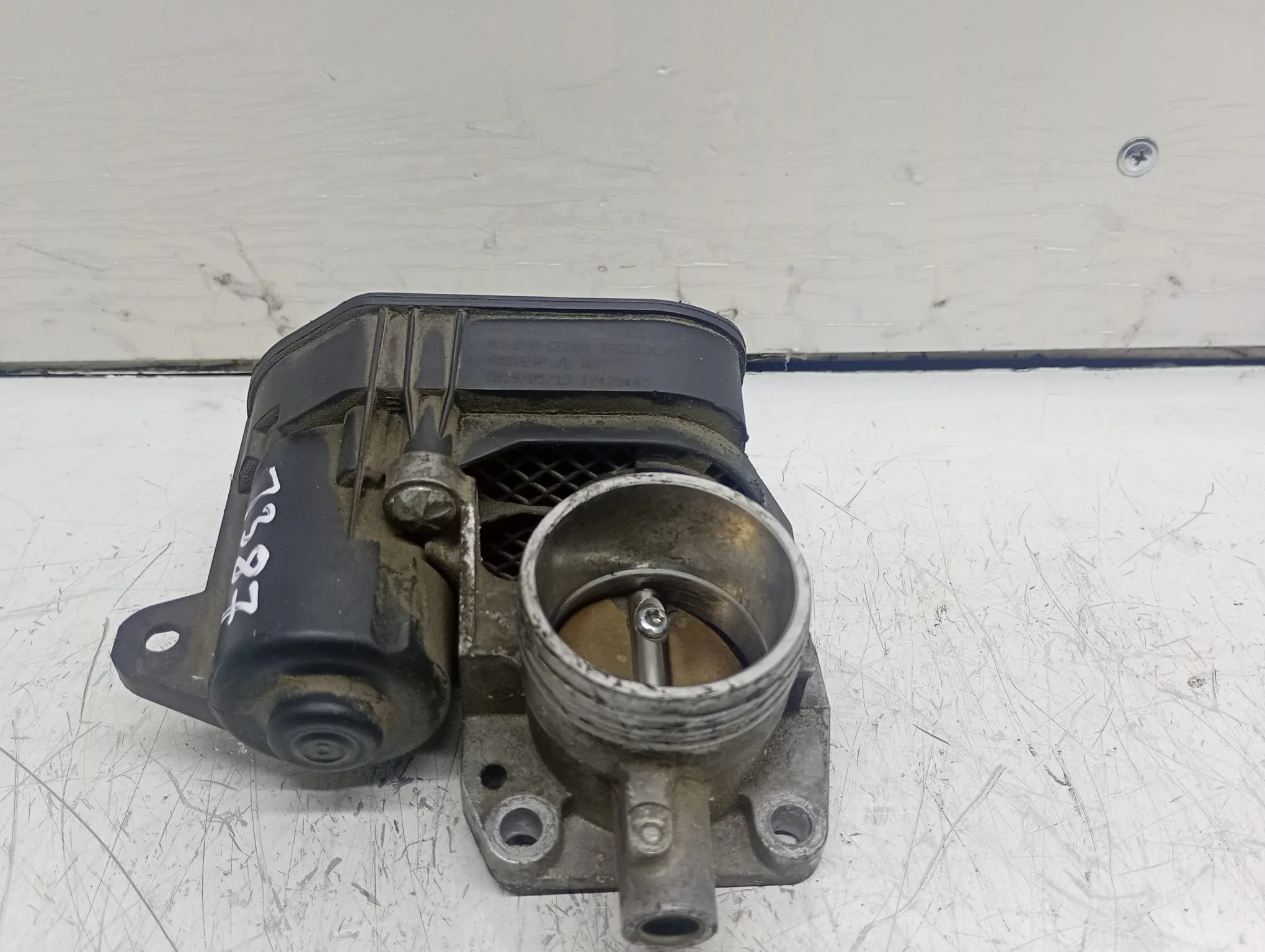
What Is a Throttle Body and Why It Matters More Than You Think
The throttle body is a critical component in modern engines, responsible for controlling the amount of air entering the intake system. This directly affects:
- engine power
- fuel consumption
- idle stability
- throttle response
In modern vehicles, the throttle body is electronically controlled (drive-by-wire) by the ECU, meaning there is no mechanical cable between the pedal and the engine.
When it starts to fail, the symptoms are often subtle at first — but ignoring them can lead to serious engine issues.
Top Symptoms of a Failing Throttle Body
These are the most common real-world signs drivers experience:
1. Delayed or Jerky Acceleration
You press the accelerator and notice:
- hesitation
- slow response
- inconsistent power delivery
This is often caused by incorrect air intake control.
2. Unstable Idle (RPM Fluctuations)
The engine may:
- rev up and down on its own
- feel rough at idle
- struggle to stay running
This is one of the earliest warning signs.
3. Engine Stalling at Low Speeds
The engine may shut off when:
- stopping at traffic lights
- slowing down
- idling
This happens when the throttle body fails to regulate airflow properly.
4. Increased Fuel Consumption
An incorrect air-fuel mixture forces the ECU to compensate, leading to:
- higher fuel usage
- inefficient combustion
5. Check Engine Light (CEL)
Common related OBD2 codes include:
- P0120 – P0123 (Throttle Position Sensor faults)
- P2111 / P2112 (Throttle stuck open/closed)
- P0068 (Airflow correlation issue)
6. Limp Mode Activation
In severe cases, the vehicle may:
- lose power
- limit acceleration
- enter safety mode
This is a protective strategy triggered by the ECU.
Real Causes of Throttle Body Failure
Understanding the cause is key to avoiding unnecessary part replacement.
Carbon Buildup (Most Common Cause)
Over time, deposits form inside the throttle body due to:
- oil vapors from PCV system
- exhaust gas recirculation (EGR)
- dust and intake contaminants
This restricts airflow and causes sticking.
Faulty Throttle Position Sensor (TPS)
The ECU relies on this sensor to determine throttle angle.
If it fails:
- incorrect data is sent
- throttle response becomes erratic
Electronic Motor Failure
Electronic throttle bodies contain an internal motor.
If it fails:
- throttle plate may stick
- response becomes inconsistent or stops completely
Wiring or Connector Issues
Electrical problems can include:
- damaged wiring
- corroded connectors
- poor grounding
Lost Throttle Adaptation
Very common after:
- battery replacement
- throttle cleaning
- ECU reset
The throttle body must be recalibrated.
How Serious Is a Throttle Body Problem?
Short answer: moderate to severe.
You may still drive the vehicle, but risks include:
- unexpected engine stalling
- increased fuel consumption
- poor performance
- cascading faults in related systems (MAF, MAP, EGR)
Ignoring the issue can lead to more expensive repairs.
Proper Diagnosis (What Most People Get Wrong)
Replacing the throttle body without diagnosis is a common mistake.
Correct diagnostic steps:
- Scan with an OBD2 diagnostic tool
- Check live data (throttle position, airflow)
- Inspect throttle body for deposits
- Test TPS voltage signals
- Verify ECU control commands
- Perform throttle adaptation
In many cases, the issue is not the part itself.
How to Fix Throttle Body Problems
Step 1: Clean the Throttle Body
Use a dedicated throttle body cleaner.
Important:
- do not use aggressive tools
- avoid damaging the coating
This solves a large percentage of cases.
Step 2: Perform Throttle Relearn / Adaptation
This is critical after cleaning or battery disconnect.
Methods:
- diagnostic tool (recommended)
- manual procedure (vehicle-specific)
Step 3: Repair Wiring or Connectors
Check and fix:
- broken wires
- loose connections
- oxidation
Step 4: Replace the Throttle Body (If Necessary)
Only after confirming failure.
Symptoms that justify replacement:
- no response
- internal motor failure
- persistent fault codes after all checks
Cost of Repair (Realistic Expectations)
Typical ranges:
- Cleaning: low cost
- Adaptation: minimal or included in diagnosis
- Throttle body replacement: moderate cost (varies by vehicle)
Most drivers overpay because the problem is misdiagnosed.
FAQ – Throttle Body Issues
Can I drive with a bad throttle body?
Yes, but it is not recommended long-term. The engine may stall unexpectedly.
Can a dirty throttle body cause limp mode?
Yes. Severe airflow restriction can trigger safety mode.
Does cleaning always fix the issue?
No, but it works in a significant number of cases.
Can a bad throttle body damage the engine?
Indirectly, yes — through poor combustion and unstable operation.
Conclusion
Throttle body problems are among the most commonly misdiagnosed engine issues. Many drivers replace expensive parts unnecessarily, when a simple cleaning or recalibration would solve the problem.
Understanding the symptoms early can save both money and prevent more serious damage.
✍️ Author: Bejenaru Alexandru Ionut – [email protected]
🔗 Internal link: https://diagnozabam.ro/sfaturi

Recommendation: Looking for a professional bi-directional diagnostic tool with full system coverage? Use code DIAGNOZABAM for 10% off.
Transparency note: Affiliate link. Purchasing through it costs you nothing extra. View Thinkcar Deal →