
The Unfinished Legacy of Munich’s Only Supercar
For decades, the phrase “BMW supercar” has remained a frustrating paradox for automotive purists. While rivals in Stuttgart, Maranello, and Affalterbach routinely field dedicated flagship performance halos, Munich has largely focused its legendary ‘M’ division on transforming production sedans and coupes into track-capable machinery. Yet, the ghost of the original 1978 BMW M1—the mid-engine, fiberglass-bodied masterpiece designed by Giorgetto Giugiaro—continues to haunt the halls of the company’s design studios.
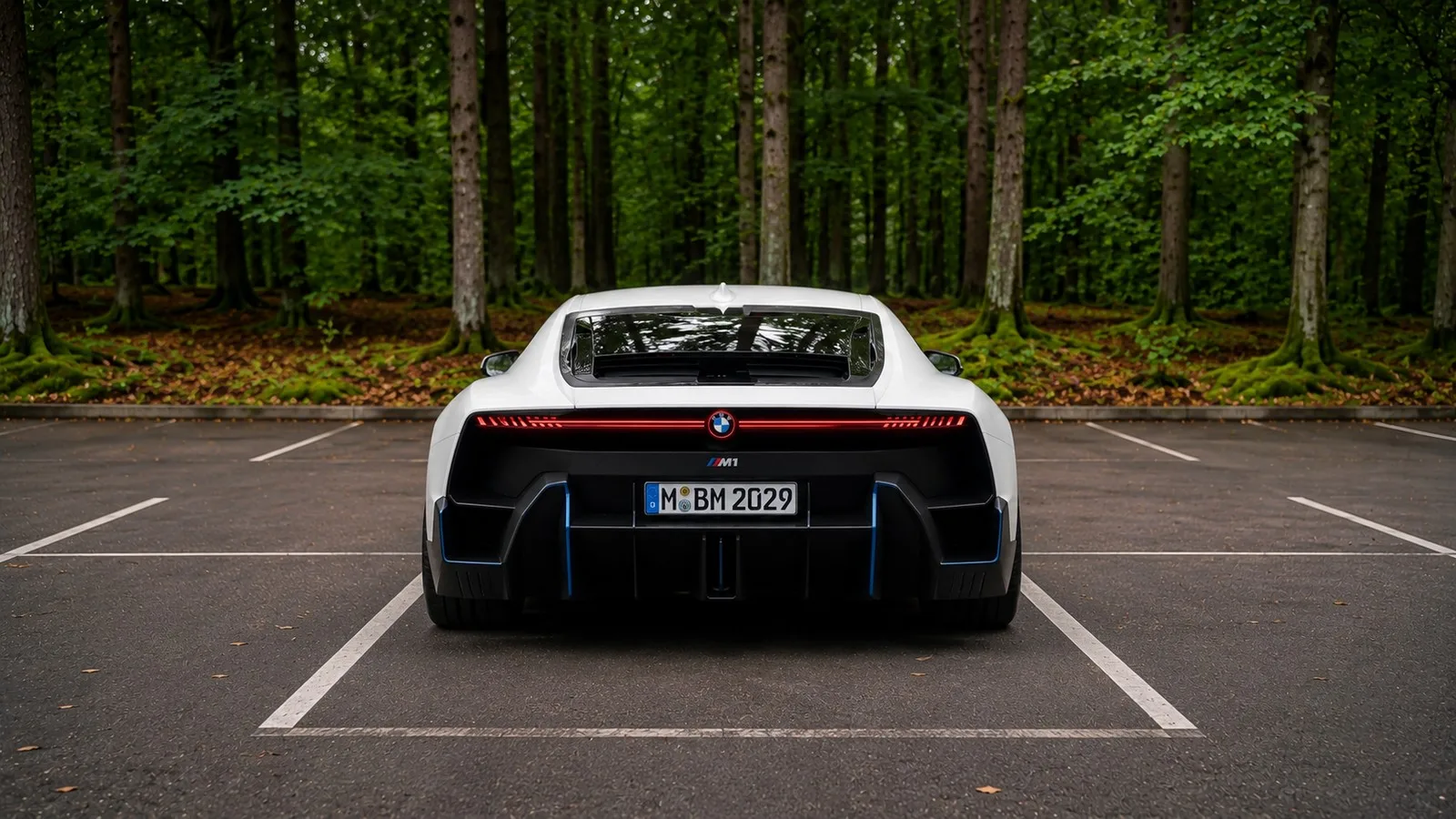
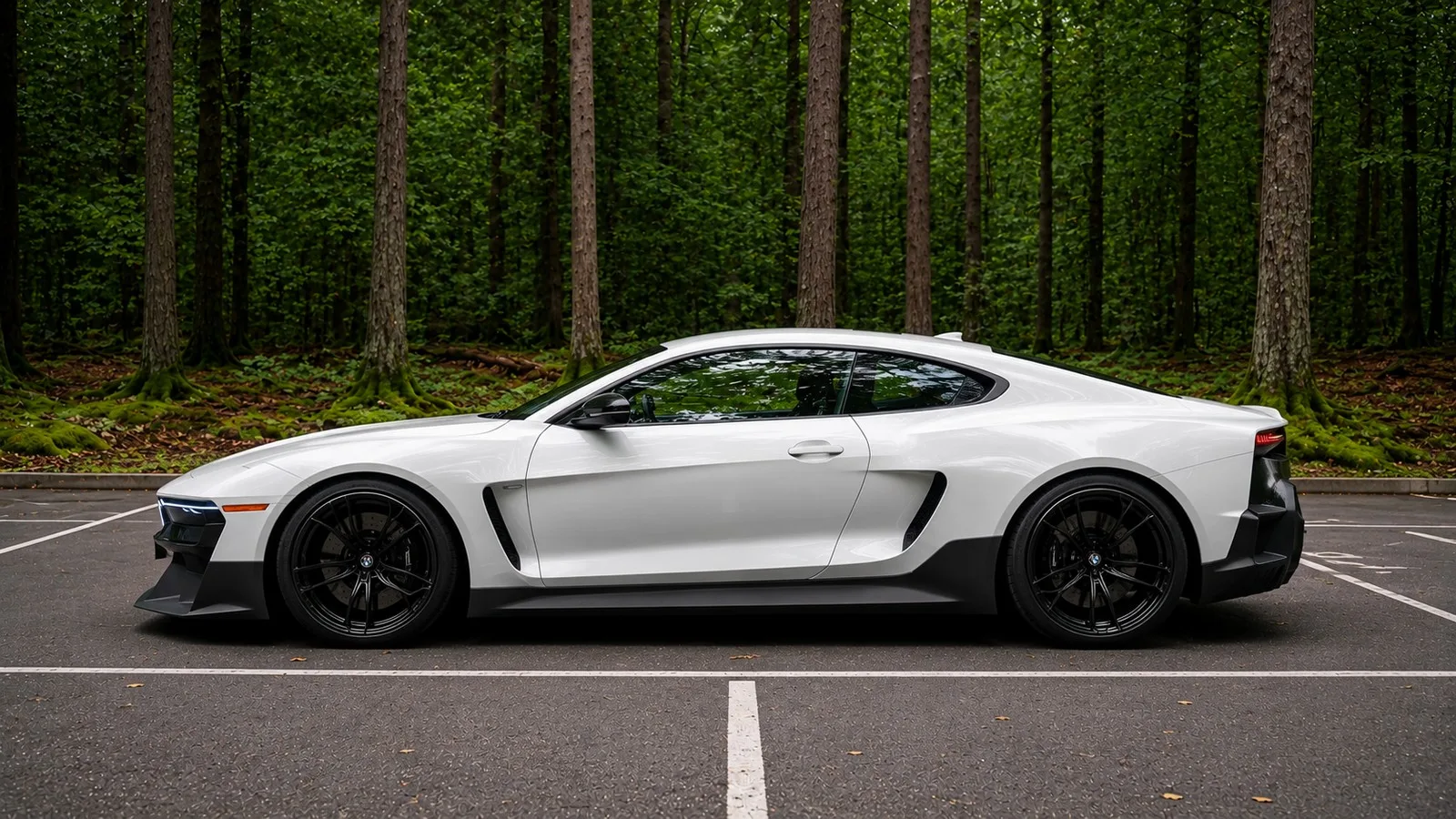
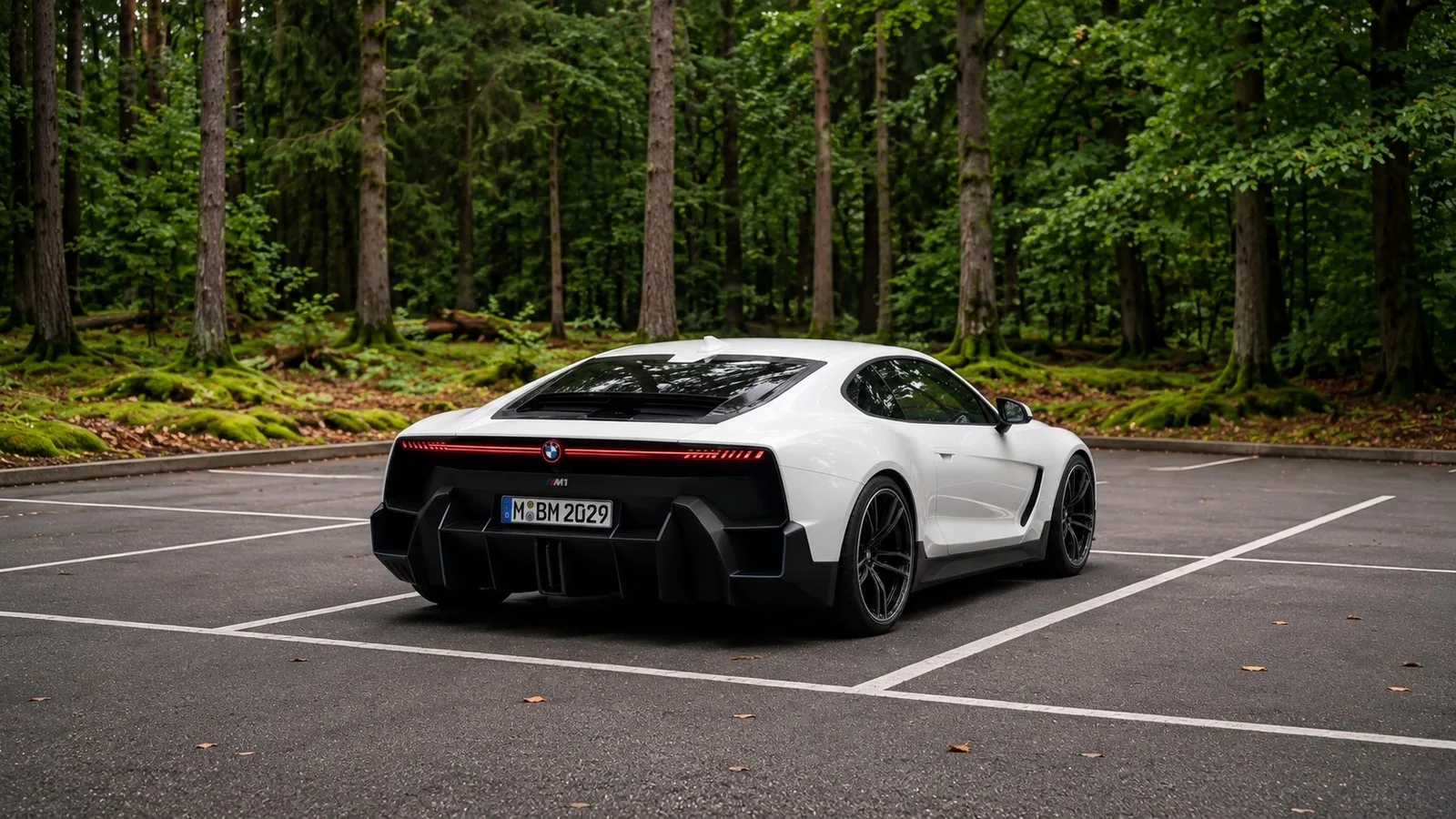
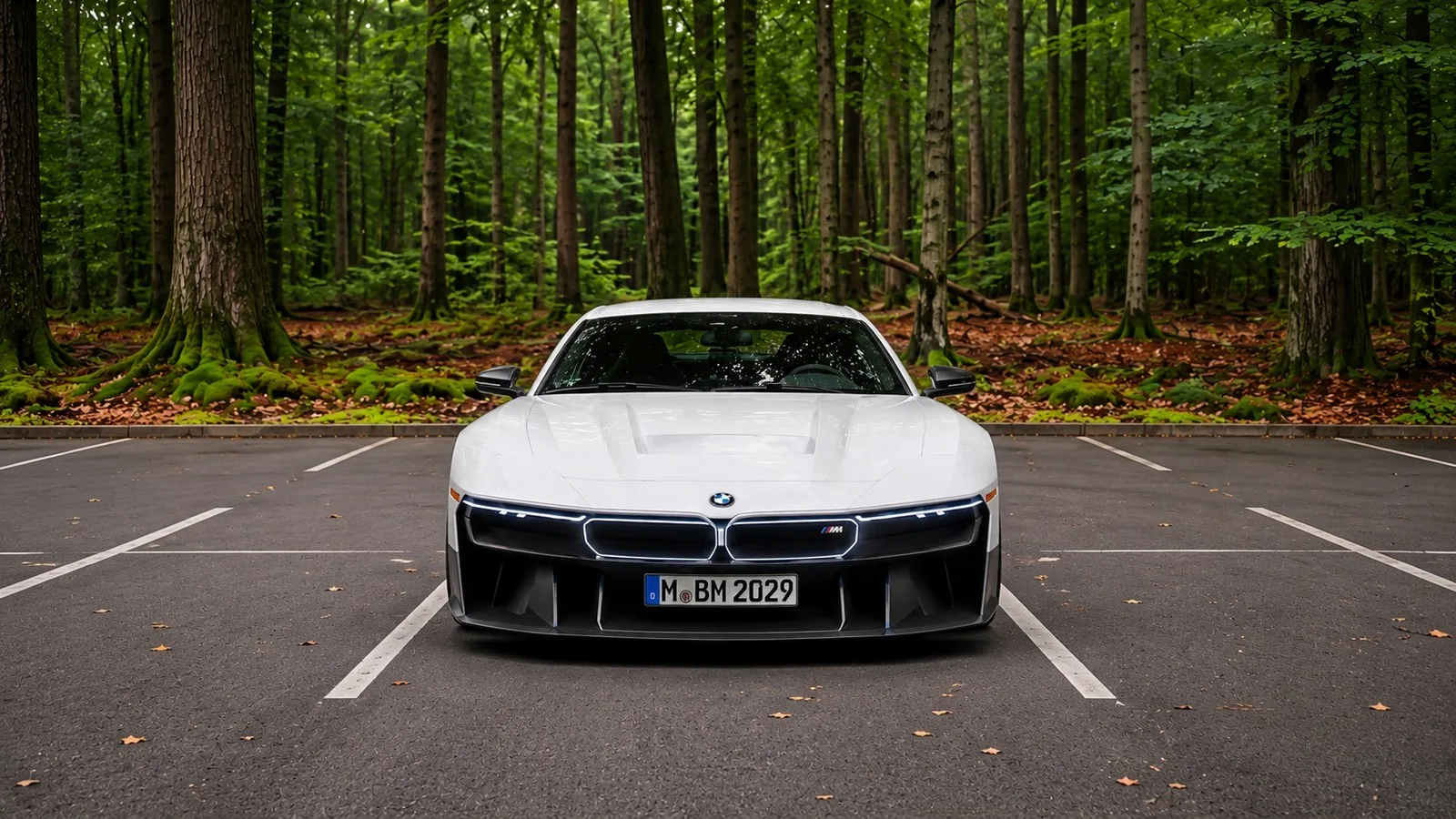
A new independent modern BMW M1 design study has surfaced, capturing the imagination of petrolheads globally. Explicitly categorized as a non-official, creative interpretation rather than a factory-vetted prototype, this digital concept attempts to solve a complex engineering and stylistic equation: how to seamlessly fuse the classic, low-slung wedge proportions of the original M1 with a hyper-aggressive, aerodynamically optimized contemporary design language.
Stylistic Architecture: Wedge DNA Meets Fluid Dynamics
The structural silhouette of this modern BMW M1 concept immediately establishes its mid-engine architecture. By placing the heavy powertrain behind the cabin but ahead of the rear axle, the vehicle achieves the quintessential cab-forward profile that defines elite hypercars.
+-------------------------------------------------------------------+
|               MODERN BMW M1 STRUCTURAL SILHOUETTE                |
+-------------------------------------------------------------------+
| [Ultra-Low Nose] ---> [Cab-Forward Greenhouse] ---> [Elongated Tail] |
|        |                       |                         |        |
|        v                       v                         v        v
| Ground-Effect Inlets     Low Center of Gravity      Massive Diffuser
+-------------------------------------------------------------------+
Key design highlights of the exterior architecture include:
-
The Aggressive Front Fascia: Moving away from the controversial, vertically elongated grilles seen on several current production models, the M1 study features an ultra-flat nose. The iconic kidney grille is re-imagined as a functional, wide horizontal intake designed to feed cooling ducts rather than act as a massive styling piece.
-
Widebody Stance and Flared Arches: The track width has been significantly increased compared to standard sports cars. Muscular, flared wheel arches house wide performance rubber, visually anchoring the vehicle to the tarmac.
-
Continuous Rear LED Light Bar: The rear treatment skips traditional individual clusters in favor of a sleek, singular continuous light strip that spans the entire width of the tail. Beneath this minimal lighting element sits a monumental rear diffuser designed to generate massive venturi-effect downforce.
Executive Backing: The Internal Dream at BMW M
What elevates this design study beyond a typical piece of internet fan art is the fact that BMW’s own leadership openly shares this exact sentiment. Frank van Meel, the CEO of BMW M, has repeatedly gone on record stating his deep admiration for the original M1, noting that he would seize any viable corporate opportunity to bring a true modern successor to fruition.
Similarly, BMW M’s Head of Design, Oliver Heilmer, has revealed that his design department routinely sketches and models modern supercar concepts on their own initiative. The primary obstacles holding the project back are not a lack of vision or passion, but rather the hard realities of corporate resource allocation, production capacities, and finding the perfect strategic window within the global BMW Group roadmap.
Historical Near-Misses: From Vision M Next to Pandemic Cuts
This is not the first time Munich has flirted with a mid-engine rebirth. The company has come tantalizingly close to greenlighting a production supercar on multiple occasions over the past decade:
-
The Vision M Next Concept (2019): This angular, futuristic plug-in hybrid concept was widely understood to be a direct spiritual successor to both the M1 and the innovative i8. It paired a turbocharged four-cylinder engine with powerful electric motors.
-
The Production Cancellation: Originally destined for a limited production run, the project was abruptly canceled. The immense development costs required to bring a bespoke structural carbon fiber tub to market, combined with the severe financial uncertainties brought on by the global COVID-19 pandemic, forced executives to shelve the plans.
-
The 1,200 HP EV Rumors: In the years following, rumors circulated regarding a quad-motor, fully electric hypercar pushing past the 1,200 horsepower barrier. However, BMW ultimately backed away from this concept as well, noticing that the global market segment for ultra-expensive, heavyweight electric sports cars was cooling down significantly.
The Path Forward: A Limited Collector’s Model Framework
Despite these setbacks, the dream of a modern BMW M1 remains structurally viable, thanks to a shifts in low-volume manufacturing strategies. Following the successful launch of highly exclusive, coachbuilt specials like the modern BMW 3.0 CSL, internal whispers suggest that an ultra-limited M-exclusive collectors’ model may already be approved behind closed doors.
Potential Engineering Architecture for a Modern M1
If a limited-run collector’s hypercar were to transition from digital renders to physical reality, its technical blueprint would likely favor raw mechanical emotion over sterile electric efficiency:
| Engineering Metric | Theoretical Configuration Spec | Expected Performance Target |
| Chassis Composition | Carbon Fiber Monocoque with Aluminum Subframes | High Torsional Rigidity / Low Mass |
| Powertrain Layout | Longitudinal Mid-Mounted Twin-Turbocharged V8 | High-Revving Emotional Soundscape |
| Hybrid Assistance | Compact High-Voltage Axial-Flux E-Motor | Instantaneous Torque Filling |
| Target System Output | Combined Internal Combustion + Electric | 1,000+ Horsepower |
| Aero Management | Active Rear Wing & Venturi Diffuser Tunnels | Extreme High-Speed Downforce |
| Suspension Geometry | Pushrod-Actuated Double Wishbone Setup | Race-Derived Kinematics |
ℹ️ Technical Note: A limited-production run allows engineers to bypass the massive capital expenditure required to set up high-volume automated assembly lines. By utilizing hand-laid carbon fiber pre-preg and curing the chassis components inside low-volume industrial autoclaves, BMW could profitably build a vehicle of this caliber even with production capped at a few hundred units worldwide.
Conclusion: Emotion Over Electrification
By intentionally depicting a traditional, raw mid-engine sports car with classic wedge proportions rather than an oversized electric crossover, this design study strikes a chord with enthusiasts. It serves as a reminder that true automotive flagships are built on heritage, acoustic drama, and visceral driving dynamics. Whether through a surprise low-volume collector series or a future technological breakthrough, the world is waiting for Munich to finally unleash its next true supercar.
Source: BMW M1 der Zukunft: So könnte der legendäre Supersportler zurückkehren!
✍️ Author: Bejenaru Alexandru Ionut – [email protected]
🔗 Internal link: https://diagnozabam.ro/sfaturi

Recommendation: Looking for a professional bi-directional diagnostic tool with full system coverage? Use code DIAGNOZABAM for 10% off.
Transparency note: Affiliate link. Purchasing through it costs you nothing extra. View Thinkcar Deal →