
The luxury SUV landscape is undergoing a massive structural transformation. Automotive manufacturers must continually balance heritage design language with aggressive emissions regulations. Modern platforms require complex electrification strategies. Legacy brands face the difficult challenge of updating iconic silhouettes without alienating loyal buyers. The current fifth-generation Land Rover Discovery (L462) has been in production since 2017. The model is now approaching the end of its typical production life cycle.
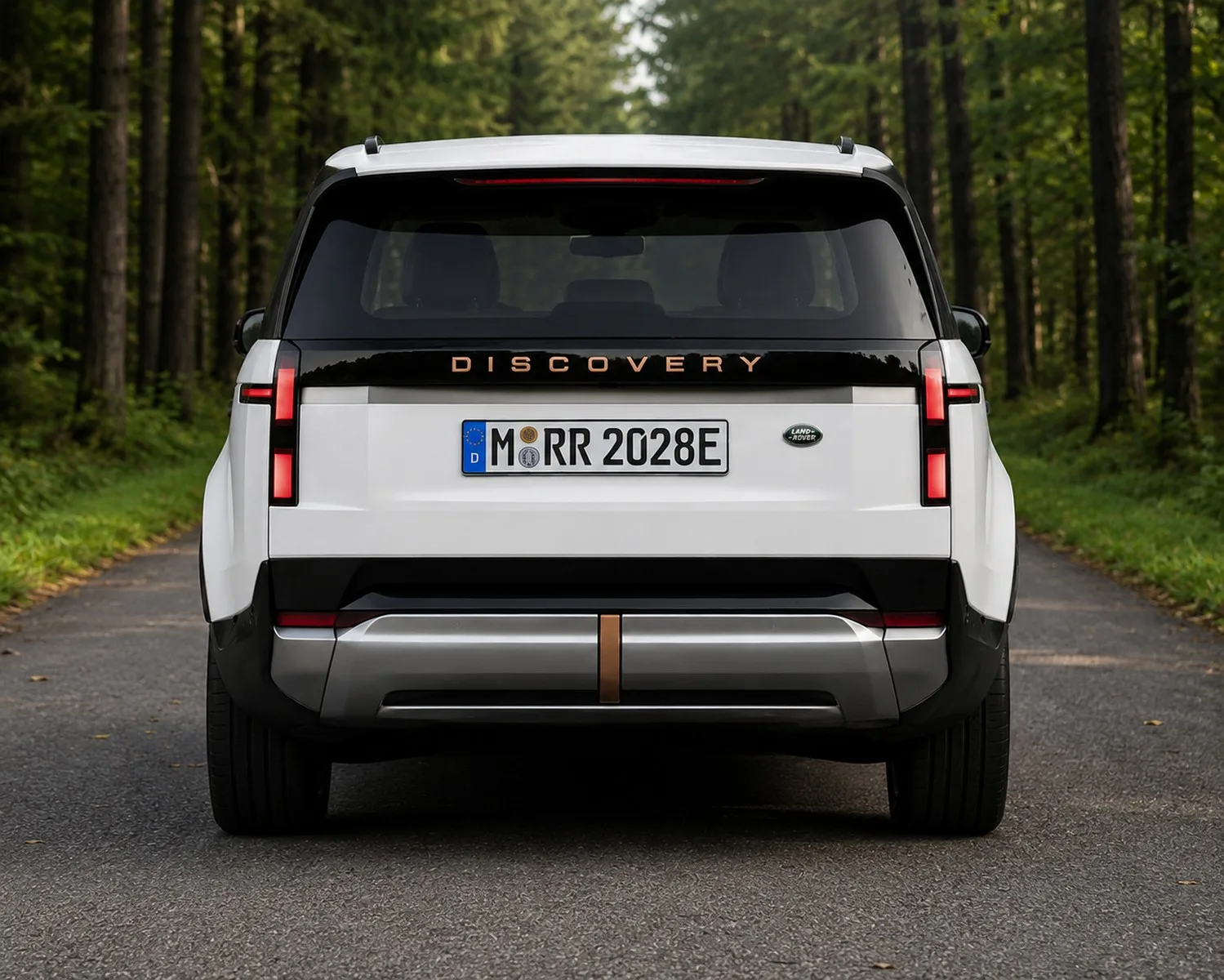
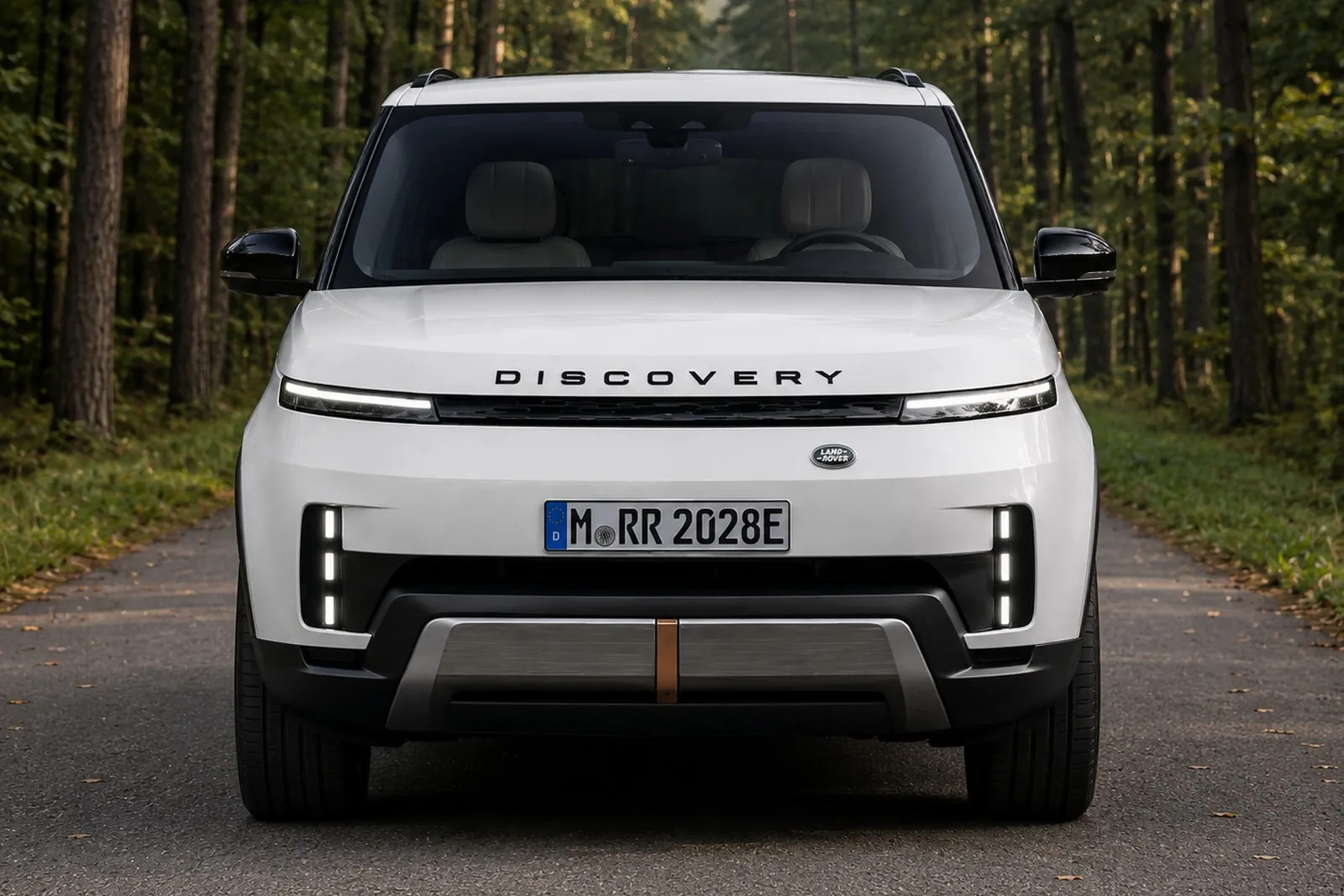
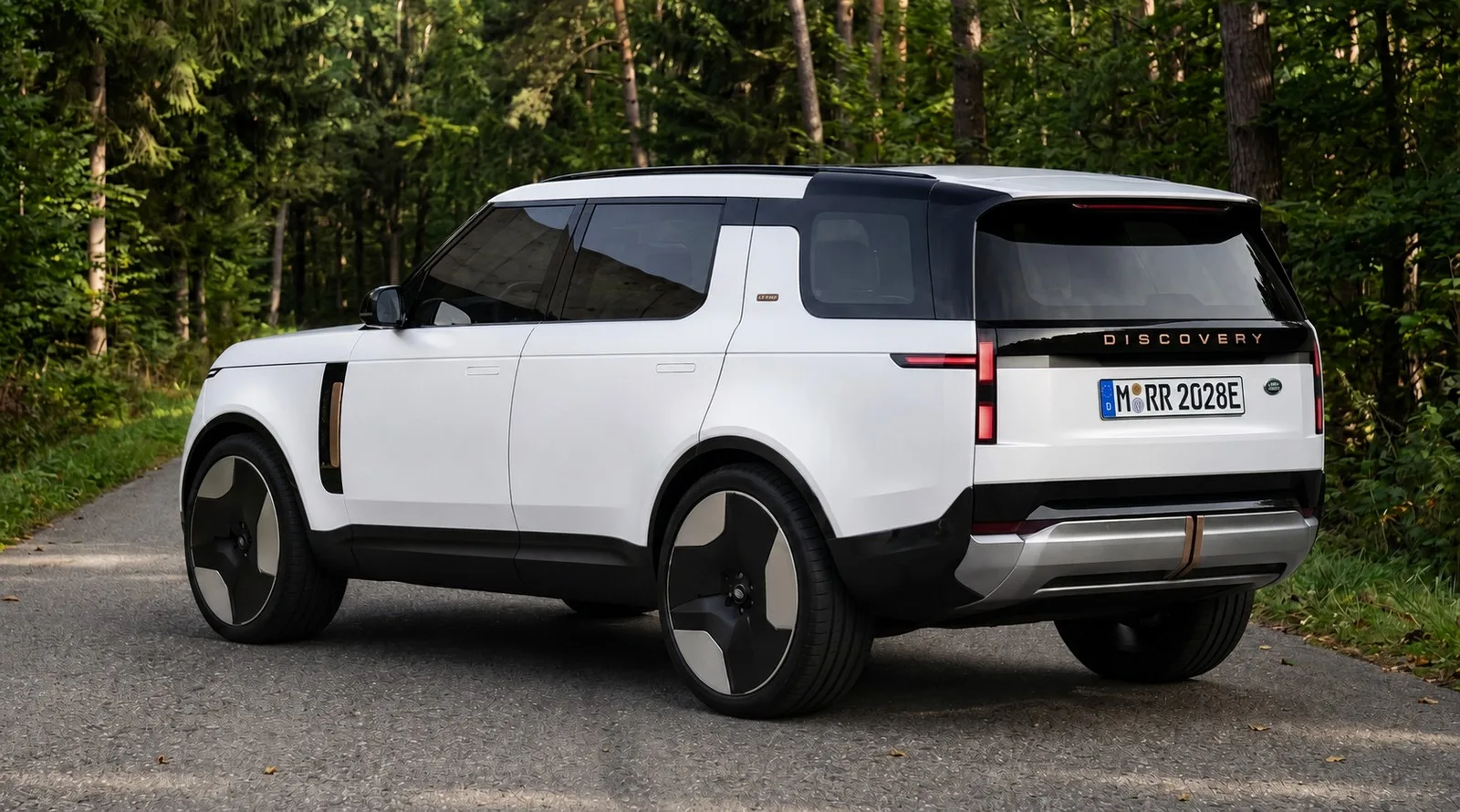
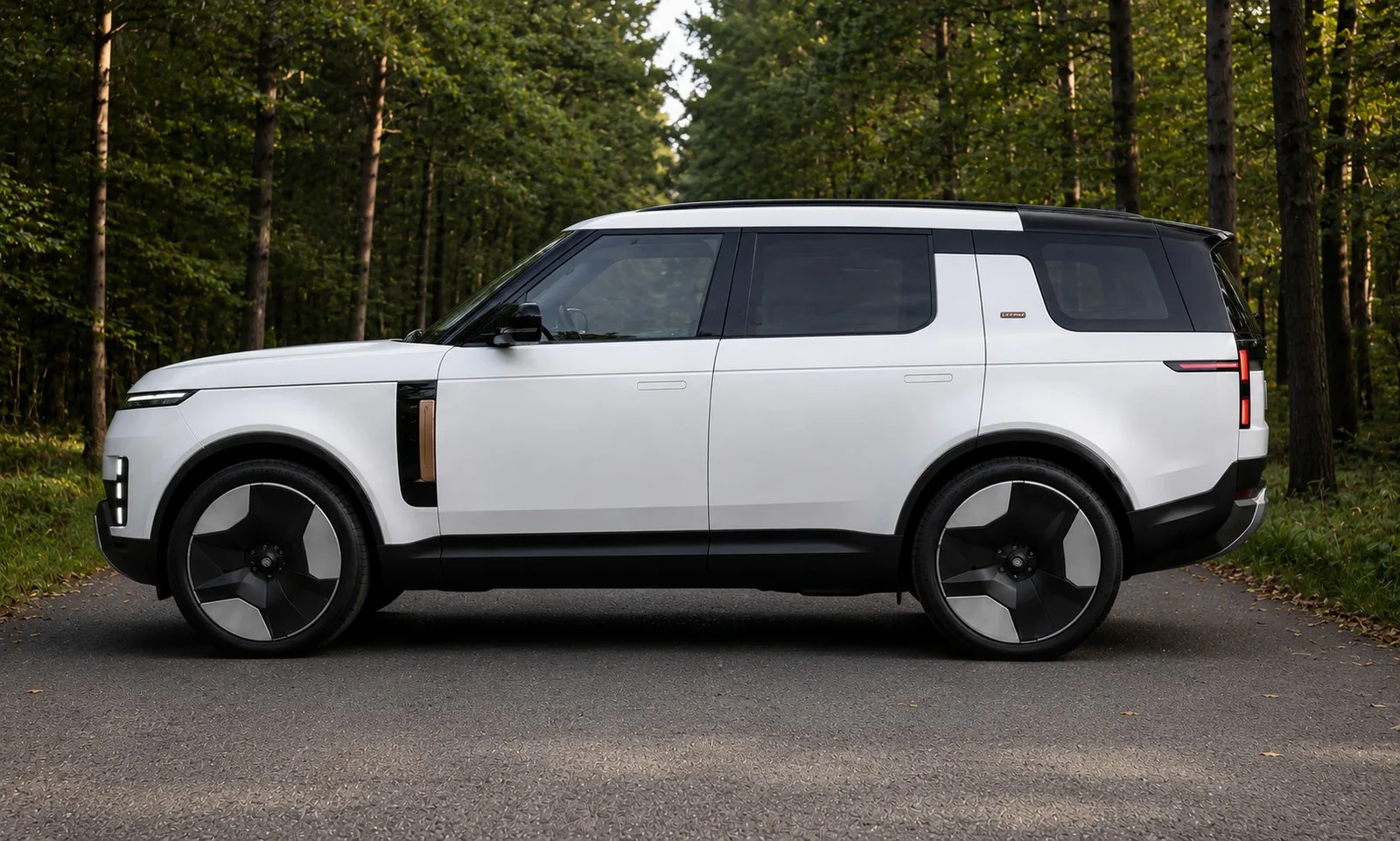
A new independent digital design study offers a vision for the sixth-generation model. The concept was developed by automotive designer Uygar under the digital moniker “uygarspots”. The rendering presents a comprehensive evolutionary design for the Land Rover Discovery 6. The project bridges traditional utility with modern, clean surfacing. Simultaneously, parent company Jaguar Land Rover (JLR) navigates complex corporate restructuring. The company faces strategic production partnerships, major safety recalls, and strict emissions compliance challenges across global markets.
1. Design Evolution: Refining the Discovery Silhouette
The fifth-generation Discovery introduced a controversial shift in 2017. It abandoned the boxy, body-on-frame architecture of its predecessors. Instead, it adopted a sleek, aluminum-intensive unibody layout. While engineering capability improved significantly, the vehicle’s rear-end styling divided brand enthusiasts. The asymmetrical rear license plate placement sparked widespread debate within the off-road community.
Designul viitorului BMW Seria 2 Coupe 2028 a fost dezvăluit!
The new digital study addresses these visual criticisms directly. The rendering applies a refined geometric philosophy. The front fascia adopts a significantly cleaner layout. The traditional mesh grille is replaced with a slim, horizontal intake aperture. Ultra-thin LED matrix headlight clusters integrate seamlessly into the front wings. Large, cluttered air scoops have been deleted. A clean lower bumper apron takes their place. This bumper design retains essential intercooler airflow while lowering aerodynamic drag.
Key Exterior Design Enhancements
-
Minimalist Surface Treatment: The side profile reduces visible panel shut-lines. Door handles sit completely flush with the sheet metal.
-
Vertical LED Tail Lamp Arrays: The controversial offset rear layout is replaced by ultra-narrow vertical lighting elements. These light bars extend deep into the rear haunches.
-
Proportional Stance: The concept maintains the signature stepped roofline. This feature preserves necessary headroom for third-row occupants.
-
Aerodynamic Wheel Arch Integration: Flared arches are flush-molded into the body panels. This design improves airflow around wide off-road tire fitments.
ℹ️ Technical Note: Modern SUV design requires strict aerodynamic drag management. High drag coefficients severely impact battery range in electrified powertrains. By smoothing body side transitions and applying flush door handles, total vehicle drag ($C_d$) can be reduced by up to 5 percent.
2. Platform Architecture and Electrification Strategy
The sixth-generation Land Rover Discovery must serve a dual purpose. It must accommodate conventional hybrid internal combustion engines. Simultaneously, it needs to support fully electric powertrains. The current D7u aluminum platform cannot efficiently house large high-voltage battery packs without sacrificing interior floor space.
                  ┌──────────────────────────────┐
                  │   Modular EMA / MLA Platform  │
                  └──────────────┬───────────────┘
                                 │
         ┌───────────────────────┴───────────────────────┐
         ▼                                               ▼
[Internal Combustion / PHEV]                    [Full Battery Electric (BEV)]
 ├── 800-Volt Electrical System                  ├── Dual-Motor All-Wheel Drive
 ├── Inline-6 Turbocharged Engine                ├── 100+ kWh Structural Battery
 └── Integrated Electric Flywheel                └── Torque Vectoring Axle Control
Industry developments indicate future Land Rover platforms will utilize flexible architecture scales. These architectures support an 800-volt electrical backbone. High-voltage systems enable rapid direct-current charging performance. They also reduce physical copper wiring harness mass throughout the vehicle chassis.
Drivetrain Configuration Comparison
| Component Parameter | Current Discovery L462 (Gen 5) | Project Discovery 6 (Target) |
| Chassis Structure | D7u Monocoque Aluminum | Modular EMA / MLA Flexible Platform |
| Electrical Architecture | 12V / 48V Mild-Hybrid System | 800V High-Voltage Infrastructure |
| Rear Lighting Layout | Asymmetrical Horizontal Assemblies | Symmetrical Vertical LED Matrices |
| Off-Road Suspension | Dual-Height Pneumatic Air Springs | Active Twin-Valve Air Damping |
| Wading Depth Capability | 900 mm Standard Rating | 950 mm Rated Capability |
The 800-volt infrastructure provides a critical operational advantage for heavy off-road vehicles. High-voltage systems generate less internal thermal resistance under heavy current draws. This thermal management is vital during extended low-speed rock crawling or continuous towing scenarios.
3. Macro Market Dynamics: JLR Corporate Restructuring and Stellantis Alliance
The visual evolution of the Discovery occurs against a backdrop of significant corporate shifts. Jaguar Land Rover has announced a strategic partnership with global automotive giant Stellantis. This alliance specifically targets the North American market.
               [Jaguar Land Rover Strategic Shift]
                                   │
         ┌─────────────────────────┴─────────────────────────┐
         ▼                                                   ▼
[North American Manufacturing]                     [Tariff Mitigation Strategy]
 - Partnership with Stellantis                - Local US Assembly Line
 - Shared Architecture Components                  - Bypasses Import Tariffs
 - US-Built Defender Variants                 - Stabilizes Vehicle Pricing
Strategic Implications of the Stellantis Alliance
-
Local North American Production: Land Rover plans to manufacture select Defender models directly inside the United States using Stellantis production facilities.
-
Tariff Bypass Mechanisms: Local production allows JLR to navigate import tariffs effectively. Imported European models face substantial customs duties.
-
Platform and Component Sharing: The partnership creates scale opportunities for heavy component sourcing. Electric drive units, structural stampings, and battery modules can be shared across brands.
-
Market Focus Realignment: JLR is deliberately shifting capital allocation toward North America. The company is scaling back direct market reliance on Eastern regions.
Building high-volume SUVs in North American plants stabilizes retail pricing. It protects gross profit margins from currency fluctuations. This financial insulation provides the capital necessary to fund long-term platform development for low-volume models like the Discovery 6.
4. Engineering Quality Control: The 250,000-Unit Airbag Recall
Product reliability and manufacturing quality control remain fundamental challenges for JLR. The automaker recently initiated a safety recall campaign impacting over 250,000 vehicles globally. The recall affects Discovery, Defender, and Range Rover models produced across multiple model years.
[Corrosion Susceptibility] ──► Clockspring Connector Terminals Oxidation
        │
        ▼
[Safety Impact]
 └── High Resistance Fault Signal ──► Airbag Fails to Deploy
        │
        ▼
[Remedial Service Action]
 └── Application of Fluorinated Protective Lubricant Gel
The Root Cause Mechanism
The safety recall stems from an electrical connectivity defect within the steering column assembly. The driver-side airbag clockspring connector terminals are susceptible to environmental moisture corrosion. Over time, surface oxidation builds up on the electrical pins. This oxidation increases electrical resistance across the firing circuit.
⚠️ WARNING: Increased electrical resistance in the clockspring circuit triggers a diagnostic fault code. In severe cases, the Supplemental Restraint System (SRS) control module disables the driver airbag completely. The airbag will fail to deploy during a front-end collision.
Land Rover’s service fix does not require full replacement of the steering column clockspring assembly. Dealers apply a specialized fluorinated protective lubricant gel directly to the connector terminals. The chemical compound repels moisture and prevents terminal oxidation. However, regional stop-sale orders were issued until dealer service centers received sufficient lubricant gel supplies.
5. Powertrain Recalibration: The Defender OCTA V8 Emissions Dilemma
Engineering challenges extend beyond electrical connectivity into combustion powertrain compliance. Land Rover’s flagship performance vehicle, the Defender OCTA, recently encountered strict European emissions hurdles.
The Defender OCTA utilizes a BMW-sourced 4.4-liter twin-turbocharged V8 engine. Initial specification sheets rated the engine at a massive 626 horsepower. However, tightening European emissions standards forced engineers to modify the engine control unit (ECU) calibration maps.
              [BMW 4.4L Twin-Turbo V8 Engine]
                             │
         ┌───────────────────┴───────────────────┐
         ▼                                       ▼
[Initial Output Mapping]                [European Calibrated Output]
 - Power: 626 HP / 635 PS           - Power: ~533-540 HP (-93 HP)
 - Peak Torque: 750 Nm                   - Peak Torque: 750 Nm (Unchanged)
 - Unrestricted Wastegate Map             - Revised Exhaust Manifold Routing
Technical Impact of the Power Reduction
-
Substantial Output Reduction: European market models suffer a power drop of nearly 100 horsepower. Total output drops down to roughly 533 to 540 horsepower.
-
Torque Curve Retention: Engineers successfully preserved peak torque output at 750 Nm. The engine maintains strong low-end pulling power despite lower top-end horsepower.
-
Exhaust Manifold Redesign: To compensate for lost output, Land Rover modified the exhaust manifold tuning. The revised system produces a deeper acoustic note under heavy acceleration.
This power reduction highlights the difficulty of maintaining high-displacement combustion engines in global lineups. Future vehicles like the Discovery 6 will likely bypass large V8 options entirely. Instead, they will rely on turbocharged inline-6 engines paired with heavy hybrid electrification.
6. Brand Expansion: Freelander Concept 97 and Heritage Revival
As Land Rover updates its primary lineup, the company is simultaneously reviving historic nameplates. The brand recently revealed the Freelander Concept 97. This vehicle signals the return of a iconic model badge from 1997.
The Freelander name will no longer exist merely as a single vehicle model. Instead, JLR is establishing Freelander as an independent, technology-focused electric vehicle brand. Developed through an international joint venture, Freelander vehicles will utilize advanced electric architectures. They will target mainstream luxury buyers seeking tech-heavy interiors and spacious seating layouts.
This multi-tiered brand strategy allows Land Rover to segment its lineup clearly:
-
Range Rover: Represents ultimate luxury, exclusivity, and elevated price points.
-
Defender: Focuses strictly on extreme off-road capability and mechanical ruggedness.
-
Discovery: Serves as the ultimate, versatile family utility vehicle.
-
Freelander: Functions as an accessible entry point for electric urban mobility.
The upcoming Discovery 6 plays a central role in this multi-pillar framework. By adopting clean design elements from independent studies, Land Rover can modernize the Discovery. Advanced platform engineering will help the SUV shed its awkward visual legacy. The next generation will deliver a modern, reliable, and technically sophisticated luxury utility vehicle for the modern market.
Source: 2028 Land Rover Discovery: Digitale Vision zeigt möglichen Zukunftslook!
✍️ Author: Bejenaru Alexandru Ionut – [email protected]
🔗 Internal link: https://diagnozabam.ro/sfaturi

Recommendation: Looking for a professional bi-directional diagnostic tool with full system coverage? Use code DIAGNOZABAM for 10% off.
Transparency note: Affiliate link. Purchasing through it costs you nothing extra. View Thinkcar Deal →
