

Post-Quantum Security 2026 is no longer a theoretical discussion. It is a strategic deadline.
For decades, modern cybersecurity has relied on mathematical problems considered impossible to solve within a realistic timeframe. Algorithms such as RSA and ECC (Elliptic Curve Cryptography) protect everything from online banking to military communications.
But quantum computing is changing that equation.
By 2026, governments, financial institutions, and infrastructure operators are accelerating migration plans toward quantum-resistant encryption. The reason is simple: once large-scale quantum machines become viable, today’s encryption could become obsolete overnight.
This article explains what Post-Quantum Security means in 2026, why it matters now, and how the global transition is unfolding.
Why Quantum Computers Are a Threat
Traditional computers process bits (0 or 1). Quantum computers use qubits, which can exist in multiple states simultaneously through superposition and entanglement.
This gives quantum systems exponential advantages for specific mathematical problems.
In 1994, mathematician Peter Shor introduced Shor’s Algorithm, demonstrating that a sufficiently powerful quantum computer could factor large integers efficiently. This directly threatens:
-
RSA encryption
-
Diffie–Hellman key exchange
-
Elliptic Curve Cryptography (ECC)
These systems protect:
-
HTTPS connections
-
Digital signatures
-
Blockchain systems
-
Government classified communications
-
Automotive OTA software updates
If a cryptographically relevant quantum computer (CRQC) emerges, current public-key infrastructure could be compromised.
The “Harvest Now, Decrypt Later” Risk
A major concern in Post-Quantum Security 2026 discussions is the “harvest now, decrypt later” strategy.
Attackers can capture encrypted data today and store it. When quantum computers mature, that archived data can be decrypted retroactively.
This creates risks for:
-
Healthcare records
-
Financial transactions
-
Military secrets
-
Intellectual property
-
Automotive connected vehicle data
Sensitive information with long-term value is already exposed if it relies solely on classical encryption.
Global Standardization: NIST’s Post-Quantum Algorithms
The turning point in Post-Quantum Security came with the standardization efforts led by National Institute of Standards and Technology (NIST).
After years of global evaluation, NIST selected quantum-resistant algorithms designed to replace RSA and ECC.
The primary standards include:
-
CRYSTALS-Kyber (key encapsulation mechanism)
-
CRYSTALS-Dilithium (digital signatures)
-
Falcon (digital signatures)
-
SPHINCS+ (hash-based signatures)
These algorithms are based on lattice-based and hash-based cryptography, which are believed to resist known quantum attacks.
By 2026, major tech vendors are integrating these standards into:
-
Operating systems
-
Cloud infrastructure
-
VPN services
-
Automotive ECUs
-
Industrial control systems
Post-Quantum Security 2026 in Critical Sectors
Financial Systems
Banks and payment processors are upgrading internal PKI systems. Long-term financial contracts must remain secure for decades. Hybrid cryptographic models (classical + post-quantum) are becoming standard practice.
Automotive Industry
Connected vehicles rely heavily on digital certificates for:
Post-Quantum Security is now part of automotive cybersecurity regulations in both the EU and US markets.
Energy & Infrastructure
Power grids, pipelines, and industrial systems use encrypted communication layers. Quantum vulnerability in these systems would create systemic risks.
Migration to quantum-resistant algorithms is becoming a compliance issue rather than an optional upgrade.
Hybrid Cryptography: The 2026 Transition Strategy
Full migration cannot happen instantly.
Most organizations are deploying hybrid cryptographic systems:
-
Classical encryption (RSA/ECC)
-
Post-quantum algorithm (e.g., Kyber)
-
Combined handshake mechanism
This ensures compatibility while providing forward security.
TLS 1.3 implementations are already experimenting with hybrid key exchanges. Cloud providers are testing quantum-resistant VPN tunnels and certificate authorities.
Challenges of Post-Quantum Migration
Transitioning to Post-Quantum Security 2026 is complex.
1. Larger Key Sizes
Post-quantum algorithms often require larger keys and signatures, increasing bandwidth and storage requirements.
2. Hardware Limitations
Legacy embedded systems may not support new cryptographic libraries without firmware redesign.
3. Supply Chain Risk
Third-party vendors must also migrate. A single weak cryptographic link can undermine the entire ecosystem.
4. Regulatory Fragmentation
Different regions may adopt standards at different speeds, creating interoperability challenges between EU, UK, and US infrastructures.
Is 2026 Really the Deadline?
No confirmed quantum computer today can break RSA-2048 in real time.
However:
-
Quantum hardware development is accelerating
-
Governments are investing billions
-
Classified progress remains unknown
Security planning must consider worst-case scenarios, not public announcements.
In cybersecurity, waiting for proof is often equivalent to reacting too late.
Post-Quantum Security and Long-Term Strategy
Post-Quantum Security 2026 is less about panic and more about preparation.
The transition involves:
-
Cryptographic inventory audits
-
Identifying long-life encrypted assets
-
Implementing crypto-agility frameworks
-
Testing quantum-resistant certificate chains
-
Updating firmware signing infrastructure
Organizations that begin migration now reduce systemic risk later.
Conclusion
Post-Quantum Security 2026 marks a structural turning point in digital trust architecture.
Quantum computing may not break encryption tomorrow. But the migration must begin before the break happens — not after.
Governments are standardizing. Enterprises are testing. Infrastructure operators are upgrading.
The question is no longer whether quantum-safe cryptography will replace current systems.
The real question is: who will be ready when it does?
✍️ Author: Bejenaru Alexandru Ionut – [email protected]
🔗 Internal link: https://diagnozabam.ro/sfaturi
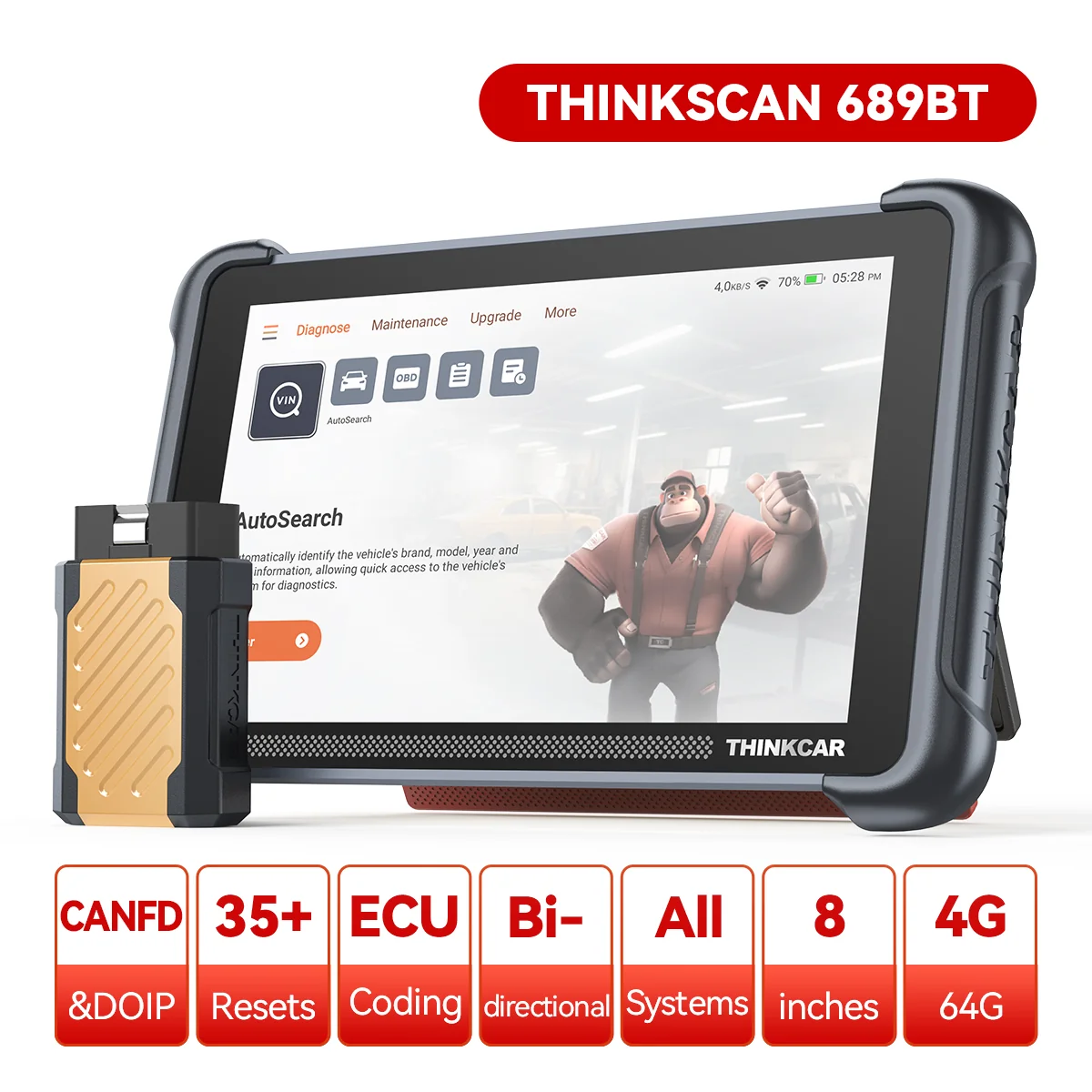
Recommendation: Looking for a professional bi-directional diagnostic tool with full system coverage? Use code DIAGNOZABAM for 10% off.
Transparency note: Affiliate link. Purchasing through it costs you nothing extra. View Thinkcar Deal →
