

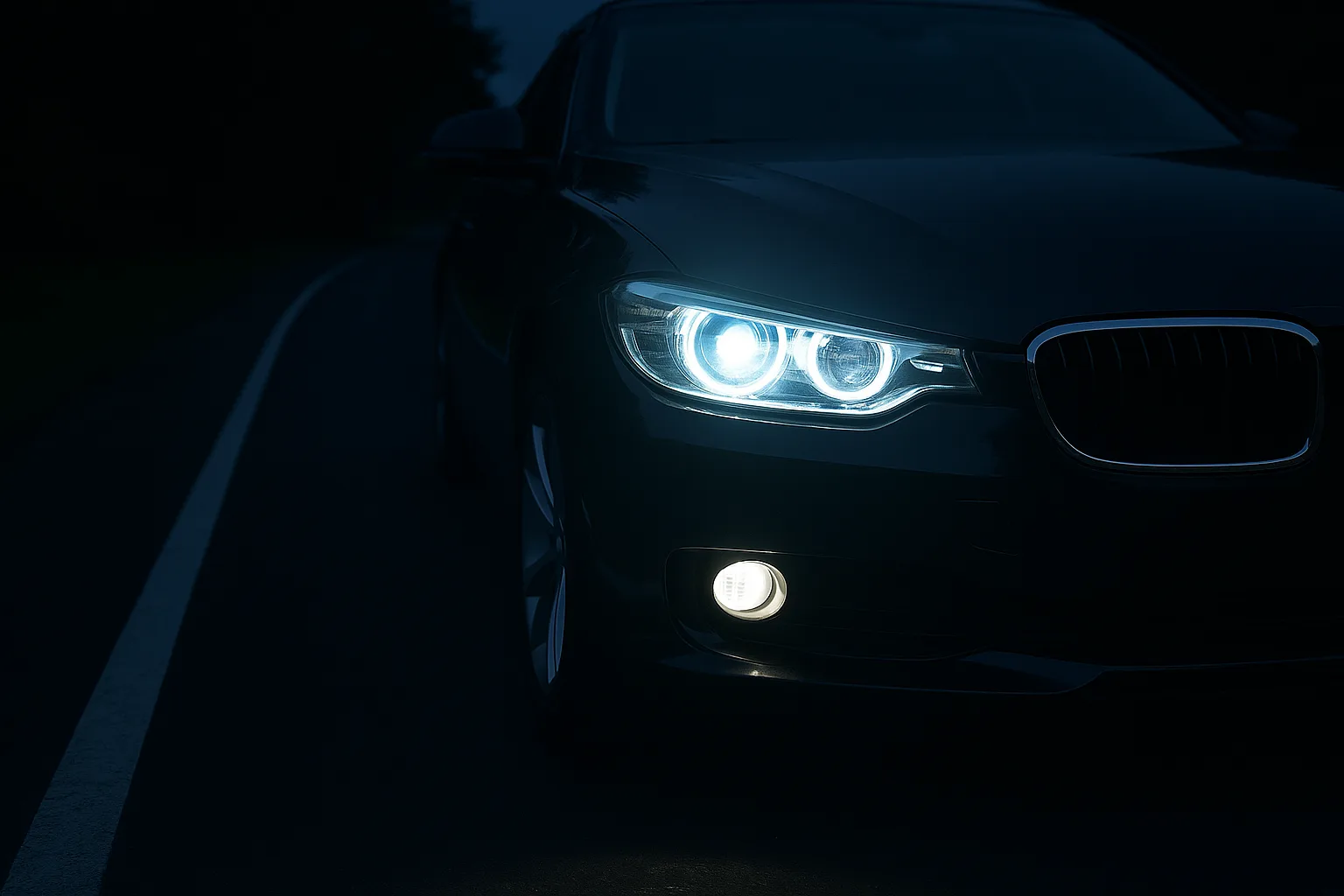
Xenon headlights are among the most remarkable innovations in automotive lighting, offering a clean, white beam that closely mimics daylight. They work by creating an electrical arc between two tungsten electrodes enclosed in a noble gas – typically xenon – to produce high-intensity illumination.
⚙️ How Xenon Headlights Work
Unlike halogen bulbs, Xenon headlights operate using a High-Intensity Discharge (HID) process. The electric current excites the xenon gas within a quartz tube, producing a bright and consistent light. This method requires less than half the power of halogen lights while generating significantly more visible light, resulting in improved road visibility, especially in peripheral areas.
🌌 Advantages and Drawbacks
Advantages:
-
Brighter light with a wider range.
-
Reduced power consumption.
-
Longer lifespan compared to halogen bulbs.
Drawbacks:
-
More expensive to replace.
-
Require a ballast for ignition.
-
Improper alignment may cause glare to oncoming drivers.
🚘 Bi-Xenon and the Next Generation
Modern systems known as Bi-Xenon combine both low and high beams in one bulb through reflector movement. By 2018, Xenon headlights became standard in many vehicles, but are now being gradually replaced by LED and Laser lights, which are more efficient, durable, and responsive.
🔗 Read more on DiagnozaBAM.ro
🔗 External source: Bosch Mobility Solutions – Lighting Systems
✍️ Author: Bejenaru Alexandru Ionut – [email protected]
✍️ Author: Bejenaru Alexandru Ionut – [email protected]
🔗 Internal link: https://diagnozabam.ro/sfaturi

