
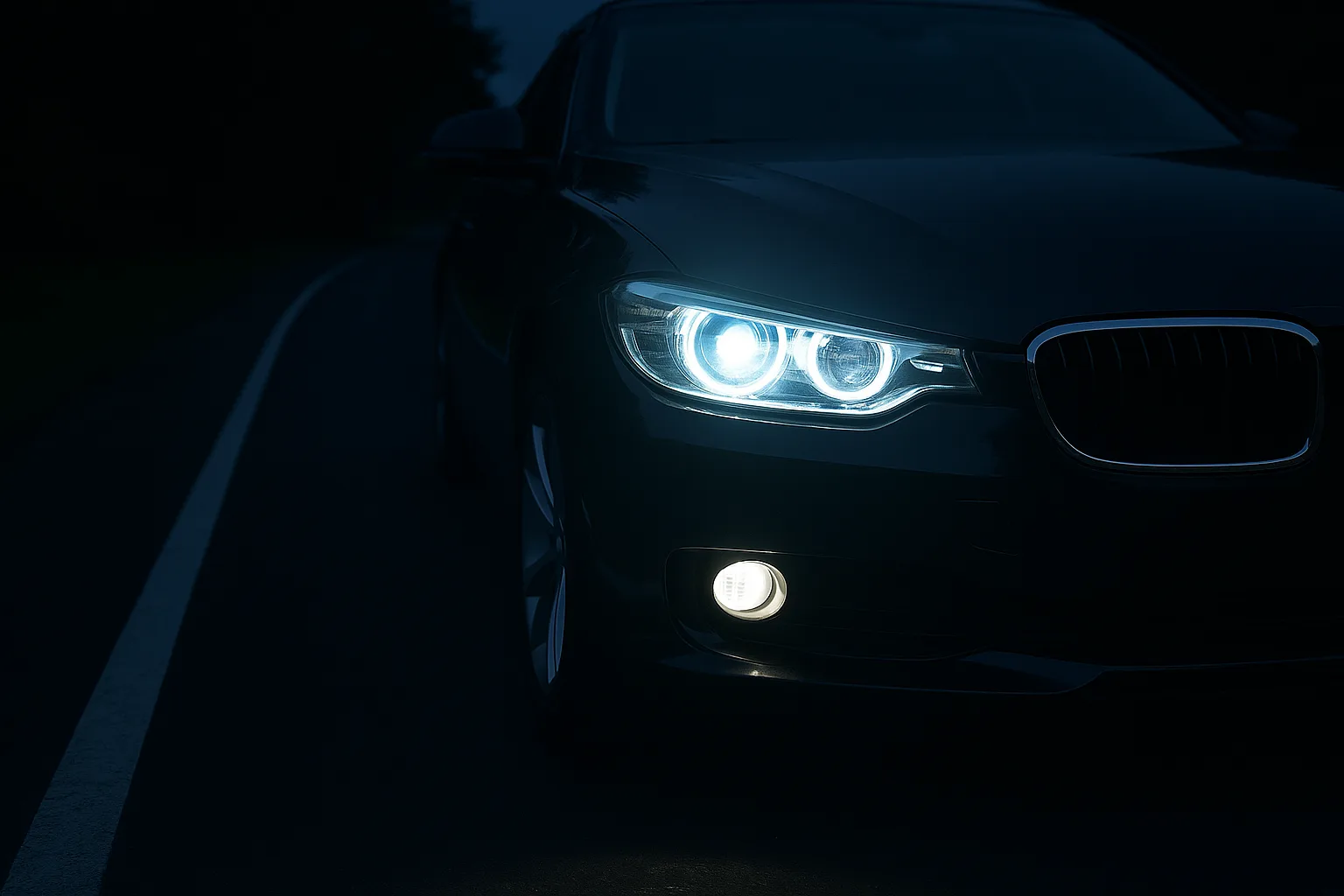
What Are Xenon Headlights?
Xenon headlights, also known as HID headlights, are one of the most important developments in modern automotive lighting. They became popular because they produce a strong, clean white light that is much closer to daylight than traditional halogen bulbs.
Instead of using a heated filament, xenon headlights create light through an electrical arc inside a sealed bulb filled with xenon gas and other noble gases. This process produces a high-intensity beam that improves visibility at night and in poor weather conditions.
For many years, xenon headlights were seen as a premium feature, especially on luxury cars and higher trim levels. Today, they are still valued for their brightness, long lifespan and distinctive white-blue appearance, although LED and laser lighting systems are gradually replacing them in newer vehicles.
Schimbarea LED-urilor la bord auto – Ghid complet pas cu pas
How Xenon Headlights Work
Unlike halogen bulbs, which rely on a tungsten filament that glows when heated, xenon headlights use a technology called High-Intensity Discharge, or HID.
Inside the xenon bulb, an electric arc is created between two tungsten electrodes. This arc passes through a quartz capsule filled with xenon gas and metal salts. When the system is activated, the gas becomes excited and produces an intense beam of light.
Because this process requires a very high voltage at startup, xenon headlights need a component called a ballast. The ballast has two main roles:
It generates the high voltage needed to ignite the bulb.
It regulates the electrical current after the bulb is running.
Without the ballast, a xenon bulb cannot operate correctly. This is one of the main differences between xenon and halogen lighting systems.
Why Xenon Headlights Are Brighter Than Halogen Bulbs
Xenon headlights produce significantly more visible light than halogen bulbs while using less energy. A typical halogen bulb wastes a large part of its energy as heat, while HID technology converts more energy into usable light.
This makes xenon headlights more efficient and more powerful. The light is also whiter, which helps the human eye detect road markings, signs, pedestrians and obstacles more easily during night driving.
Another advantage is the wider light spread. Xenon headlights often illuminate not only the road ahead, but also the peripheral areas, making it easier to see curves, sidewalks and roadside hazards.
Main Advantages of Xenon Headlights
The biggest advantage of xenon headlights is visibility. The beam is brighter, cleaner and usually reaches farther than a standard halogen beam. This can make night driving safer, especially on poorly lit roads.
Another benefit is energy efficiency. Xenon systems usually consume less power than halogen bulbs while producing more light. This reduces electrical load on the vehicle.
Xenon bulbs also tend to last longer than halogen bulbs. While a halogen bulb may need frequent replacement, a quality HID bulb can work for many years under normal conditions.
The appearance is another reason why many drivers like xenon headlights. Their white or slightly blue light gives the vehicle a more modern and premium look.
Disadvantages of Xenon Headlights
Despite their benefits, xenon headlights also have some disadvantages.
The first one is cost. Xenon bulbs and ballasts are more expensive than halogen components. If a ballast fails, the repair can be significantly more costly than replacing a simple halogen bulb.
Another issue is glare. If xenon headlights are not properly aligned, they can blind oncoming drivers. This is why many factory xenon systems are equipped with automatic leveling and headlight washers.
Xenon systems are also more complex. Because they require ballasts, igniters and sometimes leveling sensors, there are more components that can fail compared to a basic halogen setup.
Bi-Xenon Headlights Explained
Bi-Xenon headlights are an evolution of standard xenon lighting. In a normal xenon system, the HID bulb is usually used only for the low beam, while the high beam may use a separate halogen bulb.
In a Bi-Xenon system, the same xenon bulb is used for both low beam and high beam. This is usually achieved through a movable shutter or reflector mechanism. When the driver activates the high beam, the system changes the light pattern instead of switching to a different bulb.
This solution offers strong illumination in both driving modes and keeps the lighting system more compact.
Xenon vs LED Headlights
Although xenon headlights were once considered one of the best lighting technologies available, LED headlights have become more common in recent years.
LED systems are more energy-efficient, turn on instantly, generate less heat in the beam area and allow more flexible headlight designs. They can also be integrated with adaptive lighting systems that automatically adjust the beam depending on speed, steering angle, traffic and road conditions.
However, xenon headlights still offer very strong performance, especially on vehicles that were designed with high-quality HID projectors. A good factory xenon system can still provide excellent road illumination.
Are Xenon Headlights Still Worth It?
Xenon headlights are still worth it when they are factory-installed, properly maintained and correctly aligned. They offer excellent night visibility, good efficiency and a premium look.
However, cheap aftermarket HID conversion kits can create problems. If installed in headlights that were designed for halogen bulbs, they may scatter light incorrectly and cause dangerous glare. For this reason, proper projector lenses, alignment and compatible components are extremely important.
For drivers who already own a car with factory xenon headlights, maintaining the original system is usually the best option. For new cars, LED headlights are now becoming the preferred technology.
Conclusion
Xenon headlights represented a major step forward in automotive lighting. By using HID technology, they offered stronger illumination, better road visibility and lower power consumption compared to traditional halogen bulbs.
Their main strengths are brightness, long lifespan and improved night driving comfort. Their weaknesses are higher repair costs, system complexity and the risk of glare if the headlights are not aligned correctly.
Even though LED and laser headlights are becoming more common, xenon headlights remain an important technology in automotive history and are still highly appreciated on many vehicles.
✍️ Author: Bejenaru Alexandru Ionut – [email protected]
🔗 Internal link: https://diagnozabam.ro/sfaturi
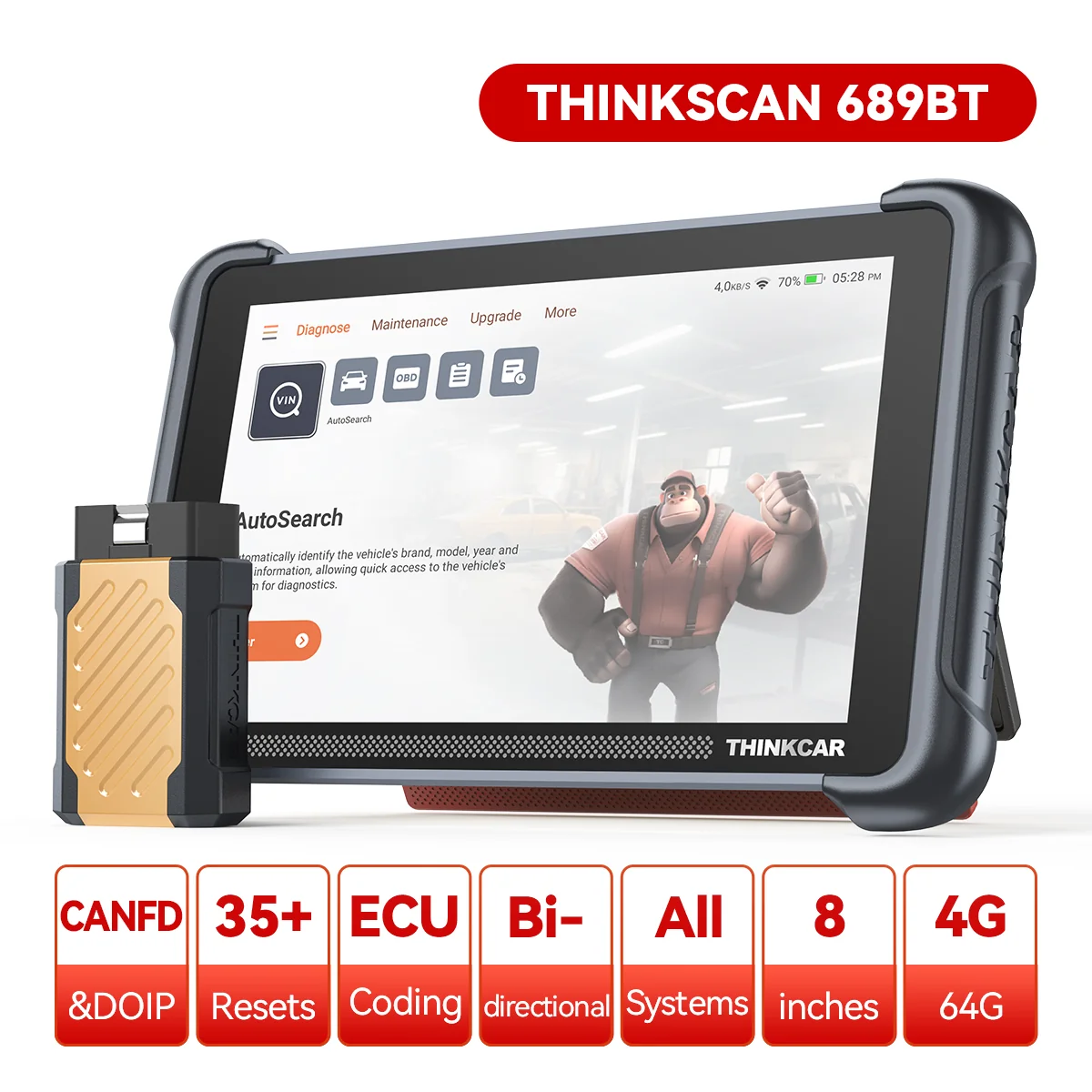
Recommendation: Looking for a professional bi-directional diagnostic tool with full system coverage? Use code DIAGNOZABAM for 10% off.
Transparency note: Affiliate link. Purchasing through it costs you nothing extra. View Thinkcar Deal →
