
Clay Crushed 3D: Two Weeks Instead of Eleven for One Bumper
A German design studio tried to drop clay completely. It designed car parts in 3D only. Then it went back to industrial clay.
The reason is simple. One front bumper took 8–11 weeks on the digital route. The same part took one to two weeks in clay.
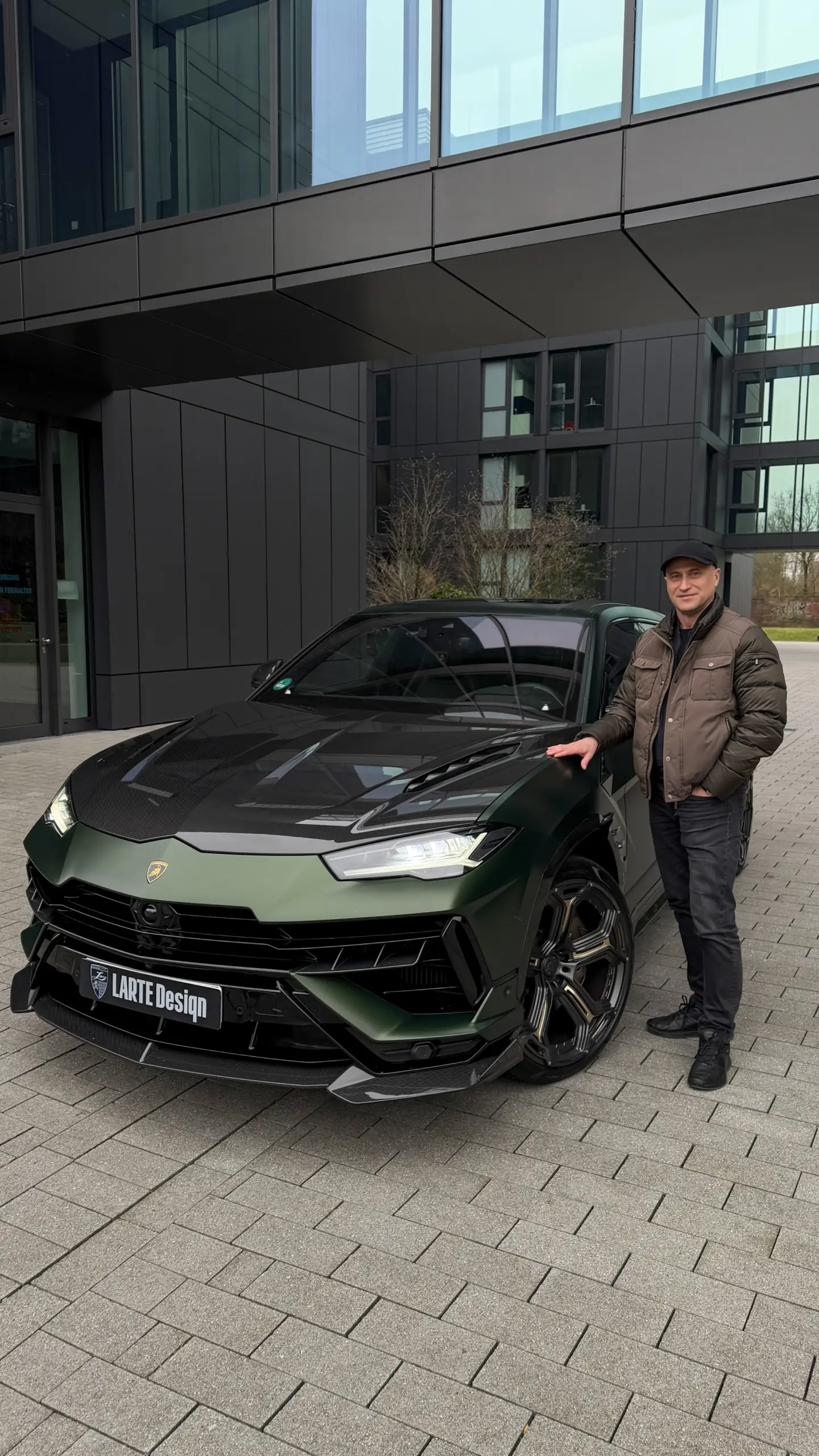
Alexej Janowski, founder of LARTE Design, shared the numbers. His conclusion is blunt. Handwork combined with 3D gets a design approved several times faster than the screen alone.
The Experiment That Changed the Plan
LARTE Design has used clay on every project since 2012. In 2024 the studio opened a branch in Turin. The team there had backgrounds at Ferrari, BMW, Porsche and Pininfarina.
Those specialists were confident. In their view, everything could be done in 3D. Clay looked like a relic.
So the studio ran several projects fully digital. Facelifts and custom builds exposed the weak point. Decisions on those jobs must be made fast, and on the real car.
Janowski is careful here. He says the Turin team did excellent work. The 3D-only method is simply built for large OEM programmes with long timelines. Small, fast projects are a different game.
The big manufacturers have not abandoned clay either. Mitja Borkert has led Lamborghini’s design centre since 2016. He brought full-size models back into a process that was almost entirely digital before him. Porsche calls industrial plasticine models indispensable for judging a design.
One Bumper, Step by Step: The 3D Route
The test part was a front bumper. Here is how the digital route played out.
- A week went on sketches.
- The designer modelled the bumper in Blender.
- About ten working days later, the design was approved on screen.
- The team printed the part to see it at full size.
The printing step is where time and money disappear. Even the largest industrial printers have a build volume of roughly 70 × 38 × 58 cm. A bumper does not fit.
Engineers must split the model into sections. They plan the joints and allow for shrinkage. Then they print, clean and bond the pieces.
LARTE chose selective laser sintering (SLS). It is the most expensive process. But a rough surface from cheaper printing tells you nothing about form.
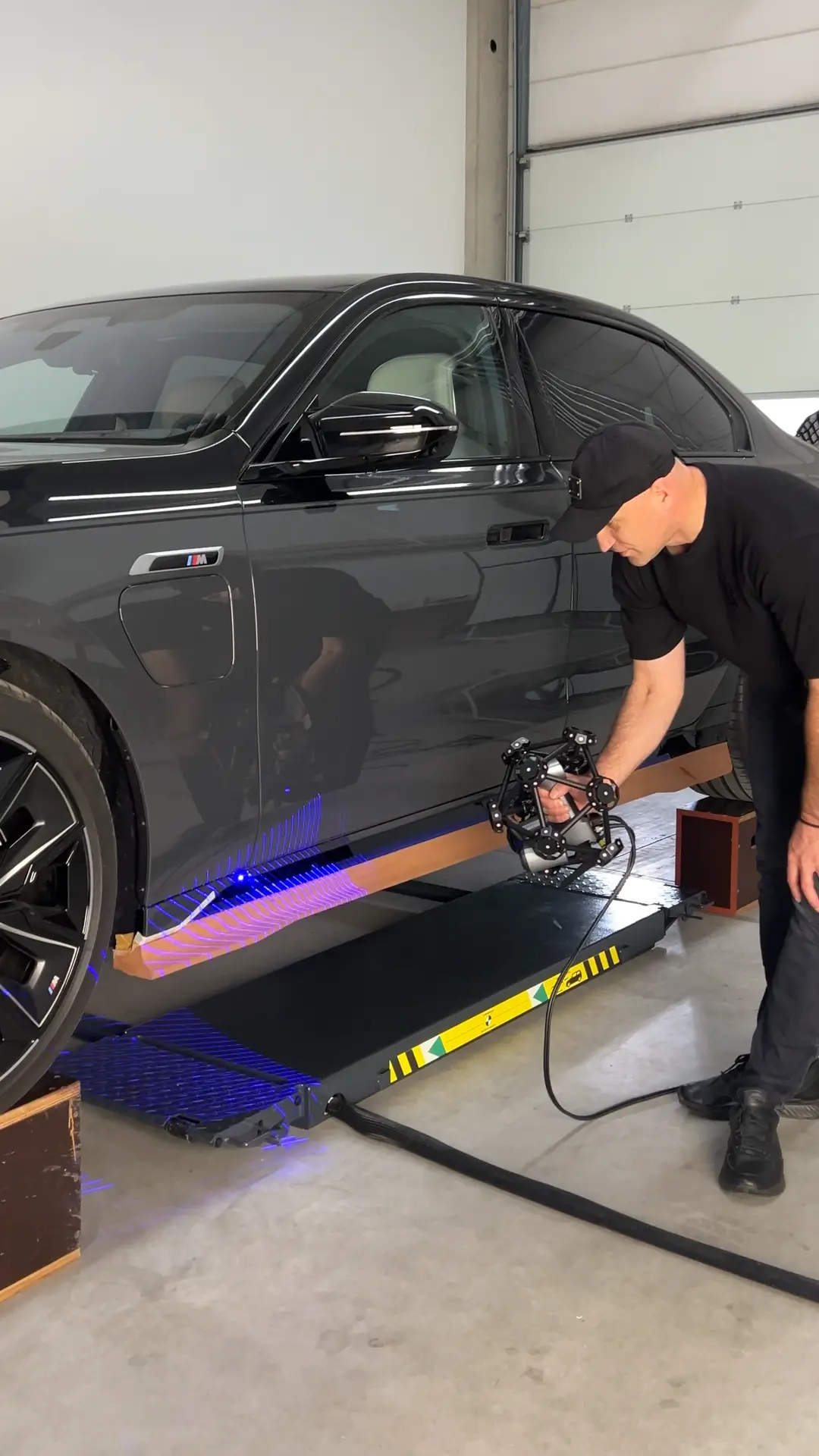
Three to four weeks later, the bumper reached the car. And it showed what the screen had hidden:
- The proportions read differently.
- The highlights fell in the wrong places.
- Some areas did not suit the character of the car.
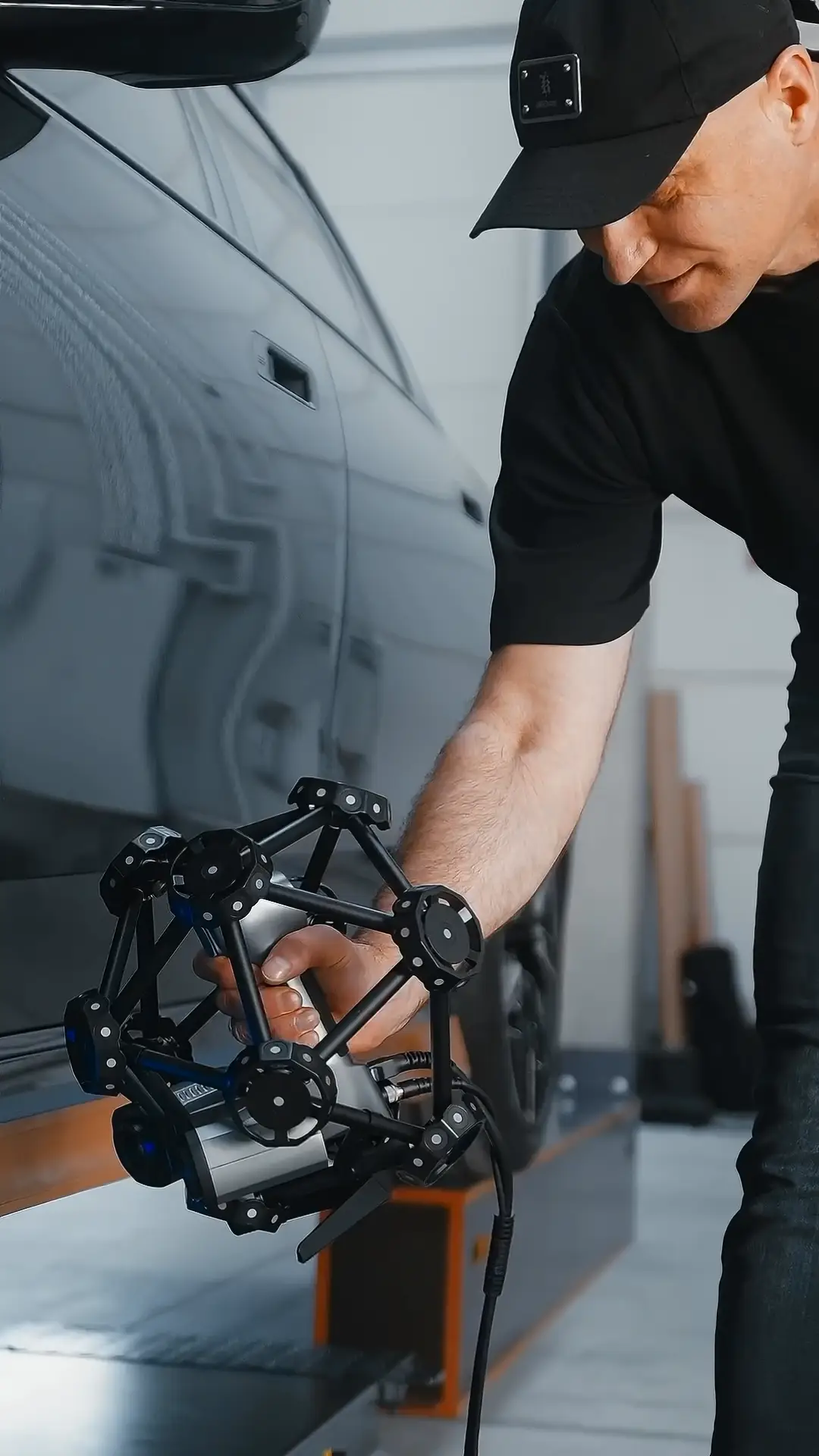
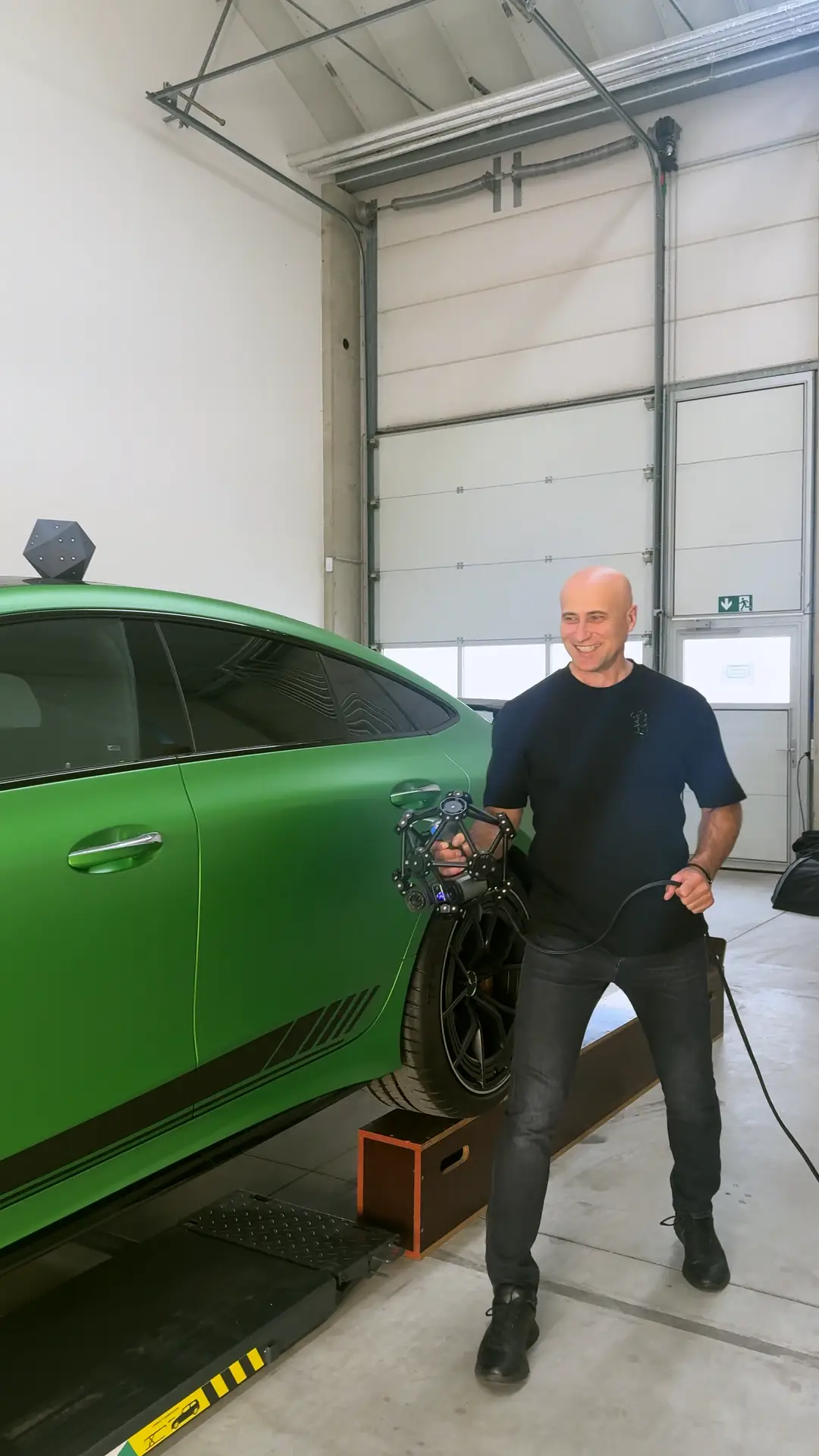
The designer and the 3D specialist measured the part. They found why the proportions diverged. They corrected the model.
Then the cycle repeated. Another print. Another bonding session. Another delivery. That cost two to three more weeks.
The final tally was 8–11 weeks to an approved design. Two SLS prints cost around €12,000. That figure covers printing only.
The rest was more expensive. Designer hours, the print contractor, logistics, project management and the owner’s time at every fitting all added up. The full cycle reached tens of thousands of euros.
The Same Bumper in Clay
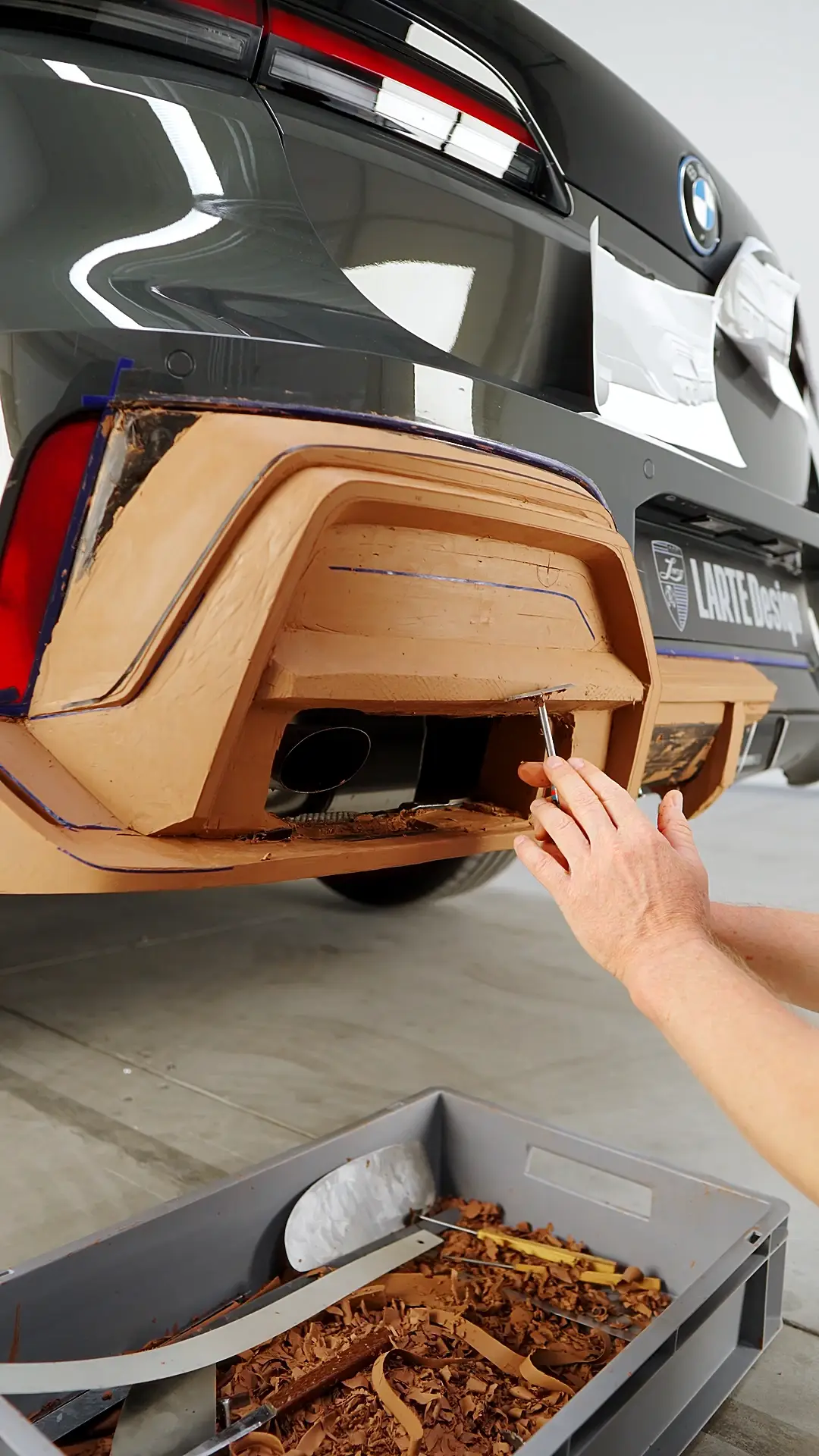
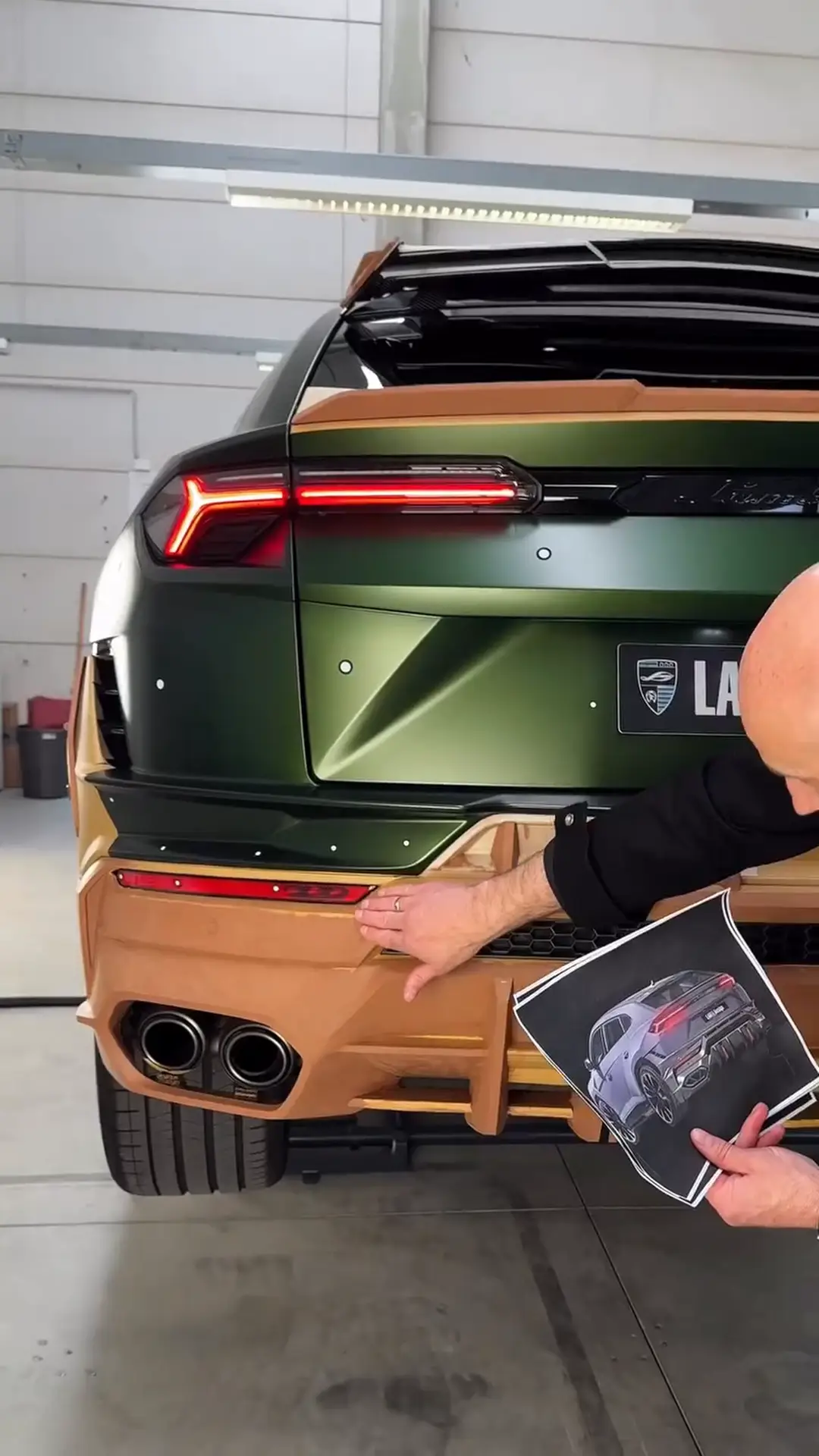
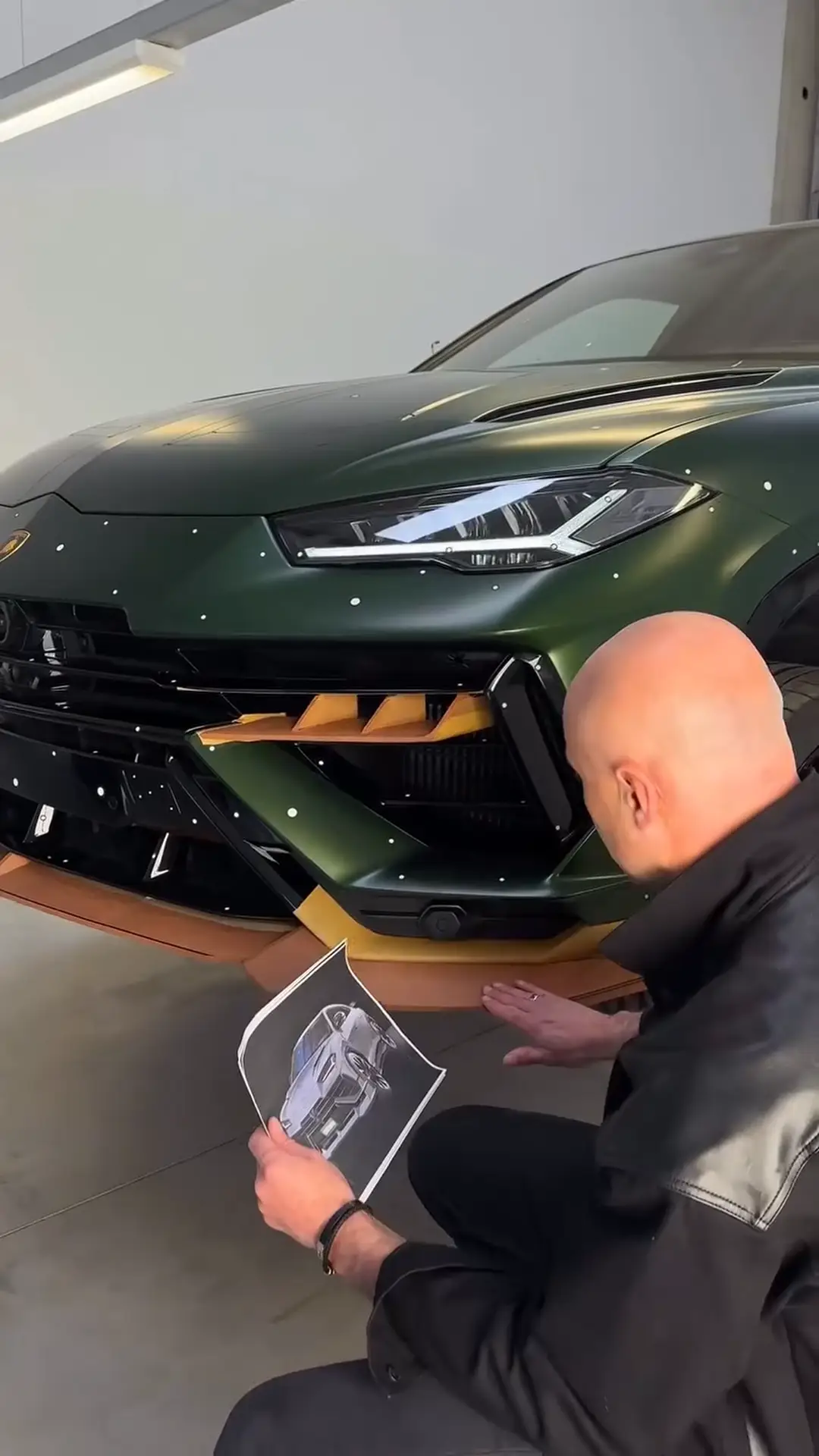
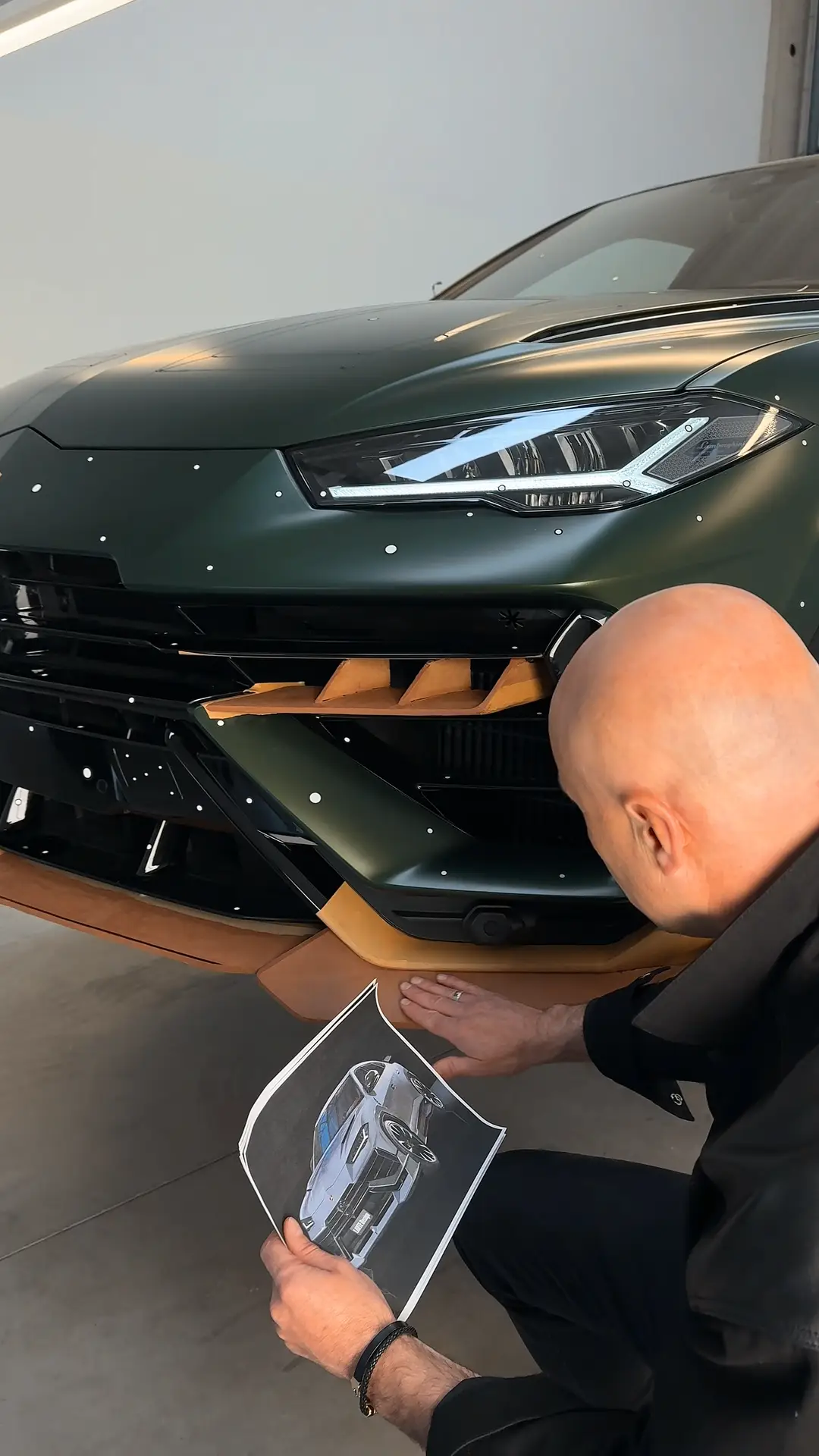
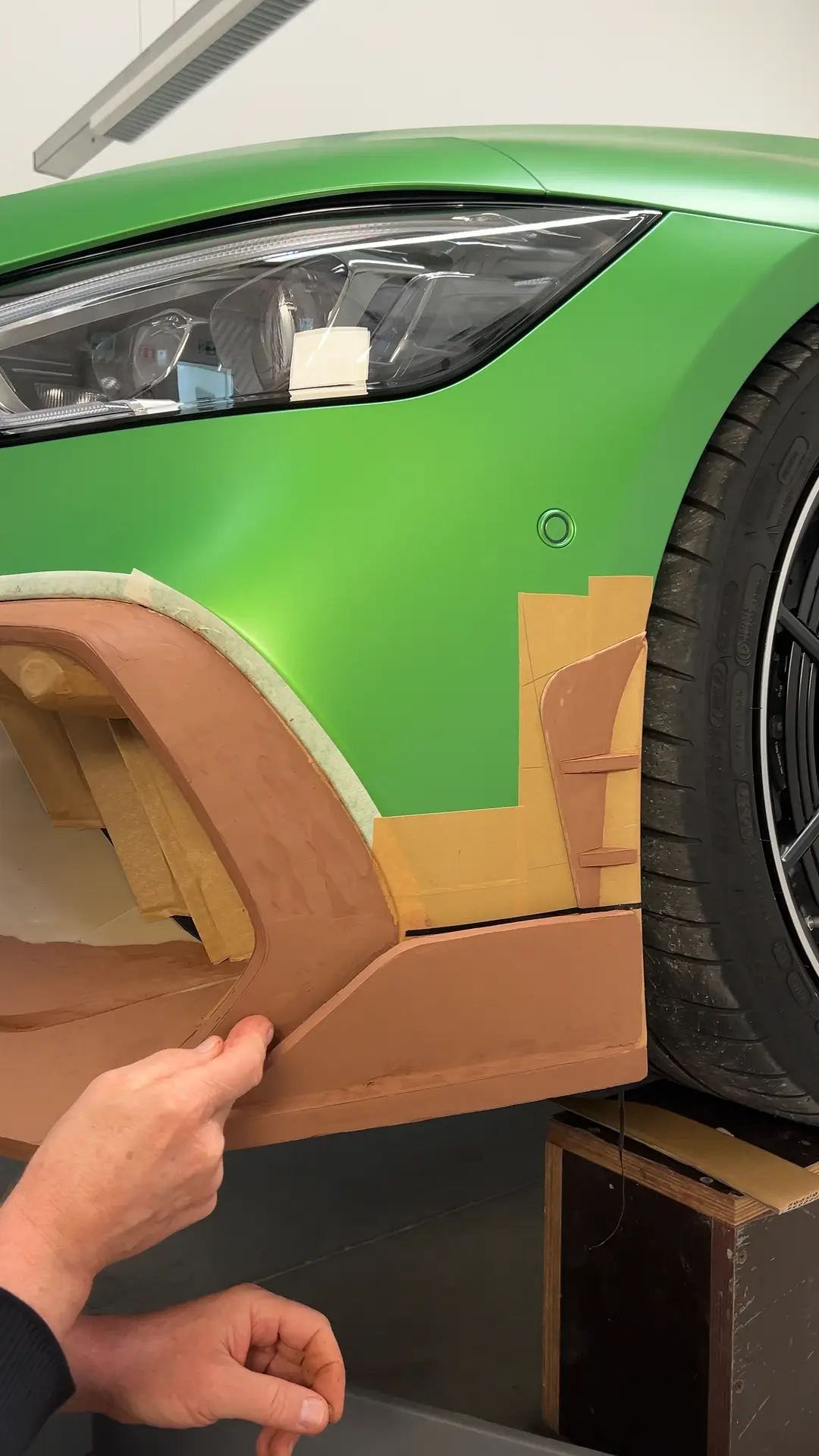
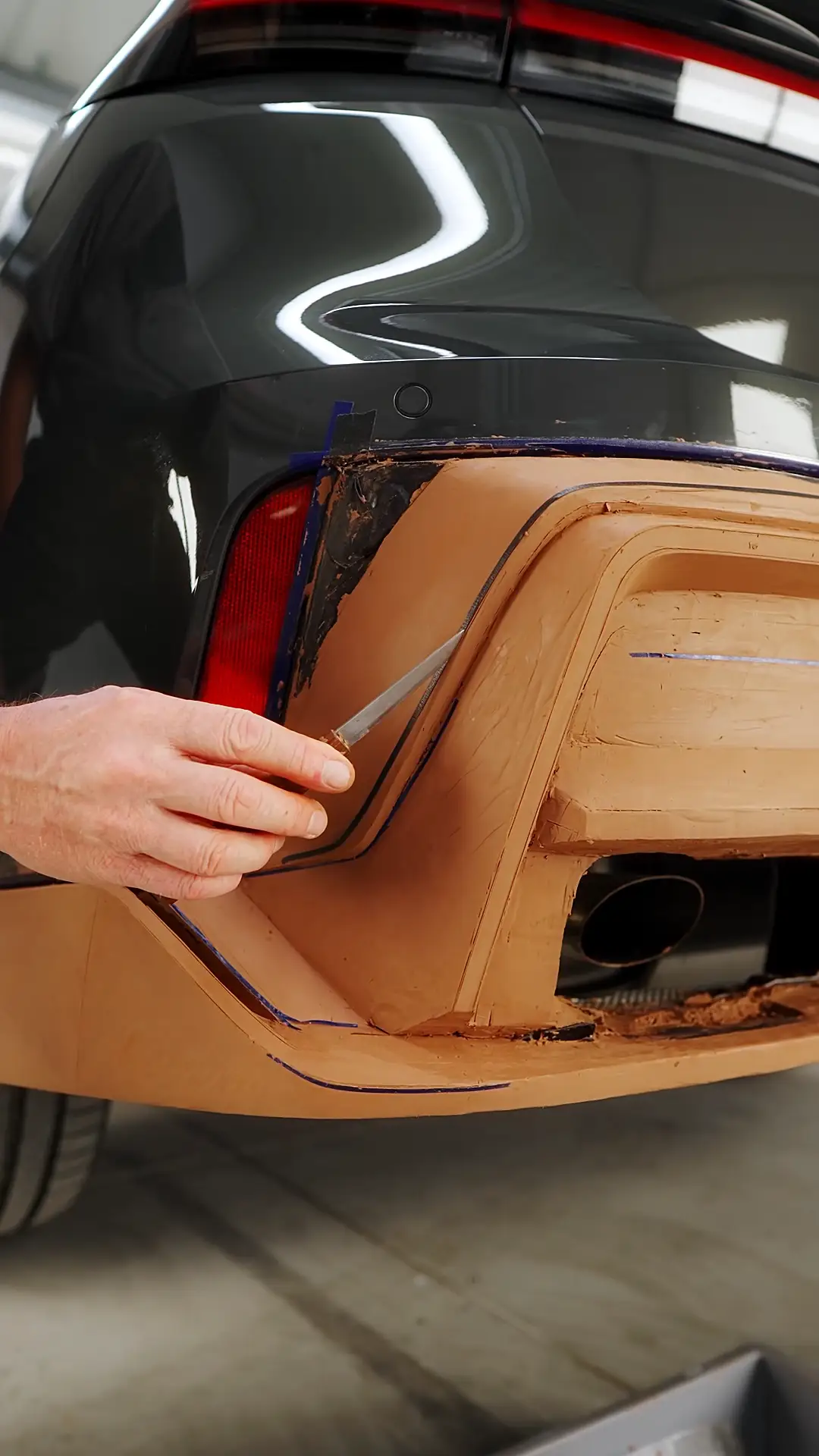
The clay route starts differently. The designer does not spend weeks in front of a monitor. From day one he works on the real car, next to the clay modeller.
The process runs like this:
- Contour tape marks the main lines on the car.
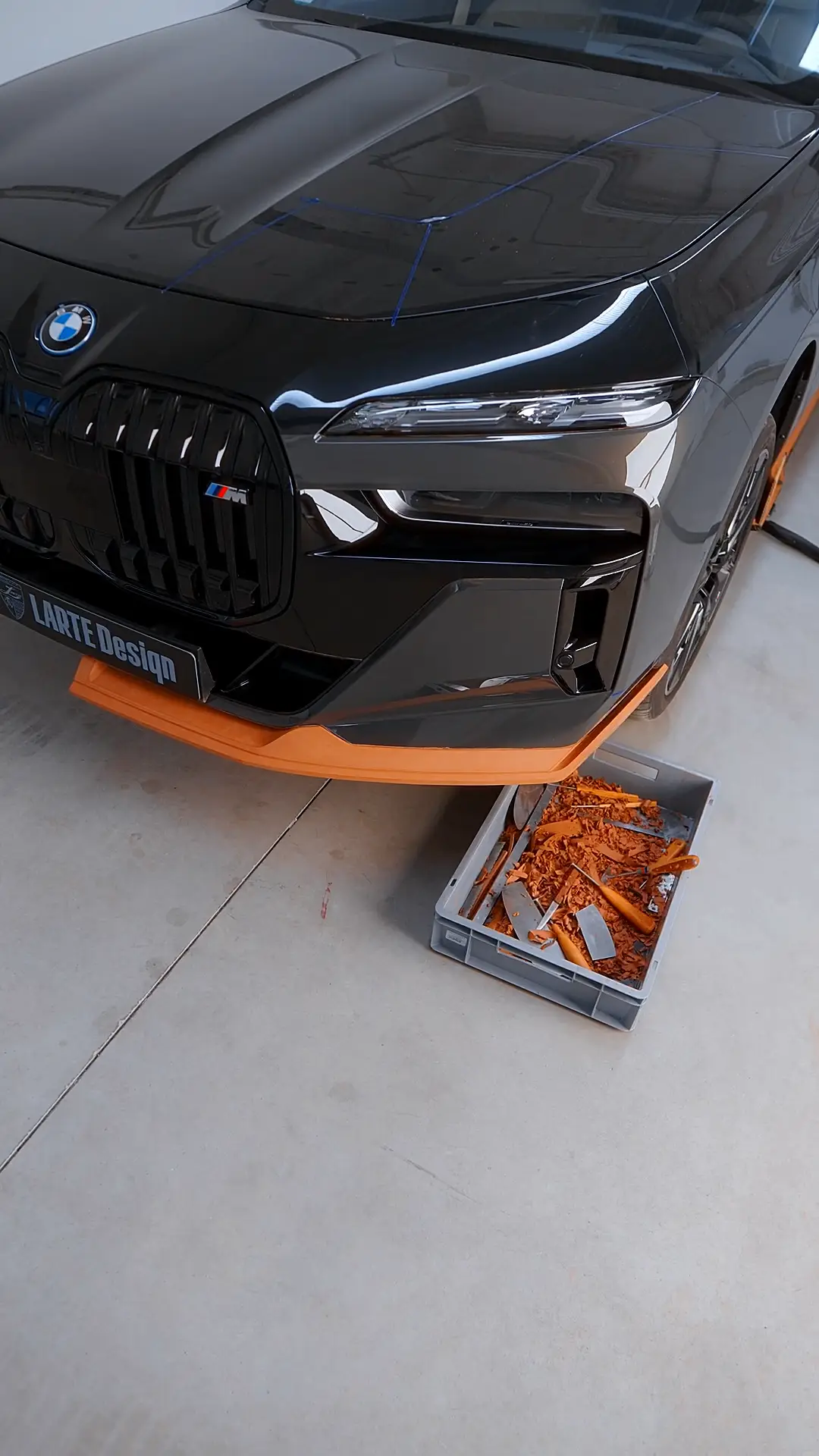
- Clay goes on, and the part takes shape in front of everyone.
- By day seven, a complete form sits on the car.
- The team judges it from different angles and distances.
Then comes detailing. Chamfers, radii, character lines, surface transitions and highlights are all checked at full size. Every correction happens on the spot.
The client joins the review. Designer, modeller and client stand at the car together. Within two weeks at most, the design is approved. It goes to scanning without a single design print.
ℹ️ Technical Note: Clay is not a Class A surface. Class A is the final mathematical surface, ready for production. The surfacing specialist builds it from a scan of the finished clay model. His job is to transfer every line and surface into the software as precisely as possible. He does not invent the form again.
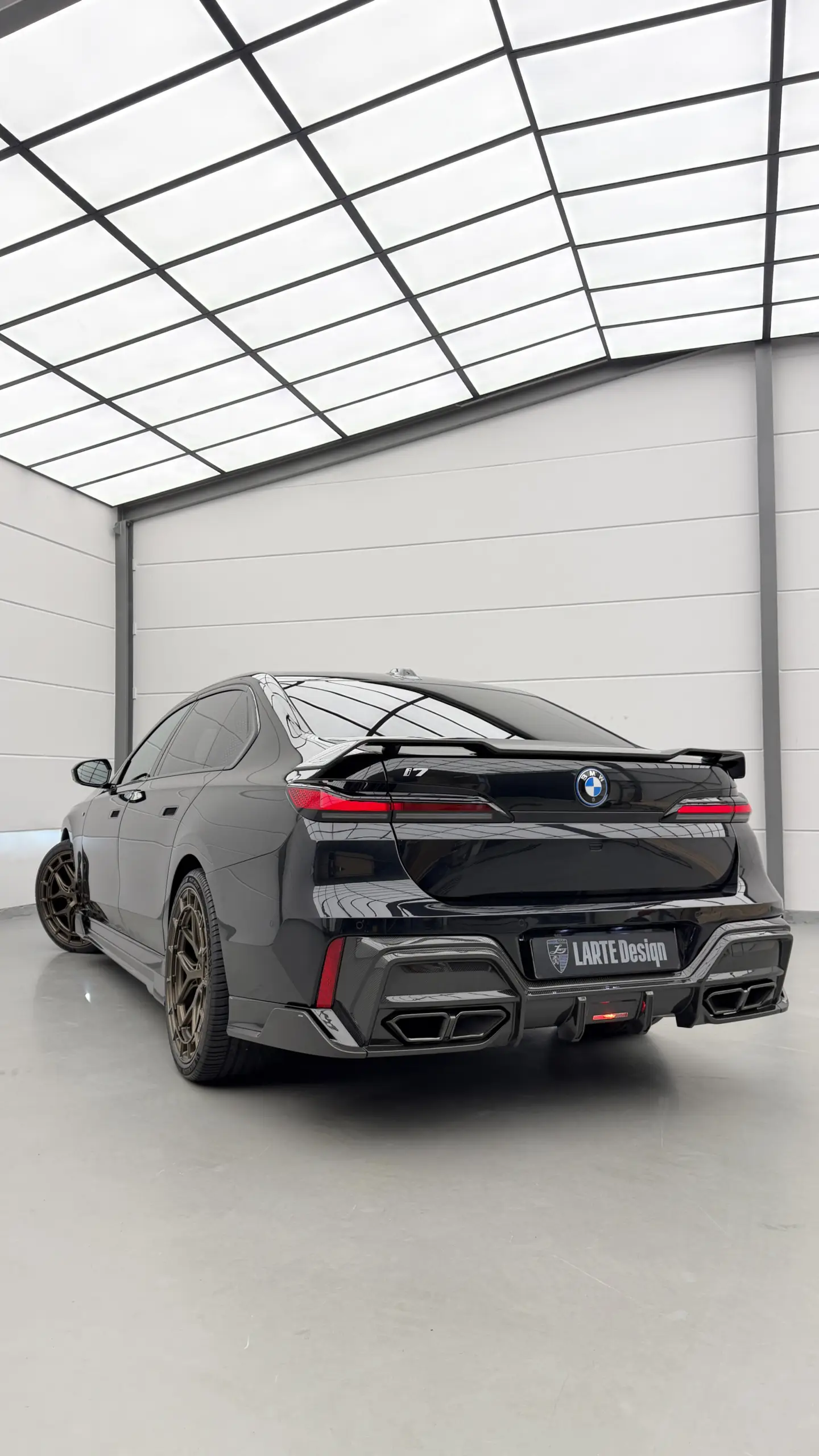
This is the same workflow behind the BMW X7 body kit built to outlive the model. There, clay refines the surface before the carbon layup starts.
Why a Monitor Cannot Show the Truth
The explanation comes down to scale. A car is about five metres long. A large monitor is around one metre on the diagonal. The screen never shows the whole picture.
On the street, people see a car from every side and every distance. Only a full-size form shows how proportions read. Only 1:1 scale shows how light falls and where a highlight breaks.
Correction speed matters too. On a clay model, a change takes a few hours on the car itself. In 3D, the edit takes minutes on screen. But seeing it for real needs a new cycle of print, ship and fit. That is two to three more weeks.
Janowski sums it up in three short lines. The eye feels proportion. The hand creates form. Light and full scale reveal the truth.
Who Guards the Form After Approval
Approval is not the end. The part still goes through scanning, surfacing, engineering and tooling. The shape shifts slightly at each stage.
LARTE handles this with a system of checkpoints. The approved clay model is the reference. Every later step is checked against it.
The clay modeller also stays on the project to the end. Yuri, the studio’s modeller, has been with the team since 2012. That continuity protects the original design intent.
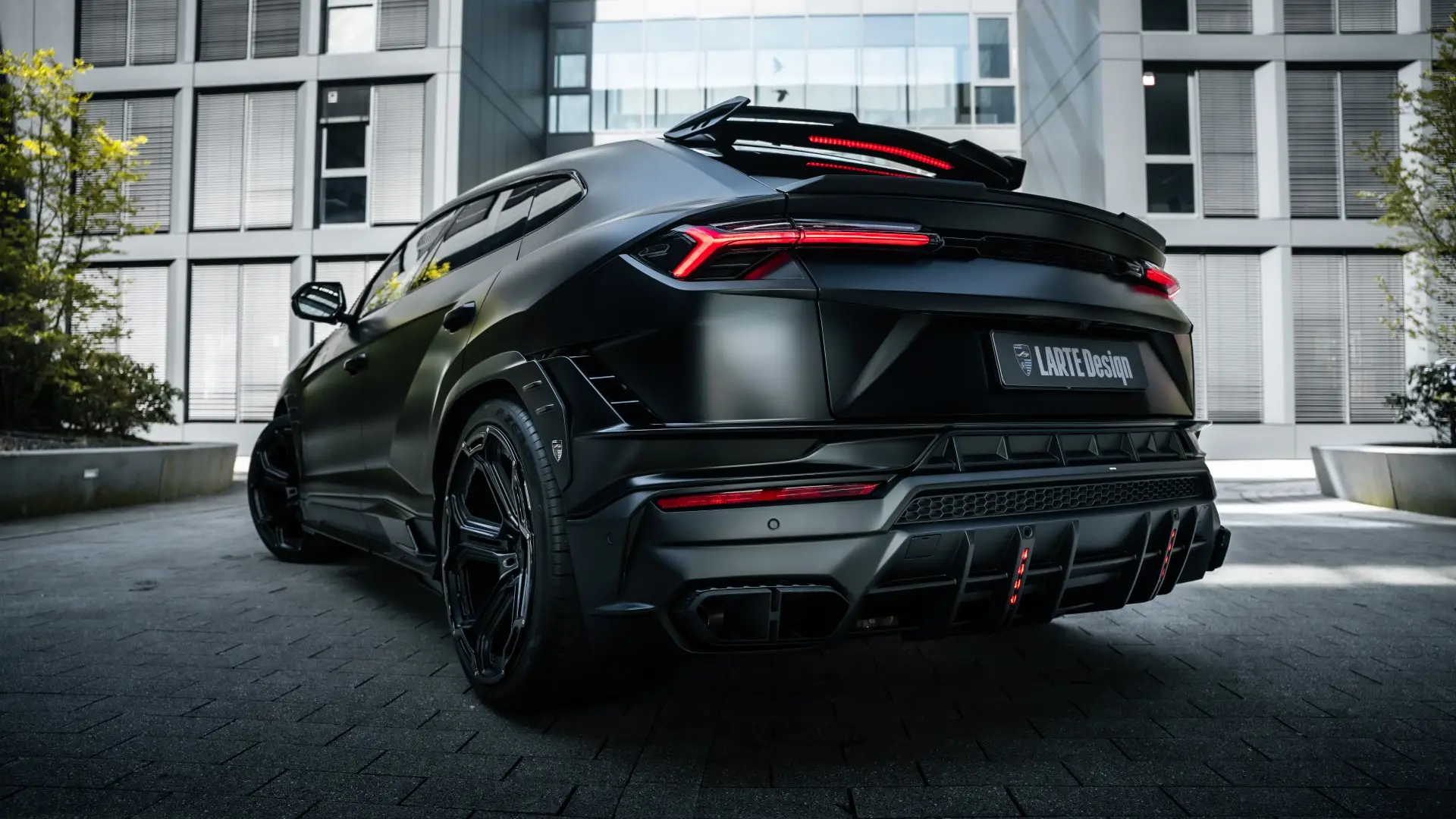
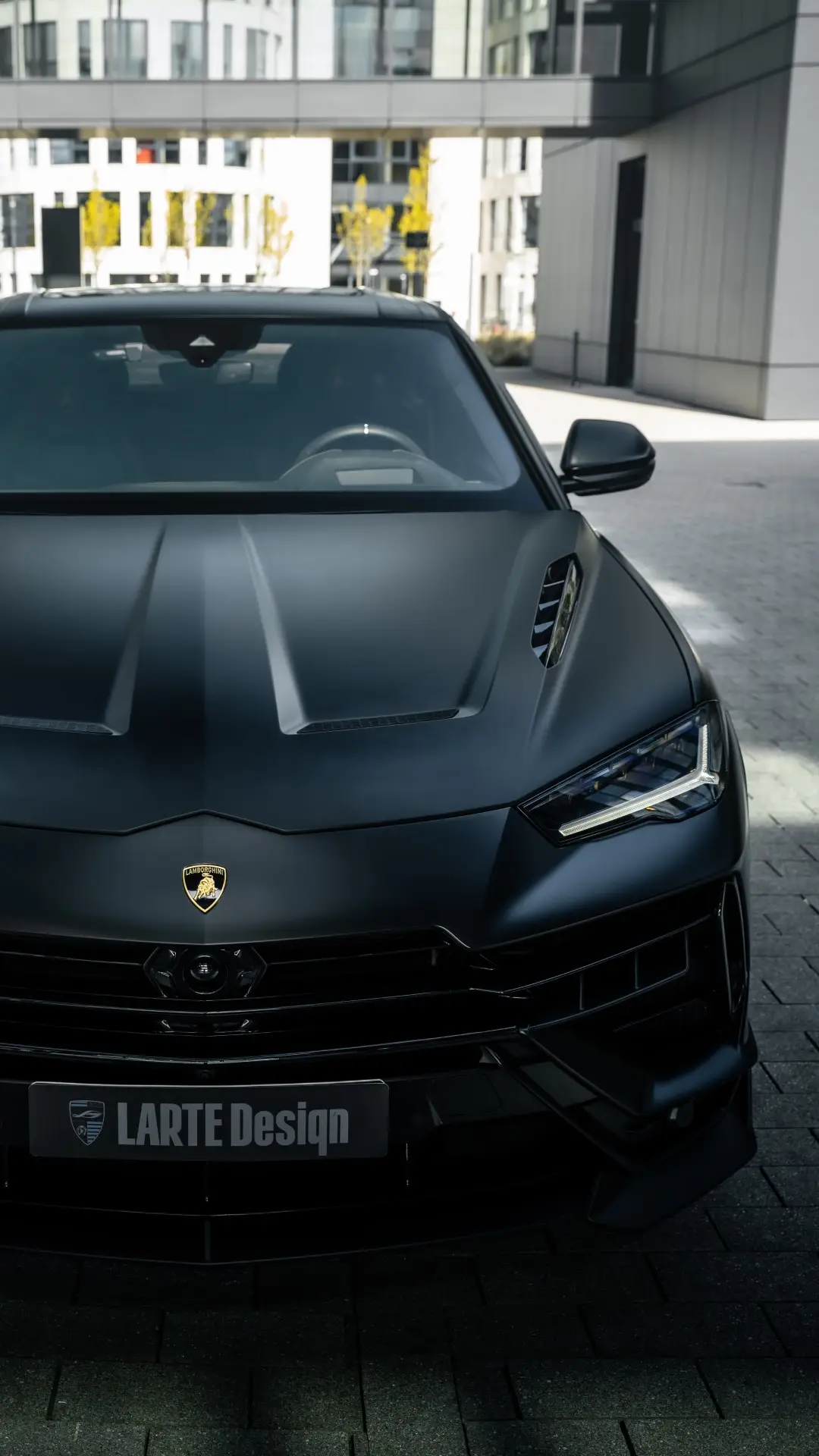
The approach shows in the studio’s finished work. Take the Lamborghini Urus SE LARGENDA programme. Or the pink dry carbon Porsche Cayenne. Both rely on forms judged at full size before any carbon is laid.
Craft as Part of Car Culture
Janowski also sees clay as a craft. The modeller works like a sculptor, with hands, eye and light. And this craft works alongside 3D, not against it.
About five years ago, the studio began showing the process on Instagram. The clay modelling videos have reached 465 million views on his account alone. Viewers asked which clay, which tools and how to hold a line. They saved the videos and sent them to colleagues.
For Janowski, that interest proves the craft is far from dead.
Counting the Cost Honestly
Clay is expensive. But the alternative is not cheap either. It means VR equipment, large screens, software licences and print after print.
One bumper cost tens of thousands of euros in the digital test. Around €12,000 of that went to printing alone. By the studio’s estimate, a whole-car project would run into hundreds of thousands.
Still, money is not the main point. Speed is. The design is approved in weeks, not months.
When someone proposes a 3D-only plan, Janowski asks four questions:
- When will we see the form at full size on the car?
- How many prints will go on design alone?
- What does one correction cost in money, time and people?
- Who makes sure the form does not change between programs?
Where 3D Still Wins
Janowski is not against new technology. He names the areas where digital is stronger:
- Exploring many variants quickly.
- Achieving perfect symmetry and precise data.
- Working remotely.
The best result comes from combining both. Clay gets the team to an approved design faster. Digital tools then make the form precise and ready for production.
One rule applies. After every digital step, check the part against the approved model.
His line is worth remembering. 3D gets you to variants faster. Clay gets you to an approved design faster. And an owner pays for the approved design, not for the variants.
Side by Side: One Bumper, Two Routes
| Criterion | Blender and 3D printing (Turin) | Clay 1:1 on the car |
|---|---|---|
| Time to approved design | 8–11 weeks | 1–2 weeks |
| Full-size prints for design | 2 SLS prints, around €12,000 for printing alone | None |
| People in every correction | Designer, 3D specialist, print contractor, logistics, project manager, owner | Designer, clay modeller, owner |
| Cost of one correction | Measuring, model fix, sign-off, new print | Fixed on the car, result within hours |
What This Means for Facelifts and Custom Builds
The lesson is not “clay always wins”. Large OEM programmes have long timelines and huge budgets. For them, a digital pipeline can make sense.
Facelifts and custom projects are different. The timelines are short. The owner wants to see the part on the real car. Parts must also stay true to a vehicle that already exists.
That is the case with the Cadillac Escalade-V ESV ESTHETE kit. It is also the case with the G63 individual colour and painted carbon programme. In both, a form judged only on screen would carry real risk.
Design is also only half of the story. A part must work in real conditions too. LARTE showed this with its Porsche Cayenne test beyond the Arctic Circle.
One practical point for owners. Fitting any body kit touches parking sensors, cameras and radar. After installation, scan the car for stored faults. A bidirectional tool such as the THINKCAR THINKSCAN 689BT makes that check quick.
Engineering, fitting to the original mounting points and production are the subject of LARTE’s next piece.
Frequently Asked Questions
Why does LARTE Design still use clay modelling?
Clay gets a design approved much faster on facelifts and custom projects. The team sees the form at full size on the real car. Corrections take hours, not weeks.
How long did the 3D-only bumper take?
It took 8–11 weeks to reach an approved design. That included sketches, Blender modelling and two full-size SLS prints. The same part in clay took one to two weeks.
How much did the 3D printing cost?
Two SLS prints cost around €12,000. That is printing alone. The full cycle, with labour and logistics, ran into tens of thousands of euros.
Is clay a finished production surface?
No. Clay is not a Class A surface. The Class A surface is built later from a scan of the approved clay model.
Is LARTE Design against 3D technology?
No. Janowski says 3D is stronger for variants, symmetry, precise data and remote work. His view is that the best results combine craft and digital tools.
Do other manufacturers still use clay models?
Yes. Lamborghini’s design centre brought full-size models back into its process under Mitja Borkert. Porsche also calls industrial plasticine models indispensable.
Source: LARTE Design


✍️ Author: Bejenaru Alexandru Ionut – [email protected]
🔗 Internal link: https://diagnozabam.ro/sfaturi

Recommendation: Looking for a professional bi-directional diagnostic tool with full system coverage? Use code DIAGNOZABAM for 10% off.
Transparency note: Affiliate link. Purchasing through it costs you nothing extra. View Thinkcar Deal →