
The modern hypercar landscape has evolved into a sterile, digital battleground. The market is now dominated by multi-motor electric powertrains. Advanced torque-vectoring algorithms and lightning-fast dual-clutch transmissions are the industry norm. These computational advancements yield unprecedented track times. They also provide impressive theoretical performance metrics on paper. However, they inevitably dilute the tactile, visceral relationship between driver and machine. The deeply mechanical connection is lost. Absolute automotive performance has become a software calibration exercise. It is no longer about raw mechanical mastery.
Texas-based hypercar manufacturer Hennessey Performance rejects this digital paradigm completely. Baseline supercars have now abandoned the physical clutch pedal entirely. Despite this, the American boutique manufacturer has unveiled a radical alternative. The machine is the Hennessey Venom F5-M. This vehicle systematically dismantles the safety net of automated shifting. It replaces standard systems with the most powerful production gated manual transmission ever engineered. The vehicle is offered exclusively as an open-top roadster. The F5-M represents a purist manifesto. It acts as a deliberate, uncompromising assault on digital isolation. This trend currently defines contemporary automotive engineering.
1. Powertrain Architecture: The 2,059 PS “Fury” Evolution
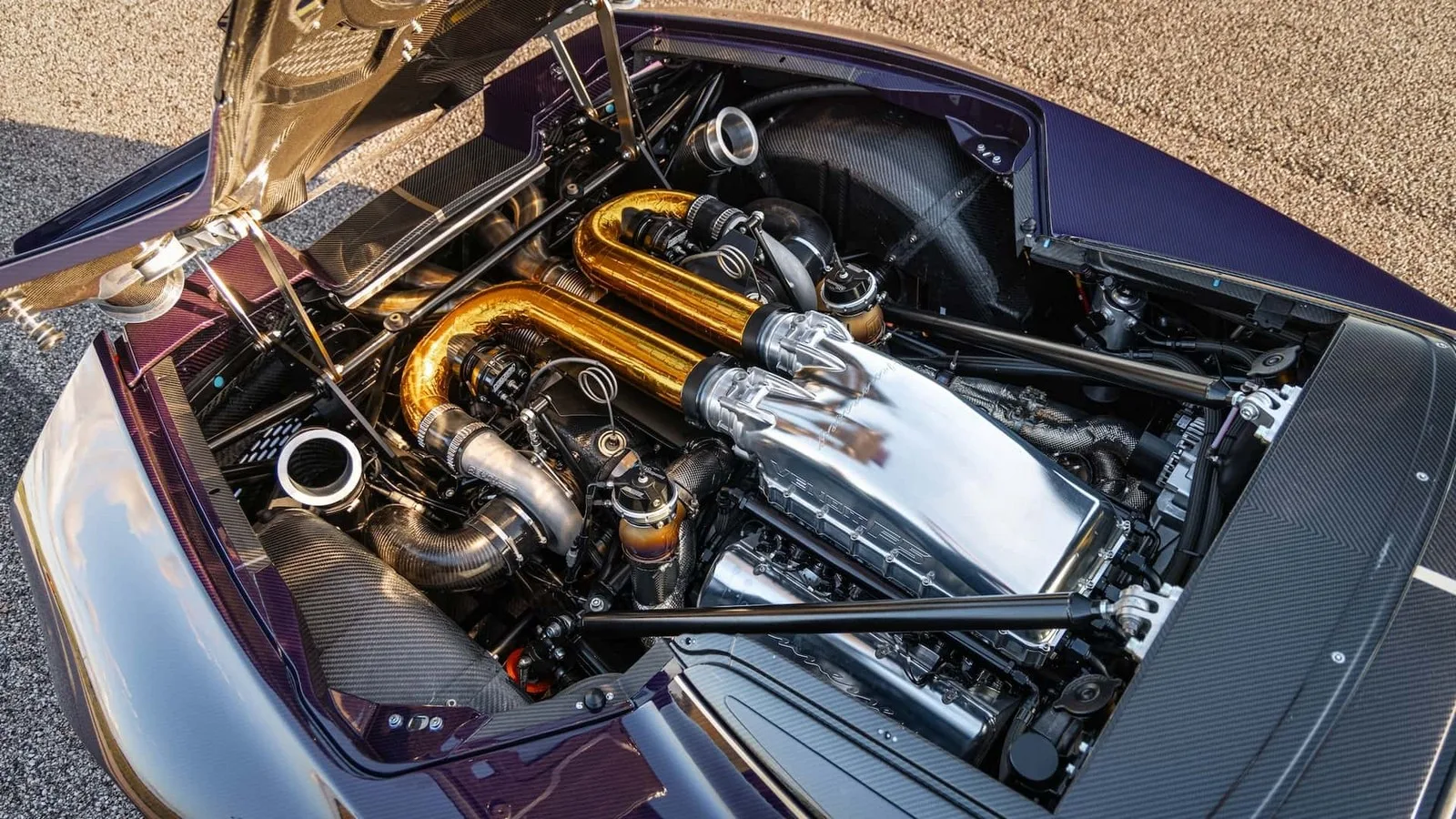
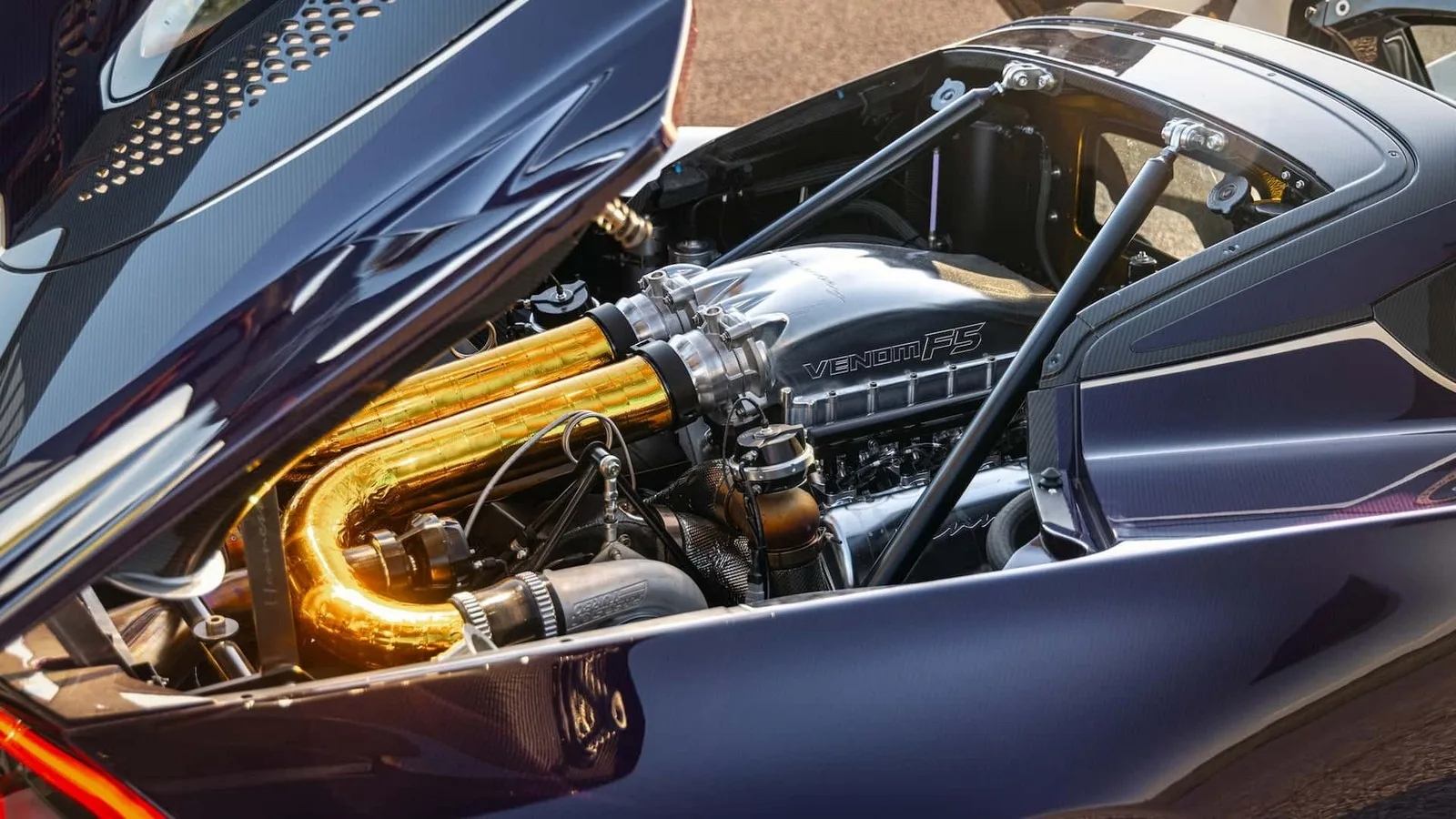
The core of the Hennessey Venom F5-M features the latest evolution of Hennessey’s “Fury” engine architecture. The baseline platform already occupied the highest echelons of internal combustion technology. However, the power plant has undergone extensive recalibration. These changes accommodate its new mechanical interface. The 6.6-liter twin-turbocharged V8 is highly optimized. It delivers an astonishing 2,059 PS (approximately 2,031 brake horsepower). This output cements its position as a mechanical anomaly in the modern automotive space.
                  ┌──────────────────────────────┐
                  │ 6.6L V8 Twin-Turbo ("Fury")   │
                  │ Output: 2,059 PS / 2,031 BHP │
                  └──────────────┬───────────────┘
                                 │
                                 ▼
                  ┌──────────────────────────────┐
                  │ Heavy-Duty Twin-Plate Clutch │
                  └──────────────┬───────────────┘
                                 │
                                 ▼
                  ┌──────────────────────────────┐
                  │ 6-Speed Gated Manual Gearbox │
                  └──────────────┬───────────────┘
                                 │
                                 ▼
                  ┌──────────────────────────────┐
                  │ Mechanical Limited-Slip Diff │
                  └──────────────┬───────────────┘
                                 │
                                 ▼
                  ┌──────────────────────────────┐
                  │ Rear Wheels Only (Pure RWD)  │
                  └──────────────────────────────┘
Immense engineering is required to channel over two thousand metric horsepower through a traditional manual transmission. Standard multi-clutch or planetary automatic gearboxes rely on hydraulic actuation. They use electronic pressure management to smooth out torque spikes. These systems prevent immediate structural failure. In contrast, the F5-M utilizes a heavily reinforced 6-speed gated manual transmission. This unit relies entirely on physical linkages. It uses a heavy-duty twin-plate or triple-plate clutch system. The driver’s left foot modulates engagement directly.
The complete power output is routed exclusively to the rear wheels. Therefore, mechanical and thermal stresses are extreme. These forces heavily impact the rear differential, driveshafts, and tire beads. The vehicle completely lacks an automated gearbox. Consequently, structural protection must be managed via advanced electronic traction algorithms. These programs interface directly with the engine’s wastegates. They also control ignition timing. The setup prevents catastrophic wheelspin. Simultaneously, it preserves a raw, unmitigated analog throttle response.
2. The Global Hypercar Hierarchy
One must analyze the elite stratosphere of modern hypercars to fully understand the F5-M. The global horsepower race is currently dominated by heavily electrified platforms. Complex all-wheel-drive systems are also standard. This context makes the analog packaging of the F5-M a stark mechanical outlier.
| Hypercar Model | Peak Power Output | Drivetrain Layout | Transmission Type | Aspiration / Propulsion |
| Hennessey Venom F5-M | 2,059 PS | Rear-Wheel Drive (RWD) | 6-Speed Gated Manual | Twin-Turbocharged V8 |
| Rimac Nevera R | 2,107 PS | All-Wheel Drive (AWD) | Single-Speed Direct Drive | Quad-Motor Electric (EV) |
| Koenigsegg Gemera | 2,300 PS | All-Wheel Drive (AWD) | 9-Speed Light Speed (LST) | Twin-Turbo 3-Cyl + Electric |
| Bugatti Tourbillon | 1,800 PS | All-Wheel Drive (AWD) | 8-Speed Dual-Clutch (DCT) | Naturally Aspirated V16 + Hybrid |
ℹ️ Technical Note: The Rimac Nevera R utilizes instant electric torque vectoring. The Koenigsegg Gemera relies on a complex hybrid system. This setup is paired with a multi-clutch, multi-gear transmission layout. In contrast, the Hennessey Venom F5-M remains completely unassisted by electrification. It stands as the absolute highest-output production combustion vehicle ever paired with a physical gear lever. A manual clutch pedal completes the package.
The choice of a 6-speed layout is deliberate. Hennessey rejected 7-speed or 8-speed manual configurations. This decision is rooted in mechanical packaging and structural durability. Internal gears must withstand the gargantuan torque output of the 6.6-liter engine. Therefore, the internal shafts require substantial physical width. Hennessey engineers limited the transmission to six forward speeds. This maximized the thickness of each individual gear-tooth face. The design successfully mitigates the risk of structural shearing under high load factors in lower gears.
3. Structural Re-Engineering and Advanced Aerodynamics
A hypercar designed to approach the 400 km/h threshold faces severe complications without a roof. Removing this component introduces major structural and aerodynamic challenges. A continuous load path requires a fixed roof structure. Without it, a hypercar chassis is highly susceptible to torsional twisting. This issue occurs when the vehicle is subjected to violent torque spikes. These spikes are generated by aggressive, un-isolated manual gear shifts.
The Carbon Monocoque Core
Hennessey engineered a revised iteration of its signature chassis to combat deflection. The foundation is a rigid carbon fiber monocoque core. This central tub features altered carbon weave patterns. Engineers optimized the layering profiles around the transmission tunnel. The rear bulkhead pick-up points were also reinforced. By strengthening these specific zones, the chassis provides a completely rigid foundation. This rigidity supports the mechanical gear linkages. It ensures that the gate selector alignments remain microscopic in precision. The alignment holds true even when the chassis faces high lateral G-forces during cornering.
[Open Roadster Cockpit] ──► Subject to Torsional Twist & Aerodynamic Lift
        │
        ▼
[Engineering Solutions Applied]
 ├── Reinforced Carbon Fiber Monocoque Core (Optimized Layering)
 ├── Forward-Facing Carbon Fiber Roof Scoop (High-Pressure Plenum Feed)
 └── 1,400 mm Dorsal Stabilizing Fin (Laminar Flow Control >320 km/h)
Aerodynamic Manipulation at Extreme Velocities
Operating a roadster at speeds exceeding 320 km/h requires highly meticulous airflow management. Proper engineering prevents dangerous front-axle lift. It also eliminates extreme cockpit turbulence. Hennessey’s aerodynamic department implemented three primary exterior revisions:
-
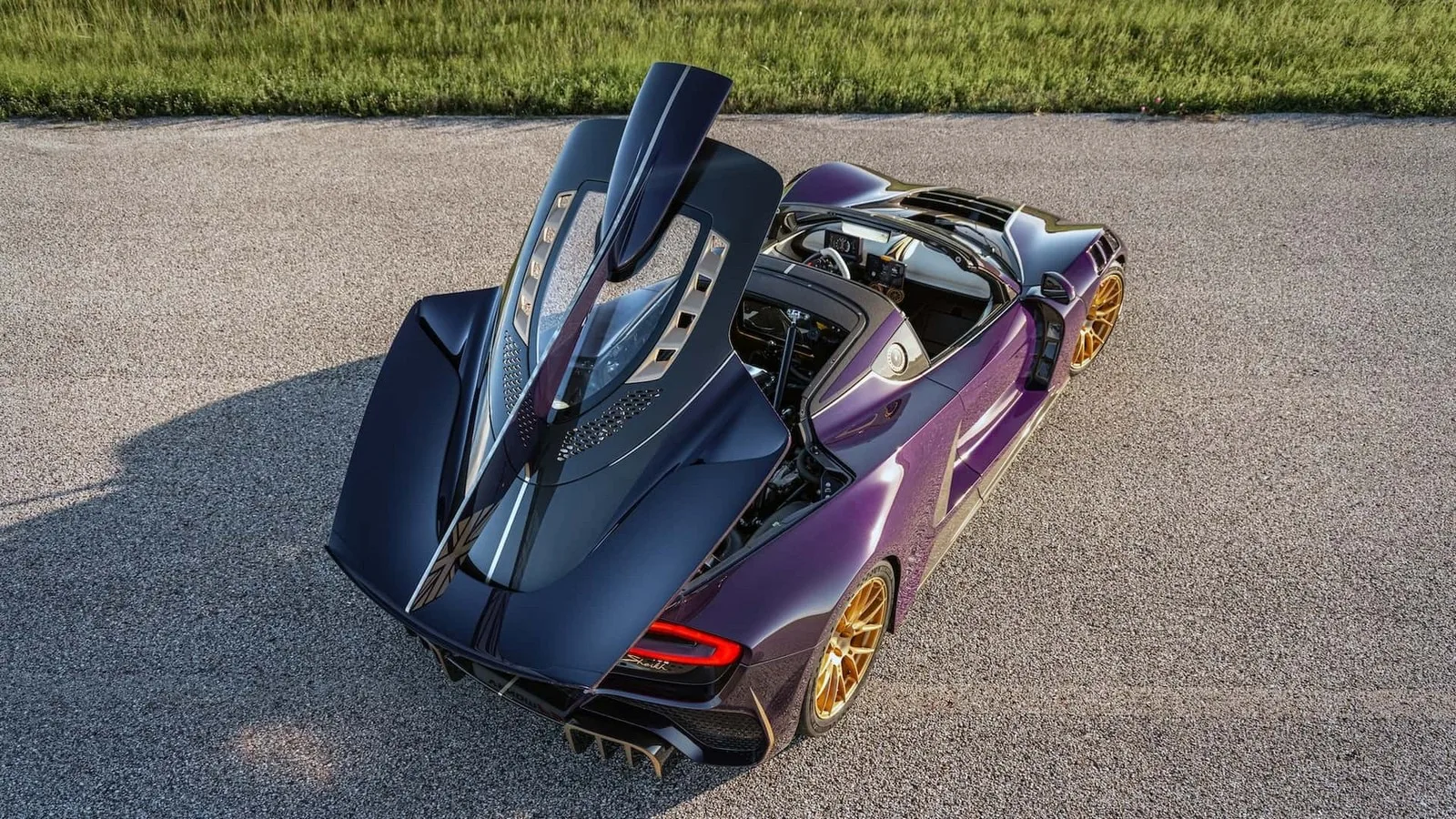
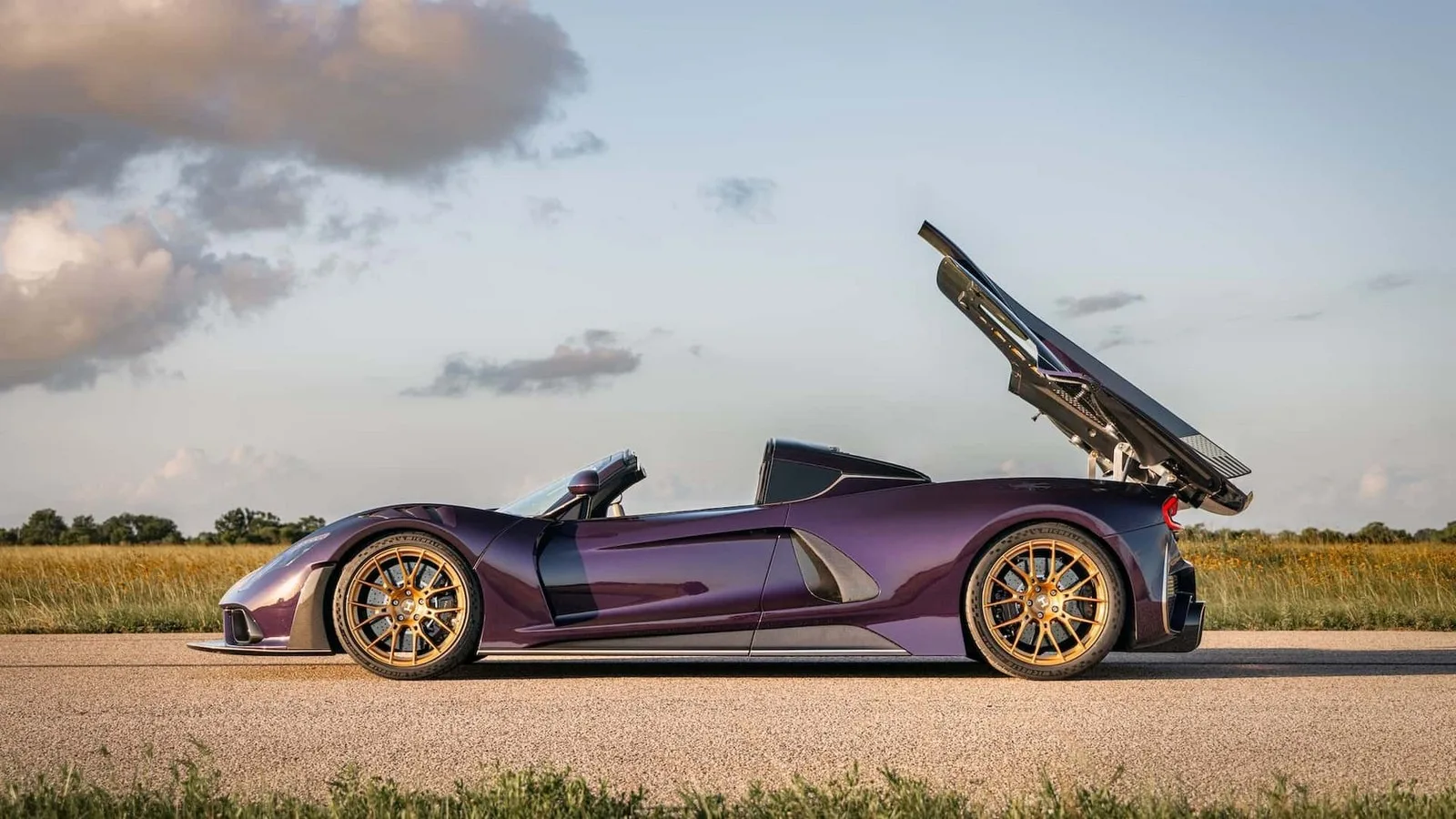
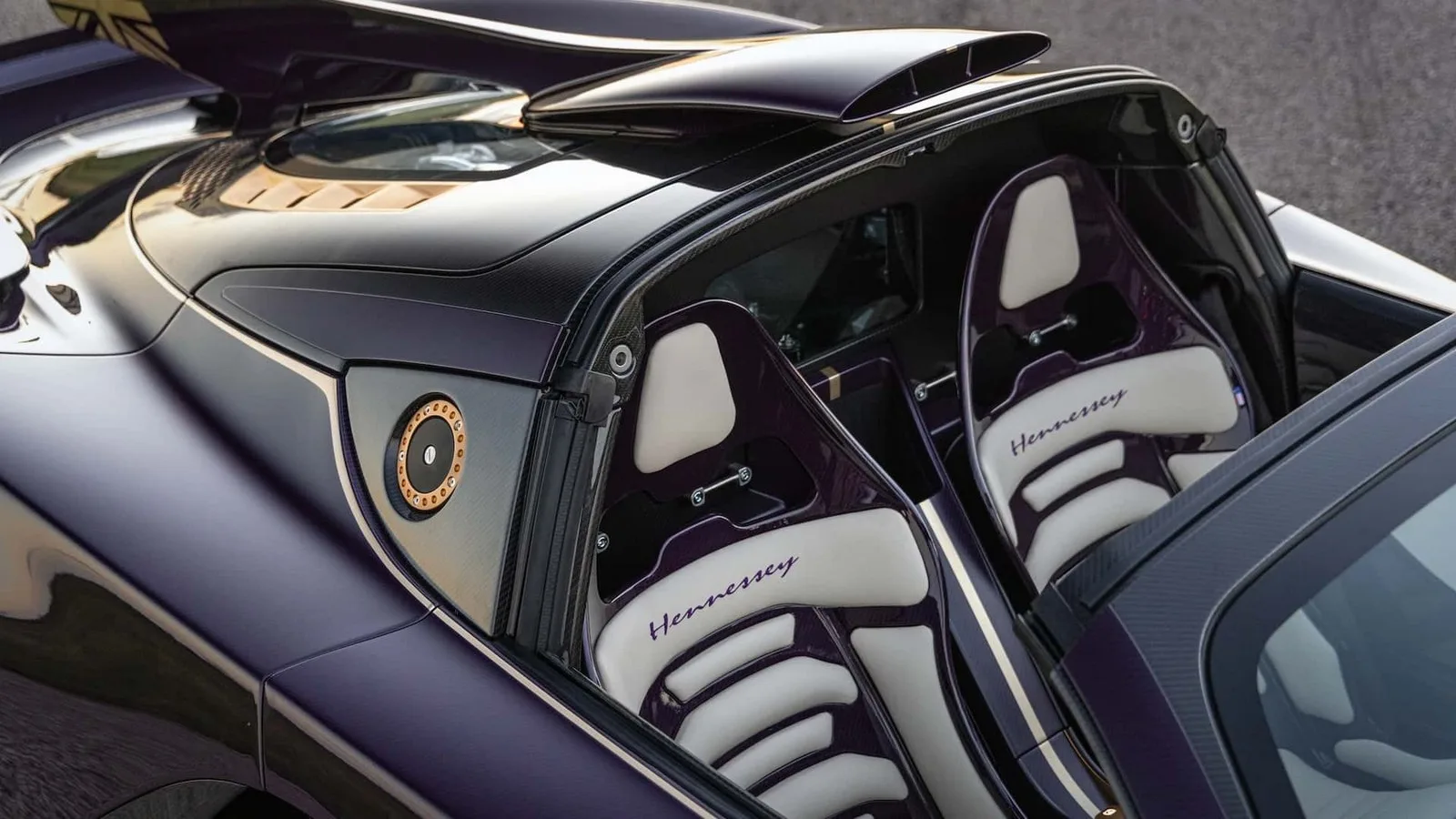
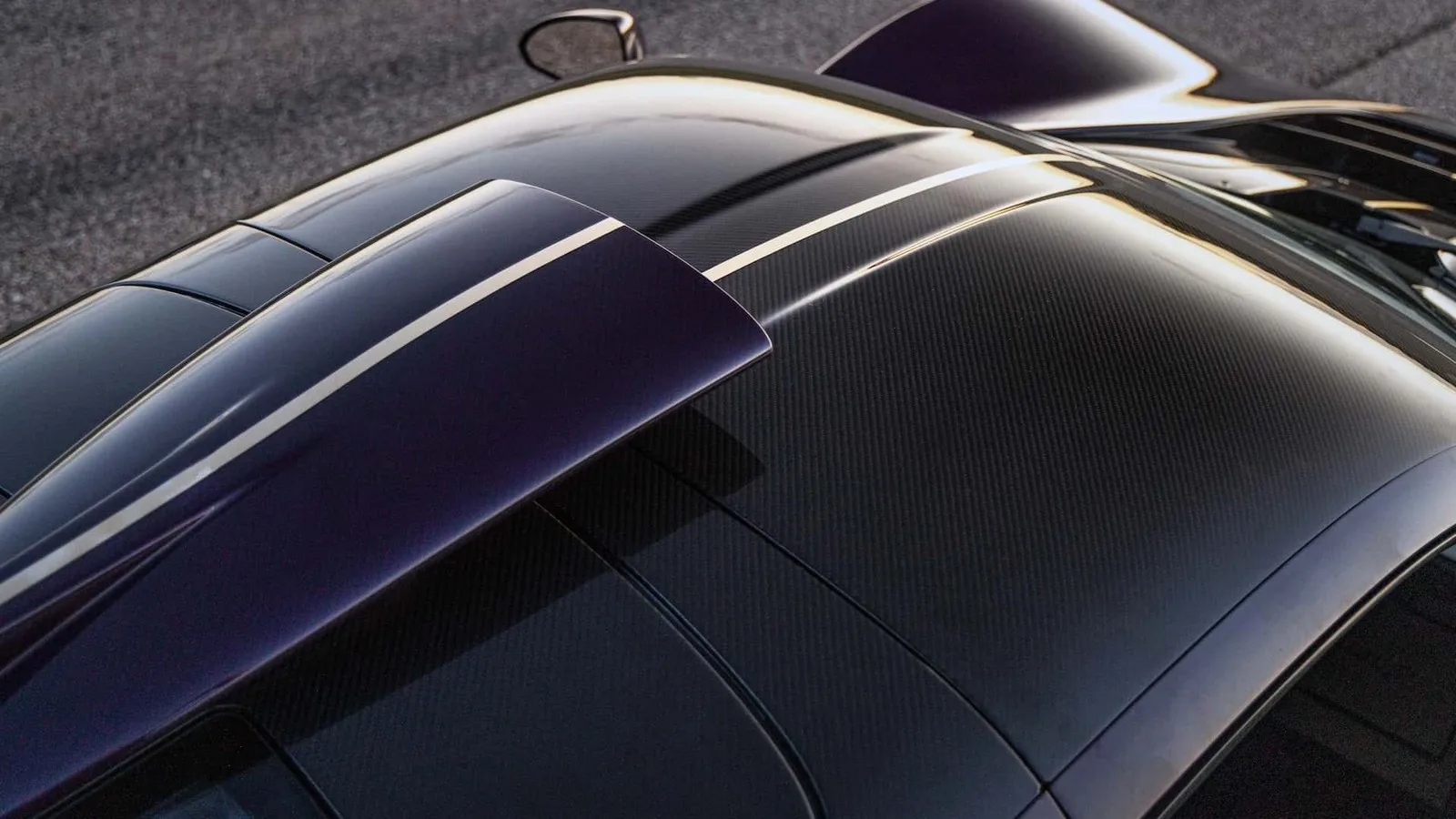
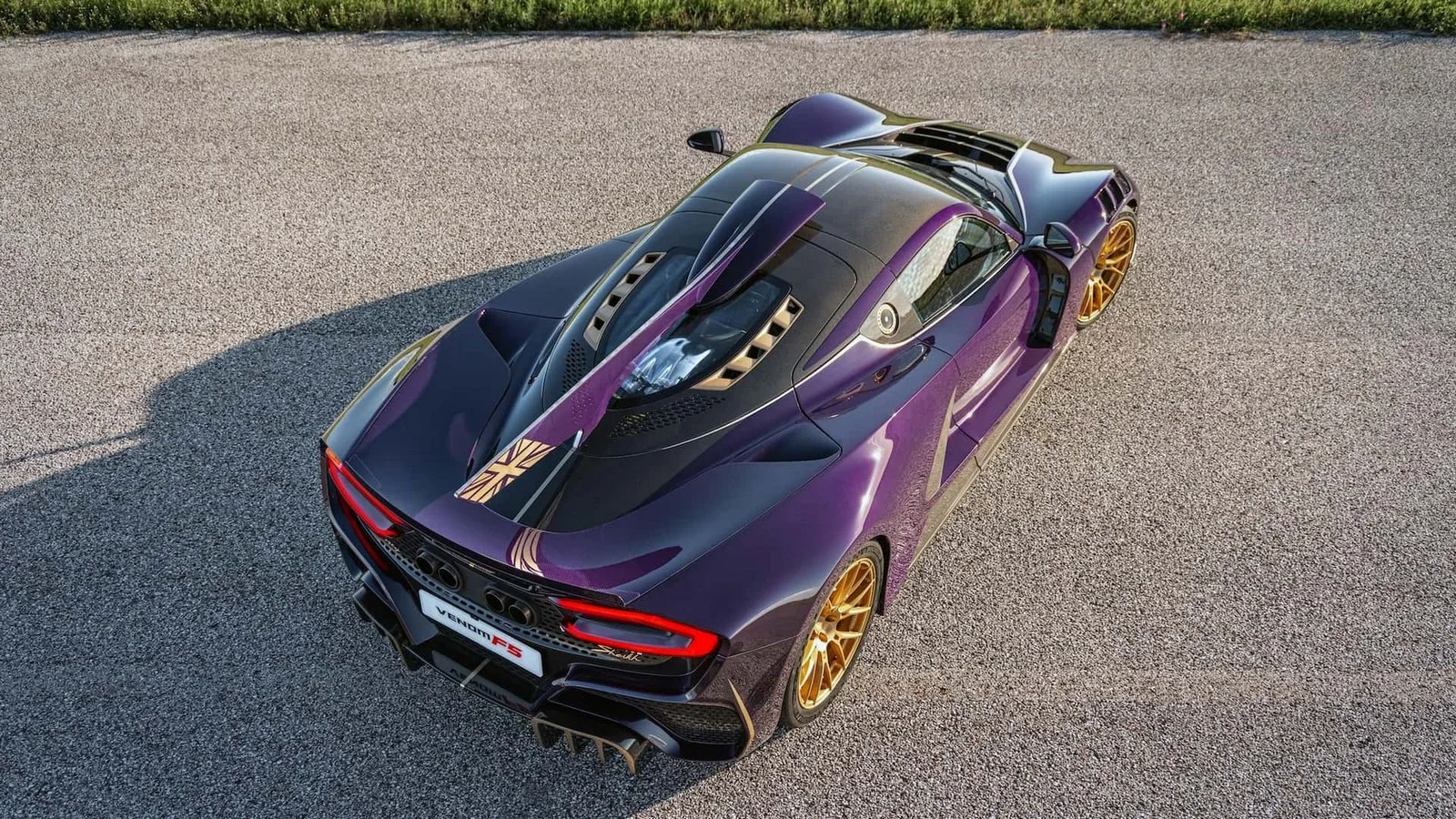
Integrated High-Pressure Roof Scoop: A rigid carbon fiber intake tract is mounted directly above the open passenger cabin. This element captures clean, high-velocity air. The air is forced directly down into the twin-turbo V8’s carbon intake plenum. This architecture creates a ram-air effect. The system completely offsets the turbulent wake created by the missing fixed roof structure.
-
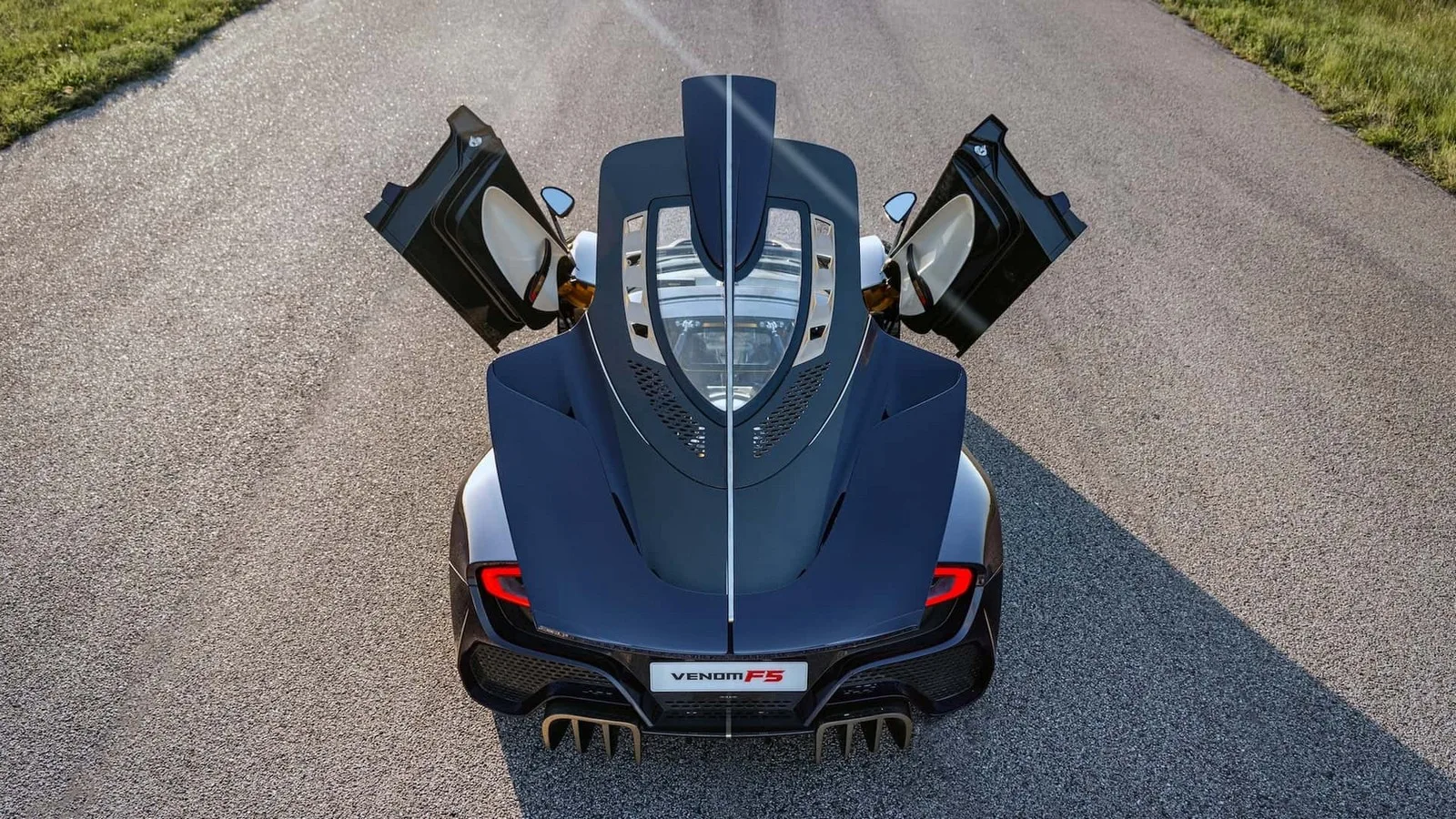
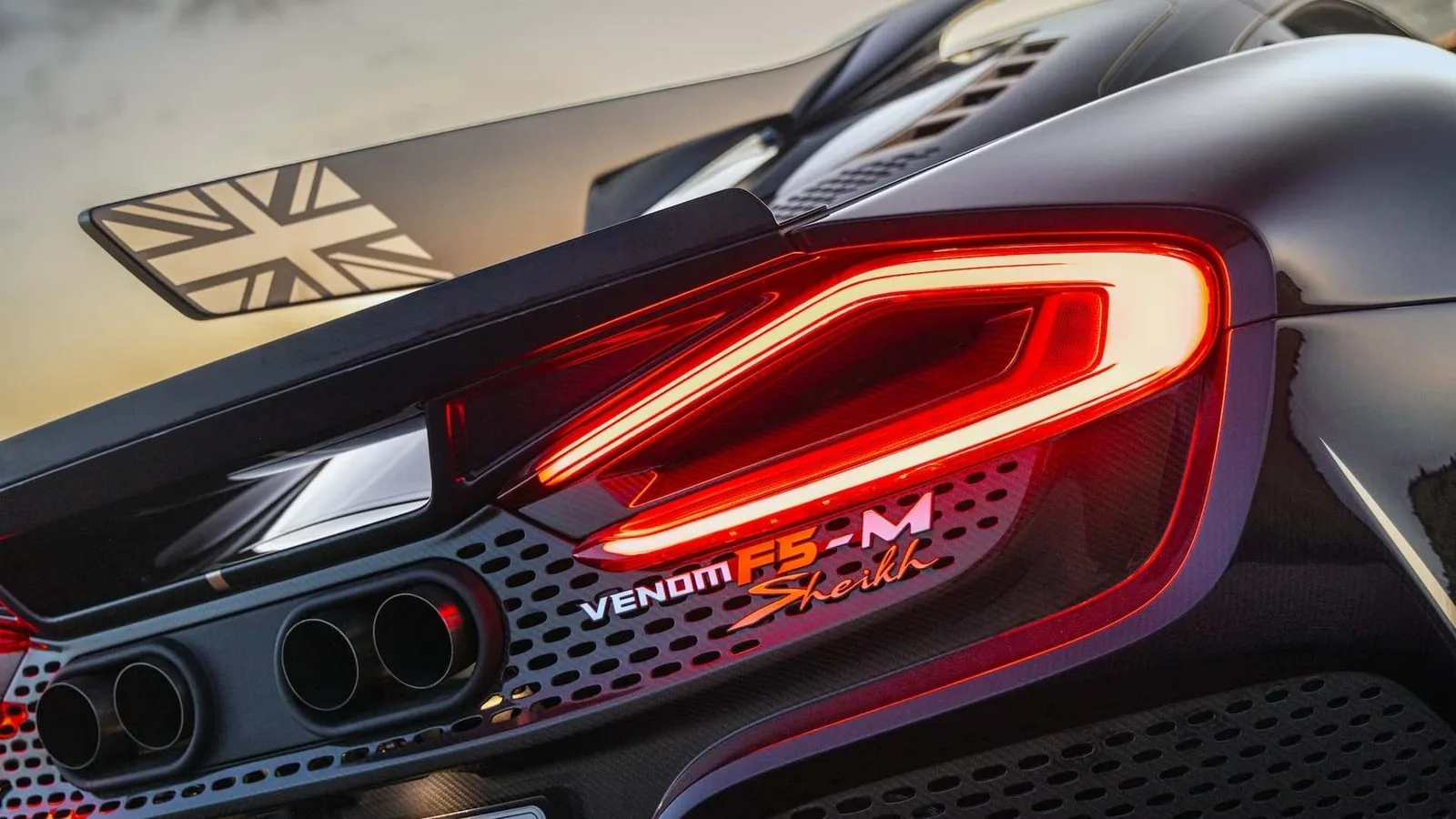
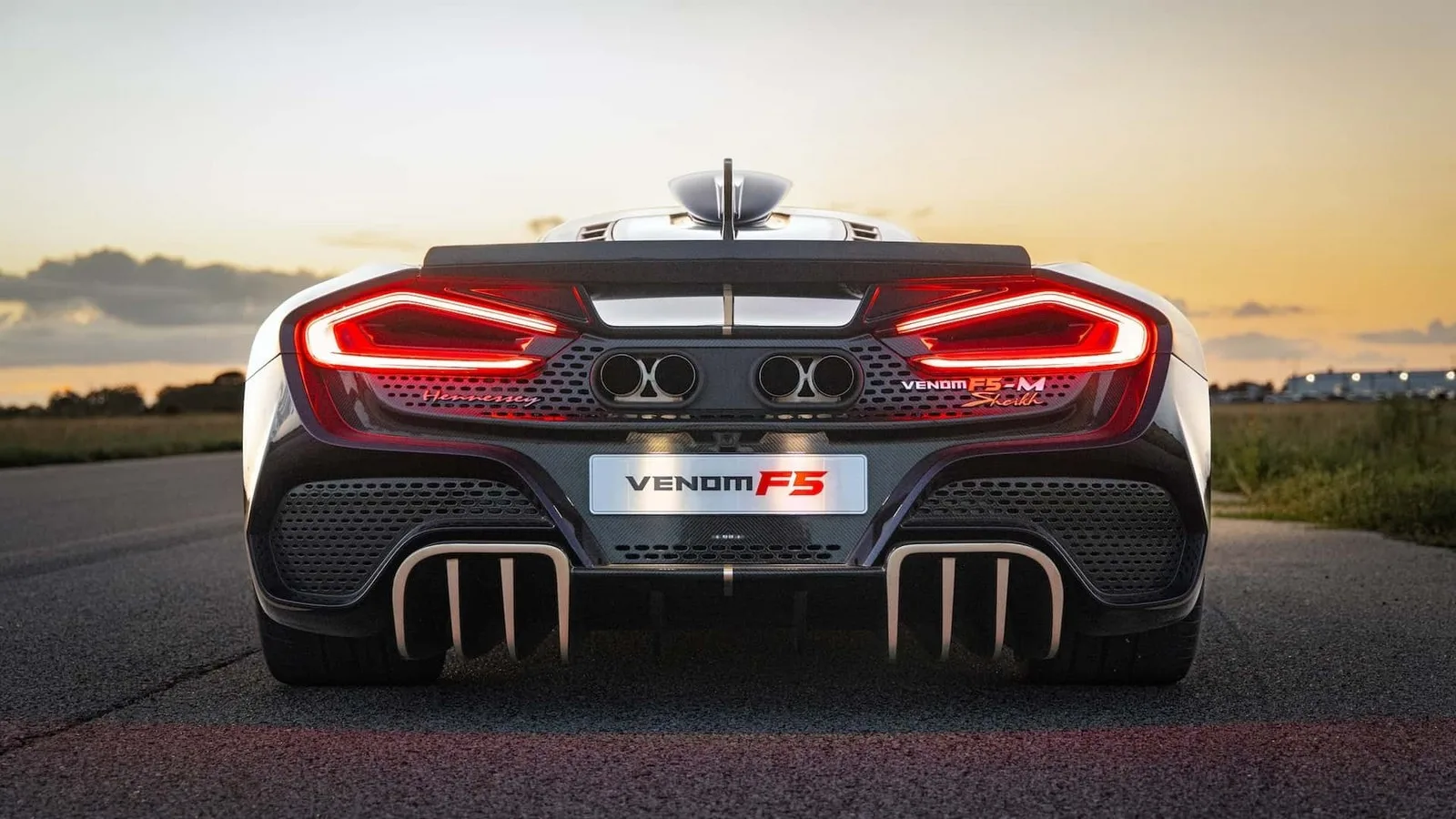
Extended Dorsal Fin: A prominent stabilizing fin bisects the rear decklid. This component is heavily optimized using computational fluid dynamics (CFD). The structural element spans from the trailing edge of the roof scoop to the integrated rear spoiler. Its primary function is to eliminate lateral air stall. It also maximizes directional stability during high-speed tracking. The fin acts as a kinetic rudder.
-
Adaptive Suspension Control Architecture: The Venom F5-M integrates an active, adaptive damping suspension setup. This layout complements the revised aerodynamic profile perfectly. The system utilizes real-time sensors. These sensors monitor vehicle ride height and pitch variation under hard braking. Roll angles during cornering are also measured. The dampers modify their valving stiffness within milliseconds. This rapid adjustment ensures stable contact patches. The Michelin Pilot Sport Cup 2 R rear tires maintain uniform force distribution against the tarmac during manual shifts.
4. Bespoke Engineering: The Maverick Customization Ecosystem
Production volumes of Hennessey Special Vehicles are exceptionally low. Therefore, the buying process is an intensely collaborative engineering exercise. The client works directly with the manufacturer. This design philosophy is managed through Hennessey’s highly specialized Maverick customization program.
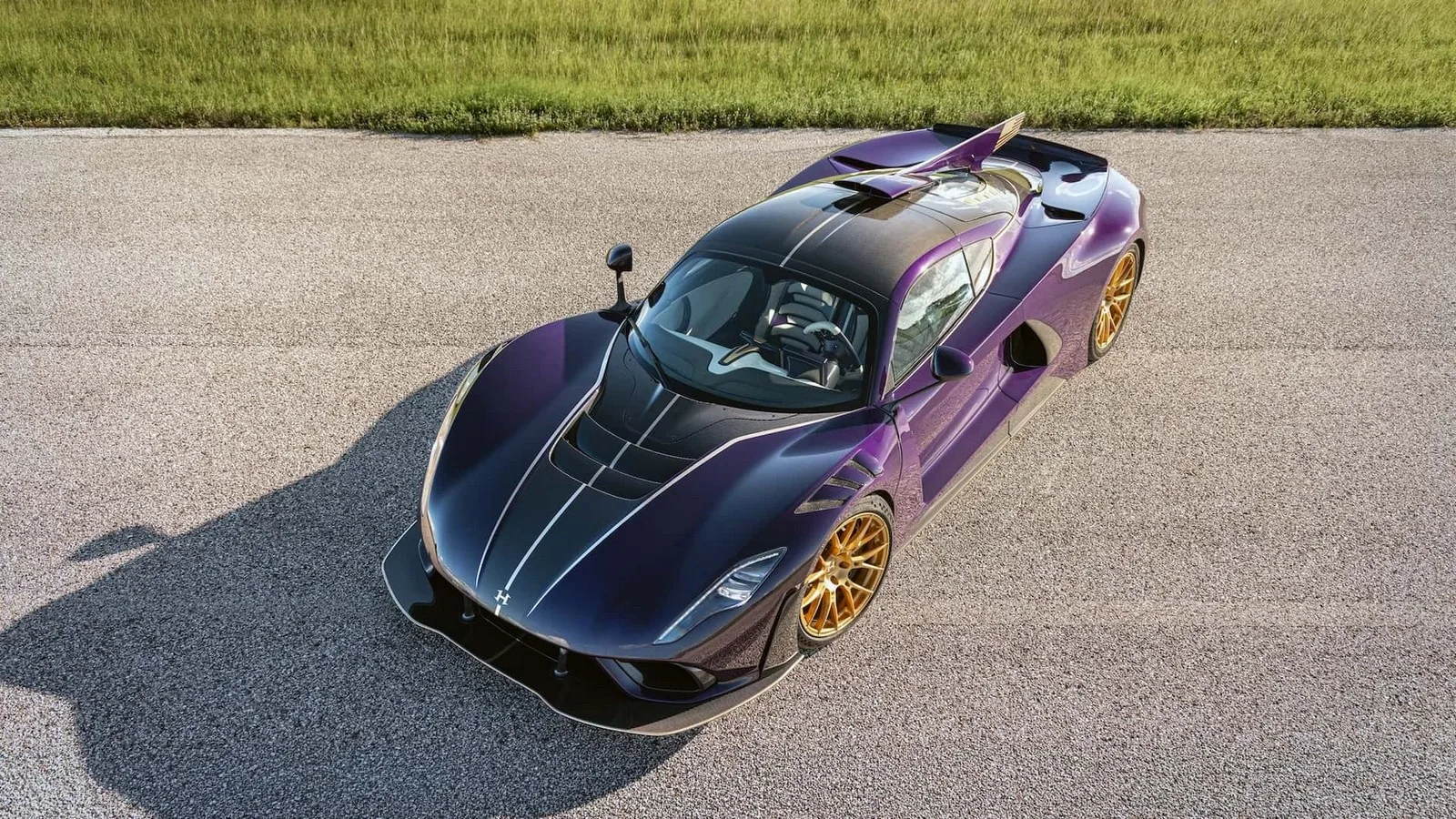
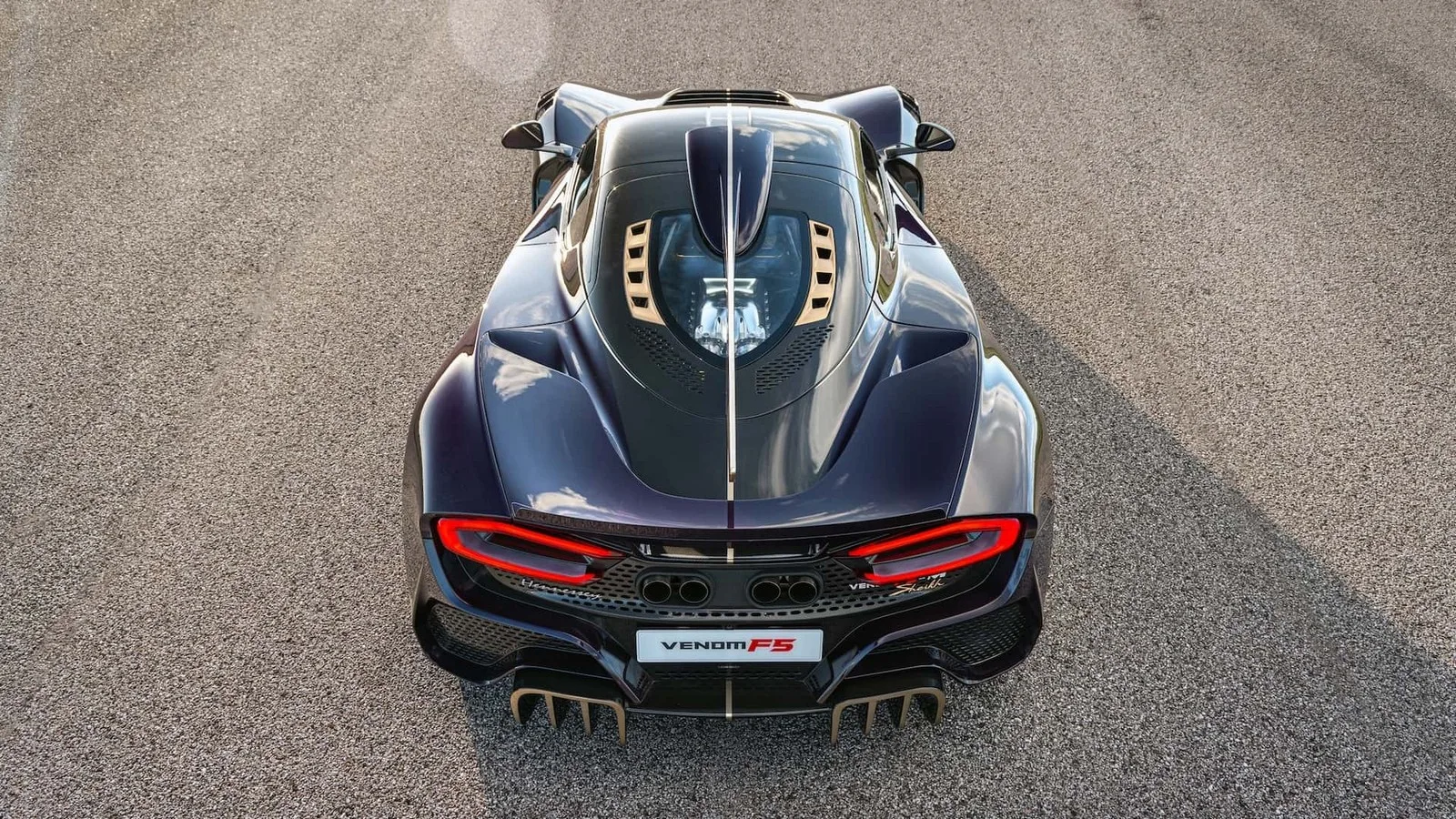
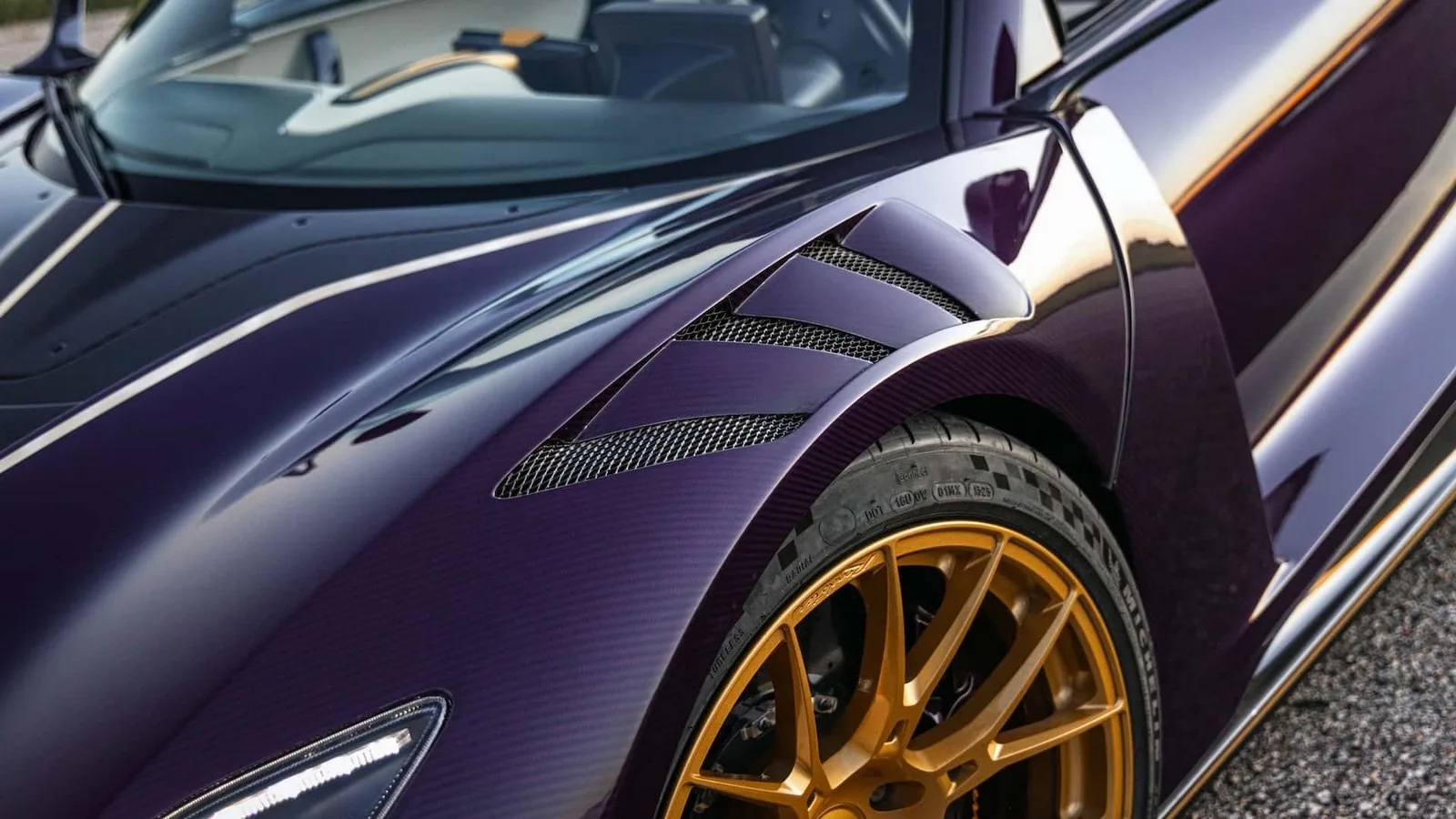
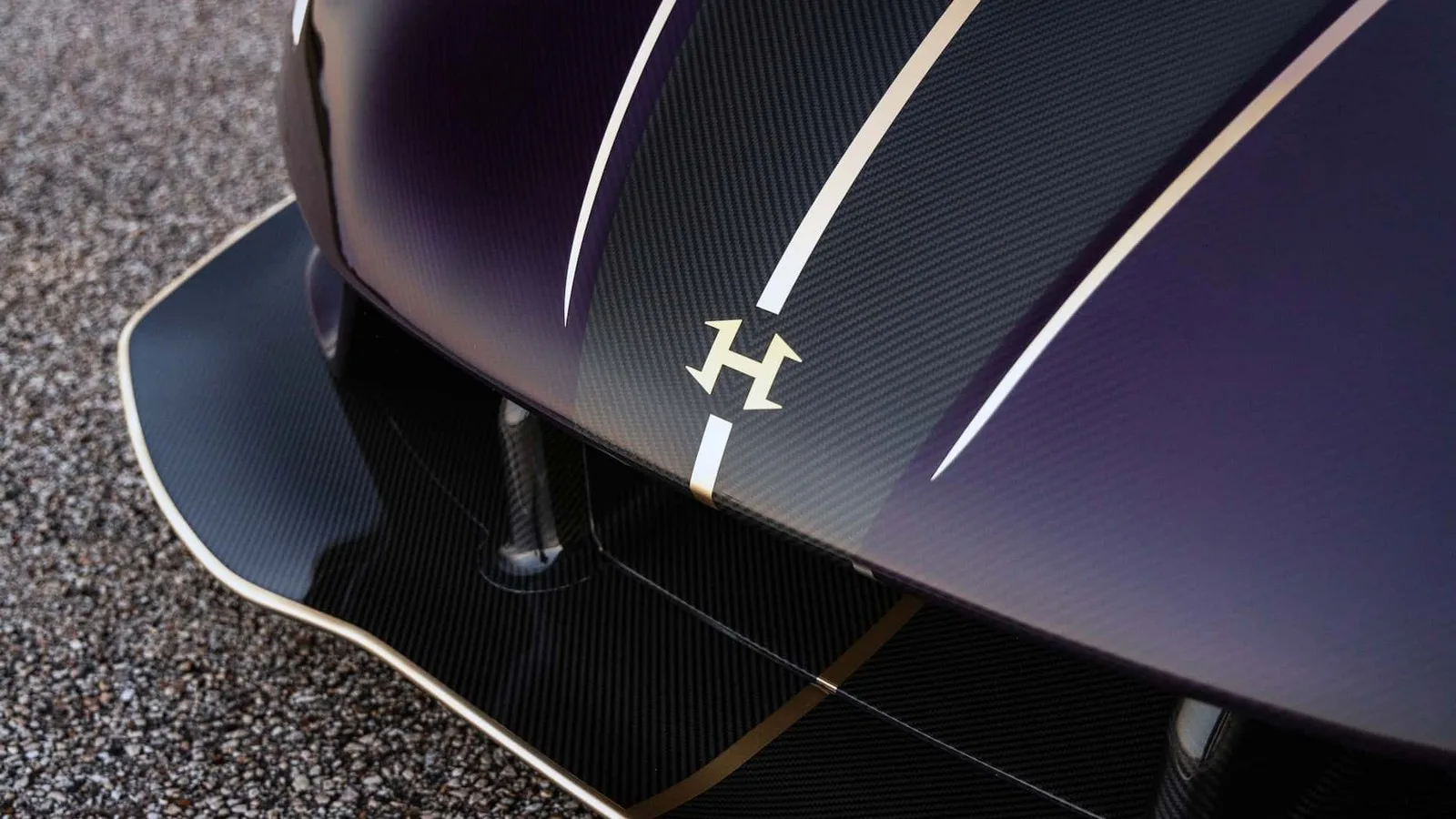
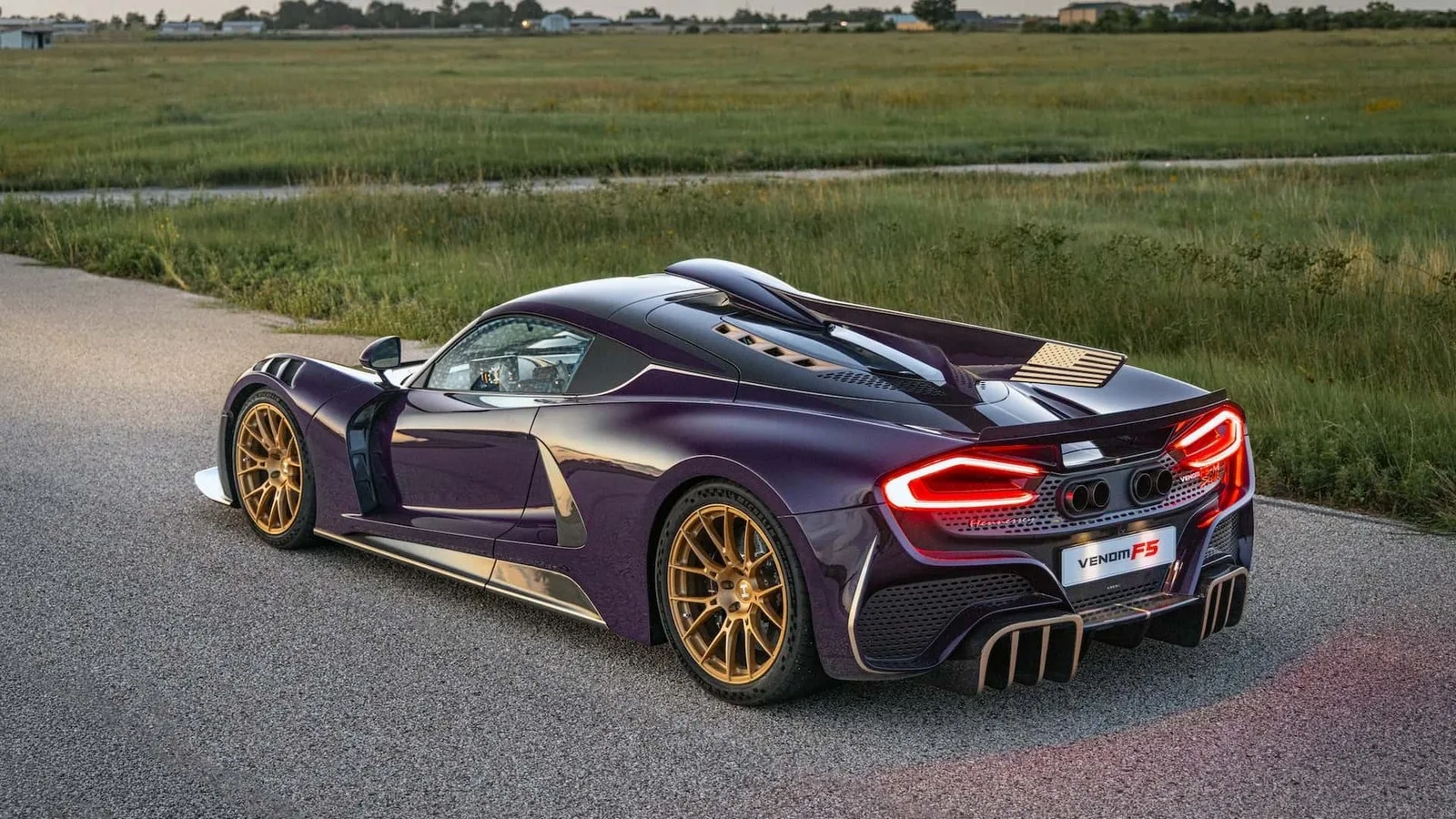
A performance enthusiast based in the United Kingdom commissioned the inaugural production unit of the Venom F5-M. The buyer did not rely on standard catalog paint finishes. Instead, the vehicle was constructed using a highly complex purple-tinted exposed carbon fiber technique. A specialized, ultraviolet-resistant translucent clear coat is used. This resin is mixed with custom purple pigments. It is applied directly over the raw, symmetrical carbon fiber sheets. The method ensures that the structural carbon weave remains completely visible under direct light.
              [Bespoke Maverick Program Specifications]
                                 │
         ┌───────────────────────┴───────────────────────┐
         ▼                                               ▼
[Material Enhancements]                         [Identity Integration]
 - Purple-Tinted Translucent Carbon Resin        - Hand-Drawn Monocoque Pin-Striping
 - 24-Karat Gold Exterior Leaf Inlays           - Laser-Etched Family Nomenclature
 - High-Temperature Ceramic Exhaust Shielding   - Custom Anodized Aluminum Gated Plate
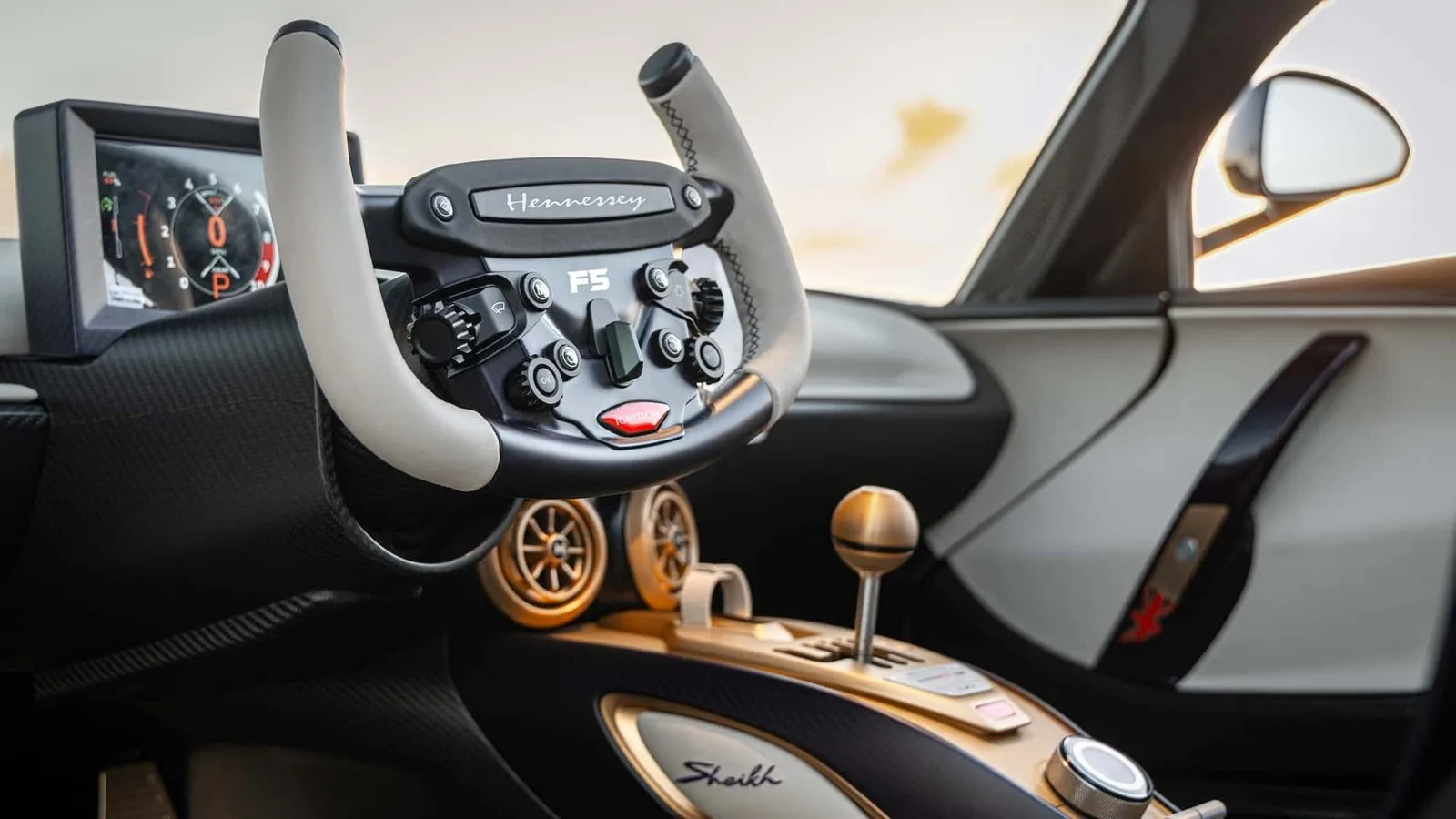
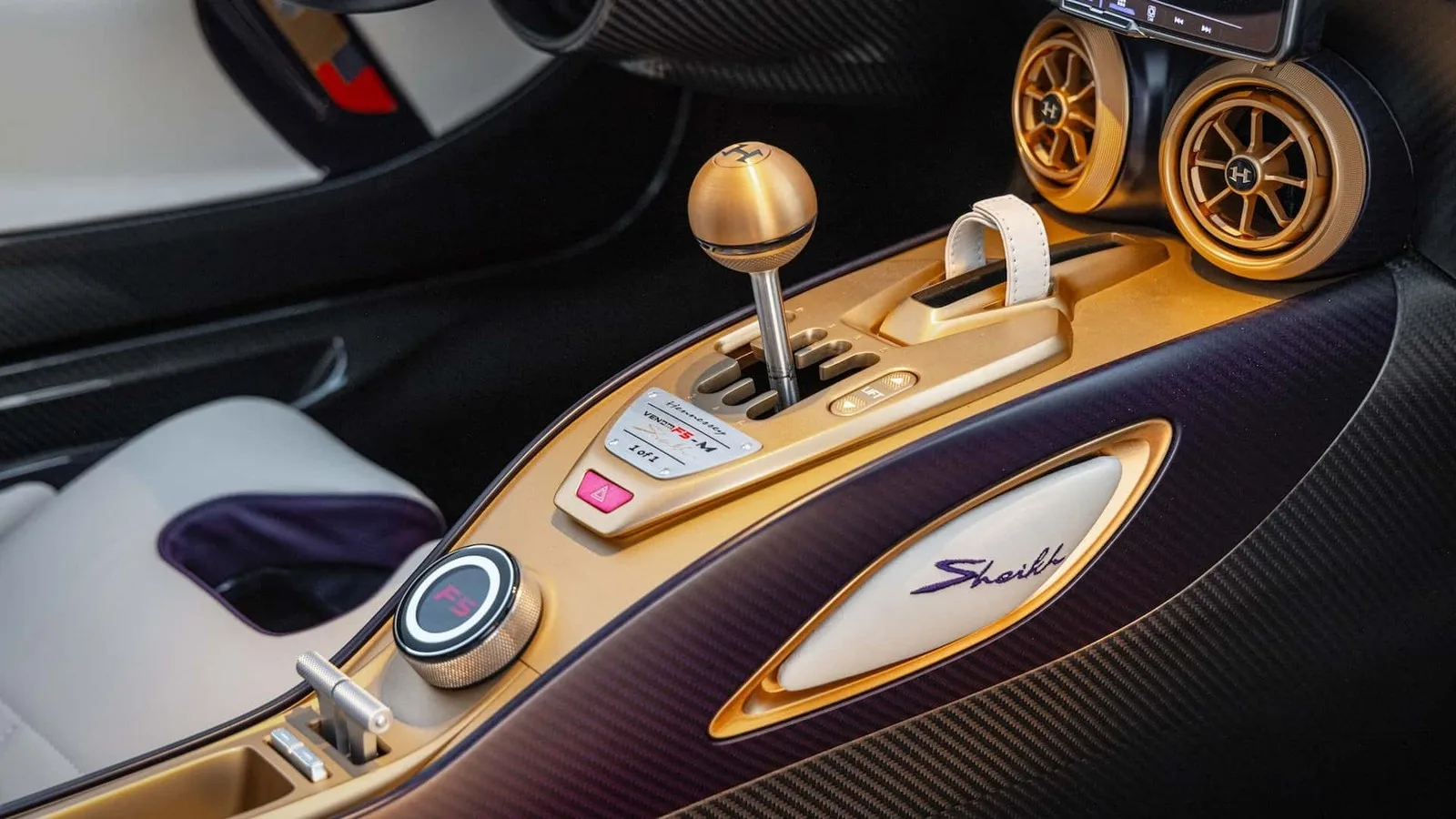
Custom accent lines complement the tinted carbon substructure beautifully. These lines are executed in genuine 24-karat gold leaf. Technicians inlay these gold accents meticulously by hand. They place them into recessed body grooves before the final protective clear coats are baked in. Hand-drawn national flags are detailed onto both vertical flanks of the prominent central dorsal fin to further personalize the vehicle. The owner’s family nomenclature is permanently laser-etched into the metallic framework. It sits on the interior center console. The text is positioned directly adjacent to the custom-anodized aluminum gated shifter plate.
5. Mechanical Integration of the Gated Shifter
The physical gear shifting apparatus defines the Hennessey Venom F5-M interior. Hennessey engineers rejected hidden cables. They also avoided electronic “shift-by-wire” actuators that merely mimic a manual feel. Instead, they developed a fully mechanical, solid-rod linkage system. The shift lever rises vertically out of a precision-machined billet aluminum gate plate. This setup exposes the raw physical slots for all six forward gears and reverse.
⚠️ WARNING: Operating a manual transmission paired with a twin-turbocharged architecture requires profound driver discipline. The small-block V8 produces over 2,000 PS. Modern automated vehicles protect the engine from operator error. However, this manual layout allows for the possibility of an accidental downshift at high RPM. This error is commonly referred to as a “money shift”. It can instantaneously over-rev the valvetrain. The mistake causes catastrophic internal engine failure.
Hennessey incorporated an electro-mechanical reverse lockout gate to partially mitigate this risk. This safety feature does not reduce driver engagement. Engineers also added a heavy, spring-loaded gate centring mechanism. This system operates efficiently between the third-and-fourth gear plane. The clutch pedal assembly is fully adjustable. It utilizes a modular hydraulic master cylinder. This component allows the owner to customize the physical weight of the pedal. The biting point of the clutch can also be altered to match personal preference. This custom adjustability is a critical feature. It is necessary given the immense pressure required to clamp a 2,059 PS driveline securely.
6. Financial Stratification and Production Scarcity
Availability is kept strictly limited due to extensive engineering overhead. Hennessey had to redesign a hypercar carbon chassis for a mechanical shifter. The team also recalibrated the twin-turbo engine mapping for manual clutch engagement. Furthermore, open-top aerodynamics required comprehensive re-engineering. Consequently, Hennessey Performance will produce exactly 12 units of the Venom F5-M Roadster worldwide.
The financial acquisition cost of the vehicle reflects its extreme mechanical exclusivity. The Hennessey Venom F5-M is priced at a base MSRP of 2.65 million Dollars. This sum translates to approximately 2.32 million Euros under current market evaluations. One can evaluate the vehicle’s position relative to its fixed-roof sibling to understand the premium commanded by this bespoke analog configuration:
-
Hennessey Venom F5 Coupé (Standard Automated Packaging): Base price begins at approximately 2.1 million Dollars (~1.84 million Euros).
-
Hennessey Venom F5-M Roadster (Gated Manual Packaging): Premium fixed price of 2.65 million Dollars (~2.32 million Euros).
This delta of over half a million dollars represents more than just the transition to an open cockpit. The price covers the structural amortization of a highly complex, low-volume engineering program. Hennessey guarantees that each vehicle will operate as a highly appreciated mechanical relic by capping total production at just twelve units globally. The F5-M represents the absolute historical apex of pure internal combustion performance. It stands as a monument to mechanical interaction. This vehicle arrives before legislative mandates, mandatory hybrid integration, and total electrification permanently extinguish the raw art of the manual gear shift.
Source: 2027 Hennessey Venom F5-M: Hypercar mit 2.059 PS und Handschaltung!
✍️ Author: Bejenaru Alexandru Ionut – [email protected]

Recommendation: Looking for a professional bi-directional diagnostic tool with full system coverage? Use code DIAGNOZABAM for 10% off.
Transparency note: Affiliate link. Purchasing through it costs you nothing extra. View Thinkcar Deal →