
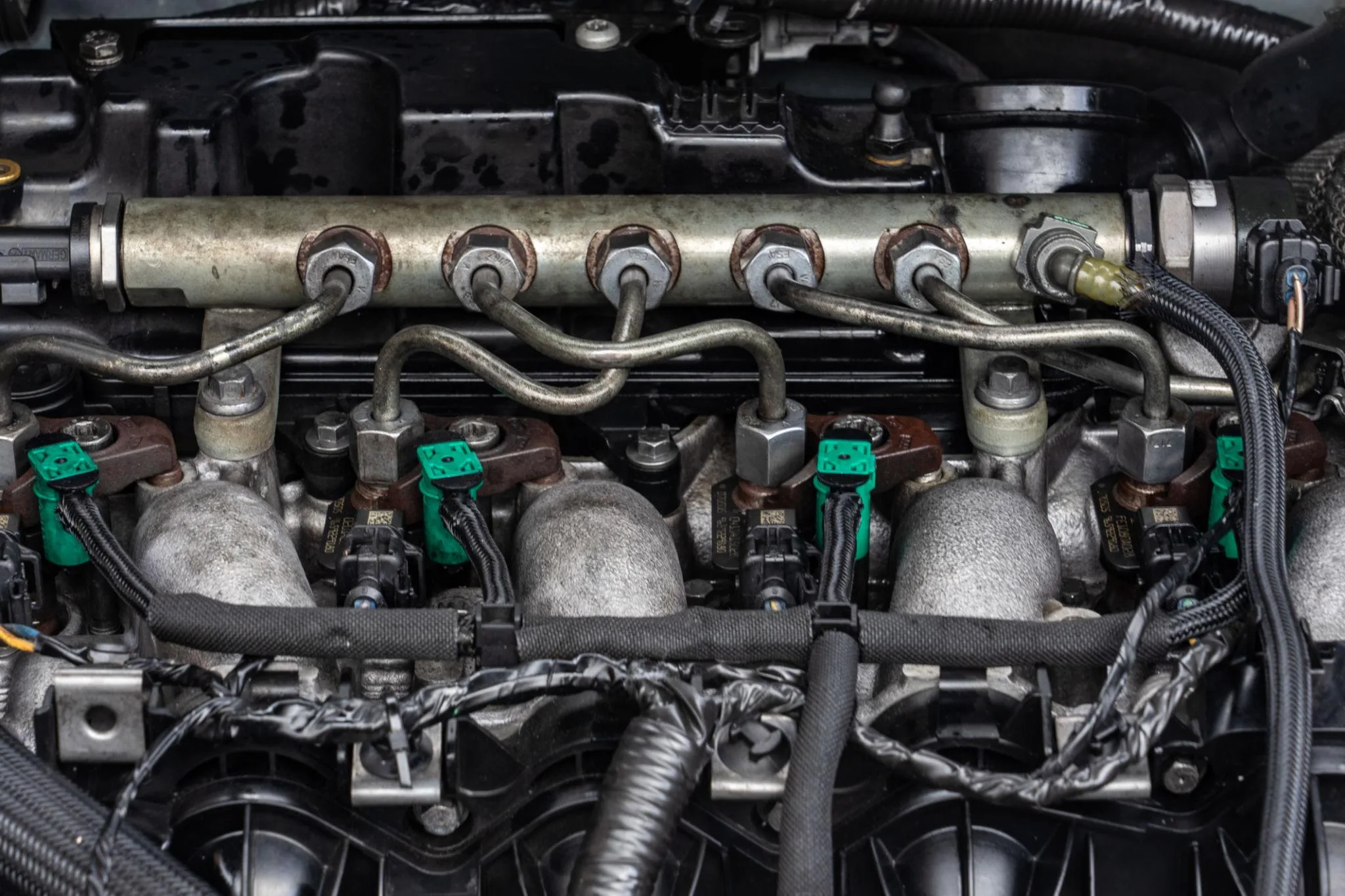
The P0088 fault code is one of the most dangerous diesel-related common rail errors. When P0088 appears, the engine control module (ECM) detects that fuel rail pressure exceeds calibrated safety limits for the current operating conditions.
Unlike P0087 (fuel pressure too low), which mainly causes power loss, P0088 can rapidly damage injectors, the high-pressure pump, and in extreme cases internal engine components.
In real workshop diagnostics, P0088 is treated as a priority fault — not something to ignore or simply clear.
What P0088 Actually Means
The official OBD2 definition of P0088 is:
“Fuel Rail/System Pressure Too High.”
The ECM continuously compares:
-
Desired rail pressure (commanded value)
-
Actual rail pressure (measured by the rail pressure sensor)
If actual pressure exceeds the allowed tolerance window, the ECM stores P0088.
OBD2 diagnostic standards are defined internationally by SAE International:
https://www.sae.org
How the Common Rail System Works (Technical Overview)
Modern diesel common rail systems include:
-
High-pressure fuel pump
-
Fuel pressure regulator (on pump or rail)
-
Common rail
-
Rail pressure sensor
-
ECM
Typical pressure ranges:
-
250–400 bar at idle
-
1000–1800 bar during acceleration
-
Up to 2500 bar on modern systems
The ECM adjusts pressure depending on:
-
Engine load
-
RPM
-
Accelerator position
-
Temperature
-
Emissions control strategy
When pressure cannot be regulated properly and exceeds limits, P0088 is triggered.
What Physically Happens When Pressure Is Too High
Many drivers assume higher pressure equals better performance. That is incorrect.
Excessive rail pressure causes:
🔥 1. Aggressive Fuel Injection
Over-pressurized injection can lead to:
-
Harsh combustion
-
Diesel knock
-
Increased cylinder pressure spikes
🧱 2. Injector Wear and Internal Damage
Injector nozzles are extremely precise. Excess pressure accelerates mechanical wear.
🛢 3. Oil Dilution Risk
If injectors begin leaking due to excessive stress, fuel may contaminate engine oil.
💣 4. Piston or Connecting Rod Stress (Rare but Possible)
Especially in tuned or remapped engines where safety thresholds are modified.
Real-World Symptoms of P0088
When P0088 is active, drivers may notice:
-
Check Engine Light
-
Hard metallic combustion noise
-
Harsh acceleration
-
Limp mode activation
-
Difficult hot restart
In severe cases, the ECM may limit engine RPM to prevent catastrophic damage.
Most Common Real Causes of P0088
1️⃣ Stuck Fuel Pressure Regulator (Closed Position)
The most common cause. If the regulator cannot release excess pressure, the rail becomes over-pressurized.
2️⃣ Faulty Rail Pressure Sensor
Incorrect high readings may trigger P0088, even if mechanical pressure is normal.
3️⃣ High-Pressure Pump Malfunction
Internal pump failure can cause uncontrolled pressure spikes.
4️⃣ Blocked Fuel Return Line
If excess fuel cannot return to the tank, pressure builds up.
5️⃣ Aggressive ECU Remap
Modified software may push rail pressure beyond safe factory limits.
Diagnostic Strategy – Professional Approach
Proper diagnosis of P0088 requires more than reading the code.
Step 1 – Full OBD2 Scan + Freeze Frame
Check related codes such as:
-
P0191 (pressure range/performance)
-
P0087 (pressure too low fluctuations)
-
P0093 (large fuel leak detected)
Step 2 – Live Data Monitoring
Compare:
-
Desired rail pressure
-
Actual rail pressure
-
Regulator duty cycle
If actual pressure remains high while regulator duty cycle attempts to lower it, the regulator may be stuck.
Step 3 – Return Flow Test
Measure injector return flow to rule out injector internal damage.
Step 4 – Mechanical Pressure Verification
Use specialized pressure gauges if sensor data is suspicious.
Clearing P0088 without proper verification is a serious diagnostic mistake.
More diesel OBD2 technical guides are available at:
👉 https://diagnozabam.ro
2026 Estimated Repair Costs
Typical repair costs:
-
Rail pressure sensor: €90–200
-
Fuel pressure regulator: €180–400
-
High-pressure pump replacement: €700–1700
-
Injector replacement: €250–600 per injector
If ignored, total repair cost can exceed €2000–4000.
Brands Frequently Affected
The P0088 code commonly appears on diesel engines from:
Especially on 1.6L, 2.0L and 3.0L diesel platforms.
Long-Term Risk If Ignored
Ignoring P0088 can lead to:
-
Injector nozzle damage
-
Pump failure
-
Internal engine wear
-
Oil contamination
-
Complete fuel system contamination (metal particles in extreme pump failure cases)
This is why P0088 is classified as a high-risk diesel fault.
Conclusion
P0088 is not a minor fuel system code.
Excessive rail pressure can rapidly compromise injector precision and fuel system integrity.
✍️ Author: Bejenaru Alexandru Ionut – [email protected]
🔗 Internal link: https://diagnozabam.ro/sfaturi

Recommendation: Looking for a professional bi-directional diagnostic tool with full system coverage? Use code DIAGNOZABAM for 10% off.
Transparency note: Affiliate link. Purchasing through it costs you nothing extra. View Thinkcar Deal →
