
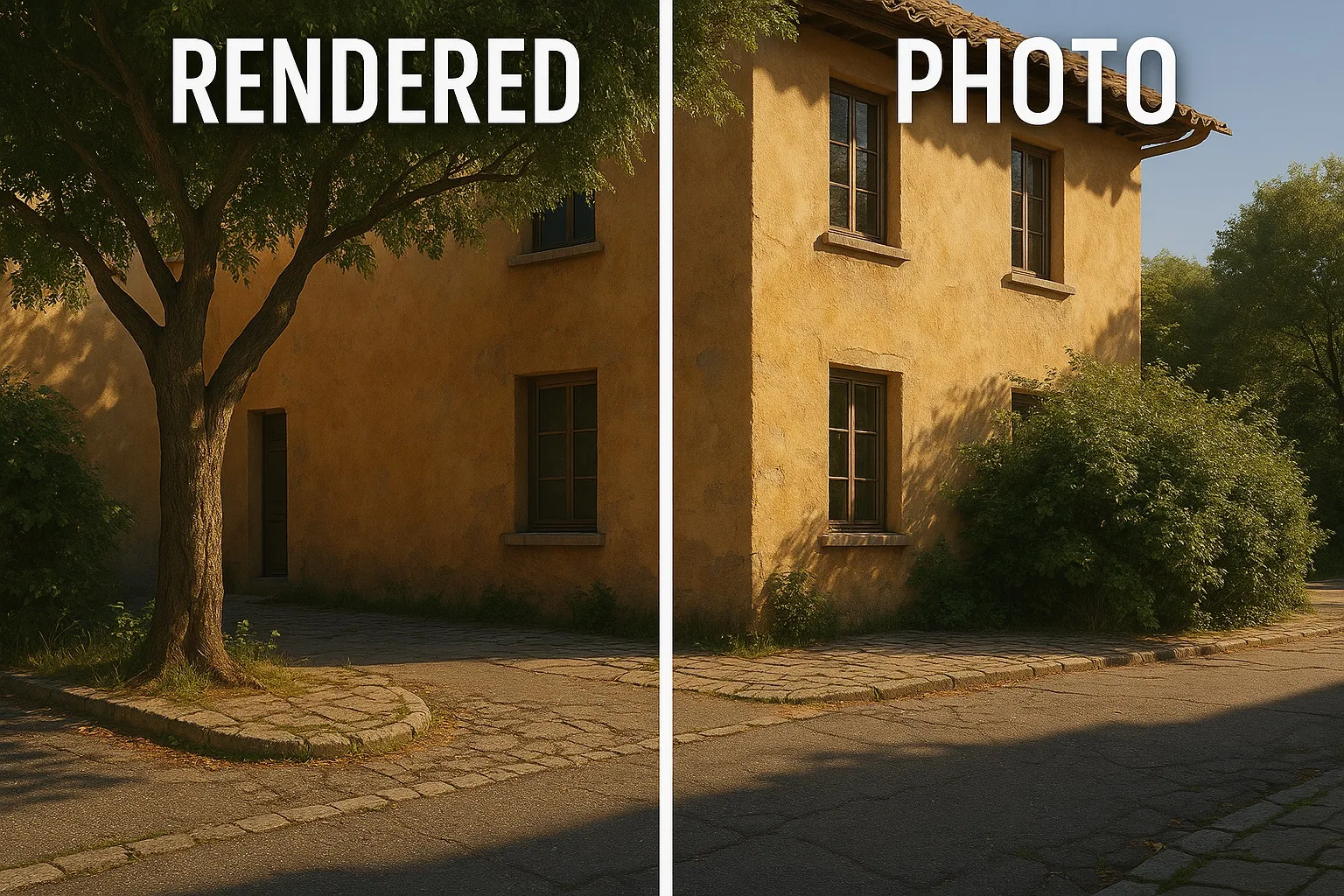
Realistic Graphics Engine – What It Is And Why It Looks Real
The term realistic graphics engine shows up more and more in video games, simulators and digital film production. Few people know what actually happens under the hood.
A realistic graphics engine is an advanced software system. It reproduces images, motion, shadows and light almost identically to reality. Sometimes the difference is hard to spot even with the naked eye.
What Makes An Engine Look “Realistic”?
A graphics engine does not become realistic through a single trick. It is the result of several combined technologies. Each one solves a different visual perception problem.
1. Real-Time Ray Tracing
Ray tracing simulates the physical path of light. Each ray gets calculated individually. The engine tracks how light hits an object, how it reflects, and how it refracts.
The result: accurate reflections on glass, water and metal. Shadows get natural edges instead of harsh cutoffs. This simulation demands heavy GPU calculation, which is why it only became feasible recently, once dedicated ray tracing hardware arrived.
ℹ️ Technical Note: Classic offline ray tracing (used in CGI) can take hours to render a single frame. The real-time version used in games trades some quality for speed, yet the result stays impressive.
2. PBR – Physically Based Rendering
PBR means rendering based on the real physical properties of materials. Metal reflects light differently from wood. Glass has transparency and refraction. Surface roughness changes how light scatters.
A PBR engine calculates these properties mathematically instead of painting them manually. That’s why the same textures look correct regardless of the lighting angle.
Common physical properties used in PBR:
- Albedo (base surface color)
- Roughness (surface texture behavior)
- Metallic (how metallic the surface is)
- Normal map (fake surface relief detail)
- Ambient occlusion (shading in hidden areas)
3. Tessellation And Detailed Meshes
Tessellation adds extra geometry in real time, exactly where it’s needed. Cracked asphalt, character skin, or leaves moving in the wind gain detail without loading the entire scene upfront.
The engine “decides” how close you are to an object and adds extra polygons only there. From a distance, the surface stays computationally simple.
4. Dynamic Weather, Water And Smoke Simulation
Rain, smoke and water are not pre-recorded animations. They get calculated live, particle by particle, using physics algorithms. Every particle reacts to wind, gravity and obstacles in the scene.
This approach makes the same explosion or the same rainstorm look different each time. The behavior gets closer to real, chaotic nature.
5. AI And Machine Learning For Animation
A character’s walk, facial expressions and impact reactions are increasingly generated automatically. Machine learning models train on real motion capture data and generate plausible variations.
The result: less repetitive animations and smoother transitions between movements.
Where Is A Realistic Graphics Engine Used?
The applications go far beyond the video game industry.
- Video games – Unreal Engine 5, Unity HDRP
- Driving or flight simulators – Microsoft Flight Simulator and similar platforms
- CGI films and streaming productions – fully digital visual effects
- Architecture and industrial design – photorealistic 3D renders for projects that don’t exist yet
- VR/AR and the metaverse – fully immersive experiences
Each field uses the technologies above in different proportions. A game prioritizes rendering speed. A CGI studio prioritizes maximum quality, without real-time constraints.
What Does Realism Cost In Computing Power?
Visual realism isn’t free. Each technology above consumes significant hardware resources. A realistic graphics engine forces the GPU to run millions of extra calculations per frame.
Here’s a rough overview of the performance impact:
| Technology | Performance impact | Main visual benefit |
|---|---|---|
| Real-time ray tracing | Very high | Physically correct reflections and shadows |
| Full PBR | Medium | Believable materials at any angle |
| Tessellation | Medium-high | Surface detail up close |
| Particle simulation | High | Smoke, water, dynamic weather |
| AI animation | Low-medium | Natural, less repetitive movement |
Because of this, most modern engines use hybrid rendering. They combine ray tracing only for critical elements (main reflections and shadows) with classic rasterization for the rest of the scene. This keeps a balance between visual quality and a playable frame rate.
AI-based denoising techniques also cut costs. Instead of calculating every light ray in full, the engine calculates a reduced sample and uses AI to “guess” the rest of the clean image, without visual noise. Nvidia DLSS and AMD FSR are well-known examples of this approach.
Comparing Popular Graphics Engines
Not all realistic graphics engines are built the same way. Each one has different trade-offs between realism, development speed and licensing cost.
- Unreal Engine 5 – Focuses on Lumen (dynamic global illumination) and Nanite (virtualized geometry). Popular with both large studios and indie developers, thanks to accessible visual tools.
- Unity HDRP – Built for multi-platform flexibility. High-quality rendering, but requires more careful manual configuration than Unreal.
- Proprietary studio engines – Used by large CGI productions or specialized simulators (flight, driving). Strictly optimized for one type of content, without a generalist engine’s compromises.
The choice of engine depends on the project. A film studio prioritizes maximum quality, without real-time constraints. A game developer must maintain a stable frame rate, even with visual trade-offs.
Frequently Asked Questions About Realistic Graphics Engines
Why do some games look “realistic” but run poorly on any graphics card? Because they use full ray tracing or aggressive tessellation without hybrid optimizations. The computational cost quickly exceeds standard hardware capacity.
Can a realistic graphics engine replace real filming? Partially. Modern CGI productions already combine real actors with digitally generated backgrounds and effects. The difference becomes harder to spot, especially in short scenes.
What graphics card do you need for real-time ray tracing? A graphics card with dedicated ray tracing cores (for example, the RTX series). Without this specialized hardware, the simulation becomes too slow for smooth gameplay.
Reality Or Illusion?
Technological progress creates an unexpected problem: visual confusion. Some fully digitally generated images are hard to tell apart from a real photograph.
Concrete examples of this confusion:
- 3D historical reconstructions presented as period photographs
- Real estate renders that look “better” than the final property
- Video game trailers mistaken for real filmed footage
⚠️ WARNING: Photorealistic renders in real estate or advertising don’t guarantee the final result. Always check the source of an image before drawing conclusions about a real product.
Why This Technology Matters
Realistic graphics engines aren’t just a visual gimmick. They cut production costs in film and architecture. They allow a project to be tested before it physically exists. A realistic flight simulator trains pilots without real-world risk.
The technology is advancing fast. What looked like science fiction ten years ago is standard today in many commercial graphics engines.
What’s Next For Realistic Graphics Engines
The clear direction is toward AI-based rendering, not just raw computing power. Instead of calculating every pixel classically, future engines will generate more and more detail through neural networks trained on millions of real images.
This shift reduces the hardware cost needed for a similar visual result. At the same time, it raises a growing ethical question: how much information in a scene is “real,” and how much is statistically generated by an AI model?
Major studios already invest in teams dedicated solely to this problem. Standards for labeling digitally generated content are becoming a discussion topic even at the legislative level, especially for historical reconstructions or advertising material.
Conclusion
A realistic graphics engine combines ray tracing, PBR, tessellation, physics simulations and artificial intelligence. Each component solves a piece of the visual perception puzzle.
The result is an increasingly thin line between a digitally generated image and filmed reality. This line will keep blurring as computing power grows and AI-based techniques become industry standard.
For anyone working with visual content – games, architecture, real estate marketing or video production – understanding these technologies is no longer optional. It becomes a basic skill for telling a real image apart from a digitally generated one.
✍️ Author: Bejenaru Alexandru Ionut – [email protected]
🔗 Internal link: https://diagnozabam.ro/sfaturi

Recommendation: Looking for a professional bi-directional diagnostic tool with full system coverage? Use code DIAGNOZABAM for 10% off.
Transparency note: Affiliate link. Purchasing through it costs you nothing extra. View Thinkcar Deal →
