

What Is VoLTE?
You see the “VoLTE” icon during a call. Most people ignore it. It deserves a closer look.
VoLTE stands for Voice over LTE. It sends your voice as data over the 4G network. Your phone stays on 4G for the whole call.
Before VoLTE, 4G carried only data. Voice calls lived on older networks. That split caused most of the problems people blame on “bad signal.”
This guide explains what VoLTE is and how it works. It also covers the real advantages, the real limits, and how to switch it on.
How Calls Worked Before VoLTE
Old mobile networks used circuit switching. The network reserved a dedicated line for your call. That line stayed locked for the whole conversation.
LTE has no such line. It is a pure data network. Everything on it travels as IP packets.
So 4G phones needed a trick to make calls. That trick is called Circuit Switched Fallback, or CSFB.
Here is what happens during a CSFB call:
- You dial a number while connected to 4G.
- The phone drops to 3G or even 2G.
- The call runs on the old network.
- When the call ends, the phone returns to 4G.
This causes three visible problems:
- The call takes longer to connect.
- Your mobile data slows down or stalls.
- Voice quality stays at an old, narrow standard.
ℹ️ Technical Note: CSFB is not a fault. It was a deliberate workaround. It kept voice working while operators built the full voice system for LTE.
How VoLTE Works
VoLTE replaces the old voice line with a data-based one. Your voice becomes small IP packets. These packets travel over the same LTE network as your browsing.
Three pieces make it work.
The IMS Core
IMS stands for IP Multimedia Subsystem. It is the voice brain inside the operator network. It handles call setup, routing and billing.
Your phone registers with IMS when it connects to the network. This happens in the background. You never see it.
Call Signaling
A protocol called SIP handles the signaling. It sets up the call, rings the other phone, and ends the call. Think of it as the switchboard operator.
Voice Transport
Once the call connects, your voice flows as RTP packets. The phone slices your speech into tiny pieces. Each piece is encoded, packed and sent.
The Priority Lane
Here is the clever part. The network gives voice packets a dedicated bearer. This is a protected path with guaranteed quality.
Your video streaming and your phone call share the same radio. But the call gets priority. That is why a call stays smooth even when the cell is busy.
Phone (VoLTE)
   |
   v
LTE Radio (eNodeB)
   |
   +--> Dedicated bearer --> IMS Core --> Called party
   |        (voice, priority)
   |
   +--> Default bearer ----> Internet
            (your data)
Key Advantages of VoLTE
1. Better Voice Quality
Classic calls use a narrow audio band. It covers roughly 300 Hz to 3,400 Hz. Voices sound thin and flat.
VoLTE uses the AMR-WB codec. This is the codec behind HD Voice. It covers roughly 50 Hz to 7,000 Hz.
The result is easy to notice:
- Voices sound fuller and more natural.
- Consonants like “s” and “f” are clearer.
- Background noise is handled better.
- You can tell similar-sounding words apart.
Some networks and phones also support the EVS codec. EVS goes even wider. It can sound close to a face-to-face talk. Both phones and both networks must support it.
ℹ️ Technical Note: HD quality only works end to end. If the other person is on an older network, your call falls back to the narrow standard.
2. Faster Call Setup
A CSFB call must switch networks first. That takes several seconds. A VoLTE call connects much faster, often in about one to two seconds.
You notice this when you dial. The ringing starts almost at once.
3. Data Keeps Running During Calls
This is the biggest practical gain. On 4G, VoLTE lets data continue at LTE speed.
During a VoLTE call, you can:
- Use GPS navigation.
- Check a map or a document.
- Share a hotspot with another device.
- Send photos or messages.
Without VoLTE, the phone drops to 3G. Data slows down. On 2G, it nearly stops.
4. Better Network Efficiency
LTE uses radio spectrum more efficiently than 3G. A voice call takes up less capacity. Operators can serve more callers on the same frequencies.
This is one reason operators push VoLTE. It also helps free old spectrum for 4G and 5G.
Possible Disadvantages
VoLTE is good. It is not perfect. Be honest about the limits.
- Weak LTE coverage. If the 4G signal is poor, the call can drop or stutter.
- Handover quirks. Moving out of LTE coverage needs a handover to the old network. This can cause a short audio gap.
- Device support. Some older phones lack VoLTE support.
- Carrier activation. The operator must allow VoLTE on your plan and your phone model.
- Old SIM cards. Very old SIMs sometimes need a replacement.
- Interoperability. Calls between different networks do not always keep HD quality.
What Happens When You Leave LTE Coverage
Drive out of a 4G zone during a call. The network must move the call to 3G or 2G without cutting it. This feature is called SRVCC.
It usually works. But you may hear a short glitch. In weak rural areas, an older network can sometimes hold the call better than a faint LTE signal.
VoLTE on the Road
Mobile signal is a real daily problem for people who work in the field. Think of roadside responders, delivery drivers and mobile mechanics. They move through cells all day. They also rely on a phone for both calls and data.
VoLTE helps here in one specific way. You can talk to a customer and still use your data connection. You can read a vehicle manual, check a wiring diagram, or follow navigation while on the call.
The same logic applies when you diagnose a car at the roadside. A scan tool like the THINKCAR THINKSCAN 689BT pairs with your smartphone over Bluetooth. If your phone drops to 3G whenever a call arrives, your data can stall at the worst moment. A phone staying on LTE during the call avoids that trap. You can learn more about the scanner here.
VoLTE vs WiFi Calling
People mix these two up. They are different.
| Feature | VoLTE | WiFi Calling (VoWiFi) |
|---|---|---|
| Network used | Operator LTE network | Any WiFi connection |
| Best use | General everyday calls | Indoors with poor cell signal |
| Needs cell signal | Yes | No |
| Needs WiFi | No | Yes |
| Handover | Between LTE cells | Between WiFi and mobile |
WiFi Calling shines in basements, thick-walled buildings and some offices. VoLTE shines everywhere LTE coverage is solid.
Many modern phones support both. The phone picks the best path by itself.
How to Enable VoLTE
First, check that your carrier supports VoLTE. Then check that your phone model is approved.
Android
Menu names change between brands. The usual path looks like this:
- Open Settings.
- Go to Mobile network or SIM & network.
- Find the VoLTE or HD Voice switch.
- Turn it on.
On some phones, the option is inside the SIM card settings. On others, it appears only after the carrier enables it.
iPhone
- Open Settings.
- Tap Cellular.
- Open Cellular Data Options.
- Tap Voice & Data.
- Select LTE and check for the VoLTE option.
The exact wording depends on the iOS version and the carrier.
Can’t Find the Option?
If you do not see the switch, one of these is likely true:
- Your carrier does not support VoLTE on your plan.
- Your phone model is not approved on that network.
- Your SIM card is too old.
- Your phone runs outdated software.
Update the phone first. Then contact your operator.
Is VoLTE Free?
In most cases, yes. VoLTE calls are billed like normal calls. Your voice minutes are used as usual.
Technically, the call does travel over the data network. But operators treat it as voice traffic. It normally does not eat into your mobile data allowance.
Check your own plan to be sure. Some operators may handle it differently.
Why VoLTE Matters for the Future
Operators are retiring old networks. 3G is being shut down in many countries. 2G is following in some places.
When 3G disappears, CSFB has nowhere to fall back to. Phones without VoLTE can lose voice calls completely. That is why VoLTE is becoming mandatory, not optional.
The next step is VoNR, or Voice over New Radio. It carries voice over 5G. It follows the same core idea as VoLTE. Voice becomes IP packets with priority treatment.
Until 5G coverage is complete, many networks still use VoLTE as the backbone. Phones may switch between VoNR and VoLTE during a call.
Conclusion
What is VoLTE? It is voice calling built natively for 4G. Your phone stays on LTE. Your voice is carried as protected IP packets.
You get clearer sound. You get faster call setup. You keep full data speed while you talk.
The limits are real but small. Weak coverage can hurt. Old phones and SIMs may not qualify.
If your phone and carrier support it, leave VoLTE on. It is the standard that will carry voice calls from now on.
FAQ
What does the VoLTE icon mean on my phone?
It means your call is running over the 4G network as an IP voice call. Your phone did not drop to 3G or 2G.
Does VoLTE use my mobile data?
Technically the call travels over the data network. Most operators bill it as voice minutes instead. It normally does not reduce your data allowance.
Is VoLTE better than a normal call?
In most cases, yes. It gives better sound, faster connection and full data speed during the call. Both sides need support for the best result.
Can I use the internet during a VoLTE call?
Yes. Data keeps running at 4G speed. You can navigate, browse or share a hotspot while you talk.
Why can’t I find the VoLTE option on my phone?
Your carrier may not support it on your plan. Your phone model may not be approved. An old SIM or outdated software can also hide the option.
Should I turn VoLTE off?
Only if you have a clear problem. Weak LTE coverage can cause call drops in some areas. In that case, test with VoLTE off and compare.
What is the difference between VoLTE and WiFi Calling?
VoLTE uses the operator’s LTE network. WiFi Calling uses a WiFi connection. Use WiFi Calling indoors when cell signal is poor.
Will VoLTE work after 3G is shut down?
Yes. VoLTE is built for exactly that situation. Phones without it may lose calling on networks with no 3G.
What is VoNR?
VoNR means Voice over New Radio. It is the 5G version of VoLTE. It uses the same IP-based voice approach.
✍️ Author: Bejenaru Alexandru Ionut – [email protected]
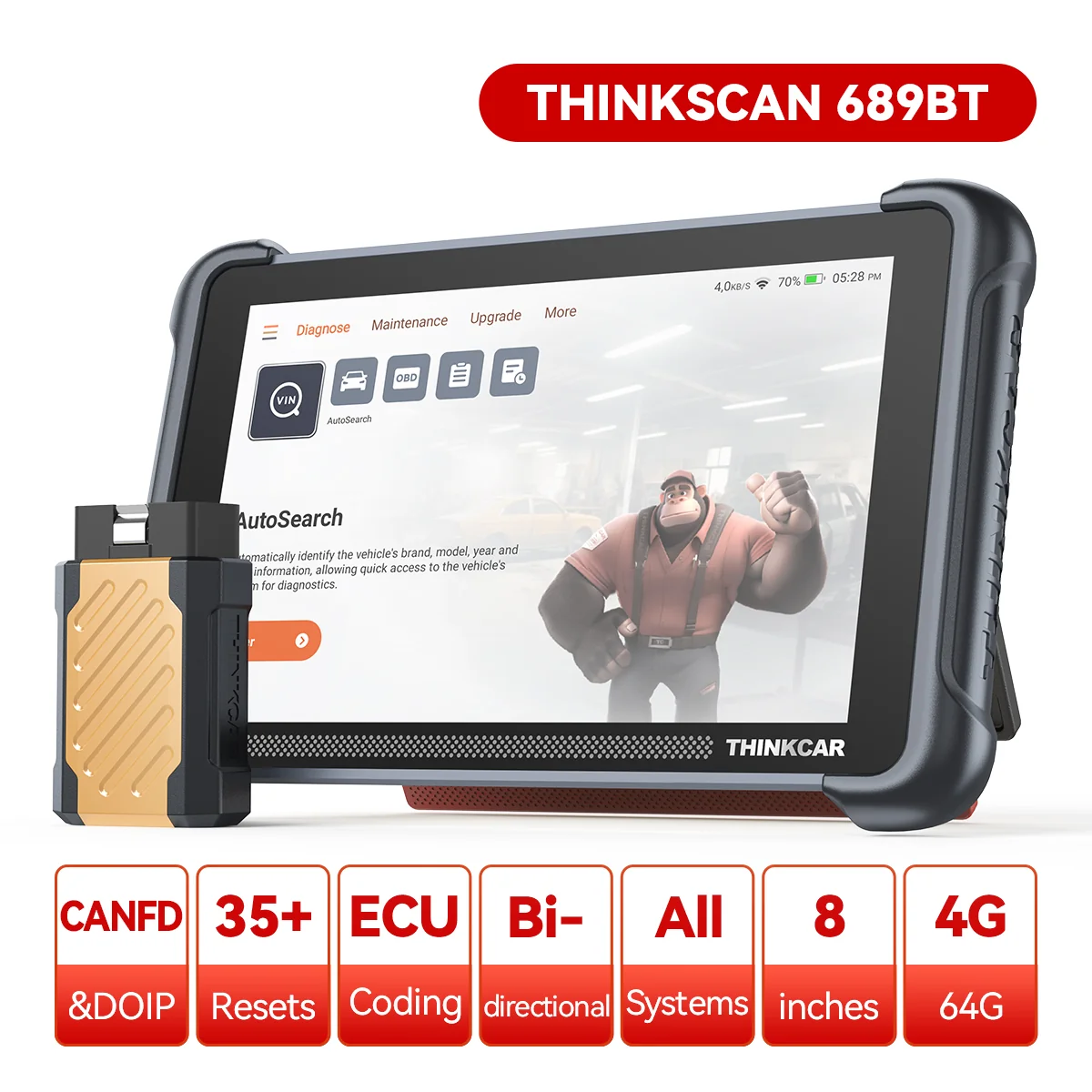
Recommendation: Looking for a professional bi-directional diagnostic tool with full system coverage? Use code DIAGNOZABAM for 10% off.
Transparency note: Affiliate link. Purchasing through it costs you nothing extra. View Thinkcar Deal →