
The Sci-Fi Renaissance of Buchloe: Dissecting the Radical Vision-Inspired BMW Alpina XB5 Digital Concept Study
Introduction: The Tectonic Shifts Within the BMW Group Portfolio
The automotive landscape witnessed a historic transformation when the BMW Group formally acquired the intellectual and naming rights of Alpina Burkard Bovensiepen. For over half a century, the legendary family-owned tuner turned boutique manufacturer operating out of Buchloe, Germany, was celebrated for creating incredibly fast, highly understated luxury cruisers. Their philosophy relied heavily on classic understated elegance—vehicles that could conquer the German Autobahn at over 300 km/h without drawing unnecessary attention to themselves.
However, under the full strategic custody of the Munich giant, the brand’s trajectory is undergoing a monumental paradigm shift. BMW is actively repositioning future production vehicles into an elite, ultra-luxury tier, strategically slotted directly above the standard BMW luxury flagships and just below the absolute pinnacle represented by Rolls-Royce.
The physical manifestation of this new corporate direction debuted to thunderous applause at the prestigious Concorso d’Eleganza Villa d’Este. The physical show car—a massive, 5,200 mm long, low-slung grand touring coupé powered by a roaring V8 engine—shocked the industry by discarding traditional, quiet understatement in favor of a highly emotional, muscular, and futuristic design language.
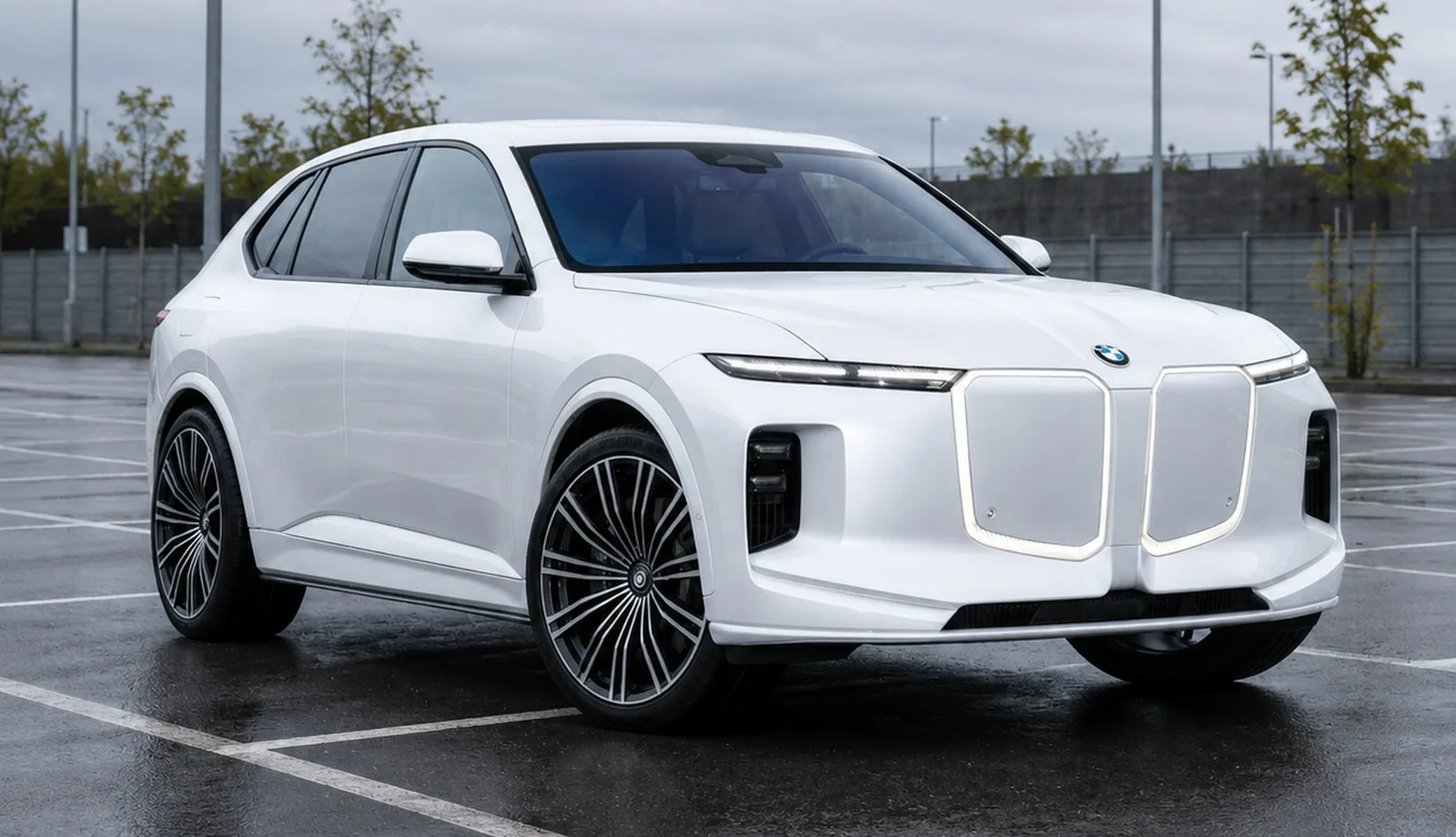
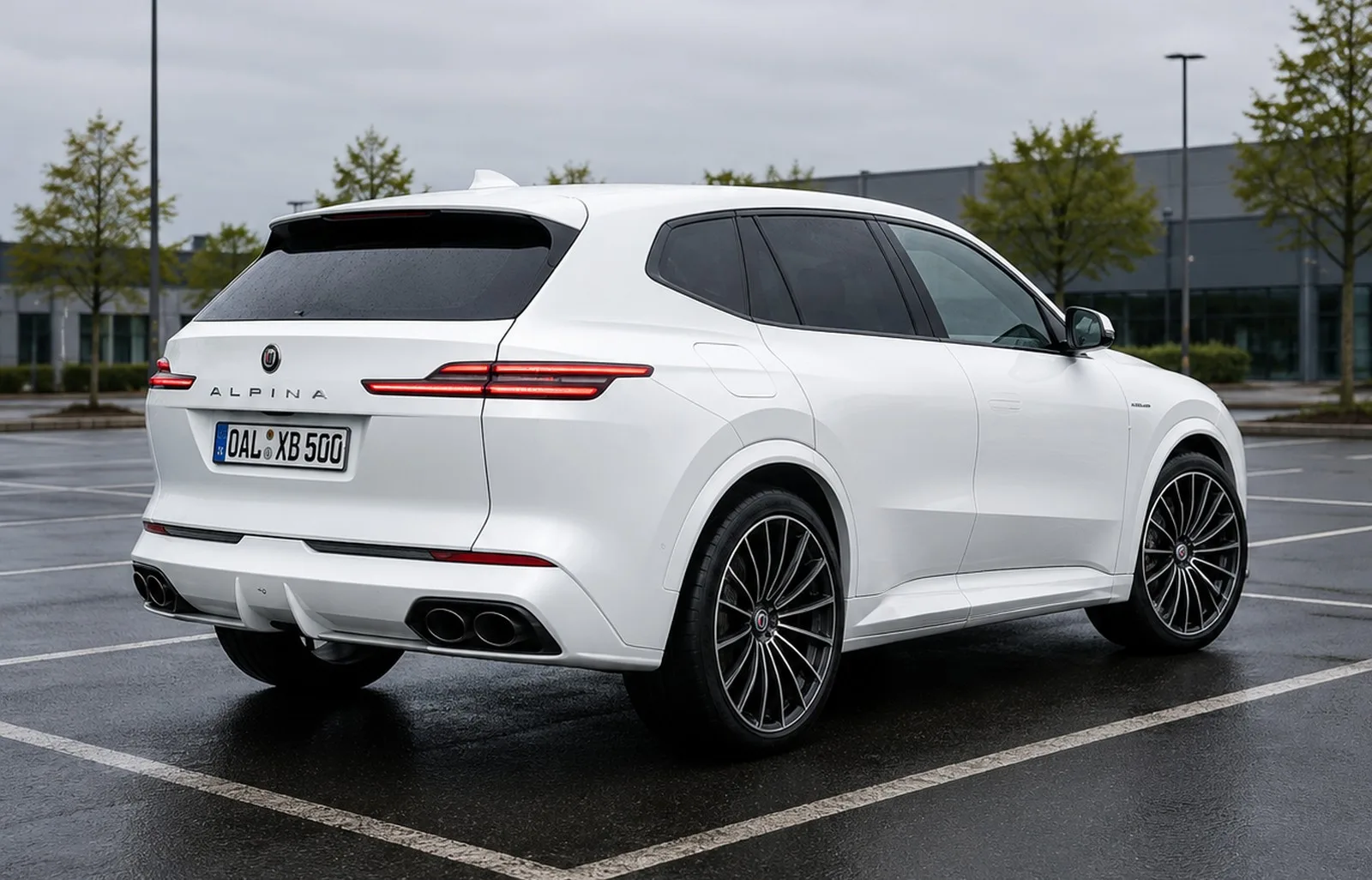
While the factory concept focused entirely on classic grand touring lines, it immediately ignited the imagination of the global digital rendering community. Celebrated pixel master and industrial designer @sugardesign_1 took this radical aesthetic blueprint and flawlessly cross-pollinated it with BMW’s highly successful premium mid-size SUV platform to create a breathtaking CGI project: the BMW Alpina XB5.
This visionary design study serves as a highly realistic, jaw-dropping preview of how the brand’s bold new design DNA can successfully migrate onto a high-performance luxury SUV under the unified direction of the BMW Group.
Architectural Synthesis: Merging X5 Underpinnings with Vision Concept Aesthetics
The core brilliance of the digital BMW Alpina XB5 concept study lies in its flawless structural balance. Rather than drawing a completely detached, ungrounded sci-fi vehicle, the designer deliberately utilized the recognizable, highly successful structural silhouette of the current G05-generation BMW X5 platform as the foundational canvas. This choice ensures that the digital concept study remains grounded in reality, matching factory structural safety parameters, cabin glasshouse proportions, and hard point vehicle packaging dimensions.
                  [ G05 BMW X5 Structural Architecture Base ]
                                      │
       ┌──────────────────────────────┴──────────────────────────────┐
       ▼                                                             ▼
 [ Radical Front Axis Restructuring ]                 [ High Impact Rear Restructuring ]
 • Split-Level LED Light Array                        • Monolithic Horizontal Dual-Bars
 • Multi-Faceted Angular Kidney Grilles               • Clean Shaved Tailgate Architecture
       │                                                             │
       └──────────────────────────────┬──────────────────────────────┘
                                      ▼
                      [ Aggressive Side Skirt Lines ]
                      [ Integrated Vision Speed-Feature Axis ]
By superimposing the radical body panels of the Villa d’Este concept car onto this established premium SUV layout, the rendering demonstrates how advanced aerodynamic elements can transform a traditional, upright two-box SUV profile into a futuristic mechanical masterpiece.
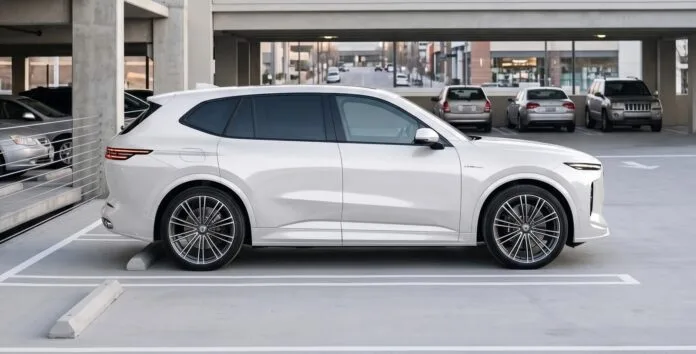
The traditional side cladding and softer lines of the factory luxury utility vehicle are completely replaced by sharply creased sheet metal surfaces, highly aggressive rocker panel side skirts, and prominent shoulder lines that expand the vehicle’s tracking stance, giving the XB5 an incredibly commanding presence.
Facial Revolution: The Next-Generation Split-Lighting and Kidney Grille Matrix
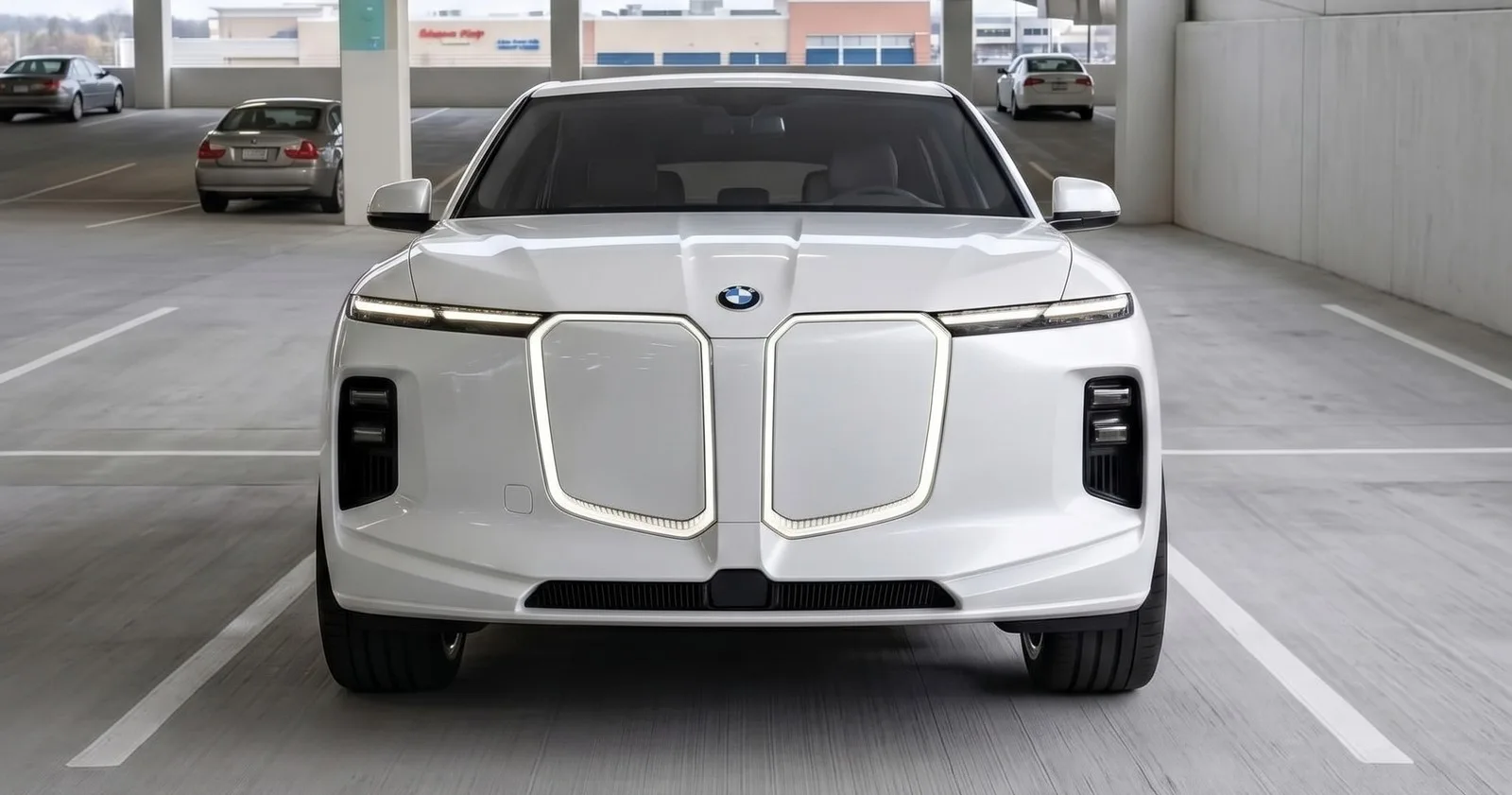
The most polarizing and visually dramatic element of the digital BMW Alpina XB5 study is centered squarely on its front fascia. The front end completely discards the current corporate face of BMW’s utility vehicle lineup, opting instead to implement the concept car’s revolutionary split-level lighting matrix.
                       [ Upper Level LED Horizon ]
                       • Ultra-Slim Daytime Running Lights
                       • Laser-Etched Internal Crystals
                                    │
                                    ▼
                     [ Deep Recessed Projector Array ]
                     • High-Intensity Main Beam Matrices
                     • Seamless Functional Intakes
                                    │
                                    ▼
                [ Three-Dimensional Illuminated Grille ]
                • Forward-Leaning Sharknose Stance
                • Concealed Perimeter Lighting Elements
The upper tier features ultra-thin, highly sharp horizontal LED daytime running light bands that sit right at the edge of the hood line. These units are embedded with laser-etched internal crystals that cast a sharp visual signature across the nose. The actual functional high-intensity main beam projector lenses are hidden below in deep, dark geometric recesses, blending seamlessly with the surrounding bumper air intakes when turned off.
The Modern Sharknose Reinterpretation
Framed by this next-generation lighting signature is a radical, multi-faceted reinterpretation of the iconic BMW kidney grille. Moving far away from the massive vertical grilles found on current production models, this digital concept introduces a wide, highly structured, three-dimensional geometric shape that leans aggressively forward at the top—a direct, historical homage to the classic “sharknose” front ends of vintage models.
The inner vertical slats feature intricate, finely scaled signature graphics beneath a dark metallic coat, surrounded by a concealed perimeter backlighting system that illuminates the grille with a warm white tone when the vehicle is activated. The front bumper assembly below is highly angular, ditching generic mesh inserts for sharp carbon fiber air deflectors designed to scoop air directly into the main cooling radiators.
Rear Tier Engineering: Monolithic Lighting and the Missing Multi-Spokes
Moving along the side profile, the digital concept study maintains a very clean, uncluttered look. The door handles are replaced with flush-mounted, touch-sensitive electronic release pads, while the signature “speed feature line”—which runs at a distinct six-degree inclination on the physical concept car—is integrated along the upper shoulder line of the SUV body panels, wrapping seamlessly around into the rear hatch.
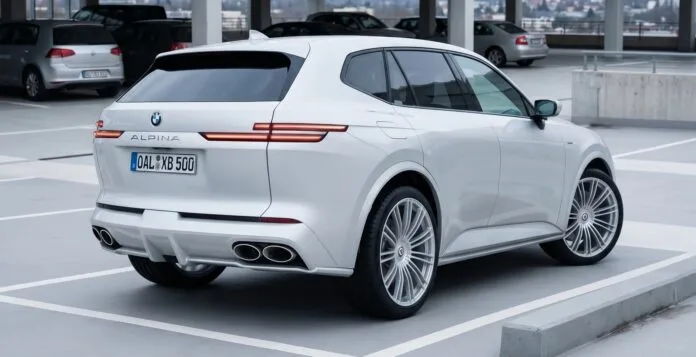
The rear section of the XB5 is a masterclass in clean styling. The bulky, traditional taillight assemblies of the production X5 are completely removed. In their place sits a stunning monolithic horizontal dual-bar LED setup that mirrors the exact design philosophy of the Villa d’Este concept car.
These ultra-slender light strips extend across the entire width of the rear tailgate, neatly split by the shut lines of the rear hatch. The license plate recess is moved down into the lower, aggressive rear bumper assembly, allowing the main tailgate surface to remain completely smooth, maximizing the visual width and low-slung stance of the vehicle.
A Critical Wheel Alternative
Despite the incredible execution of the rendering, automotive purists and long-time fans noted one missing signature element: the iconic Alpina classic multi-spoke forged alloy wheels. The digital study instead opts for a stylized, geometric concept wheel design.
To maximize its visual identity as a genuine product of Buchloe, a production variant would undoubtedly need to implement a massive set of staggered 23-inch, 20-spoke classic forged alloy wheels wrapped in ultra-low profile tires. This missing wheel setup would provide the final, undeniable touch of historic class to ground the futuristic styling.
Cockpit Topology: The High-Tech Digital Sanctuary Concept
While the rendering focuses primarily on the striking exterior body panels, the interior framework for a vehicle like the BMW Alpina XB5 would need to mirror the revolutionary digital cockpit concepts introduced by the Munich design team.
 ┌──────────────────────────────────────────────────────────────────────────┐
 │                       Panoramic Vision Projection HUD                    │
 ├──────────────────────────────────────────────────────────────────────────┤
 │ [ Curved Instrument Screen ] [ Central Media Screen ] [ Passenger Screen ] │
 └──────────────────────────────────────────────────────────────────────────┘
The interior design completely abandons traditional isolated tablet screens, opting instead for a massive, pillar-to-pillar panoramic digital landscape display positioned along the lower base of the windshield. This setup is cleanly split into three distinct, user-customizable zones:
-
Driver Instrumentation Core: Displays high-resolution driving telemetry, speed metrics, and adaptive driver assist maps, utilizing classic blue and green background color palettes.
-
Central Infotainment Hub: Manages vehicle ride parameters, climate routing, and advanced comfort settings via an intuitive, next-generation BMW iDrive operating system.
-
Dedicated Passenger Entertainment Screen: Features an independent, surface-treated display screen that remains completely invisible to the driver while the vehicle is in motion, allowing the front passenger to view streaming media or monitor trip navigation independently.
This massive digital display array is paired with a unique four-spoke luxury sport steering wheel derived straight from the physical concept car, featuring a milled aluminum center hub and contrast hand-stitching in heritage colors. The rest of the cabin is a sanctuary of high-end materials, replacing standard plastics with open-pore wood trim, machined aluminum control surfaces, and hand-selected, full-grain leather sourced from independent farms across the Alpine region.
Power Dynamics: Preserving the Glory of High-Performance V8 Propulsion
In an era where premium manufacturers are rapidly forcing full electrification across their product lineups, a potential production-spec BMW Alpina XB5 would proudly preserve high-performance, internal combustion propulsion as its mechanical centerpiece. To deliver the effortless torque and smooth power delivery that buyers expect, the engine bay would house a highly evolved 4.4-liter twin-turbocharged V8 engine integrated with an advanced mild-hybrid or plug-in hybrid electrical architecture.
                    [ 4.4-Liter Twin-Turbocharged V8 Block ]
                                       │
                    ▼ (High Torque Optimization Tuning)
                    │
            [ System Output: ~650 Horsepower / 850+ Nm Torque ]
            [ Drivetrain Connection: 8-Speed Sport-Automatic & xDrive ]
Rather than focusing on aggressive, track-focused power curves like BMW’s internal M division, engineering teams would optimize the twin-scroll turbochargers to deliver massive low-rpm torque. This strategy ensures immediate, effortless acceleration from anywhere in the rev range.
With a projected output of at least 650 horsepower and over 850 Newton-meters of torque, the XB5 would comfortably sprint from 0 to 100 km/h in under 3.7 seconds, while utilizing the brand’s exclusive Comfort+ adaptive air suspension calibration to provide an incredibly smooth, cloud-like ride across long distances.
Structural Comparison Matrix: Current XB7 vs. Future XB5 Digital Concept
The radical design leap between current high-performance SUVs from the boutique brand and this next-generation digital design concept study is perfectly detailed through their core styling elements:
| Design & Mechanical Element | Production BMW Alpina XB7 (Current Era) | Vision Alpina XB5 Studio (Next Gen) |
| Foundational Chassis Platform | BMW X7 (G07 LCI) Full-Size Architecture | BMW X5 (G05) Mid-Size SUV Chassis |
| Front Lighting Philosophy | Traditional Split Box Projector Units | Ultra-Slim Sci-Fi Matrix LED Split Arrays |
| Kidney Grille Execution | Massive Chrome Vertical Slat Grille | Angular Three-Dimensional Sharknose Grille |
| Lower Front Apron Treatment | Integrated Lip Spoiler with Classic Script | Aggressive Integrated Carbon Fiber Deflectors |
| Side Profiling Character | Traditional Flat SUV Utility Sheet Metal | Fluid Sculpted Panels with 6° Speed Line |
| Rear Lighting Signature | Traditional L-Shaped Red Light Clusters | Monolithic Horizontal Dual-Bar LED Strip |
| Wheel Rim Specification | 23-Inch 20-Spoke Classic Forged Rims | Futuristic Multispoke Geometric Design |
| Exhaust Exit Layout | Quad Round Elliptical Tailpipes | Integrated Blended Rear Diffuser Exhausts |
| Cockpit Screen Interface | Standalone Curved Dual-Screen Housing | Full Width Pillar-to-Pillar Panoramic Array |
| Steering Wheel Form | Sport Three-Spoke Hand-Stitched Wheel | Concept Four-Spoke Milled Aluminum Wheel |
Conclusion: A Triumphant Glimpse into an Uncompromising Future
The digital BMW Alpina XB5 concept study by @sugardesign_1 represents a brilliant, highly necessary piece of creative work that answers the burning questions surrounding the brand’s future design direction. By successfully applying the radical, polarizing visual language of the Lake Como concept car onto the practical, real-world framework of a premium luxury SUV, this design study proves that the brand’s new styling language is highly adaptable and incredibly cohesive.
It demonstrates a beautiful, alternative design path that completely moves away from the minimalist trends of modern electric vehicles, choosing instead to focus on aggressive proportions, stunning lighting details, and high-performance internal combustion heritage.
As the brand transitions into its official production era under full BMW ownership starting in 2027, this digital concept serves as a phenomenal, high-impact blueprint. It proves that the future of high-end luxury transport can be bold, futuristic, and uncompromised, while proudly keeping its high-performance performance soul intact.
Source: Vision BMW Alpina XB5: So wild könnte der Luxus-SUV der Zukunft aussehen
✍️ Author: Bejenaru Alexandru Ionut – [email protected]
🔗 Internal link: https://diagnozabam.ro/sfaturi

Recommendation: Looking for a professional bi-directional diagnostic tool with full system coverage? Use code DIAGNOZABAM for 10% off.
Transparency note: Affiliate link. Purchasing through it costs you nothing extra. View Thinkcar Deal →
