
The Purist’s Last Stand: Inside the Ultra-Exclusive BMW M3 CS Manual G80 Finale
Introduction: The Rebellion Against Digital Supremacy
The modern high-performance automotive industry has reached a state of cold, calculated perfection. In the endless pursuit of shaving tenths of a second off Nürburgring lap times, elite engineering divisions have systematically eliminated variables that introduce human error. Dual-clutch systems and lightning-fast torque-converter automatic transmissions have long since conquered the performance market, offering shifting speeds that no human hand or foot could ever hope to replicate. Combined with advanced variable all-wheel-drive systems, the modern sports sedan has evolved into a highly digital, launch-control-driven computer on wheels.
Yet, as vehicles grow faster, heavier, and more disconnected, a vocal and passionate segment of the enthusiast community is crying out for a return to raw mechanical engagement. They argue that driving pleasure cannot be measured solely by telemetry or spreadsheets; it is found in the physical feedback of a heavy clutch pedal, the crisp mechanical slot of a gear lever, and the unassisted balance of a rear-wheel-drive chassis.
Recognizing that the current G80-generation M3 is nearing the end of its life cycle, the engineers at BMW M have delivered an astonishing, completely unexpected love letter to these traditionalists: the BMW M3 CS Manual.
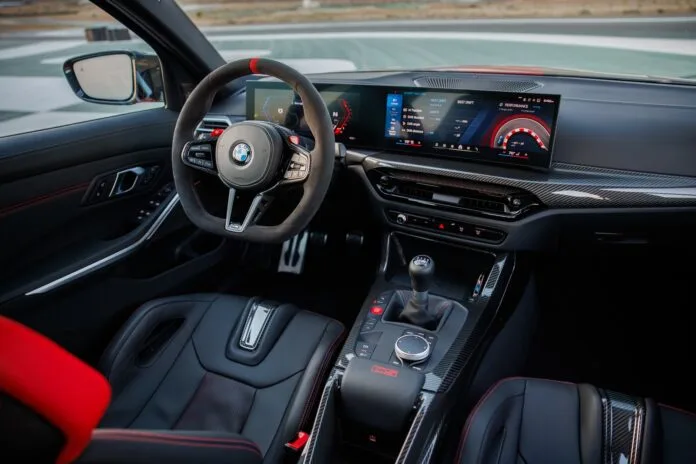
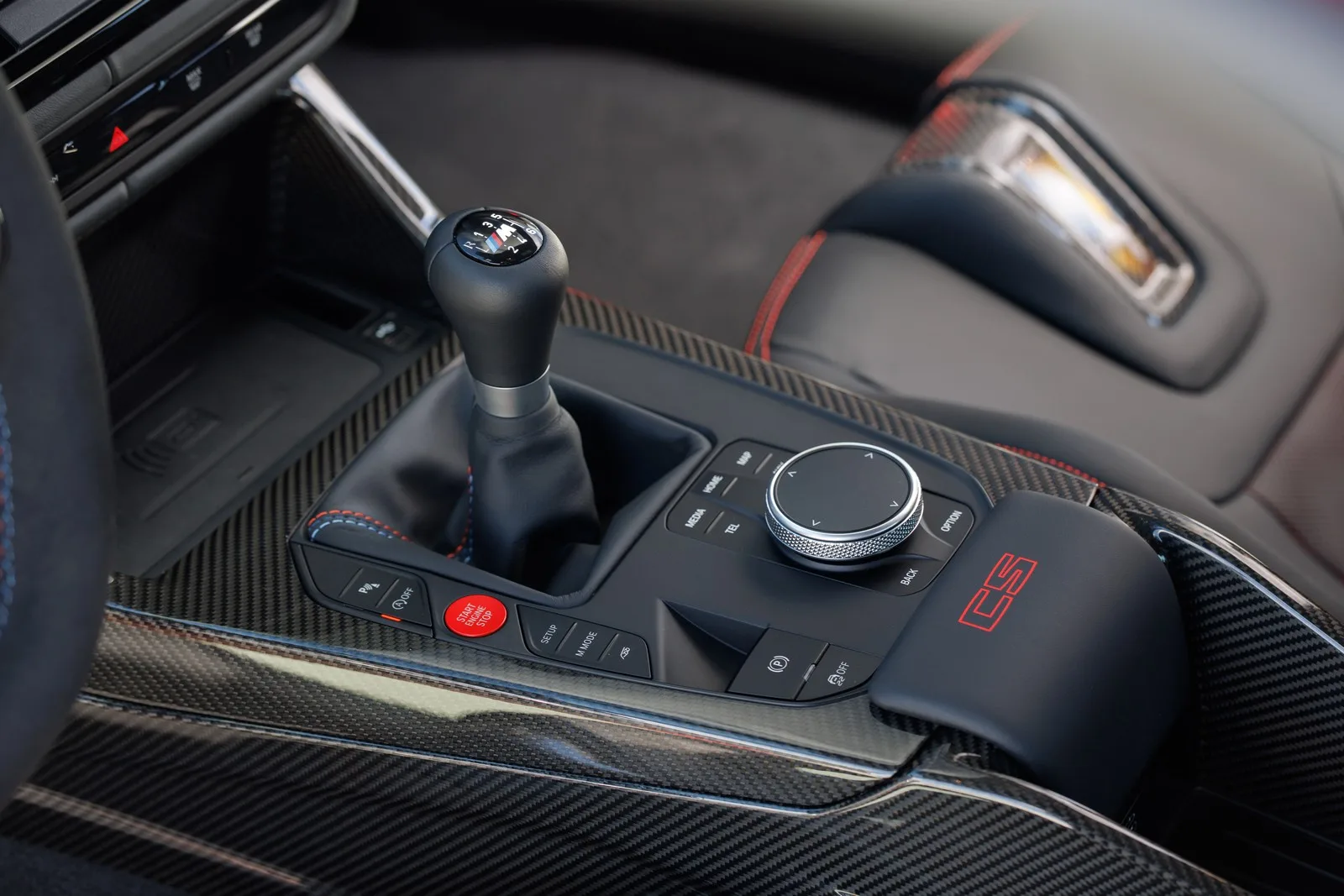
By throwing away the standard Competition package’s automatic transmission and xDrive all-wheel-drive hardware, this limited-run special edition strips the G80 platform back to its purest, most emotional foundations.
Strategic Localization: The North American Sanctuary
In a fascinating corporate twist that has caused immense jealousy across the European continent, BMW has announced that the new manual-transmission M3 CS will be available exclusively within the United States and Canadian domestic markets.
This decision was not made at random. While European buyers have largely embraced the ultra-fast M Steptronic automatic gearboxes, North America has remained the global stronghold for high-end manual performance sales. For years, take-rates for three-pedal configurations on standard M3 and M4 models in the United States have consistently outpaced the rest of the world combined.
   [ European Performance Market ] ──► Maximum Shift Speed -> Automatic & xDrive Dominance
                                                 │
                                                 ▼ (The North American Purist Stronghold)
                                                 │
   [ North American M3 CS Release ]  ──► 6-Speed Manual Only -> 100% Destined for USA & Canada
By restricting this emotional grand finale permanently to North American shores, BMW has instantly guaranteed the vehicle’s future status as a highly sought-after modern classic. It represents a highly localized, ultra-exclusive token of appreciation to a market that refused to let the mechanical gear lever die.
Power Modulation: Engineering the S58 for Three Pedals
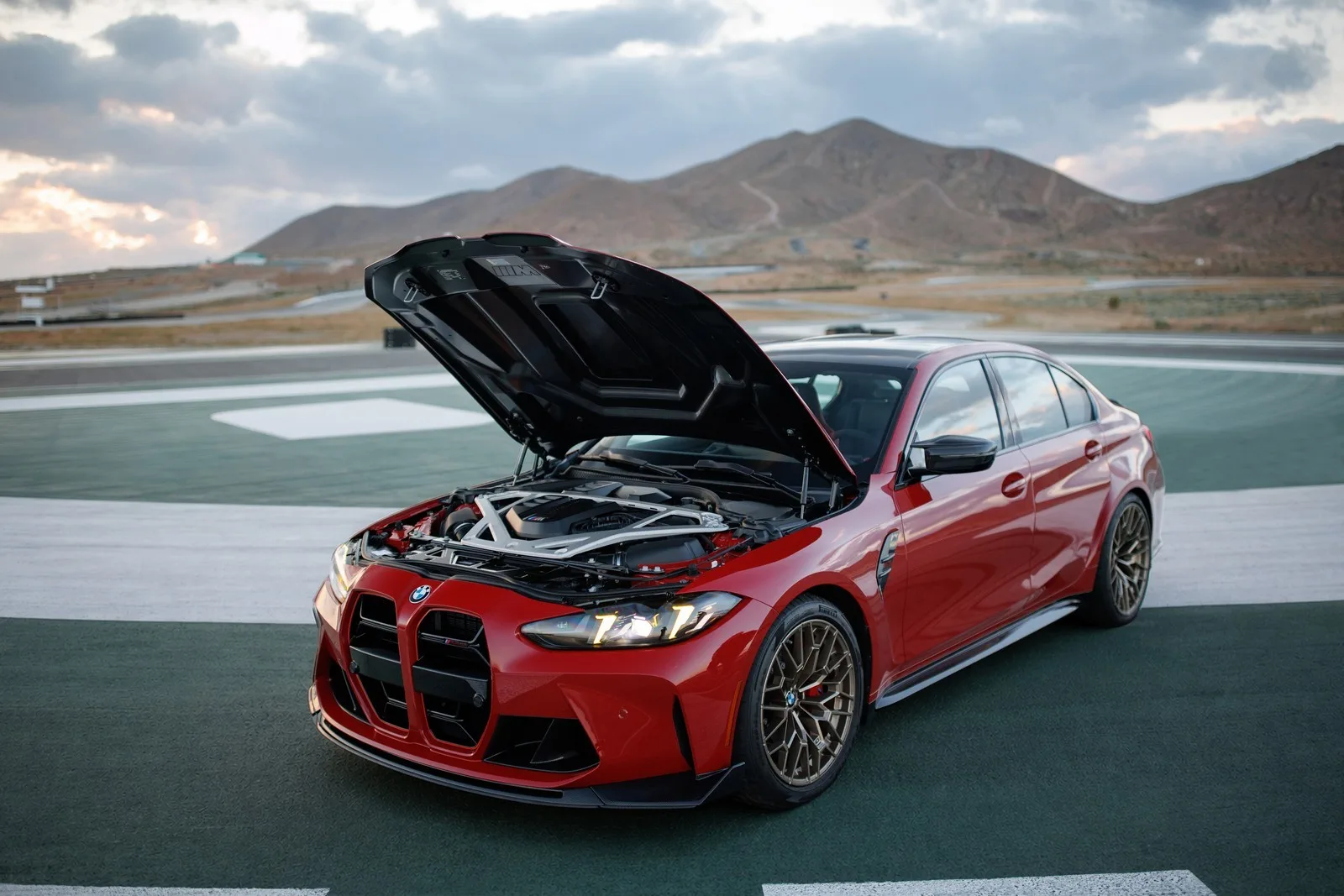
At the absolute core of the M3 CS Manual sits the universally acclaimed S58 3.0-liter twin-turbocharged inline-six engine. This legendary powerplant utilizes a rigid closed-deck block structure, a lightweight forged crankshaft, and a highly advanced 3D-printed cylinder head core that allows for optimal cooling passage routing. In its standard Competition and previous automatic CS applications, this twin-scroll monster is tuned to unleash up to 550 horsepower and 650 Nm of torque.
                  [ S58 Twin-Turbocharged Inline-6 Engine ]
                                     │
       ┌─────────────────────────────┴─────────────────────────────┐
       ▼                                                           ▼
 [ Automatic xDrive CS Trim ]                               [ New Manual CS Trim ]
 • Output: 550 Horsepower                                   • Output: 480 PS (473 HP)
 • Torque: 650 Newton-Meters                                • Torque: 550 Newton-Meters
 • Transmission: 8-Speed Steptronic                         • Transmission: 6-Speed Manual
However, for the manual-transmission CS, BMW M engineers had to implement a highly deliberate, calculated recalibration strategy. The physical limitations of a mechanical clutch plate mean that it cannot continuously absorb the violent, immediate low-end torque spikes generated by the 650 Nm automatic tune without experiencing rapid wear or failure.
As a result, the S58 engine in this variant has been tuned to deliver 480 PS (473 horsepower) and 550 Nm (406 lb-ft) of torque.
The Subjective Victory Over Numbers
While internet armchair critics might initially view this reduction in pure engine output as a technological step backward, the real-world experience tells a completely different story.
By pulling back the absolute boost pressure slightly, engineers shifted the engine’s power band higher up the rev range. This rewards the driver for holding onto gears longer and shifting precisely at the redline. It transforms the car from a point-and-shoot digital drag racer into an organic, highly rewarding mechanical instrument that requires skill and concentration to exploit.
WhatsApp scam „I found your photo” – cum iti poate fura contul
Weight Minimization: The Intensive CS Weight-Loss Program
To complement the pure mechanical character of the three-pedal drivetrain, BMW applied a strict, multi-material weight reduction program to the G80 chassis. Every single gram removed from the vehicle directly improves its power-to-weight ratio, cornering turn-in agility, and steering feedback.
   [ Carbon Fiber Body Panels ]   ──► Lightweight Hood, Roof, Splitter & Mirror Caps
                 │
   [ Unsprung Mass Reductions ]   ──► Staggered Forged Alloy Wheels (Style 927M)
                 │
   [ Acoustical Weight Saving ]   ──► Pure Titanium Rear Exhaust Silencer Assembly
                 │
   [ Cabin Mass Stripping ]       ──► Ultra-Rigid M Carbon Shell Bucket Seating
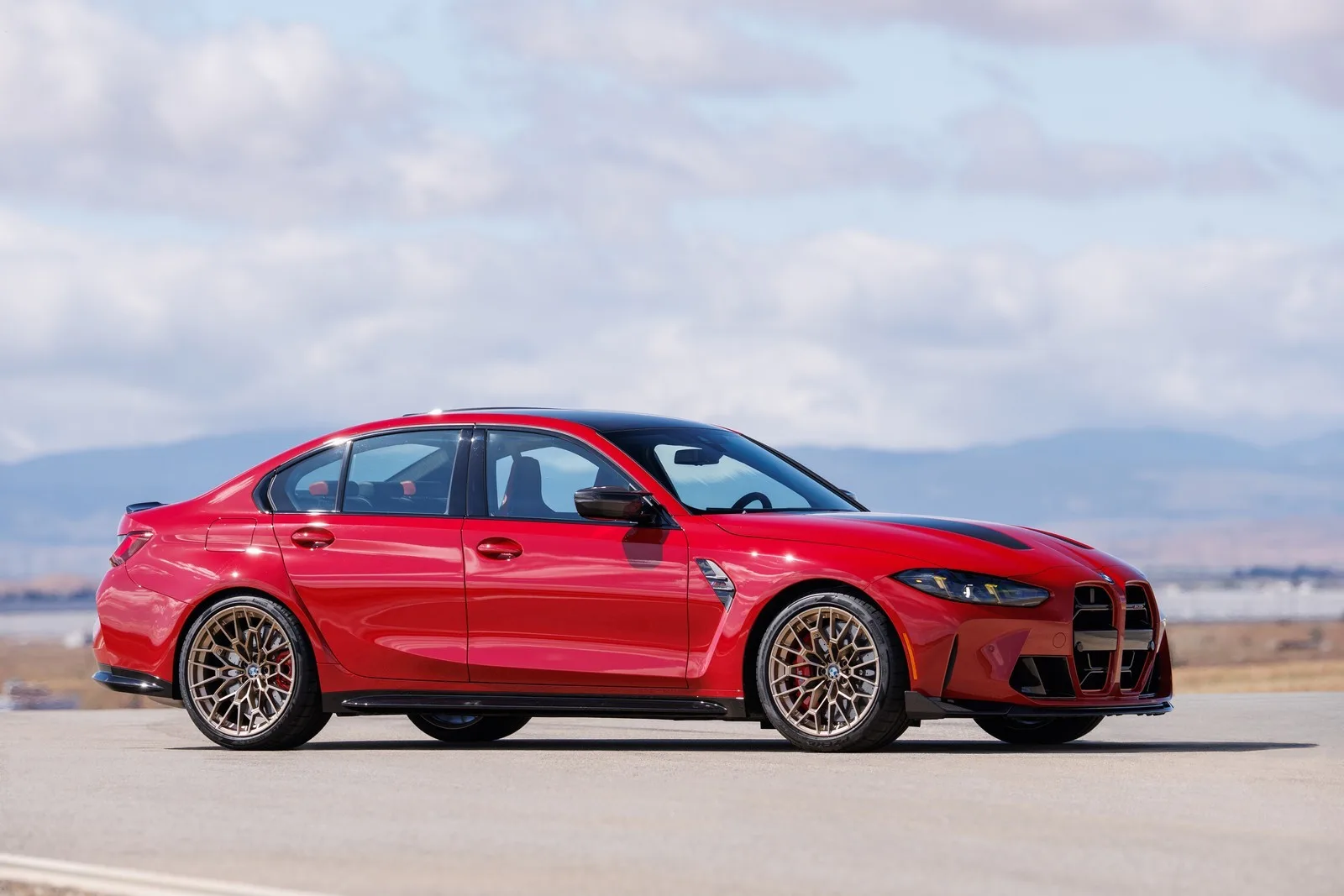
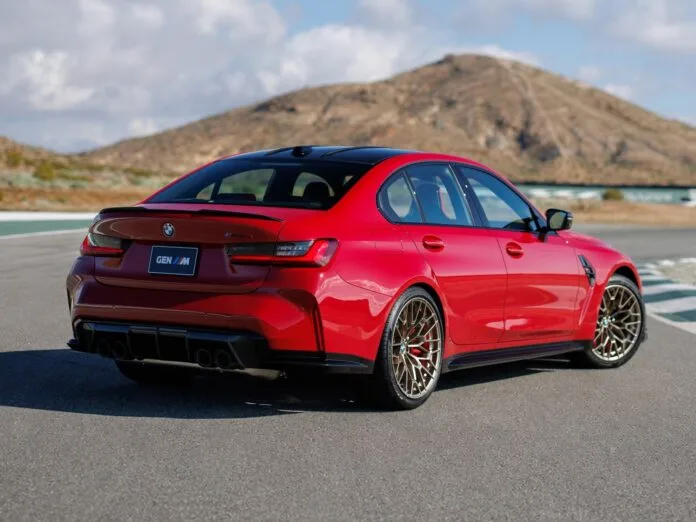
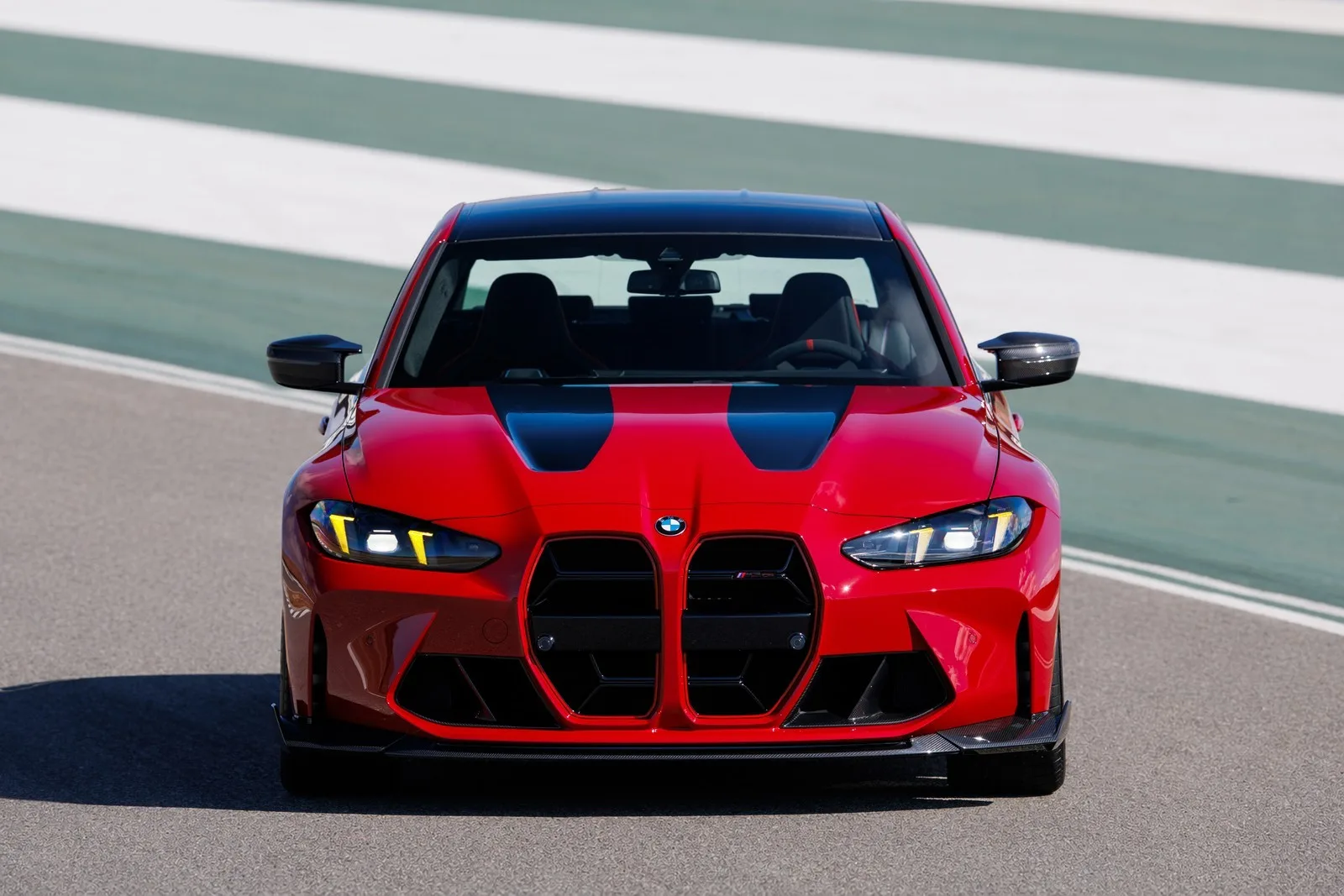
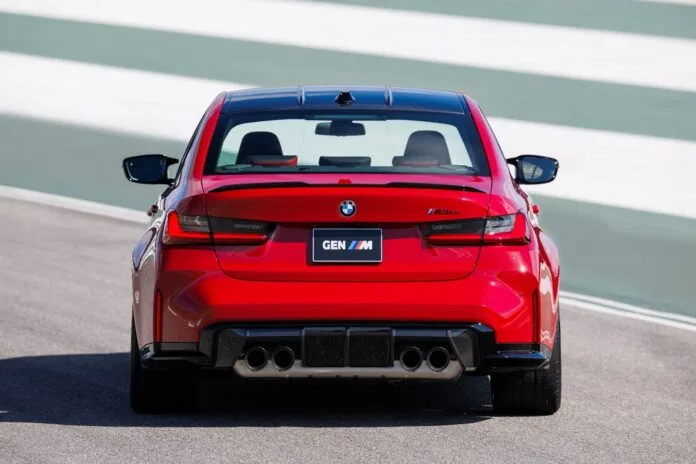
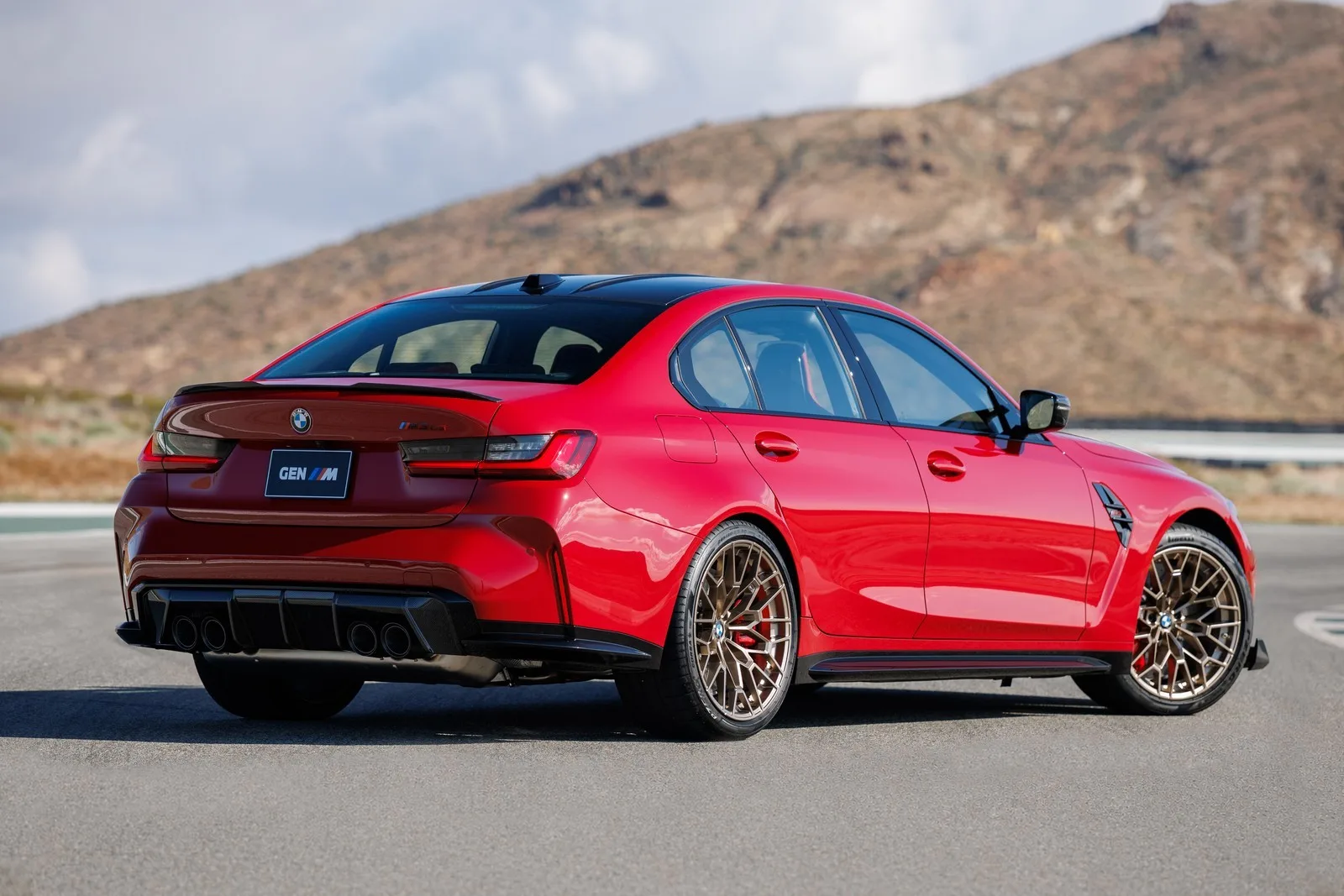
The extensive use of Carbon Fiber Reinforced Plastic (CFRP) is apparent across the exterior shell. The hood, roof panel, front splitter, side mirror housings, rear diffuser, and trunk lip spoiler are all constructed from raw, beautifully lacquered carbon fiber.
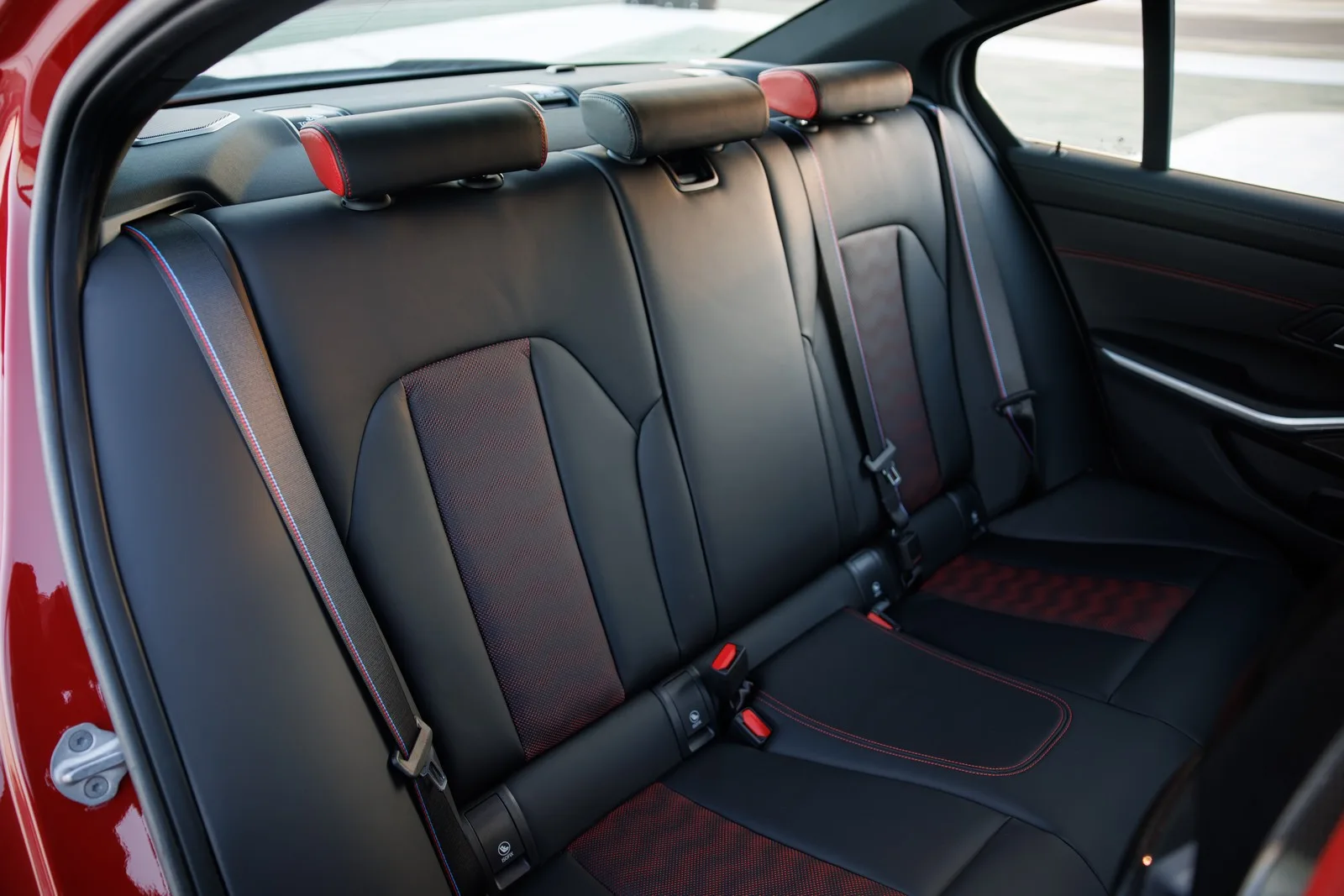
Underneath the car sits a high-performance titanium rear exhaust silencer assembly, which dramatically alters the exhaust tone while cutting significant mass from the very rear of the car. Inside the cabin, the heavy, motorized factory leather seats have been replaced by ultra-rigid, lightweight M Carbon bucket seats.
In total, these comprehensive measures remove approximately 34 kilograms (75 pounds) of mass compared to a standard, base-model M3. While the car’s unladen curb weight still hovers around the 1,700 kg mark, the reduction in unsprung and upper-body mass fundamentally sharpens the car’s dynamic reactions.
Suspension Transmutation: Implementing Hardcore M4 CSL Kinematics
Where the M3 CS Manual truly elevates itself above a standard manual M3 is its comprehensive chassis and suspension redesign. Rather than simply stiffening the factory springs, BMW M engineers chose to transplant the highly aggressive, track-focused suspension architecture directly from the record-breaking, two-seat M4 CSL coupe.
                [ Standard G80 M3 Suspension ]
                              │
                              ▼ (The M4 CSL Engineering Overhaul)
                              │
                [ Hardcore CS Manual Framework ]
                • 6 mm Lower Ride Height Profile
                • Solid Ball-Joint Hinterachs-Anbindung (Zero Deflection)
                • High-Rigidity Cast Aluminum Front Strut Tower Brace
The CSL Damping and Lowered Geometry
The car’s overall ride height has been lowered by exactly 6 mm, drastically reducing body roll and low-speed pitch during hard cornering maneuvers. The vehicle implements specialized, adaptive dampers with unique valving profiles, higher-rate coil springs, and entirely redesigned auxiliary helper springs on both axles.
Zero-Deflection Rear Axle Linkage
Crucially, the rear suspension rubber bushings have been replaced with solid ball joints (Hinterachs-Anbindung) derived straight from motorsport applications. This creates a completely rigid mechanical link between the rear subframe and the wheel carriers, eliminating any physical deflection under high cornering loads.
To reinforce the front tracking grid, buyers can option a beautiful, cast-aluminum M front strut tower brace that locks the front suspension turrets together, ensuring laser-precise turn-in tracking through high-speed apexes.
Performance Realities: Blistering Real-World Capability
Despite losing its xDrive all-wheel-drive traction advantages and giving up 70 horsepower compared to its automatic brother, the manual M3 CS remains a devastatingly fast performance sedan:
| Performance Metric | Evaluation Criteria | Real-World Value |
| 0-96 km/h (0-60 mph) | Launch Control / Mechanical Shift | 4.1 Seconds |
| Maximum Top Velocity | M Driver’s Package (Standard) | 290 km/h (180 mph) |
| Wheel Diameter Matrix | Front Axle / Rear Axle Stagger | 19-Inch Front / 20-Inch Rear |
| Base MSRP (North America) | United States Dollar Valuation | $108,450 USD |
The 4.1-second sprint to 96 km/h proves that launch times are secondary to the rolling acceleration and high-speed cornering stability of this unique build. With a factory top speed of 290 km/h, this machine is engineered to chase down dedicated supercars on any circuit.
Nostalgic Aesthetics: The Retro Color Palette
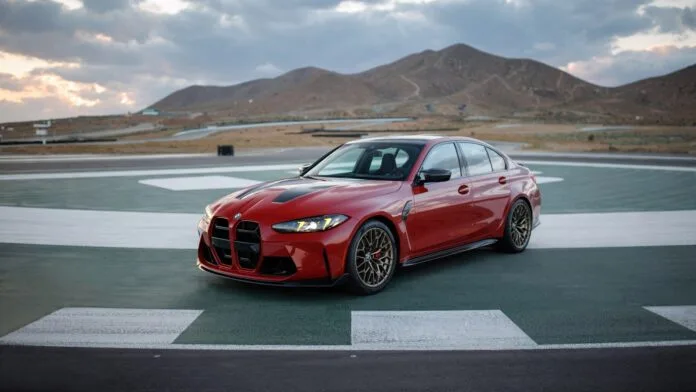
To visually communicate its old-school, purist mechanical identity, BMW opened up its historical paint archive for the M3 CS Manual. Alongside modern options like Black Sapphire Metallic and Isle of Man Green, the factory is offering two highly revered, legendary heritage paint finishes: Imola Red and the iconic Techno Violet Metallic.
Techno Violet, which originally achieved legendary status on the air-cooled E36-generation M3 in the 1990s, acts as an instant nostalgic dog-whistle for long-time BMW purists. This deep, color-shifting hue is paired with staggered Style 927M forged alloy wheels finished in a striking Matte Gold Bronze.
Up front, the standard white daytime running lights have been replaced with vivid yellow laser headlight elements that pay homage to historic GT endurance racing cars, creating a presence that is impossible to mistake for a standard business sedan.
Conclusion: The Final Analog Monument
The BMW M3 CS Manual is far more than just a limited-edition performance variant. It stands as an incredibly important, deeply emotional monument marking the absolute end of an automotive era. As rumors swirl regarding the next-generation M3 moving toward mandatory automatic gearboxes, permanent all-wheel drive, and eventually a fully electric quad-motor architecture, this vehicle represents the absolute final opportunity to own a brand-new, analog-focused BMW M flagship sedan.
                  [ The G80 M3 CS Manual Finale ]
                                 │
     ┌───────────────────────────┴───────────────────────────┐
     ▼                                                       ▼
[ Traditional Driving Attributes ]             [ Future M-Power Outlook ]
• 3 Physical Foot Pedals                       • Mandatory Automatic Gearboxes
• Direct Mechanical Shifting                   • Permanent xDrive All-Wheel Drive
• Pure Rear-Wheel Drive Dynamics               • Pure Electrification Architectures
At a starting price of $108,450 USD, it commands a premium of nearly $28,000 over a base manual M3. Yet, for the discerning collector who understands the historical weight of this moment, that premium is a small price to pay.
By fusing the legendary S58 twin-turbo engine with a 6-speed manual gearbox, a rear-wheel-drive layout, and hardcore M4 CSL chassis components, BMW has created a masterpiece that values driver emotion above raw performance data—ensuring its legacy as one of the most collectible, revered sports sedans of the modern era.
Source: BMW M3 CS Handschalter: Das letzte große Statement der G80-Ära!
✍️ Author: Bejenaru Alexandru Ionut – [email protected]
🔗 Internal link: https://diagnozabam.ro/sfaturi

Recommendation: Looking for a professional bi-directional diagnostic tool with full system coverage? Use code DIAGNOZABAM for 10% off.
Transparency note: Affiliate link. Purchasing through it costs you nothing extra. View Thinkcar Deal →
