
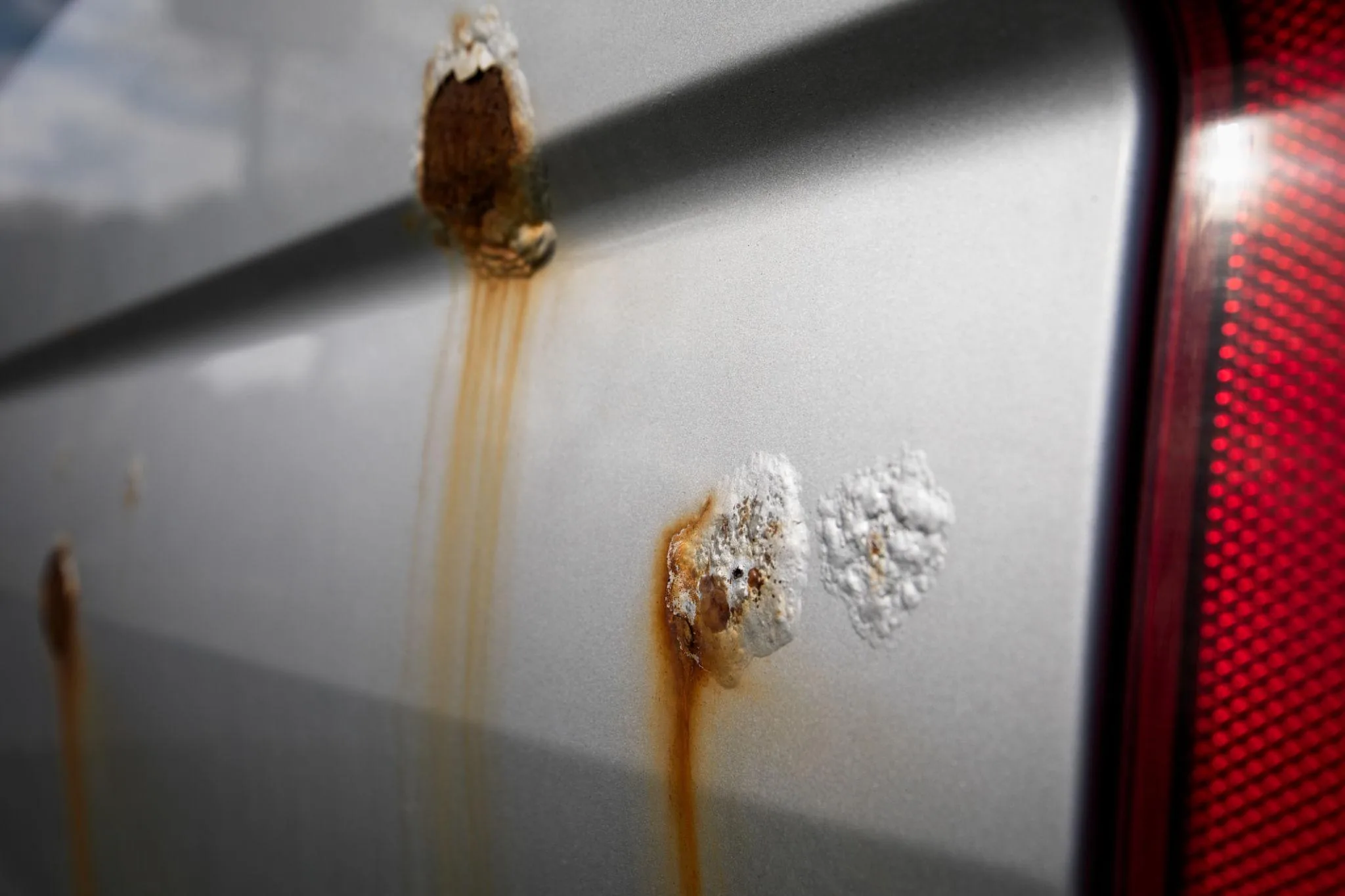
Car rust is not just a cosmetic issue. It is a progressive electrochemical process that can compromise vehicle safety, reduce resale value and lead to expensive structural repairs.
Modern vehicles are better protected than older generations, but corrosion still appears due to environmental exposure, mechanical damage and poor maintenance.
This guide explains how rust forms, how to remove it correctly and how to prevent it long-term using professional methods.
What Is Car Rust (Technical Explanation)
Rust forms when iron reacts with oxygen and water, creating iron oxide (Fe2O3).
This reaction requires three elements:
- metal (iron or steel)
- oxygen
- moisture
Additional accelerators:
- road salt (electrolyte effect)
- acidic contaminants
- temperature cycling
Once started, rust becomes self-propagating, because the oxide layer is porous and allows further oxidation.
Why Modern Cars Still Rust
Even with factory protection (galvanization, primers, coatings), rust still appears due to:
Coating Failure
- chipped paint
- stone impacts
- UV degradation
Hidden Moisture Traps
- inside doors
- under seals
- inside rocker panels
Poor Repairs
- improper repainting
- lack of primer
- untreated metal edges
Types of Car Rust (Professional Classification)
Surface Rust
- affects paint layer only
- early-stage oxidation
- fully repairable without structural work
Scale Rust
- penetrates metal surface
- paint begins to flake
- requires aggressive mechanical removal
Structural Rust
- deep corrosion
- metal integrity compromised
- requires cutting and welding
Most Common Rust Locations
- rocker panels (critical structural area)
- rear wheel arches
- underbody and subframe
- door edges
- trunk seams
These areas are exposed to water retention and debris accumulation.
How to Repair Car Rust (Professional Process)
Step 1 – Mechanical Removal
- sanding (P80–P240)
- wire brushing
- grinding for severe cases
Goal: remove all visible oxidation.
Step 2 – Chemical Treatment
Apply:
- rust converter (phosphoric acid based)
- corrosion inhibitor
This stabilizes microscopic rust particles that remain in pores.
Step 3 – Priming
Use:
- epoxy primer (best protection)
- anti-corrosion primer
This step is critical for long-term durability.
Step 4 – Refinishing
- base coat (paint)
- clear coat (lacquer)
Restores both protection and appearance.
Step 5 – Structural Repair (if needed)
- cut damaged metal
- weld new panel
- reapply full coating system
Zinc Spray – Is It Worth It?
Zinc spray is often used because it provides:
- sacrificial protection (zinc oxidizes instead of steel)
- temporary corrosion resistance
However:
- it does not remove rust
- it is not a permanent repair
- it works best on clean or lightly affected metal
Conclusion: useful as a protective layer, not as a standalone fix.
Common Mistakes That Cause Rust to Return
- painting over rust
- skipping rust converter
- using cheap primers
- ignoring hidden corrosion
- no underbody protection
These mistakes lead to recurring corrosion within months.
Long-Term Rust Prevention Strategy
Exterior Protection
- regular washing (especially winter)
- wax or sealant application
- ceramic coatings (optional)
Internal Protection
- cavity wax treatment
- corrosion inhibitors inside panels
Underbody Protection
- professional undercoating
- anti-chip coatings
- periodic inspection
Seasonal Maintenance Strategy
Winter
- remove salt frequently
- wash underbody
Summer
- inspect paint damage
- repair chips immediately
Cost vs Damage Progression
| Stage | Repair Cost | Difficulty |
|---|---|---|
| Surface rust | Low | Easy |
| Scale rust | Medium | Moderate |
| Structural rust | High | Complex |
Ignoring rust increases costs exponentially.
Conclusion
Car rust is inevitable over time, but its progression is controllable.
The difference between a minor repair and a major structural issue is:
- early detection
- correct repair method
- consistent prevention
Professional treatment always involves a combination of mechanical cleaning, chemical stabilization and protective coatings.
Întreținerea și Înlocuirea Cârligului de Remorcare: Ghid Esențial
✍️ Author: Bejenaru Alexandru Ionut – [email protected]
🔗 Internal link: https://diagnozabam.ro/sfaturi

Recommendation: Looking for a professional bi-directional diagnostic tool with full system coverage? Use code DIAGNOZABAM for 10% off.
Transparency note: Affiliate link. Purchasing through it costs you nothing extra. View Thinkcar Deal →