
Next-Gen VW Amarok III: Design Renders, Platform Speculations, and the Shift Toward Full Electrification
The midsize pickup truck segment is changing rapidly. Heavy-duty diesel engines and simple ladder frames defined early models. Modern pickup trucks must meet strict emissions laws. Buyers also expect SUV levels of interior comfort and technology.
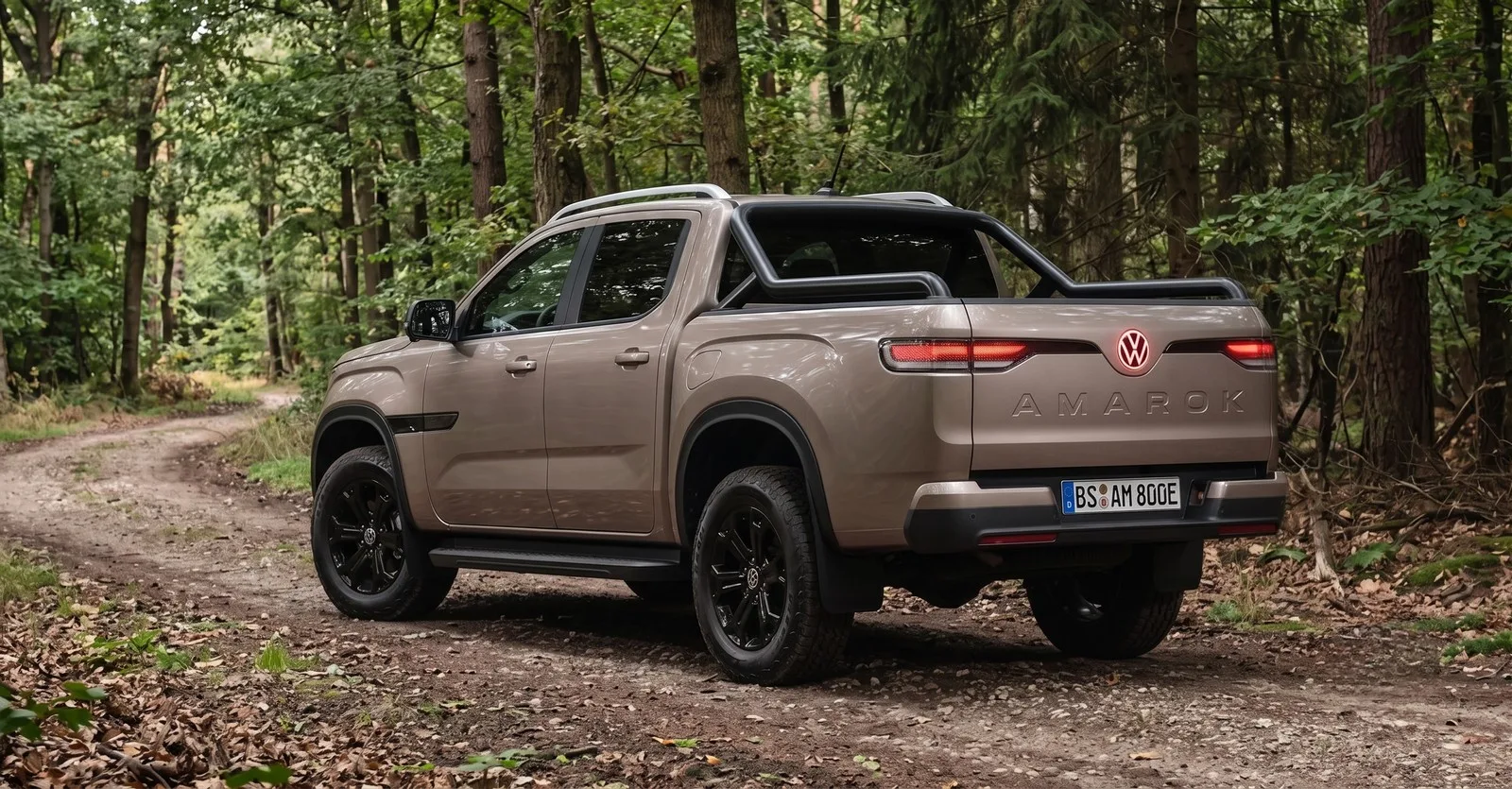
The current Volkswagen Amarok utilizes the shared Ford T6.2 platform. Production continues at the Silverton plant in South Africa. However, design teams are already focused on the future. Exclusive renderings of the theoretical VW Amarok III show a modern design direction. This vision combines rugged utility with next-generation electric vehicle technology.
Exterior Architecture: Minimalist Front Facia Meets Functional Utility
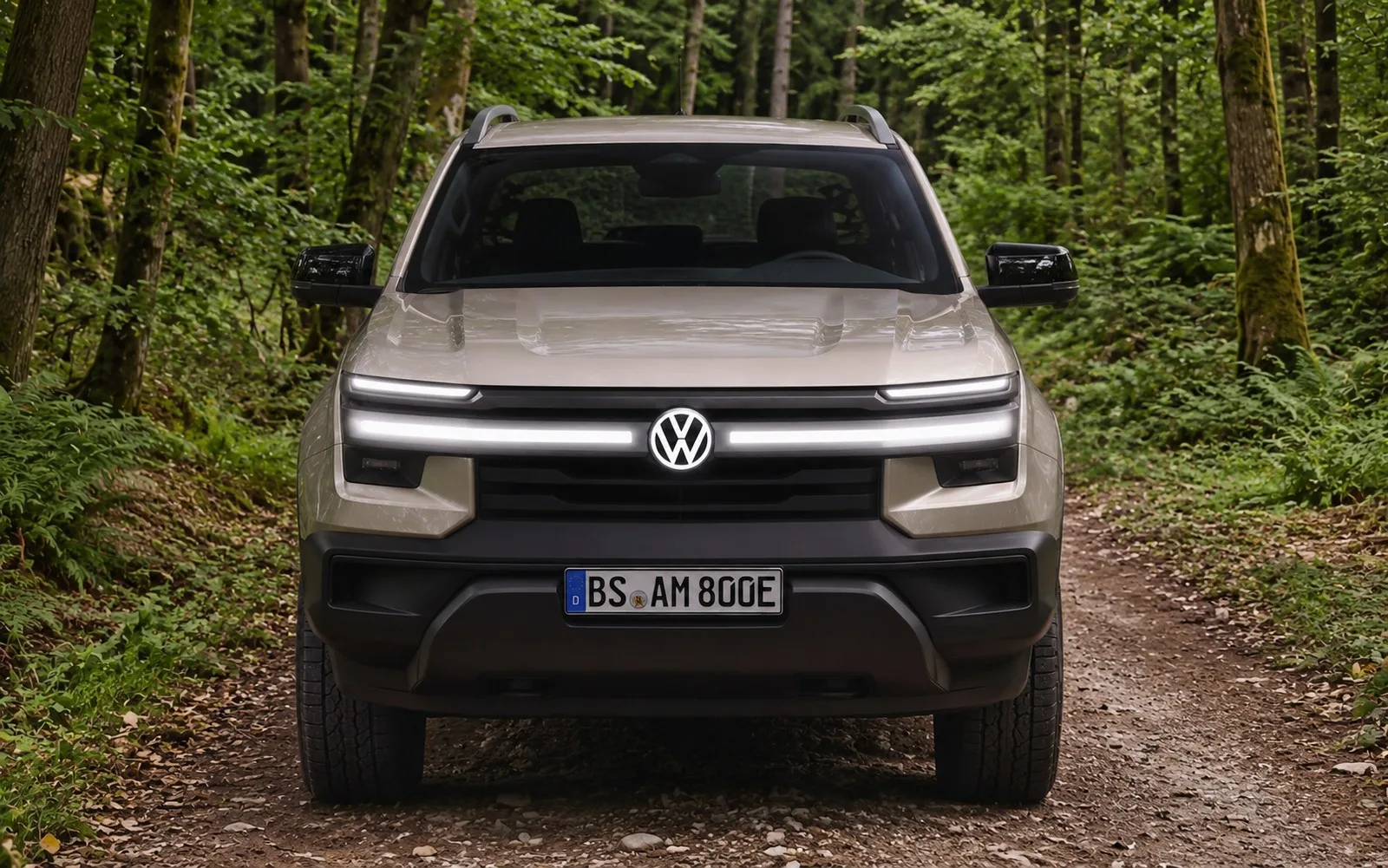
Digital design studies for the third-generation Amarok depart from older, chrome-heavy styling. Instead, the design adopts a clean aesthetic. It matches Volkswagen’s latest global styling cues. At the same time, it keeps a wide and planted stance expected of a dual-cab utility vehicle.
+-------------------------------------------------------------------+
|                     VW AMAROK III FRONT FASCIA                    |
+-------------------------------------------------------------------+
|  [=== Lightbar ===]   [=== Lightbar ===]   [=== Lightbar ===]    |
|  | LED Headlight |     < VW Illuminated Badge >   | LED Headlight ||
|  +---------------+                                +---------------+|
|                                                                   |
|      +-----------------------------------------------------+      |
|      |               Lower Minimalist Grille               |      |
|      +-----------------------------------------------------+      |
|                                                                   |
|   /=========                                         /========= |
|  [ Recovery  ]                                       [ Recovery  ]|
|   =========/                                         =========/ |
+-------------------------------------------------------------------+
Key Front-End Styling Elements
-
Continuous Lightbar Architecture: A full-width horizontal LED lightbar spans across the front grille. It integrates smooth daytime running lights (DRLs) directly into an illuminated center logo.
-
Vertical Main Beam Pods: The primary LED matrix headlights sit vertically at the outer bumper edges. This layout widens the visual stance of the truck. It also protects key optical components during off-road driving.
-
Streamlined Air Intake: A low-mounted air intake features active shutter flaps. These flaps reduce drag at highway speeds. They also ensure maximum airflow when towing heavy loads.
Profile and Cargo Bed Functionality
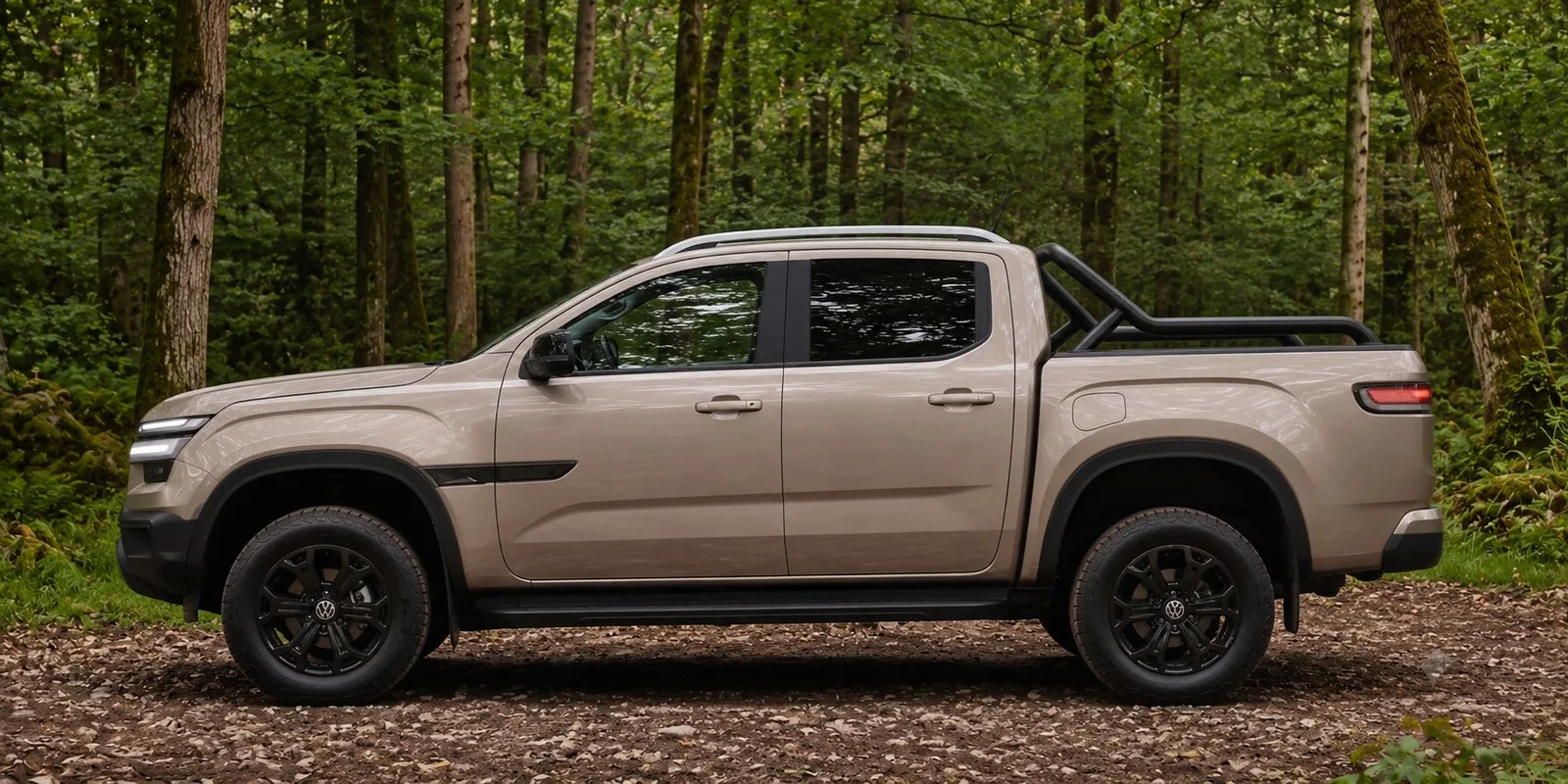
The side profile balances aerodynamic efficiency with classic pickup proportions. Smooth body panels reduce wind noise. Practical work features remain top priorities over pure styling gimmicks.
-
Heavy-Duty Door Handles: Flush electronic pop-out handles often fail in tough dirt conditions. The Amarok III keeps strong mechanical door handles. Workers can operate them easily while wearing heavy gloves.
-
Wheel Arch Flares & Stance: Squared-off protective cladding shields the wheel arches. The design fits up to 20-inch alloy wheels wrapped in all-terrain tires.
-
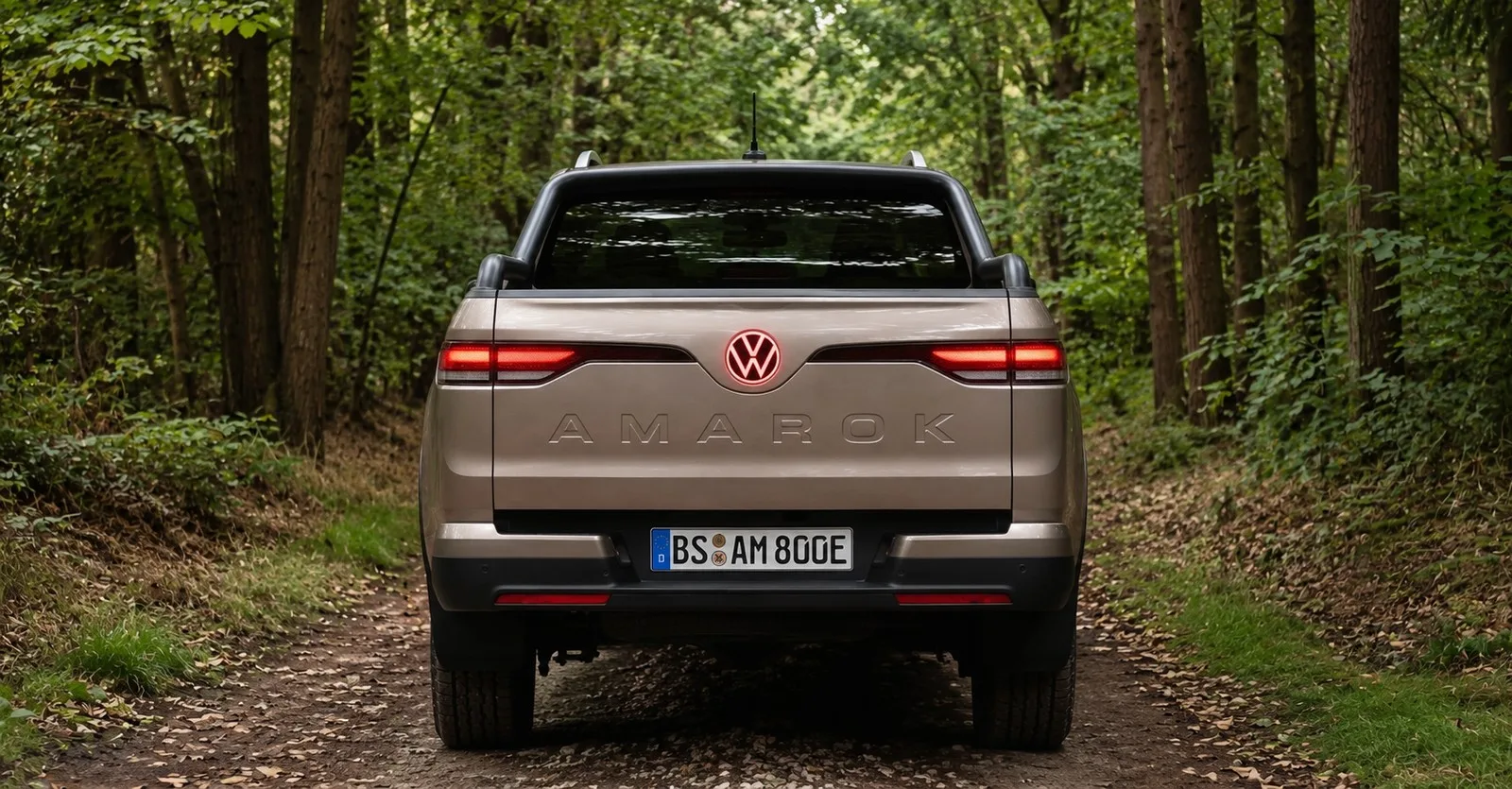
Integrated Bed Mechanics: The bed includes a black steel roll bar. Built-in rear bumper steps make accessing the bed easy. Integrated AC power outlets (120V/240V) can power heavy tools directly at job sites.
Interior Overhaul: Digitization, Ergonomics, and Cabin Refinement
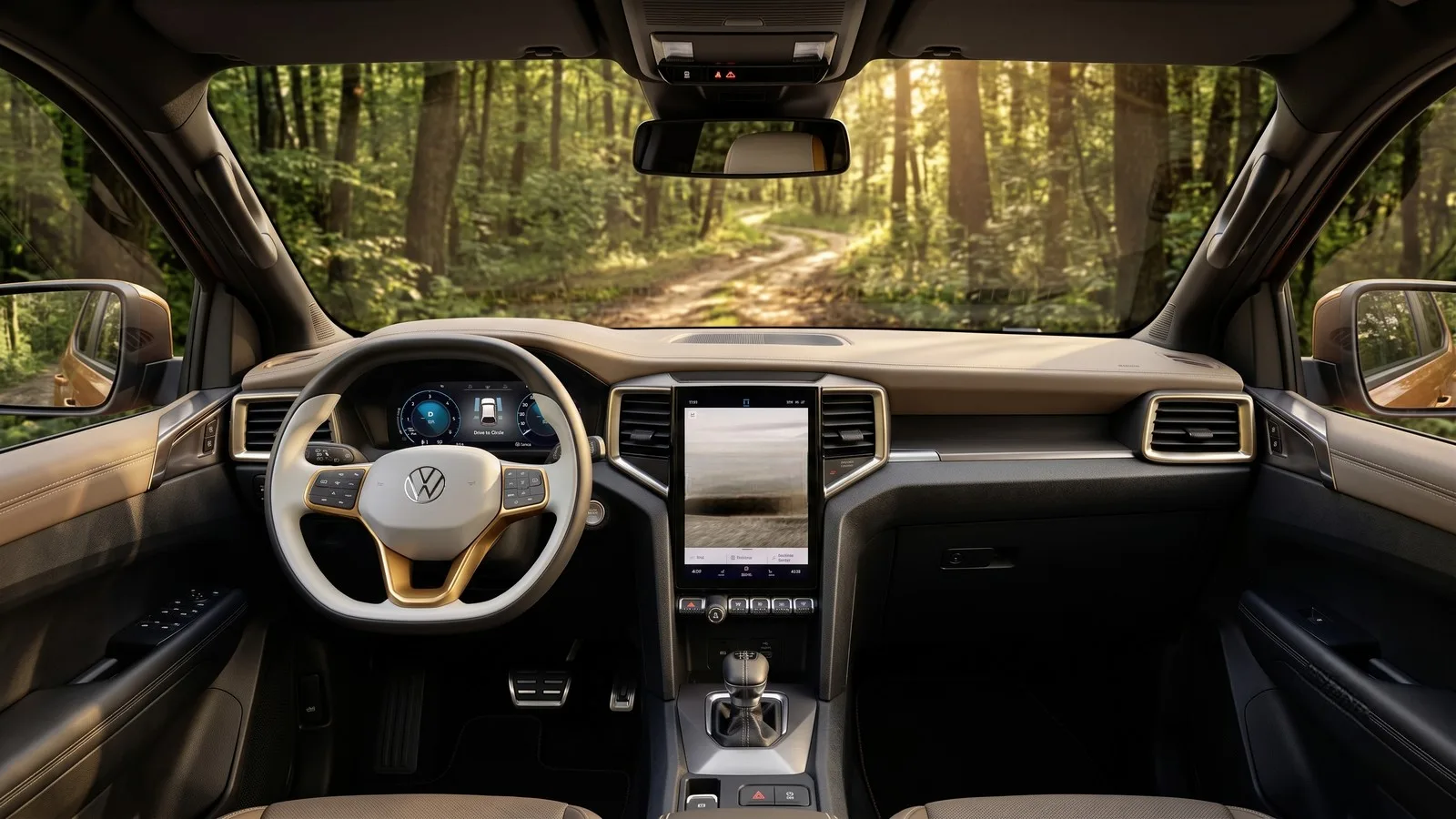
Inside the cabin, the concept replaces basic commercial plastics with premium materials. Modern buyers use pickup trucks as primary family vehicles. Cabin quietness, digital connectivity, and durable surfaces must work together smoothly.
+-------------------------------------------------------------------+
|                 CABIN ELECTRONICS & INFOTAINMENT                  |
+-------------------------------------------------------------------+
|  +-------------------+       +---------------------------------+  |
|  |  Digital Cockpit  |       |   15" Vertical Touchscreen      |  |
|  |   Instrument      |       |   Infotainment Unit (MIB4)      |  |
|  |     Cluster       |       |                                 |  |
|  +-------------------+       |   [ HVAC / Navigation / Audio ] |  |
|                              +---------------------------------+  |
|     ( Multi-Function )                                            |
|     ( Drive Selector )       +---------------------------------+  |
|                              |   Wireless Charging & AC Outlets|  |
+------------------------------+---------------------------------+--+
Digital Interface & Controls
-
Central Infotainment Display: A vertical 15-inch touchscreen runs the latest MIB4 operating system. It handles vehicle settings, off-road telemetry, and climate controls.
-
Digital Instrument Cluster: A high-definition 12.3-inch Digital Cockpit Pro display provides key driver data. It shows tire pressure, roll angles, and power distribution in real time.
-
Physical Tactical Controls: Essential off-road switches remain physical. Drivers can quickly toggle low-range mode, differential locks, and trailer brakes without navigating touch menus.
ℹ️ Technical Note: Upgrading multi-layer acoustic glass improves interior sound insulation. Injecting expanding polyurethane foam into inner body pillars further reduces road noise. These upgrades deliver a quiet, luxury SUV driving experience on open highways.
Platform Engineering Dilemma: Body-on-Frame vs. Unibody Architecture
Choosing the right chassis architecture is a major challenge for Volkswagen engineers. A traditional body-on-frame setup provides extreme durability. Conversely, a unibody platform lowers overall vehicle weight. The choice directly affects payload, towing limits, and battery layout options.
| Architectural Attribute | Traditional Ladder Frame (T6.2 / Evolution) | Modern Unibody Architecture (E-Platform) |
| Towing Capacity | Up to 3,500 kg (Standard) | Typically 2,000 kg – 2,500 kg |
| Max Payload | 1,000 kg + | 650 kg – 850 kg |
| Off-Road Torsional Rigidity | High chassis flex under extreme articulation | Rigid frame; risk of unibody stress over decades |
| Ride Quality & Handling | Rigid rear axle creates unladen bouncing | Independent 4-wheel suspension offers car-like handling |
| Battery Integration | Mounted inside frame rails (limits kWh volume) | Floor-integrated structural battery pack (100 kWh+) |
| Curb Weight Impact | Heavier baseline chassis structure | Lighter overall structure; compensates for battery weight |
               [LADDER FRAME CHASSIS]                      [UNIBODY ARCHITECTURE]
            +--------------------------+                +--------------------------+
            |  Separate Body Structure |                | Integrated Structural    |
            +--------------------------+                | Enclosure Body & Chassis |
            |      Rung / Channel      |                +--------------------------+
            |   Heavy Steel Frame      |                | Independent Subframes &  |
            +--------------------------+                | Integrated Floor Pan     |
Technical Chassis Considerations
Midsize truck buyers in key global markets demand high capability. Australia, South Africa, and South America require a minimum 3,500 kg towing capacity. Traditional ladder frames handle these extreme strain loads easily. However, fitting a large EV battery between steel frame rails requires significant re-engineering.
Unibody platforms lower total vehicle weight significantly. They allow larger battery packs to sit inside the floor structure. However, unibody trucks can suffer metal fatigue under constant heavy payload usage. Engineers must balance these chassis trade-offs carefully before production.
Powertrain Evolution: Plug-In Hybrid (PHEV) and Battery Electric (BEV)
Global emissions standards continue to tighten worldwide. Traditional diesel engines cannot remain the only propulsion choice. Speculation points toward a multi-powertrain strategy. This plan includes Plug-In Hybrid (PHEV) and full Battery Electric (BEV) setups.
+-------------------------------------------------------------------+
|               PLUG-IN HYBRID (PHEV) DRIVETRAIN LAYOUT             |
+-------------------------------------------------------------------+
| [ Turbo ICE ] ---> [ Electric Motor ] ---> [ Transmission ]      |
|                           ^                       |               |
|                           |                       v               |
|                   [ High-Volt Battery ]    [ Transfer Case ]      |
|                                            /                     |
|                                   [ Front Axle ]     [ Rear Axle ]|
+-------------------------------------------------------------------+
1. Plug-In Hybrid (PHEV) Drivetrain Architecture
The PHEV variant connects a turbocharged combustion engine to an electric motor. The motor sits between the engine flywheel and the automatic transmission.
-
Engine Configuration: A 2.0L turbocharged gasoline or diesel engine works alongside a powerful electric motor.
-
Power Output: The combined system delivers an estimated 350 HP and over 650 Nm of total torque.
-
Battery Array: A 20 kWh to 25 kWh lithium-ion battery sits above the rear axle. It provides an electric driving range of 60 km to 80 km.
-
Off-Road Benefits: Electric motors supply maximum torque instantly at 0 RPM. This feature makes rock crawling and heavy trailer launching effortless.
2. Dual-Motor Fully Electric (BEV) Variant
A full-electric Amarok III replaces physical driveshafts with a dual-motor e-4Motion setup.
+-------------------------------------------------------------------+
|               DUAL-MOTOR ELECTRIC (BEV) LAYOUT                    |
+-------------------------------------------------------------------+
| [ Front e-Motor + Gearbox ] ----------> Drives Front Wheels       |
|                                                                   |
| [ Floor-Integrated High-Voltage Battery Pack: 100 kWh - 120 kWh ]  |
|                                                                   |
| [ Rear e-Motor + Gearbox ] -----------> Drives Rear Wheels        |
+-------------------------------------------------------------------+
-
Front Electric Motor: A 150 kW motor powers the front axle directly.
-
Rear Electric Motor: A 220 kW motor powers the rear axle with rear-biased torque.
-
Total Performance: Combined output exceeds 500 HP and 800 Nm of instant torque.
-
Battery and Charging: A 100 kWh to 120 kWh battery pack uses an 800V electrical system. It supports fast DC charging from 10% to 80% in under 25 minutes.
⚠️ WARNING: Off-road electric trucks require heavy steel skid plates for battery protection. Submerging an unsealed battery casing during deep water crossings risks short-circuits and total electrical failure.
Off-Road Geometry and Suspension Engineering
A modern utility vehicle must handle tough terrain without bottoming out. Suspension geometry remains critical for off-road success.
                  APPROACH ANGLE           DEPARTURE ANGLE
                                             /
                                            /
                       v                    v
         _____________/=====================_____________
        /    [O]                                [O]
       o------------------------------------------------o
      /|                                                |
     / |               <-- WHEELBASE -->                |
    /  |                                                |
Technical Off-Road Specifications (Estimated)
-
Approach Angle: 31° for easy climbing over steep trail obstacles.
-
Departure Angle: 26° to protect the rear bumper and bed overhang.
-
Breakover Angle: 23° to prevent belly scraping on high obstacles.
-
Ground Clearance: Standard 235 mm, increasing to 250 mm with active air suspension.
-
Wading Depth: 800 mm for deep water crossings.
-
Suspension System: Double wishbone front suspension with a multi-link rear axle setup.
An optional air suspension system optimizes ride height automatically. The system lowers the truck by 20 mm on high-speed highways to improve airflow. It can also raise the chassis by 40 mm in dedicated off-road modes.
Thermal Management and Battery Cooling Systems
Electric pickup trucks face heavy thermal stress during work operations. Towing a 3,500 kg trailer uphill generates significant heat in electrical components. Engineers must design robust cooling loops for these demanding scenarios.
+-------------------------------------------------------------------+
|                  TRIPLE-ZONE COOLING LOOP SYSTEM                  |
+-------------------------------------------------------------------+
|  [ Battery Chiller Loop ] ---> Maintains 25°C to 35°C Range       |
|  [ Power Electronics Loop ] -> Cools Inverters & Motors           |
|  [ Cabin Climate Loop ] -----> Heat Pump Heat Exchanger           |
+-------------------------------------------------------------------+
-
Liquid Battery Cooling: A dedicated liquid coolant loop keeps battery modules within ideal operating temperatures. This system prevents thermal throttling during rapid DC fast charging.
-
Heat Pump Integration: A high-efficiency heat pump scavenges excess electric motor heat. It uses this thermal energy to warm the cabin during winter driving, preserving driving range.
Strategic Industry Partnerships and Global Production
Volkswagen developed the current Amarok alongside the Ford Ranger. Shared engineering saved development costs for both brands. However, future platform choices remain open.
+-------------------------------------------------------------------+
|                 VW AMAROK PRODUCTION STRATEGIES                   |
+-------------------------------------------------------------------+
|  [ Option A ] Extend Ford T6.2 Platform Alliance for Hybrid Tech  |
|  [ Option B ] Adopt VW Group Scalable Modular EV Architecture     |
|  [ Option C ] Co-Develop Commercial Platforms with Asian Partners |
+-------------------------------------------------------------------+
-
Continuing the Ford Joint Venture: Upgrading the shared T6.2 chassis allows for easy PHEV integration. It keeps established production lines in South Africa operational.
-
Developing an In-House Platform: Building the Amarok on Volkswagen’s future modular platform maximizes software integration. However, it requires massive factory retooling.
-
Targeting Global Commercial Markets: Fleet buyers require low operational costs. Hybrid powertrains provide a practical bridge before full electric adoption occurs.
The third-generation Volkswagen Amarok represents a bold shift for utility vehicles. By mixing electric power, advanced digital cabin tech, and rugged structural design, Volkswagen aims to set a new benchmark in the global pickup segment.
Source: 2029 VW Amarok III als Rendering: So könnte der nächste Pick-up aussehen
✍️ Author: Bejenaru Alexandru Ionut – [email protected]
🔗 Internal link: https://diagnozabam.ro/sfaturi

Recommendation: Looking for a professional bi-directional diagnostic tool with full system coverage? Use code DIAGNOZABAM for 10% off.
Transparency note: Affiliate link. Purchasing through it costs you nothing extra. View Thinkcar Deal →