
Solid-State Batteries: The Ultimate Breakthrough in Electric Mobility
The automotive industry is standing on the precipice of its most radical transformation since the transition from internal combustion engines to electric powertrains. While current electric vehicles (EVs) have made tremendous strides in range, efficiency, and adoption, they remain fundamentally constrained by lithium-ion battery technology. The solution that promises to shatter these physical boundaries, banish range anxiety permanently, and redefine long-distance travel is the solid-state battery.
Solid-state battery technology is widely regarded as the holy grail of energy storage. By eliminating volatile liquid components and replacing them with solid electrolytes, automotive manufacturers and battery developers are unlocking unprecedented energy densities, rapid charging capabilities, and absolute thermal stability. Major global automakers—including Toyota, BMW, Nissan, and the Volkswagen Group—are investing tens of billions of dollars to transition this technology from research laboratories to mass production lines.
In this deep dive, we examine how solid-state batteries work, compare them directly to traditional lithium-ion architecture, explore their groundbreaking benefits, analyze technical challenges, and detail the commercialization roadmaps of leading manufacturers.
What Is a Solid-State Battery?
At its core, a solid-state battery functions similarly to traditional electrochemical cells: it stores and releases electrical energy through the movement of ions between a negatively charged anode and a positively charged cathode. However, the fundamental structural innovation lies in the material separating these two electrodes.
In a conventional lithium-ion cell, the separator is soaked in a liquid or gel electrolyte—typically lithium salts dissolved in flammable organic solvents. This liquid facilitates ion transport during charging and discharging cycles. While effective, liquid electrolytes pose severe limitations in energy density, temperature sensitivity, and fire safety.
A solid-state battery (SSB) completely replaces this liquid or gel medium with a solid conductive material. Solid electrolytes can be crafted from ceramics, sulfides, glass, or solid polymers. This architectural shift creates a far more stable chemical environment, allowing engineers to utilize high-capacity electrode materials, such as pure lithium metal anodes, which were previously unstable in liquid environments.
How Solid-State Technology Works: Chemistry and Materials
To appreciate why solid-state batteries outperform legacy lithium-ion cells, one must understand the chemical matrix and physics governing ion transport across solid interfaces.
1. Solid Electrolyte Families
There is no single “solid-state” formula. Instead, developers are experimenting with four main categories of solid electrolytes, each offering unique performance trade-offs:
- Sulfide-Based Electrolytes: Known for exceptionally high ionic conductivity at room temperature, rivaling or exceeding liquid electrolytes. However, sulfides are extremely sensitive to moisture and can release toxic hydrogen sulfide (H2S) gas if exposed to ambient air during manufacturing.
- Oxide/Ceramic-Based Electrolytes: Highly stable, non-reactive, and structurally robust. Oxide cells exhibit superior thermal resistance but suffer from brittleness and high interface resistance when bonded with solid electrodes.
- Polymer-Based Electrolytes: Flexible, relatively easy to manufacture using existing roll-to-roll equipment, and low cost. However, solid polymer matrices generally require elevated operating temperatures (60°C to 80°C) to achieve adequate ionic conductivity.
- Halide-Based Electrolytes: An emerging class combining high ionic conductivity, high voltage tolerance, and good mechanical flexibility, though cost remains a primary barrier.
2. The Power of Lithium Metal Anodes
In standard lithium-ion batteries, the anode is made of graphite, which intercalates (stores) lithium ions between carbon layers. While safe, graphite takes up significant physical volume and weight without contributing directly to energy storage.
Solid-state architecture allows for the use of a lithium metal anode—or even an “anode-free” design where lithium plates directly onto a current collector during charging. Pure lithium metal provides a theoretical specific capacity of 3,860 mAh/g, compared to just 372 mAh/g for graphite. This distinction drives the massive leap in volumetric and gravimetric energy density.
Technical Note: Replacing conventional graphite anodes with pure metallic lithium increases the volumetric energy density of a cell by up to 100%, allowing engineers to pack twice the energy into the exact same physical battery enclosure.
Key Advantages: Why Solid-State Changes Everything
Solid-state batteries are not merely an incremental upgrade over existing battery chemistries; they represent a fundamental technological shift across every major performance metric.
1. Extended Driving Range (1,000+ Kilometers)
Current state-of-the-art EV batteries achieve energy densities between 240 and 300 Wh/kg at the cell level. Solid-state cells are projected to exceed 500 Wh/kg and reach 1,000 Wh/L in volumetric density.
For the everyday driver, this translates directly to real-world highway range exceeding 1,000 kilometers (620 miles) on a single charge. EV manufacturers can either double the driving distance without increasing vehicle weight or maintain current range targets while drastically reducing pack mass and footprint.
2. Ultra-Fast Charging (Under 10 Minutes)
Liquid electrolytes limit rapid charging because high current rates cause thermal buildup and localized lithium plating, which permanently degrades the battery. Solid electrolytes exhibit superior thermal tolerance and physical structure, enabling rapid lithium ion transport without damaging internal cell layers.
Next-generation solid-state vehicles will routinely charge from 10% to 80% capacity in 8 to 10 minutes. This brings electric vehicle refueling times into near parity with traditional petrol or diesel fill-ups at gas stations.
3. Absolute Safety and Elimination of Fire Risk
Thermal runaway is the leading cause of catastrophic EV fires. In standard lithium-ion cells, an internal short circuit or severe impact can puncture the separator, causing volatile liquid organic solvents to ignite in an uncontrollable, self-sustaining fire reaching over 1,000°C.
Solid-state batteries contain zero organic liquids or flammable solvents. The ceramic or polymer barrier is immune to thermal runaway under standard conditions, drastically reducing vehicle safety hazards, simplifying battery thermal management systems, and eliminating heavy liquid-cooling plates.
4. Unrivaled Lifespan and Low Degradation
Standard lithium-ion batteries gradually degrade over time due to side reactions between the liquid electrolyte and electrodes, forming a resistive layer known as the Solid Electrolyte Interphase (SEI). Solid-state systems experience far lower chemical degradation, enabling cells to withstand 2,000 to 3,000+ deep charge-discharge cycles while retaining over 80% of their initial capacity. This translates to an operational battery lifespan of 15 to 20 years, outlasting the vehicle chassis itself.
Warning: While solid-state batteries virtually eliminate chemical thermal runaway, improper mechanical pressure or severe physical crush forces during manufacturing can still lead to short circuits. Rigorous structural pack design remains mandatory.
Head-to-Head Comparison: Solid-State vs. Traditional Chemistries
| Performance Metric | Lithium Iron Phosphate (LFP) | Nickel Manganese Cobalt (NMC) | Solid-State Battery (ASSB)
|
|---|---|---|---|
| Cell Energy Density | 160 – 200 Wh/kg | 250 – 300 Wh/kg | 450 – 500+ Wh/kg |
| Volumetric Density | 350 – 450 Wh/L | 600 – 700 Wh/L | 1,000+ Wh/L |
| 10-80% Charge Time | 20 – 30 minutes | 15 – 25 minutes | 8 – 10 minutes |
| Cycle Life (80% Capacity) | 3,000 – 5,000 cycles | 1,200 – 2,000 cycles | 2,500 – 4,000+ cycles |
| Fire Safety Hazard | Moderate / Low | High (Thermal runaway risk) | Negligible / Non-flammable |
| Operating Temp Range | -20°C to 60°C | -20°C to 55°C | -30°C to 100°C+ |
| Estimated Pack Cost ($/kWh) | $70 – $90 | $100 – $130 | $250+ (Initial) / <$80 (Scale) |
Critical Engineering Bottlenecks and Mass Production Hurdles
If solid-state batteries offer such overwhelming benefits, why are they not in every new vehicle today? The answer lies in several complex engineering challenges that arise when scaling from lab samples to gigawatt-hour manufacturing lines.
- Lithium Dendrite Penetration: Microscopic, needle-like structures of metallic lithium can seep along grain boundaries in solid ceramic matrices under high current density, eventually causing internal short circuits.
- Solid-to-Solid Interface Resistance: Solid materials must maintain tight physical contact at atomic boundaries. As electrodes expand and contract during charging/discharging cycles (up to 20%), the solid electrolyte can delaminate, causing performance drops.
- Specialized Cleanroom Manufacturing: Sulfide-based cells require ultra-dry environments (<0.1% humidity) to prevent toxic gas generation. Automating high-speed assembly with uniform pressure application remains technically difficult.
Global Automotive Roadmap: Who Is Leading the Race?
Toyota Motor Corporation
Toyota holds over 1,000 patents related to solid-state energy storage, giving it the largest intellectual property portfolio in the field. Partnering with Idemitsu Kosan, Toyota aims to commercialize sulfide-based solid-state batteries in 2027–2028, targeting premium EVs with 1,000 km range and 10-minute charging.
BMW Group and Solid Power
BMW has invested heavily in Solid Power and operates a solid-state pilot line near Munich, conducting real-world tests on demonstration vehicles featuring silicon-dominant anodes.
Nissan Motor Co.
Nissan is pursuing an All-Solid-State Battery (ASSB) strategy developed in-house. Its Yokohama pilot plant is preparing for production, with the first commercial vehicle launch planned for 2028.
Volkswagen Group and QuantumScape
Volkswagen’s partner QuantumScape utilizes an anode-free cell with a ceramic separator, demonstrating over 1,000 discharge cycles with 95% capacity retention during validation testing.
The Driving Experience Transformed
- Zero Range Anxiety: Long-distance road trips become seamless without mandatory charger mapping.
- True Winter Reliability: Stable physical chemistry prevents sub-zero winter performance drops.
- Lighter, Agiler Handling: Reduced pack mass sharpens vehicle dynamics and improves efficiency.
- Higher Resale Value: Superior cycle life preserves long-term battery health and vehicle equity.
Conclusion
Solid-state batteries are moving rapidly from laboratories to commercial production. While initial high costs will restrict early adoption to premium and luxury vehicles between 2027 and 2030, scaling production will ultimately make solid-state energy storage the standard for all electric transport.
✍️ Author: Bejenaru Alexandru Ionut – [email protected]
🔗 Internal link: https://diagnozabam.ro/sfaturi
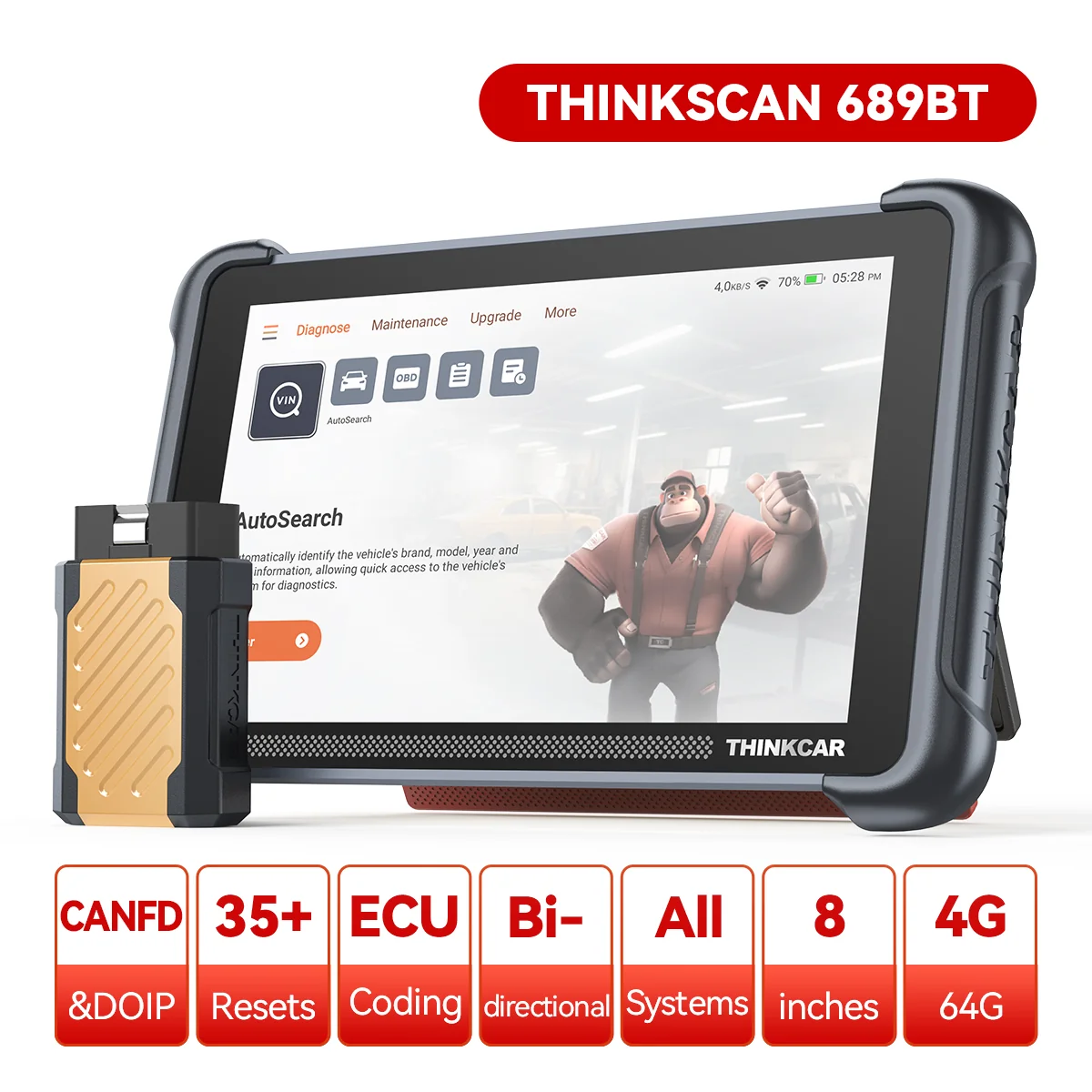
Recommendation: Looking for a professional bi-directional diagnostic tool with full system coverage? Use code DIAGNOZABAM for 10% off.
Transparency note: Affiliate link. Purchasing through it costs you nothing extra. View Thinkcar Deal →
