

What a “long vehicle” actually means
The term gets used loosely, but not every big truck automatically falls into this legal category.
A long vehicle is any single vehicle or combination (tractor unit plus semi-trailer, articulated bus, heavy truck) that exceeds the standard legal length allowed for its type under European road traffic law.
ℹ️ Technical Note: The reference framework across the EU is Directive 96/53/EC, which sets maximum authorized weights and dimensions for road vehicles circulating within the Union. Member states can add national signage rules and local restrictions on top of this framework.
Broadly, a vehicle is considered “long” when it is:
- a single (rigid) vehicle over 12 meters;
- an articulated combination (tractor + semi-trailer) or road train (truck + trailer) between 16.5 and 18.75 meters, depending on configuration;
- any combination exceeding these thresholds, which requires a special transport permit.
Common examples on the road
The categories drivers encounter most often are:
- Articulated buses — up to roughly 18 meters, common on busy urban and interurban routes;
- Truck + semi-trailer combinations — the standard freight configuration, reaching 16.5–18.75 meters;
- Road trains (tractor unit + separate trailer coupled via a drawbar) — used mainly in agricultural and forestry transport;
- Oversized convoys — any combination over 19 meters, which always requires a special transport permit and, frequently, an escort.
The distinction isn’t just theoretical — it determines which traffic restrictions apply, which markings are mandatory, and what minimum distances other road users must keep.
Signage and safety requirements
Long vehicles must be clearly identifiable, especially at night or in low visibility. The law requires:
- a yellow reflective “LONG VEHICLE” plate, mounted visibly at the rear;
- reflective strips along the outline of the vehicle or combination, marking its real dimensions in traffic;
- contour markings and triangles compliant with ECE standards, helping drivers behind estimate the actual gauge.
These aren’t optional extras. Missing them puts both the long-vehicle driver and everyone around them at significantly higher risk, particularly during overtaking or lane changes.
⚠️ WARNING: A long vehicle without proper reflective signage can be practically invisible at night until it’s dangerously close — reaction time for following drivers drops sharply in these situations.
Traffic rules specific to long vehicles
Drivers of long vehicles — and anyone driving near them — need to account for extra rules:
- greater following distances — braking distance increases with the mass and length of the combination;
- avoiding restricted routes — many towns and road sections carry explicit “No long vehicles” signs or length/tonnage limits;
- heightened awareness of blind spots — an articulated combination has much larger blind zones than a passenger car, both to the front and sides;
- wide turning maneuvers — a long vehicle cuts corners differently, and other drivers need to anticipate this, not just at intersections but in roundabouts too.
For transports exceeding standard thresholds (over 19 meters or with exceptional weight), a special transport permit is mandatory, issued by the relevant road authority, and in many cases the route must be accompanied by an escort — either police vehicles or authorized private escort vehicles, depending on the gauge and route risk.
Maximum legal length by category
| Vehicle type | Max legal length | Considered “long”? |
|---|---|---|
| Passenger car | up to 6 m | No |
| Minibus | 7–8 m | Sometimes, depending on configuration |
| Standard bus | 12 m | Yes |
| Articulated bus | 18 m | Yes |
| Truck + semi-trailer | 16.5–18.75 m | Yes |
| Oversized convoy | over 19 m | Yes, permit mandatory |
These figures are general reference thresholds; exact configurations can vary slightly between EU member states, especially for special transport categories.
Why this matters even if you don’t drive one
Even if you never sit behind the wheel of a truck or articulated bus, these rules affect you directly. Overtaking a long vehicle on a single-lane road requires far more clear visibility than overtaking a regular car, and underestimating the real length of the combination is one of the frequent causes of serious accidents involving these vehicles.
In practice:
- never overtake unless you have full visibility of the entire lane ahead;
- keep extra distance behind a long vehicle, especially in rain or fog;
- watch turn signals carefully — an articulated combination can swing left even when it looks like it’s cutting right, due to trailer geometry.
The technical side drivers rarely think about
A less-discussed but relevant point for anyone actually operating these combinations is the condition of the electrical connection between the tractor unit and the trailer — position lights, brake lights, turn signals, and the trailer’s ABS. A fault in these circuits doesn’t just cancel out the effect of reflective markings at night; it can also trigger additional penalties at roadside checks.
For mobile mechanics responding on-site to these combinations, a quick check of the electrical communication between tractor and trailer (signaling, braking, sensors) using a bidirectional diagnostic tool like the THINKCAR THINKSCAN 689BT can quickly pinpoint whether the issue is electrical, mechanical, or a broken wire at the coupling connector — especially useful for roadside troubleshooting, where time matters.
Penalties for non-compliance
Failing to meet long-vehicle requirements — missing mandatory signage, driving without a permit on restricted routes, or exceeding the gauge without proper documentation — is penalized, depending on severity, with:
- fines that vary significantly by the type of violation;
- seizure of vehicle documents until the non-conformity is corrected;
- a stop on the transport until the required permit is obtained, in the case of oversized convoys.
Conclusion
A long vehicle isn’t simply “a big truck” — it’s a well-defined legal category, with exact length thresholds, mandatory signage requirements, and additional traffic rules for both the driver and everyone around them. Understanding these thresholds — 12 meters for single vehicles, 16.5–18.75 meters for articulated combinations, over 19 meters for oversized transport — helps you drive more safely, whether you’re behind the wheel of one of these combinations or just the driver who needs to overtake it on the highway.
✍️ Author: Bejenaru Alexandru Ionut – [email protected]
🔗 Internal link: https://diagnozabam.ro/sfaturi
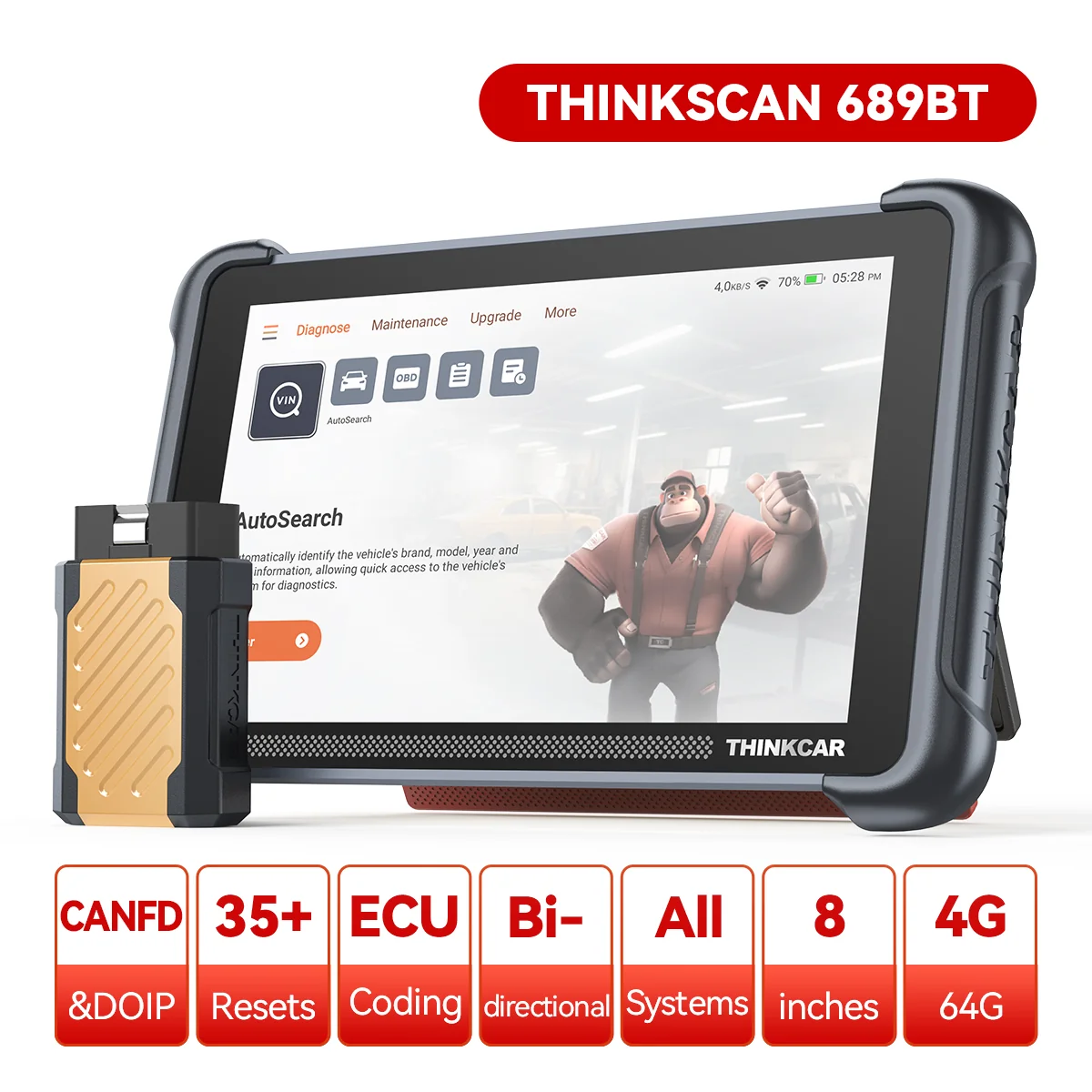
Recommendation: Looking for a professional bi-directional diagnostic tool with full system coverage? Use code DIAGNOZABAM for 10% off.
Transparency note: Affiliate link. Purchasing through it costs you nothing extra. View Thinkcar Deal →
