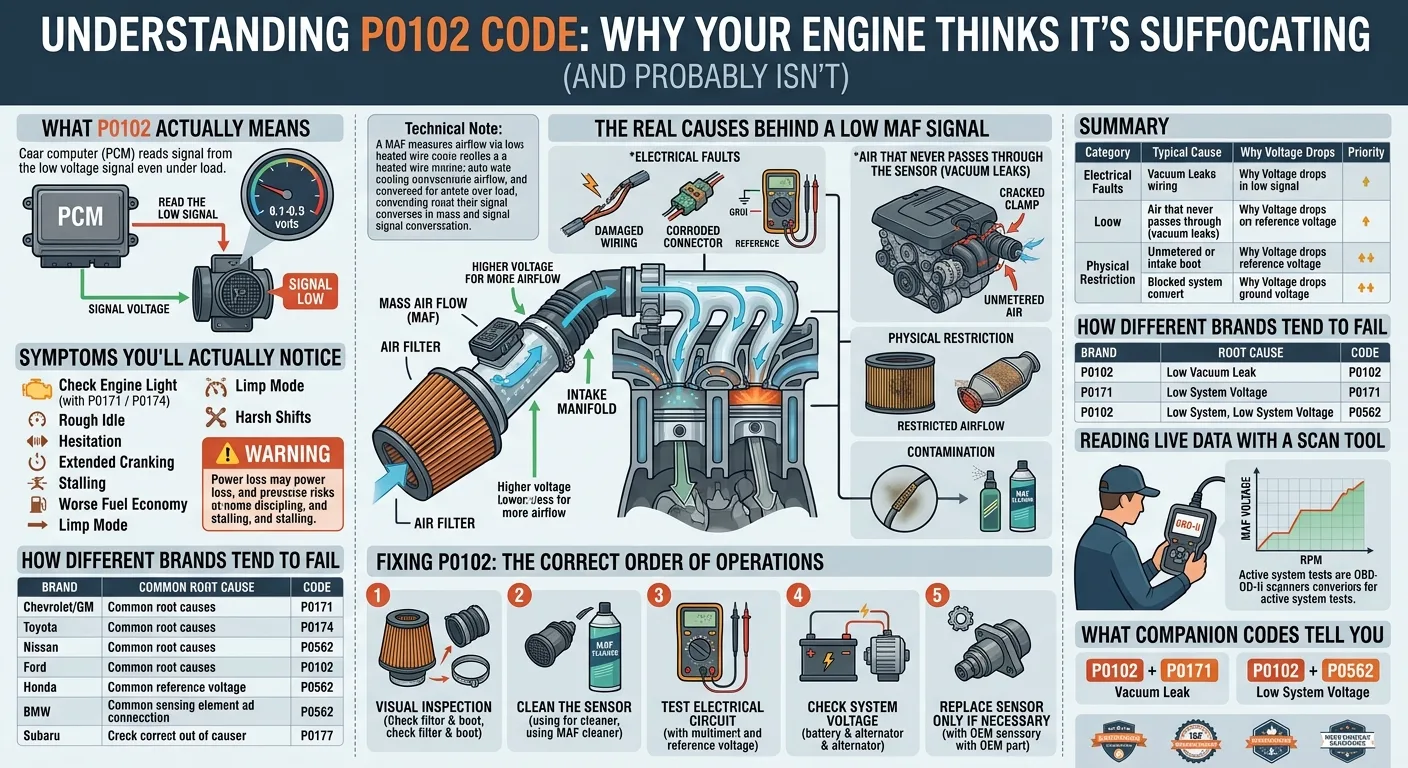
P0102 Code: Why Your Engine Thinks It’s Suffocating (And Probably Isn’t) Your check engine light comes on. You plug in a scanner. P0102 stares back at you. Before you order a new mass air flow sensor, understand this: the code doesn’t say the sensor is broken. It says the signal is low. Those are two […]
Read diagnostic guide →
P0471 Diagnostic Code Guide: Exhaust Pressure Sensor Range/Performance Diagnosis and Repair Introduction: Understanding the Out-of-Range Exhaust Signal Modern engine management software relies on a continuous stream of data from specialized sensors to maintain emissions compliance, protect exhaust system components, and optimize forced-induction performance. When an anomaly occurs within these control loops, the engine control module […]
Read diagnostic guide →
The P0251 code is a critical diagnostic trouble code related to the fuel injection system, specifically the fuel metering control of the injection pump. This issue is most commonly found in diesel engines and can significantly affect engine performance, starting behavior, and fuel delivery precision. When the P0251 code appears, it indicates that the engine […]
Read diagnostic guide →
The P0259 code is a diagnostic trouble code that indicates an intermittent fault in the fuel metering control system of the injection pump. This issue is particularly challenging because it does not occur continuously, making it harder to detect and diagnose. When the P0259 code is triggered, the engine control unit detects inconsistent signals in […]
Read diagnostic guide →
The P0258 code is a diagnostic trouble code that points to a high input signal in the fuel metering control system of the injection pump. This issue is most commonly encountered in diesel engines, where precise fuel delivery is essential for performance, efficiency, and emissions control. When the P0258 code appears, the engine control unit […]
Read diagnostic guide →
The P0257 code is a diagnostic trouble code related to the fuel injection system, indicating a low input signal in the fuel metering control circuit associated with the cam or rotor inside the injection pump. This issue is most commonly found in diesel engines and can significantly affect fuel delivery precision. When the P0257 code […]
Read diagnostic guide →
The P0256 code is a diagnostic trouble code related to the fuel injection system, specifically indicating a range or performance issue in the fuel metering control circuit of the injection pump. This fault is commonly associated with diesel engines and affects how accurately fuel is delivered to the engine. When the P0256 code appears, the […]
Read diagnostic guide →
The P0255 code is a fuel system diagnostic trouble code that indicates a general malfunction in the fuel metering control circuit of the injection pump. This issue is most commonly associated with diesel engines and directly affects how fuel is measured and delivered to the engine. When the P0255 code is triggered, the engine control […]
Read diagnostic guide →
The P0254 code is a fuel system diagnostic trouble code that indicates an intermittent issue in the fuel metering control circuit of the injection pump. This type of fault is often more difficult to diagnose because it does not occur constantly, but rather appears under specific conditions. When the P0254 code is triggered, the engine […]
Read diagnostic guide →
The P0253 code is a fuel system-related diagnostic trouble code that indicates a high input signal in the fuel metering control circuit of the injection pump. This issue is commonly found in diesel engines and can lead to incorrect fuel delivery, unstable engine behavior, and reduced efficiency. When the P0253 code appears, the engine control […]
Read diagnostic guide →
The P0252 code is a fuel system-related diagnostic trouble code that indicates a low input signal in the fuel metering control circuit of the injection pump. This issue is most commonly associated with diesel engines and can significantly affect fuel delivery accuracy and engine performance. When the P0252 code appears, the engine control unit detects […]
Read diagnostic guide →
The P0250 code is a turbocharger-related diagnostic trouble code that indicates a high voltage condition in the wastegate solenoid B circuit. This issue affects how the engine control unit regulates boost pressure, often leading to unstable turbo behavior and potential overboost situations. When the P0250 code is triggered, the ECU detects that the signal from […]
Read diagnostic guide →
The P0249 code is a turbocharger-related diagnostic trouble code that indicates a low voltage condition in the secondary wastegate solenoid circuit, referred to as solenoid “B”. This issue directly affects how the engine regulates boost pressure, often resulting in reduced turbo performance and inefficient engine operation. When the P0249 code appears, the engine control unit […]
Read diagnostic guide →
The P0248 code signals a range or performance issue within the secondary wastegate solenoid circuit, known as solenoid “B”. Unlike a complete failure, this code indicates that the component is functioning, but not within the expected parameters defined by the engine control unit. When the P0248 code appears, it usually means the turbocharger system is […]
Read diagnostic guide →
The P0247 code is a turbocharger-related diagnostic trouble code that indicates a malfunction in the secondary wastegate solenoid circuit, often referred to as solenoid “B”. This issue affects how the engine manages boost pressure, especially in vehicles equipped with more advanced or dual-stage turbo control systems. When the P0247 code is triggered, the engine control […]
Read diagnostic guide →
The P0246 code is a turbocharger-related diagnostic trouble code that indicates a high voltage condition in the wastegate solenoid circuit. This issue directly impacts the engine’s ability to regulate boost pressure, often leading to unstable turbo performance and potential overboost conditions. When the P0246 code appears, the engine control unit detects that the signal from […]
Read diagnostic guide →
The P0245 code is a turbocharger-related diagnostic trouble code that signals a low voltage condition in the wastegate solenoid circuit. This issue directly affects how the engine controls boost pressure, often resulting in reduced performance and inefficient turbo operation. When the P0245 code is triggered, the engine control unit detects that the signal from the […]
Read diagnostic guide →
The P0244 code indicates a performance or range problem within the turbocharger wastegate solenoid system. Unlike a complete failure, this code suggests that the solenoid is operating, but not within expected parameters. When the P0244 code appears, the engine control unit detects inconsistencies between commanded and actual boost control behavior. This can lead to unstable […]
Read diagnostic guide →
The P0243 code is a serious diagnostic trouble code that points to a malfunction in the turbocharger wastegate control system. Unlike simple sensor-related faults, this issue directly affects how the turbo regulates boost pressure, which plays a critical role in engine performance and efficiency. When the P0243 code is triggered, the engine control unit can […]
Read diagnostic guide →
The P0242 code is a diagnostic trouble code that signals a high voltage reading from the turbocharger boost pressure sensor circuit. This issue can disrupt how the engine control unit interprets boost levels, leading to reduced performance, incorrect air-fuel mixture, and potential long-term damage if left unresolved. Understanding the P0242 code is essential for maintaining […]
Read diagnostic guide →
The P0241 code is an OBD2 diagnostic trouble code that indicates a low input signal from the turbocharger boost sensor B circuit. This issue affects how the engine control module (ECM) interprets boost pressure, which is critical for maintaining proper engine performance and efficiency. When the P0241 code appears, the ECM detects that the signal […]
Read diagnostic guide →
The P0240 code is an OBD2 diagnostic trouble code that signals a problem with the turbocharger boost sensor B range or performance. This code is typically found in vehicles equipped with advanced turbo systems that rely on multiple sensors to monitor and regulate boost pressure. When the P0240 code appears, the engine control module (ECM) […]
Read diagnostic guide →
The P0239 code is an OBD2 diagnostic trouble code that indicates a malfunction in the turbocharger boost sensor B circuit. Unlike previous boost sensor codes that focus on sensor “A,” this code refers specifically to a secondary sensor circuit, commonly found in more advanced or high-performance turbocharged engines. When the P0239 code appears, the engine […]
Read diagnostic guide →
The P0238 code is a serious OBD2 diagnostic trouble code that indicates a high input signal from the turbocharger boost sensor. This issue directly affects how the engine control module (ECM) interprets boost pressure, often leading to incorrect turbo operation and potential engine stress. When the P0238 code appears, the ECM is receiving a voltage […]
Read diagnostic guide →
The P0237 code is a diagnostic trouble code that signals a low input condition from the turbocharger boost sensor circuit. This issue directly affects how the engine control module (ECM) interprets boost pressure, which is essential for maintaining proper air-fuel ratios and engine performance. When the P0237 code appears, it means the ECM is receiving […]
Read diagnostic guide →
The P0236 code is a common OBD2 diagnostic trouble code found in turbocharged engines, indicating a problem with the turbocharger boost sensor range or performance. This issue directly impacts how the engine measures and controls boost pressure, which is essential for maintaining optimal power and efficiency. When the P0236 code appears, the engine control module […]
Read diagnostic guide →
The P0235 code is a critical OBD2 diagnostic trouble code that points to a malfunction in the turbocharger boost sensor circuit. This issue directly affects how the engine manages air intake pressure, which is essential for performance, fuel efficiency, and engine safety. When the P0235 code appears, the engine control module (ECM) detects abnormal signals […]
Read diagnostic guide →
The P0233 code is one of the most frustrating OBD2 errors because it indicates an intermittent problem in the fuel pump secondary circuit. Unlike permanent faults, intermittent issues can appear and disappear without warning, making diagnosis more difficult and often misleading. When the P0233 code is triggered, the engine control module detects irregular voltage behavior […]
Read diagnostic guide →
The P0232 code is one of those OBD2 faults that many drivers underestimate—until the engine refuses to start or worse, suffers fuel system damage. When this code appears, it indicates a serious electrical issue in the fuel pump secondary circuit, specifically a high voltage condition detected by the ECU. Unlike more common fuel-related errors, the […]
Read diagnostic guide →
The P0231 code is a diagnostic trouble code that indicates a low voltage condition in the secondary circuit of the fuel pump. This system is critical because it ensures proper fuel delivery from the tank to the engine. When the engine control unit (ECU) detects that the voltage in the fuel pump circuit is lower […]
Read diagnostic guide →
The P0230 code is a diagnostic trouble code that indicates a malfunction in the primary circuit of the fuel pump. This system is critical because the fuel pump is responsible for delivering fuel from the tank to the engine. When the engine control unit (ECU) detects an issue in the electrical circuit controlling the fuel […]
Read diagnostic guide →
The P0229 code is a diagnostic trouble code that indicates an intermittent issue in the throttle or accelerator pedal position sensor “C” circuit. In modern vehicles equipped with electronic throttle control, multiple sensors (A, B, and C) are used to ensure accurate and safe throttle operation. When the engine control unit (ECU) detects irregular or […]
Read diagnostic guide →
The P0228 code is a diagnostic trouble code that indicates a high input signal from the throttle or accelerator pedal position sensor “C” circuit. In vehicles equipped with electronic throttle control, multiple sensors (A, B, and C) are used to ensure accurate and safe throttle operation. When the engine control unit (ECU) detects that the […]
Read diagnostic guide →
The P0227 code is a diagnostic trouble code that indicates a low input signal from the throttle or accelerator pedal position sensor “C” circuit. In modern vehicles with electronic throttle control, multiple sensors (A, B, and C) are used to ensure accurate and safe throttle operation. When the engine control unit (ECU) detects that the […]
Read diagnostic guide →
The P0226 code is a diagnostic trouble code that indicates a range or performance issue in the throttle or accelerator pedal position sensor “C” circuit. In modern drive-by-wire systems, multiple sensors work together to ensure accurate throttle control. When the engine control unit (ECU) detects that the signal from sensor “C” is outside expected limits […]
Read diagnostic guide →
The P0225 code is a diagnostic trouble code that indicates a malfunction in the throttle or accelerator pedal position sensor “C” circuit. In modern vehicles equipped with electronic throttle control, multiple sensors (A, B, and sometimes C) are used to ensure precise and safe throttle operation. When the engine control unit (ECU) detects a fault […]
Read diagnostic guide →
The P0224 code is a diagnostic trouble code that indicates an intermittent issue in the throttle or accelerator pedal position sensor “B” circuit. This system is essential for accurate throttle control in modern vehicles using electronic throttle (drive-by-wire). When the engine control unit (ECU) detects irregular or inconsistent signals from sensor “B”, it triggers the […]
Read diagnostic guide →
The P0223 code is a diagnostic trouble code that indicates a high input signal from the throttle or accelerator pedal position sensor “B” circuit. This system is essential for accurate throttle control in modern vehicles equipped with electronic throttle systems. When the engine control unit (ECU) detects that the signal voltage from sensor “B” is […]
Read diagnostic guide →
The P0222 code is a diagnostic trouble code that indicates a low input signal from the throttle or accelerator pedal position sensor “B” circuit. This system is essential in vehicles with electronic throttle control, where precise sensor signals are required for accurate engine response. When the engine control unit (ECU) detects that the signal voltage […]
Read diagnostic guide →
The P0221 code is a diagnostic trouble code that indicates a range or performance problem in the throttle or accelerator pedal position sensor “B” circuit. This system is essential in modern vehicles equipped with electronic throttle control, where the engine control unit (ECU) relies on precise sensor data to regulate engine power. When the ECU […]
Read diagnostic guide →
The P0220 code is a diagnostic trouble code that indicates a malfunction in the throttle or accelerator pedal position sensor “B” circuit. This system is critical in modern vehicles, especially those equipped with electronic throttle control (drive-by-wire). When the engine control unit (ECU) detects abnormal signals from this sensor circuit, it triggers the P0220 code. […]
Read diagnostic guide →
The P0219 code is a diagnostic trouble code that indicates the engine has exceeded its maximum safe RPM (revolutions per minute). This condition, known as engine overspeed, can occur when the engine runs beyond its designed limits, potentially causing internal damage. When the engine control unit (ECU) detects this situation, it triggers the P0219 code. […]
Read diagnostic guide →
The P0218 code is a diagnostic trouble code that indicates the transmission has exceeded its safe operating temperature. This condition is critical because excessive heat can severely damage transmission components, including clutches, seals, and fluid. When the engine or transmission control unit detects abnormal temperature levels, it triggers the P0218 code. Understanding the P0218 code […]
Read diagnostic guide →
The P0217 code is a diagnostic trouble code that indicates the engine has exceeded its safe operating temperature. This condition is critical, as overheating can cause severe engine damage if not addressed immediately. When the engine control unit (ECU) detects excessively high coolant or engine temperatures, it triggers the P0217 code. Understanding the P0217 code […]
Read diagnostic guide →
The P0215 code is a diagnostic trouble code that indicates a malfunction in the engine shutdown solenoid system. This component is responsible for controlling fuel flow to the engine, particularly in diesel engines, where it plays a critical role in stopping the engine safely. When the engine control unit (ECU) detects a fault in this […]
Read diagnostic guide →
The P0214 code is a diagnostic trouble code that indicates a malfunction in the cold start injector 2 system. This component plays an important role during engine startup, especially in low-temperature conditions, by delivering additional fuel to ensure proper combustion. When the engine control unit (ECU) detects abnormal behavior in this system, it triggers the […]
Read diagnostic guide →
The P0216 code is a diagnostic trouble code that indicates a malfunction in the injection timing control circuit. This issue is most commonly found in diesel engines, where precise fuel injection timing is critical for proper combustion, performance, and emissions control. When the engine control unit (ECU) detects irregularities in this system, it triggers the […]
Read diagnostic guide →
The P0213 code is a diagnostic trouble code that indicates a malfunction in the cold start injector 1 circuit. This component plays a crucial role during engine startup, especially in cold conditions, by providing additional fuel to ensure proper combustion. When the engine control unit (ECU) detects an issue with this injector or its circuit, […]
Read diagnostic guide →