
Automatic transmissions are designed to provide smooth, effortless driving by managing gear changes without driver input. However, one of the most common and concerning issues that can arise is automatic gearbox slipping.
This problem occurs when the transmission fails to properly transfer power from the engine to the wheels. While it may start as a minor inconvenience, ignoring it can lead to severe internal damage and costly repairs.
Understanding the causes, symptoms, and solutions is essential for maintaining your vehicle’s performance and avoiding unexpected breakdowns.
What Is Automatic Gearbox Slipping
Automatic gearbox slipping refers to a condition where the engine revs increase, but the vehicle does not accelerate accordingly.
In normal operation:
- Engine RPM rises gradually
- Gear shifts are smooth
- Power is efficiently transmitted to the wheels
In slipping conditions:
- RPM spikes without corresponding speed increase
- Gear engagement feels delayed or inconsistent
- Power delivery becomes unreliable
This issue is similar to a worn clutch in manual vehicles, but in automatic transmissions, it is caused by internal hydraulic, mechanical, or electronic failures.
Key Symptoms of Gearbox Slipping
Recognizing early symptoms can prevent major transmission failure. The most common signs include:
1. RPM Increase Without Acceleration
The most obvious symptom. You press the accelerator, the engine revs up, but the vehicle barely gains speed.
2. Delayed Gear Engagement
When shifting from Park to Drive or Reverse, the transmission takes longer than usual to engage.
3. Harsh or Erratic Shifting
You may feel:
- sudden jerks
- inconsistent gear changes
- slipping between gears
4. Burning Smell
Overheating transmission fluid (ATF) produces a distinct burnt odor, often indicating internal friction and damage.
5. Poor Take-Off Performance
The car struggles to move from a standstill, especially under load.
6. Limp Mode Activation
Modern vehicles may enter limp mode to protect the transmission, limiting speed and power.
Main Causes of Automatic Gearbox Slipping
Understanding the root cause is critical for proper diagnosis.
1. Low or Degraded Transmission Fluid (ATF)
This is the most common cause.
Transmission fluid:
- provides hydraulic pressure
- lubricates internal components
- cools the transmission
Problems occur when:
- fluid level is low
- fluid is contaminated
- fluid is burnt or degraded
Without proper pressure, clutch packs cannot engage fully, leading to slipping.
2. Worn Clutch Packs
Automatic transmissions rely on internal clutch packs made of friction material.
Over time:
- friction material wears down
- clutch plates lose grip
- slipping becomes constant
This is a mechanical failure that usually requires transmission rebuild.
3. Faulty Transmission Solenoids
Solenoids control fluid flow and pressure within the transmission.
If a solenoid fails:
- incorrect pressure is applied
- gears may not engage properly
- slipping or harsh shifting occurs
This is a relatively common electronic/hydraulic issue.
4. Valve Body Malfunction
The valve body is the “control center” of the transmission.
It distributes hydraulic pressure to different components.
Issues include:
- clogged passages
- worn valves
- internal leaks
These can lead to inconsistent pressure and slipping.
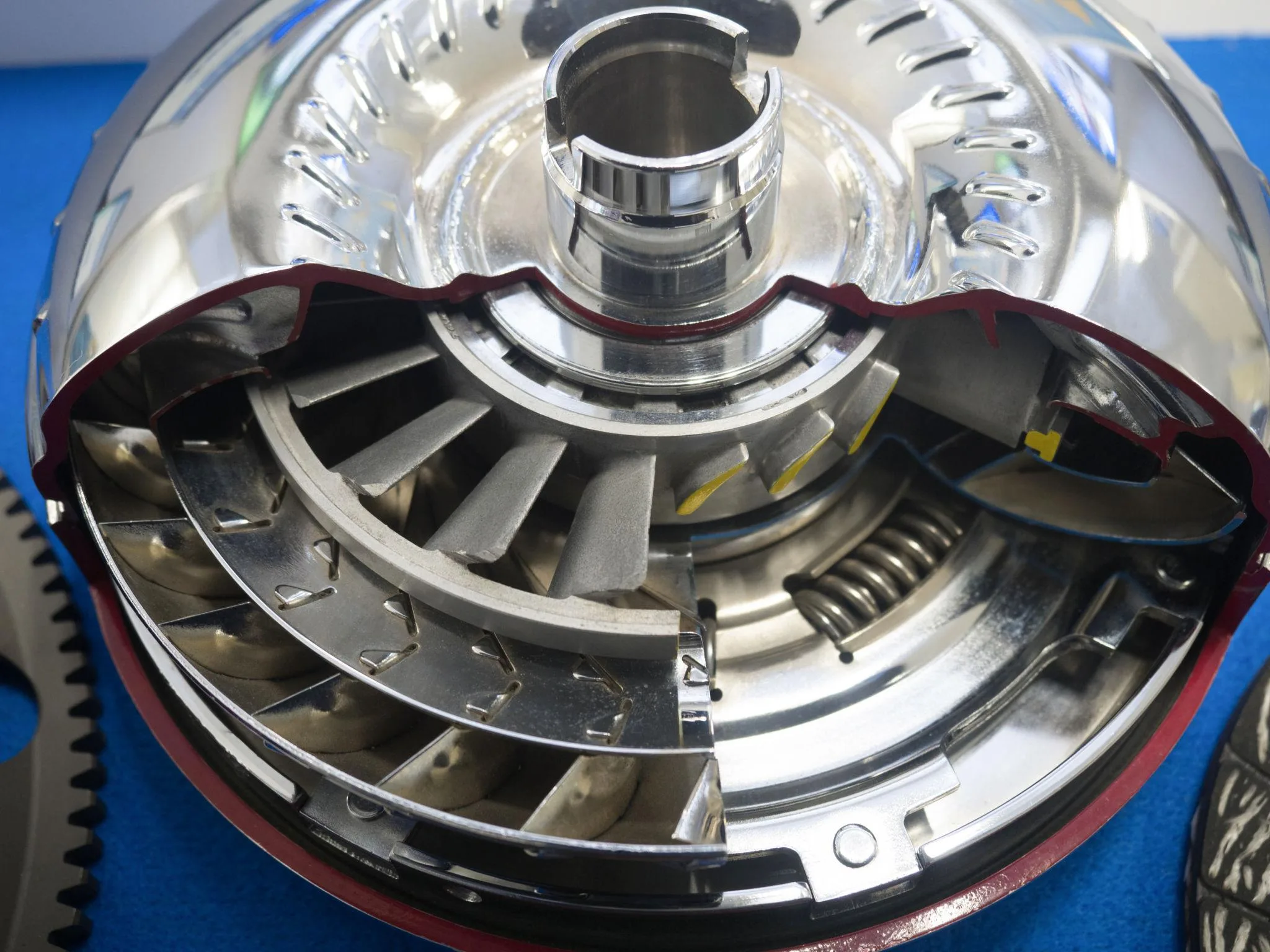
5. Torque Converter Problems
The torque converter transfers engine power to the transmission.
Common issues:
- internal slipping
- lock-up clutch failure
- fluid coupling inefficiency
Symptoms often mimic clutch pack wear.
6. Transmission Control Module (TCM) Issues
Modern transmissions rely heavily on electronics.
Faulty sensors or TCM can:
- send incorrect signals
- mismanage gear shifts
- cause slipping or hesitation
How Serious Is Gearbox Slipping
The severity depends on the cause.
- Minor (fluid-related): low cost, easy fix
- Moderate (solenoids/valve body): repairable
- Severe (internal wear): expensive rebuild or replacement
Ignoring slipping can lead to:
- complete transmission failure
- metal contamination inside gearbox
- loss of drivability
Diagnostic Process
A proper diagnosis involves several steps:
1. OBD2 Scan
Use a diagnostic scanner to check for transmission-related codes such as:
- P0700 – general transmission fault
- P0730 – incorrect gear ratio
- P0740 – torque converter issue
- P0750–P0770 – solenoid faults
2. Transmission Fluid Inspection
Check:
- fluid level
- color (red = good, brown/black = bad)
- smell (burnt = overheating)
3. Road Test
Observe:
- shifting behavior
- RPM vs speed relationship
- delay in engagement
4. Pressure Testing
Professional diagnostics may include:
- hydraulic pressure testing
- solenoid activation checks
5. Internal Inspection (if needed)
If all else fails, the transmission may need to be opened to inspect:
- clutch packs
- seals
- internal wear
How to Fix Automatic Gearbox Slipping
Solutions depend on the root cause.
1. Change Transmission Fluid and Filter
Recommended if:
- fluid is dirty or burnt
- slipping is mild
This is often the first and cheapest fix.
2. Replace Faulty Solenoids
If diagnostics indicate solenoid failure:
- replace defective units
- recalibrate transmission if needed
3. Repair or Replace Valve Body
Cleaning or rebuilding the valve body can restore proper pressure control.
4. Torque Converter Replacement
If the torque converter is slipping:
- replacement is required
- often done alongside transmission service
5. Transmission Rebuild or Replacement
Necessary when:
- clutch packs are worn
- internal damage is extensive
This is the most expensive solution.
Preventing Gearbox Slipping
Preventive maintenance is key.
- change ATF regularly (every 40,000–60,000 km depending on model)
- avoid aggressive driving when cold
- check for leaks
- use correct fluid type
Proper maintenance significantly extends transmission life.
Common Vehicles Affected
Gearbox slipping can occur in any automatic transmission, but is commonly reported in:
- BMW automatic transmissions
- Mercedes-Benz 7G-Tronic
- Volkswagen DSG (dual-clutch)
- Ford PowerShift
- Toyota and Nissan CVT systems
Each system has its own specific weaknesses.
Frequently Asked Questions (FAQ)
Can I drive with a slipping transmission?
Yes, but it is not recommended. Continued driving can worsen internal damage.
Can low transmission fluid cause slipping?
Yes. Low or degraded fluid is the most common cause of slipping.
Is gearbox slipping expensive to fix?
It depends on the cause. Fluid changes are inexpensive, while full rebuilds can be costly.
Can slipping transmission fix itself?
No. The problem will typically worsen over time if not addressed.
Conclusion
Automatic gearbox slipping is a critical issue that should never be ignored. While some causes are minor and easily fixable, others can lead to complete transmission failure if left unresolved.
Early diagnosis, proper maintenance, and timely repairs are essential to keeping your transmission in optimal condition and avoiding high repair costs.
✍️ Author: Bejenaru Alexandru Ionut – [email protected]
🔗 Internal link: https://diagnozabam.ro/sfaturi

Recommendation: Looking for a professional bi-directional diagnostic tool with full system coverage? Use code DIAGNOZABAM for 10% off.
Transparency note: Affiliate link. Purchasing through it costs you nothing extra. View Thinkcar Deal →