
Ford OBD2 Error Codes – Complete Guide: Causes, Symptoms & Fixes
If a warning light just lit up on your Ford’s dashboard — whether it’s a Focus, Fiesta, Mondeo, Kuga, Puma, EcoSport, or Transit — this guide gives you a straight, no-nonsense breakdown of every relevant OBD2 fault code. No dealership spin, no unnecessary alarm. Just the technical facts you need.
This reference covers both generic OBD2 codes (P0xxx, C0xxx) and Ford-proprietary codes (P1xxx, B1xxx, U3xxx), including the PATS anti-theft system, PowerShift DCT transmission, and Ford’s AdvanceTrac stability control platform.
⚠️ WARNING: Never clear a fault code before identifying the root cause. Clearing codes only resets the warning light — the underlying fault remains and may worsen or cause additional damage.
🧠 How Ford OBD2 Codes Work
Every OBD2 code follows a structured format. The first letter identifies the system domain:
P– Powertrain: Engine, fuel system, ignition, emissions, transmissionC– Chassis: ABS, brake system, steering, suspension, AdvanceTracB– Body: Airbags, SRS, door locks, windows, climate controlU– Network: CAN bus communication between ECUs and modules
The second digit tells you whether the code is generic or manufacturer-specific:
P0xxx/C0xxx→ SAE generic (applies to all brands)P1xxx/B1xxx/U3xxx→ Ford proprietary (unique to Ford’s platform)
Ford Vehicle Architecture – System Communication Overview
─────────────────────────────────────────────────────────────
  [PCM/ECM]──────[TCM PowerShift/Auto]──────[ABS/AdvanceTrac]
      │                   │                         │
      └────────[CAN Bus High/Low]───────────────────┘
                          │
       ┌──────────────────┼──────────────────┐
   [BCM/GEM]         [SRS Module]        [PATS/IMMO]
       │                                      │
   [Cluster/IPC]                      [Key Transponder Ring]
ℹ️ Technical Note: Ford uses the Ford IDS (Integrated Diagnostic System) as its OEM-level scan tool. For independent use, FORScan is the most capable third-party alternative, offering access to Ford-specific modules not reachable with generic OBD2 scanners.
🔧 Recommended Diagnostic Tool for Ford
Before diving into the code list, a practical note on tooling. A generic OBD2 reader will surface P0xxx codes, but it will miss Ford-proprietary faults (PATS, PowerShift slip codes, AdvanceTrac C1xxx codes). For a complete picture, you need a tool with Ford-specific software coverage.
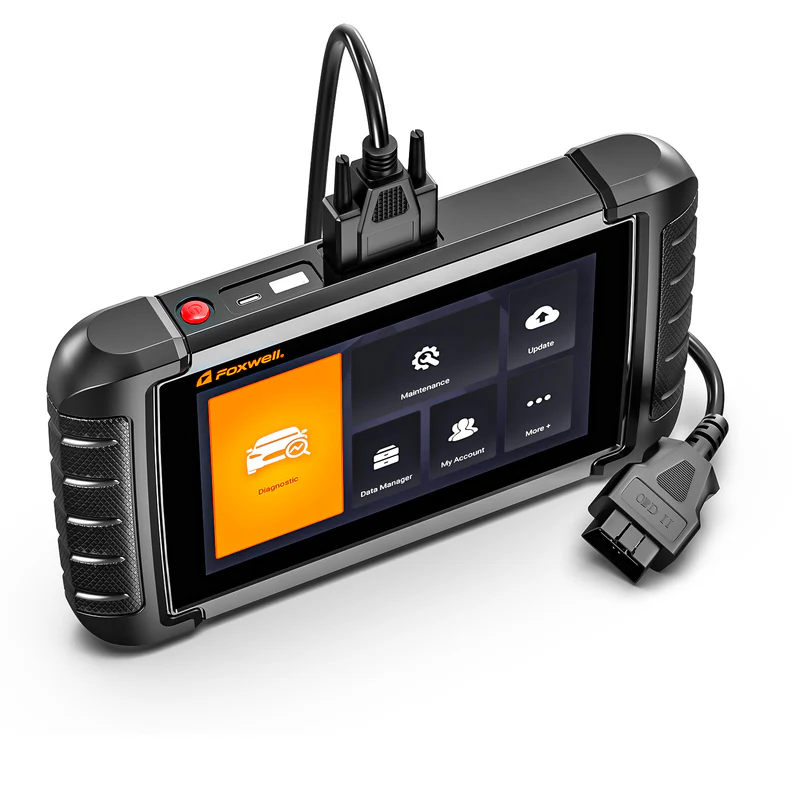
The Foxwell NT710 (Ford Edition) is a strong mid-range option that covers this gap without the cost of dealer-level hardware.
| Spec | Detail |
|---|---|
| Display | 5.5″ TFT touchscreen, Android 9.0 |
| Coverage | OE-level full-system for Ford (Engine, ABS, SRS, TCM, BCM, PATS, TPMS) |
| Bi-directional control | ✅ Active tests: EVAP, fuel pump, cooling fan, window locks |
| Service resets | 30+ (EPB, Oil, DPF regeneration, IMRC, SAS, Battery Registration, Injector Coding) |
| Update method | One-click WiFi, lifetime free updates |
| Battery | 4000 mAh internal |
| Storage | 32 GB SSD |
| Price | $259 (regular $349) |
Key advantage for Ford: The NT710 reads and clears PATS codes, PowerShift DCT fault data, and AdvanceTrac C1xxx codes — categories that a $30 dongle will never reach.
🔗 Foxwell NT710 – Ford Edition → foxwelldiag.com
🧩 Engine & Fuel System Codes (P0xxx / P1xxx Ford)
These are the most common codes you’ll encounter across the Ford range. The P1xxx entries below are Ford-proprietary and will not appear on non-Ford vehicles.
| Code | Description | Likely Causes | Symptoms | Recommended Action |
|---|---|---|---|---|
| P0087 | Fuel rail pressure too low | Weak fuel pump, clogged filter, pressure regulator | Hard start, hesitation under load | Test fuel pressure, inspect pump and filter |
| P0101 | MAF sensor range/performance | Dirty or failed mass airflow sensor | Unstable idle, rough running | Clean or replace MAF sensor |
| P0171 | System lean – Bank 1 | Dirty MAF, intake air leak, weak injectors | Engine hesitation, high fuel consumption | Inspect intake tract, test MAF and injectors |
| P0174 | System lean – Bank 2 | Same as P0171, applies to V6 engines | Rough idle, lean misfires | Intake leak test, injector balance test |
| P0299 | Turbocharger underboost | Failed turbo, cracked intercooler hose, wastegate stuck | Significant power loss, limp mode | Pressure test boost circuit, inspect wastegate |
| P0300 | Random/multiple cylinder misfire | Worn spark plugs, failed coil, weak fuel delivery | Engine shake, rough idle | Full ignition and fuel system diagnostic |
| P0301–P0304 | Cylinder 1–4 specific misfire | Individual coil failure, fouled plug, leaking injector | Engine vibration, check engine light | Swap coils and plugs individually to isolate |
| P0401 | EGR flow insufficient | Blocked EGR valve, failed vacuum source | Reduced power, increased emissions | Clean or replace EGR valve and passages |
| P0420 | Catalyst efficiency below threshold | Worn catalytic converter, failed downstream O2 sensor | Sulphur smell, emissions test failure | Verify O2 sensor operation first, then cat |
| P0480 | Cooling fan relay circuit fault | Failed relay, broken wire | Engine overheating, fan inoperative | Test relay and wiring |
| P0500 | Vehicle speed sensor signal absent | Wheel speed sensor, broken wiring | Speedometer dead, ABS instability | Test VSS wiring and sensor |
| P0562 | Battery voltage low | Failing alternator, corroded ground strap | Battery warning light, dim lighting | Load test alternator and battery |
| P1000 | OBD readiness monitors incomplete | Battery recently disconnected, insufficient drive cycles | Check engine light without other symptoms | Complete a full drive cycle |
| P1120 | Throttle position sensor out of range | Worn TPS potentiometer, oxidised connector | Erratic throttle response, unstable idle | Calibrate or replace TPS |
| P1131 | Lack of upstream O2 sensor switching (Bank 1) | Failed upstream lambda sensor, intake leak | High fuel consumption, check engine | Replace upstream lambda sensor |
| P1233 | Fuel pump driver module not responding | Failed FP driver, relay, wiring | Engine cranks but won’t start | Test FP driver module and relay |
| P1450 | Excessive EVAP canister vacuum | Stuck EVAP purge valve, cracked hose | Fuel smell in cabin, check engine | Inspect EVAP system and charcoal canister |
| P1516 | IMRC (Intake Manifold Runner Control) stuck | Seized actuator, broken cable | Low-end power loss | Inspect and free IMRC actuator |
🧩 Diesel-Specific Codes: DPF, EGR & Emissions
Applies primarily to: Ford Focus 1.6 TDCi / 2.0 TDCi, Mondeo 2.0 TDCi, Kuga 2.0 TDCi, Transit 2.2 TDCi / 2.0 EcoBlue
| Code | Description | Likely Causes | Symptoms | Recommended Action |
|---|---|---|---|---|
| P2002 | DPF efficiency below threshold | Clogged DPF, failed regeneration | Black smoke, power reduction, DPF warning | Forced regeneration via scan tool |
| P2452 | DPF differential pressure sensor fault | Failed sensor, cracked sensing pipe | DPF regeneration impossible | Replace DPF pressure sensor |
| P2458 | DPF regeneration duration too long | Short-trip driving pattern, blocked EGR | Frequent regeneration attempts, high fuel use | Forced regen + address EGR condition |
| P0403 | EGR circuit malfunction | Broken EGR wiring, burned solenoid | Check engine, power loss, limp mode | Check EGR wiring and solenoid resistance |
| P0404 | EGR position out of range | Stuck EGR valve, incorrect feedback | Rough idle, RPM limitation | Clean or replace EGR valve |
| P0409 | EGR sensor circuit fault | Broken sensor wire, corroded connector | Erratic EGR operation | Inspect EGR position sensor wiring |
| P242F | SCR catalyst temperature too low | Blocked SCR/DPF, failed AdBlue dosing | Reduced power, emissions warning | Inspect SCR system and AdBlue injector |
ℹ️ Technical Note: Ford TDCi DPF regeneration requires sustained motorway-speed driving (above 60 km/h for 20–30 minutes) or a forced regeneration command via a compatible scan tool. The Foxwell NT710 Ford edition supports forced DPF regeneration natively.
🧩 ABS / ESP / AdvanceTrac Codes (C-Codes)
Ford markets its electronic stability program under the AdvanceTrac name. Underneath, it operates on the same architecture as standard ESP/ESC systems. Fault codes use the C prefix.
| Code | Description | Likely Causes | Symptoms | Recommended Action |
|---|---|---|---|---|
| C0031 | Left front wheel speed sensor fault | Worn sensor, damaged tone ring | ABS inoperative, ABS light on | Replace sensor, inspect tone ring |
| C0034 | Right front wheel speed sensor fault | Broken wiring, contaminated sensor | AdvanceTrac disabled | Inspect wiring harness and sensor gap |
| C0040 | Left rear wheel speed sensor fault | Corrosion, physical damage | ABS + ESP both disabled | Replace sensor, clean mounting surface |
| C0044 | Right rear wheel speed sensor fault | Short circuit, cable damage | Safety systems inactive | Repair wiring or replace sensor |
| C0110 | ABS pump motor fault | Burned pump motor | Hard brake pedal, no ABS function | Test pump motor, replace if failed |
| C1145 | Right front wheel speed signal fault | Cracked tone ring, sensor failure | AdvanceTrac warning on dash | Replace tone ring and/or sensor |
| C1155 | Left front wheel speed signal fault | Same as C1145 | Instability warning, ABS error | Same as above |
| U0121 | Lost communication with ABS module | Failed ABS ECU, CAN bus fault | All stability systems offline simultaneously | Check CAN wiring, test ABS module |
🧩 Transmission Codes – Manual, Automatic & PowerShift DCT
Ford’s PowerShift dual-clutch transmission (DCT) fitted to Focus, Fiesta, C-Max, and B-Max has its own fault domain. These codes require a Ford-capable scanner to read correctly.
https://diagnozabam.ro/sfaturi/blog/new-toyota-celica-gr-400-hp-g20e-turbo-awd/
PowerShift DCT Architecture
─────────────────────────────────────
  Engine → [Dual Clutch Pack (Wet)] → Gearbox Output
              │           │
          [Clutch 1]  [Clutch 2]       ← Odd/Even gears
              │           │
          [Mechatronics Unit]           ← TCM + Solenoids
              │
[CAN Bus] → PCM/ECM| Code | Description | Likely Causes | Symptoms | Recommended Action |
|---|---|---|---|---|
| P0700 | Transmission control system MIL request | General TCM fault signal to PCM | Limp mode, gear lock | Full TCM diagnostic required |
| P0715 | Input/turbine speed sensor circuit | Failed sensor, unstable signal | Difficult gear changes, TCM errors | Replace input shaft speed sensor |
| P0730 | Incorrect gear ratio | Slipping clutch pack, worn internals | High RPM, no forward drive | Fluid and clutch pack inspection |
| P0741 | TCC solenoid circuit performance | Failed lock-up solenoid, failed converter | Vibration at cruise, high fuel consumption | Test solenoid, inspect torque converter |
| P07BE | Clutch 1 slip – PowerShift | Worn Clutch 1, degraded PowerShift fluid | Jerk on pull-away, shudder at low speed | PowerShift fluid change (LV75W) + adaptation reset |
| P07BF | Clutch 2 slip – PowerShift | Worn Clutch 2, mechatronics fault | Harsh upshifts, transmission in limp mode | Mechatronics diagnostic, fluid change |
| P1636 | Communication fault – transmission module | CAN line fault, TCM failure | Gearbox stuck in gear | Inspect TCM wiring, replace if needed |
| U0101 | Lost communication with TCM | Failed TCM, broken CAN wire | Transmission unresponsive, warning light | Test CAN bus integrity, test TCM power |
⚠️ WARNING: Ford PowerShift (
DPS6) transmissions require Ford-specific Motorcraft MERCON LV fluid. Using the wrong fluid type, even once, accelerates clutch pack wear dramatically. Many P07BE/P07BF faults trace back to incorrect fluid used during a previous service.
🧩 Airbag & SRS Restraint Codes (B-Codes)
| Code | Description | Likely Causes | Symptoms | Recommended Action |
|---|---|---|---|---|
| B0001 | Driver airbag circuit open | Broken clock spring, loose connector at steering wheel | SRS warning light on permanently | Test clock spring, check wheel connector |
| B0002 | Passenger airbag circuit open | Corroded connector, failed airbag unit | Passenger airbag disabled | Inspect under-dash connector |
| B0051 | Driver seatbelt pre-tensioner fault | Under-seat connector worn | SRS fault, tensioner inoperative | Inspect and clean connectors under seat |
| B0052 | Passenger seatbelt pre-tensioner fault | Broken wire at seat track | SRS warning, tensioner inactive | Repair seatbelt circuit |
| B0081 | Left front side curtain airbag fault | Previous impact, damaged wiring | SRS locked out | SRS diagnostic post-impact |
| B1342 | ECU internal fault (BCM/SRS module) | Overvoltage event, module failure | Multiple warning lights simultaneously | Replace and recode affected module |
| B1484 | Crash sensor signal out of range | Damaged impact sensor | SRS system disabled | Replace side impact sensor |
🧩 PATS Anti-Theft & Key Programming Codes
Ford’s PATS (Passive Anti-Theft System) is a transponder-based immobiliser architecture. It is deeply integrated with the PCM and BCM, and its fault codes are exclusively in the B1xxx and P1xxx range — invisible to generic scanners.
PATS Communication Flow
────────────────────────────────────────────
  Key Transponder
       │ (125 kHz RF signal)
  [Transponder Antenna Ring]   ← around ignition barrel
       │
  [GEM / PATS Module]          ← reads and validates key ID
       │ (CAN)
[PCM/ECM] ← grants or denies engine start| Code | Description | Likely Causes | Symptoms | Recommended Action |
|---|---|---|---|---|
| B1213 | Less than 2 programmed keys present | New key added but not paired | Engine starts then immediately dies | Programme minimum 2 PATS keys with Ford IDS or FORScan |
| B1232 | Transponder ID does not match | Incorrectly cloned key, damaged chip | Anti-theft light flashing, no start | Reprogram key with OEM-level tool |
| B1600 | Key has no PATS transponder chip | Blank mechanical key used | Engine starts 2 seconds then cuts out | Replace with a chipped PATS-compatible key |
| B1601 | Transponder chip not programmed | New unprogrammed key | Immobiliser active | Programme key via Ford IDS/FORScan |
| B2103 | Transponder antenna circuit open | Broken antenna ring, connector | Key cannot be read | Replace ignition antenna ring |
| P1260 | Anti-theft system – engine disabled | Active PATS lockout, invalid key | Engine will not fire at all | Full PATS diagnostic and key reprogramming |
| U1900 | CAN communication fault – PATS | Failed GEM module, broken CAN | Intermittent immobiliser activation | Inspect GEM and CAN bus integrity |
ℹ️ Technical Note: PATS programming on Ford requires a sequence of two already-programmed keys to add a third. If both original keys are lost, programming requires an OEM tool with dealer-level PATS access. Budget USB dongles cannot perform this operation.
🧩 Electrical & Body Control Codes (B-Codes / U-Codes)
| Code | Description | Likely Causes | Symptoms | Recommended Action |
|---|---|---|---|---|
| B1318 | Battery voltage low (BCM) | Failing battery or alternator | Multiple simultaneous BCM errors | Full charging system test |
| B10D7 | Interior temperature sensor fault | Defective cabin temp sensor | A/C unable to regulate temperature | Replace interior sensor |
| B1249 | Air distribution door motor stuck | Seized blend actuator | Air only hot or only cold, no mixing | Reset or replace actuator motor |
| U0100 | Lost communication with ECM/PCM | Battery fault, CAN wiring break, ECU failure | Multiple warnings, total limp mode | Check ECM power supply and CAN wiring |
| U0121 | Lost communication with ABS module | ABS ECU failure, CAN fault | All stability systems offline | Verify CAN bus, replace ABS module if needed |
| U0140 | Lost communication with BCM | BCM failure, broken CAN | Windows, lights, door locks unresponsive | Inspect BCM power and CAN connections |
| U0155 | Lost communication with instrument cluster | Cluster failure, CAN fault | Dead dashboard, no speedometer | Check cluster connector and CAN |
| U0401 | Invalid data received from ECM | Corrupted CAN data, ECM fault | Multiple modules showing errors | CAN bus test, ECM verification |
📊 Ford Error Code Priority Reference
| Severity | Code Range | Action Required |
|---|---|---|
| 🔴 Critical | P0087, P1260, U0100, B0001 | Stop driving — diagnose immediately |
| 🟠 High | P0299, P07BE/P07BF, C0110, P2002 (severe) | Book diagnostic within days |
| 🟡 Medium | P0171, P0401, P0420, C1145 | Diagnose within 2–3 weeks |
| 🟢 Low | P1000, P1450, B10D7 | Monitor, schedule routine service |
🔬 Diagnostic Workflow for Ford Fault Codes
A structured approach prevents misdiagnosis and unnecessary parts replacement:
- Full system scan — Read all modules, not just the engine. A single root cause often triggers faults in multiple systems.
- Record freeze frame data — Captures operating conditions at the moment the fault occurred (RPM, load, temperature, fuel trim).
- Identify P1xxx / B1xxx / U3xxx codes — These require a Ford-capable tool (FORScan, Ford IDS, or Foxwell NT710 Ford edition).
- Perform active tests — Bi-directional control lets you actuate solenoids, pumps, and fans directly to verify component operation.
- Repair the root cause — Do not clear codes until the repair is verified.
- Post-repair verification — Re-scan all modules and confirm no new faults. Run a drive cycle to confirm OBD monitors pass.
📌 Conclusion
This reference covers the full spectrum of Ford-specific OBD2 fault codes, from common generic P0xxx codes to the Ford-proprietary PATS, PowerShift DCT, and AdvanceTrac fault domains.
Key takeaways for Ford owners and independent technicians:
- PATS codes (
B12xx,P1260) require a Ford-capable scanner and cannot be resolved with generic tools. - PowerShift
P07BE/P07BFfaults are often fluid-related before they become mechanical — a fluid change and clutch adaptation reset resolves many cases. - AdvanceTrac
C1xxxcodes need wheel speed sensor diagnostics that generic readers will misidentify or miss entirely. - FORScan is the best free option for Ford-specific diagnostics. For a complete hardware+software solution, the Foxwell NT710 Ford edition covers all of the above at an accessible price point.
This article will be updated as new Ford model coverage becomes available. Bookmark it or share it if you found it useful.
✍️ Author: Bejenaru Alexandru Ionut – [email protected]
🔗 Internal link: https://diagnozabam.ro/sfaturi
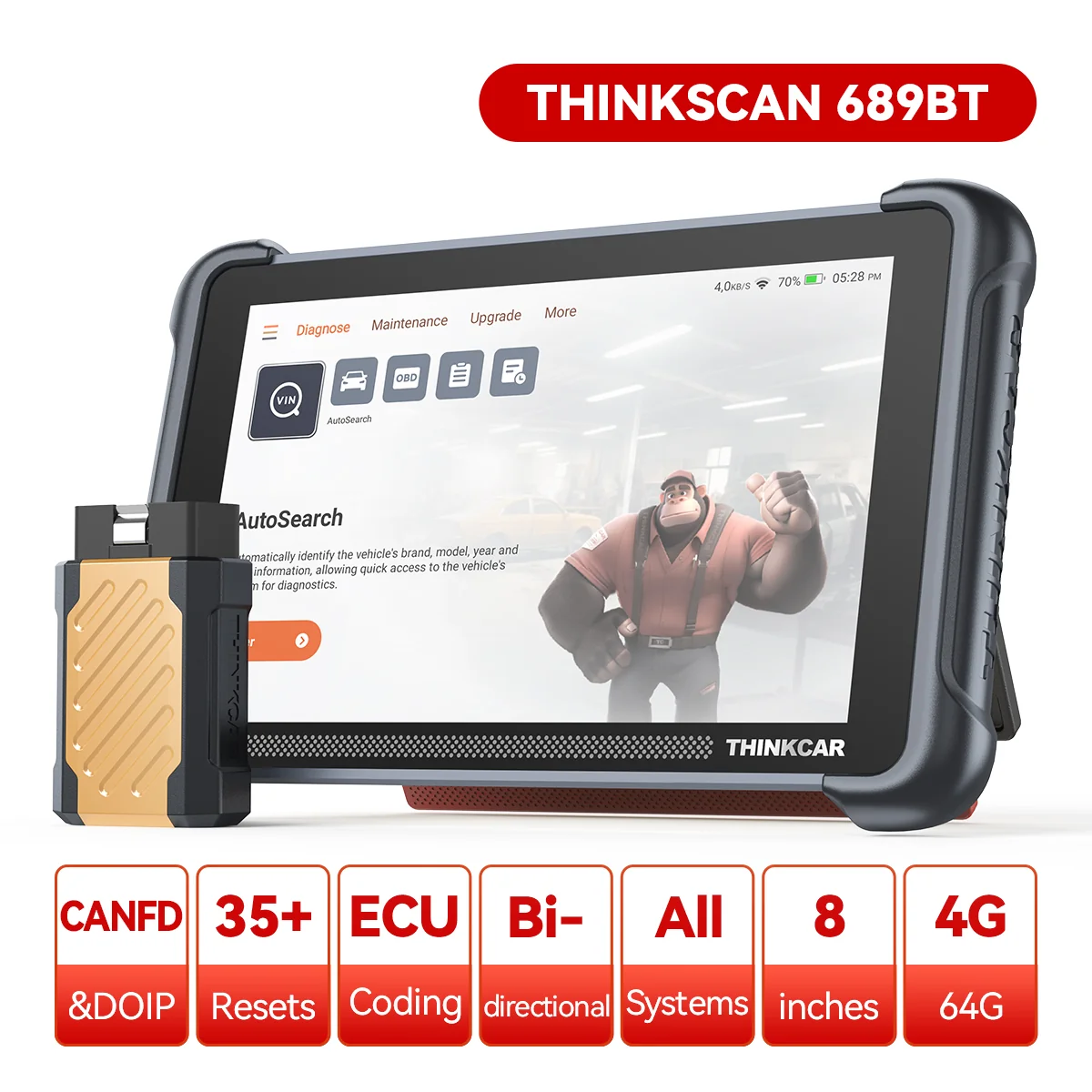
Recommendation: Looking for a professional bi-directional diagnostic tool with full system coverage? Use code DIAGNOZABAM for 10% off.
Transparency note: This link is promotional (affiliate). Purchasing through it costs you nothing extra and helps support our content. View Thinkcar Deal →
