
The Renaissance of Group 5 Violence: Inside the 1000 HP, Koenigsegg-Powered Kimera K-39
Introduction: Breaking the Shackles of the Restomod Label
For the past several years, boutique Italian automaker Kimera Automobili has occupied a highly revered, deeply specialized niche within the global automotive landscape. The brand secured its legendary status among die-hard petrolheads through the flawless execution of the EVO37 and EVO38—masterful, modern-day love letters that meticulously reinterpreted the iconic Lancia 037 Group B rally car. These creations combined old-school mechanical drama with modern manufacturing tolerances, earning critical acclaim as some of the finest restomods ever engineered. However, resting on past laurels is anathema to absolute ambition.
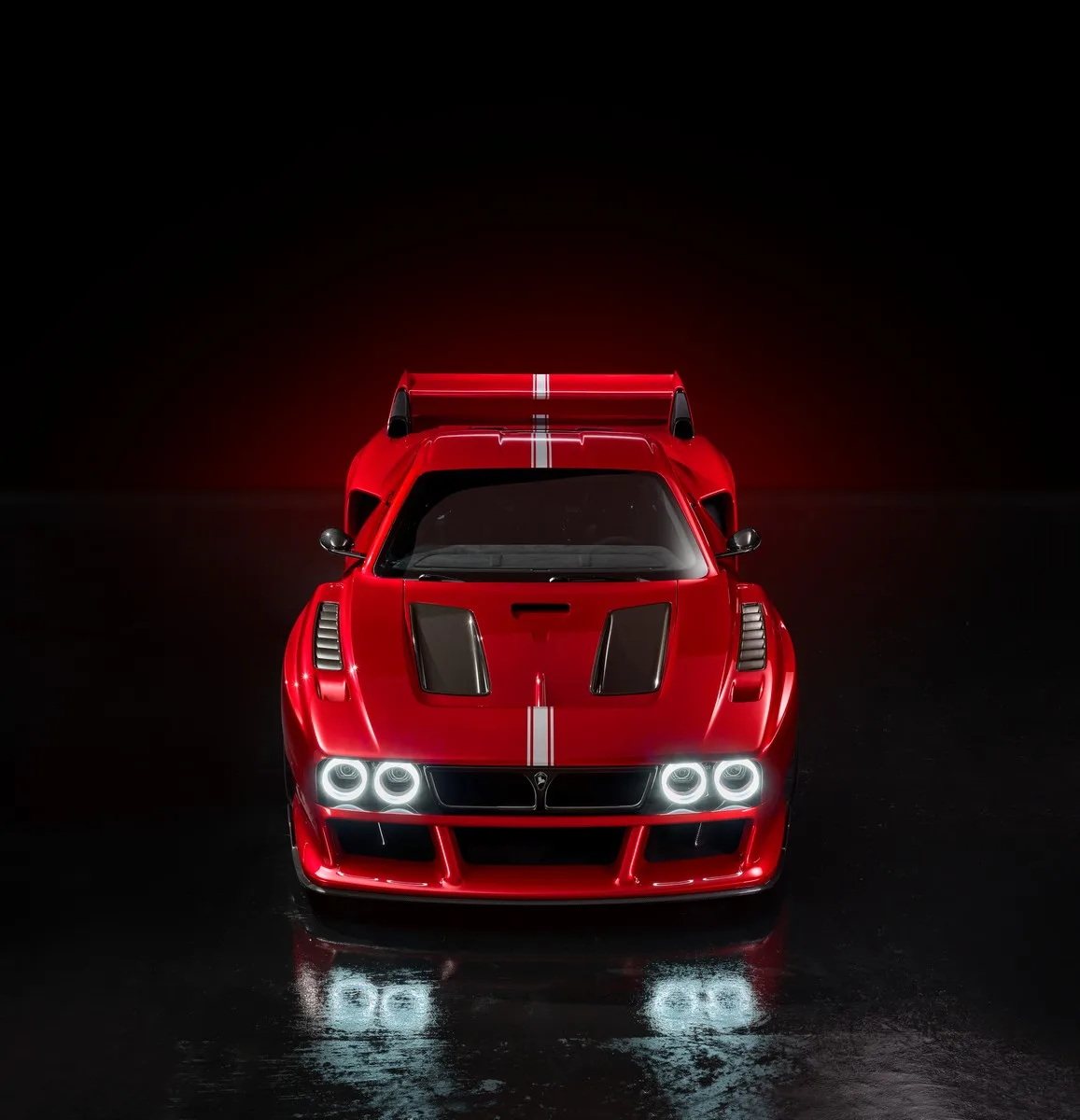
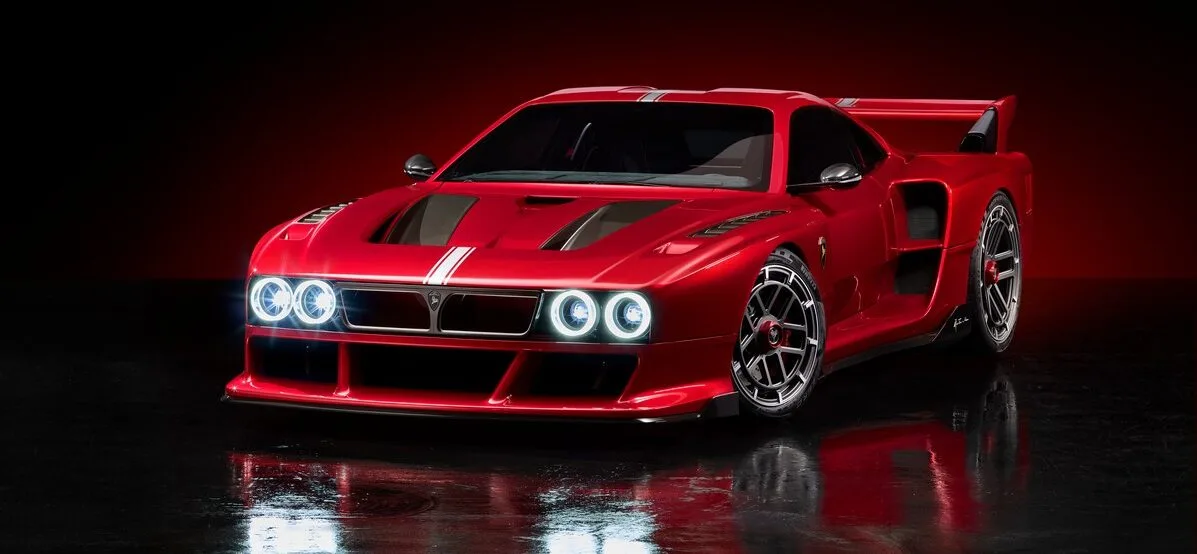
At the 2026 Concorso d’Eleganza Villa d’Este on the sun-drenched shores of Lake Como, Kimera completely redefined its corporate trajectory. The brand pulled the silk sheets off its most extreme, uncompromising project to date: the Kimera K-39.
This vehicle represents a monumental paradigm shift. The K-39 is no longer a restomod built on the bones or architecture of a vintage chassis; it is a completely clean-sheet, independently engineered hypercar packed with uncompromising motorsport DNA.
Drawing deep visual and philosophical inspiration from the wild, muscular silhouette of 1980s Group 5 endurance racing legends—specifically honoring the brutal silhouette of the Lancia Beta Montecarlo Turbo—the K-39 steps out from the forests of rally stages and squarely onto the asphalt of international circuits. It stands as a breathtaking fusion of nostalgic visual violence and state-of-the-art hypercar technology, designed from day one to deliver a raw, analog driving experience that challenges the digitized status quo of the modern exotic car market.
The Monocoque Matrix: Dallara Engineering and Weight Optimization
Beneath the highly dramatic, multi-layered bodywork of the Kimera K-39 lies an elite engineering foundation that distances this machine from any traditional custom build. Instead of utilizing a modified production chassis or a tubular spaceframe, Kimera engineered an ultra-stiff, lightweight carbon fiber monocoque tub. This structural cell provides immense torsional rigidity, ensuring that the suspension pick-up points remain perfectly stable under extreme cornering loads.
                    [ Carbon Fiber Monocoque Core Tub ]
                                     │
       ┌─────────────────────────────┴─────────────────────────────┐
       ▼                                                           ▼
 [ Front Pushrod Suspensions ]                              [ Rear Pushrod Suspensions ]
 • Inboard Racing Dampers                                   • Inboard Dual-Wishbone Setup
 • Linear Roll Control Actuators                            • High-Load Camber Stability
       │                                                           │
       └─────────────────────────────┬─────────────────────────────┘
                                     ▼
                     [ Target Curb Weight: 2,425 lbs ]
                     [ Aerodynamic Package Designed by Dallara ]
To hone the vehicle’s mechanical grip and high-speed behavior, Kimera teamed up with Dallara, the legendary Italian motorsport-engineering powerhouse responsible for dominating IndyCar grids and elite Le Mans prototype classes. Every element of the chassis was refined to eliminate unnecessary mass, resulting in a phenomenal target curb weight of just over 2,425 pounds (approx. 1,100 kg).
Advanced Motorsport Footwork
Suspension geometry is derived directly from top-tier endurance racing. Both the front and rear axles employ an intricate inboard pushrod suspension configuration, identical in philosophy to the layout found on the EVO38 but completely recalibrated for high-downforce circuit dynamics.
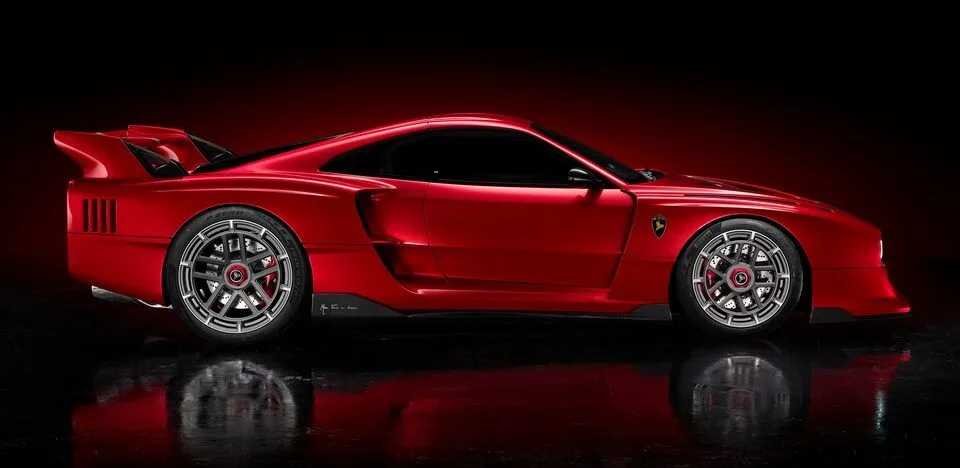
This setup moves the heavy damper units inboard, reducing unsprung mass at the wheel hubs and allowing the car to transition over curbing with absolute stability. This structural architecture is wrapped in massive wheels—20 inches at the front and 21 inches at the rear—wrapped in ultra-sticky Pirelli Trofeo RS rubber, guaranteeing massive mechanical traction even before the advanced aerodynamics come into play.
Aerodynamic Sculpting: The Art of Fluid Management
The exterior design of the Kimera K-39 is an intense, calculated dialogue with moving air. Rather than applying superficial wings and vents as visual styling cues, Kimera and Dallara engineered the entire body panels as a unified aerodynamic system designed to generate immense downforce while minimizing parasitic drag.
                  [ Deep Front Splitter Architecture ]
                                   │
                   ▼ (High-Velocity Induction)
                   │
                  [ Internal S-Duct Hood Channeling ]
                                   │
       ┌───────────────────────────┴───────────────────────────┐
       ▼                                                       ▼
 [ Slatted Fender Louvers ]                             [ Roof-Mounted Ram Intake ]
 • Extracts Wheel Arch Pressure                         • Feeds High-Density V8 Air Charge
       │                                                       │
       └───────────────────────────┬───────────────────────────┘
                                   ▼
             [ Boeing A380-Sized Rear Motorsport Wing ]
             [ Massive Underbody Ventures / Rear Diffuser Extracts ]
The front fascia implements a highly advanced S-Duct system. High-pressure air enters through the massive openings in the front bumper, is forced through a tightly curved internal channel, and is expelled at high velocity out through a massive duct carved directly into the front hood. This transition creates an immense low-pressure zone beneath the front nose, pinning the front axle to the tarmac.
Simultaneously, aggressive, GT3 RS-style slatted louvers cut into the carbon fiber front fenders release hot, pressurized air from inside the spinning wheel arches, reducing high-speed front-end lift.
Functional Group 5 Homage
The side profile reveals ultra-wide, muscular box arches that give the impression of a slender racing cockpit swallowed by a wide-body silhouette. Massive intakes integrated into the rear quarter panels serve dual purposes: the lower scoops feed high-velocity air into the complex powertrain cooling radiators, while an intake integrated cleanly into the upright of the rear wing serves as a brilliant historical nod to the vintage Beta Montecarlo Turbo.
The rear end is a masterclass in motorsport function: completely flat and abrupt, dominated by an enormous, sculpted rear wing and a deep, multi-channeled carbon fiber rear diffuser that extracts underbody airflow to generate massive venturi-effect downforce.
Power of the Gods: The Bespoke Koenigsegg Twin-Turbo V8
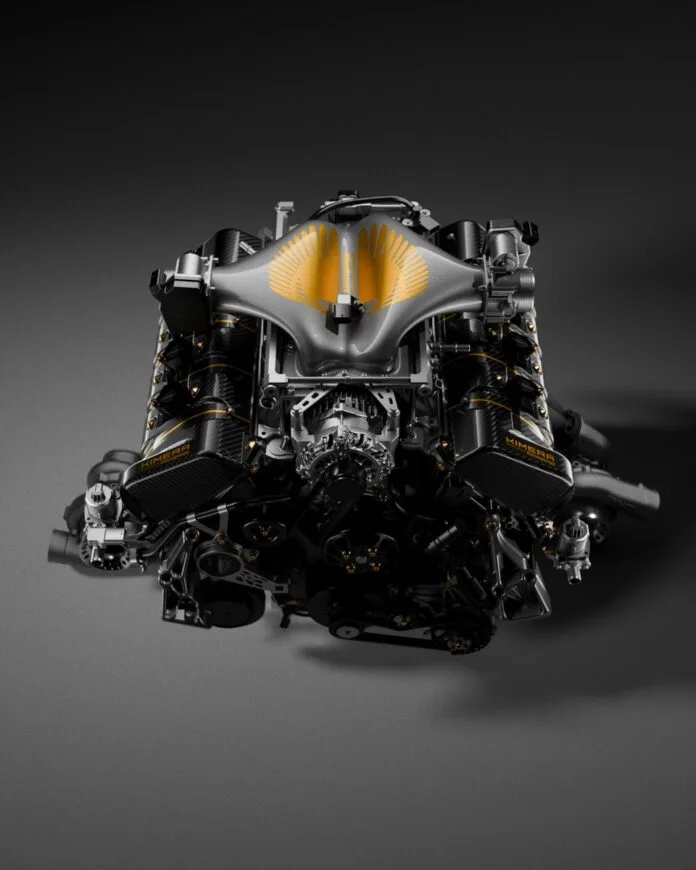
While the design and aerodynamics of the K-39 are world-class, the crown jewel of this Italian masterpiece resides directly behind the driver’s cockpit. In an unprecedented, historic joint venture that shocked the hypercar industry, Kimera secured a technical partnership with the Swedish speed wizards at Koenigsegg. This marks the first time in history that Christian von Koenigsegg has permitted his company’s legendary, proprietary powertrain technology to be utilized by an external boutique manufacturer.
                 [ 5.0-Liter Aluminum Koenigsegg Core V8 ]
                                     │
                  ▼ (The Agera Hybridized Blueprint)
                  │
                 [ Downsized High-Response Twin Turbos ]
                                     │
                  ▼
         [ Peak Power Output: 1,000 Horsepower (986 BHP) ]
         [ Brutal Torque Metric: 1,200 Newton-Meters ]
         [ Transmission Link: 7-Speed Gated Manual Drivetrain ]
The heart of the K-39 is a 5.0-liter twin-turbocharged V8 engine, heavily modified to match Kimera’s distinct performance philosophy. While this engine is capable of unleashing up to 1,600 horsepower when bolted inside a Koenigsegg Jesko running on E85 biofuel, Kimera deliberately retuned the unit for linear usability, throttle response, and uncompromised driver engagement:
-
Total Power Output: A massive 1,000 horsepower (986 BHP) generated on standard 95-octane pump fuel.
-
Peak Torque: A brutal 1,200 Newton-meters (885 lb-ft) of twisting force sent exclusively to the rear wheels.
-
Engine Redline: A screaming 8,250 rpm limit, with peak power arriving at a glorious 7,350 rpm.
To achieve an incredibly sharp, immediate throttle response that eliminates traditional turbo lag, Kimera replaced the massive Jesko turbochargers with smaller, lightning-fast high-response turbo units derived from the Koenigsegg Agera blueprint. Coupled with a bespoke intake system and unique software management mapping, the V8 behaves like an ultra-responsive, naturally aspirated race engine on throttle tip-in before unleashing a wave of twin-turbo torque.
True to its analog ethos, Kimera pairs this Swedish monster with a 7-speed mechanical manual transmission (supplied by Cima), featuring a traditional gear stick, although a sequential paddle-shift gearbox is being evaluated for track-only variants.
The Pikes Peak Configuration: Absolute Track Escalation
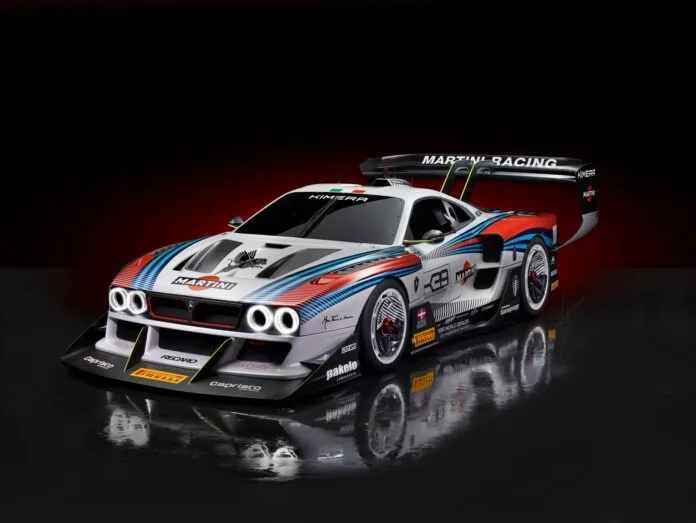
Kimera’s ambitions for the K-39 extend far beyond standard European road tours and concours exhibition lawns. Alongside the road-legal model, the Italian brand simultaneously unveiled a dedicated K-39 Pikes Peak version, engineered specifically to conquer the legendary, treacherous asphalt of the Pikes Peak International Hill Climb.
   [ K-39 Road Architecture ] ──► Dual-Purpose Carbon Tub & Gated Manual System
                                           │
                                           ▼ (The Pikes Peak Transformation)
                                           │
   [ Pikes Peak Track Monster ] ──► Surfboard Front Splitter / Massive Roof Scoop / Monolithic Wing
This track-only weapon strips away all remaining street concessions in favor of pure, raw motorsport speed. The aerodynamic package is turned up to a level of absolute escalation: it features a massive, protruding “surfboard” front carbon splitter, a prominent roof-mounted ram-air intake scoop that forces cold air directly into the Koenigsegg V8, and an even larger, multi-element rear wing designed to capture maximum downforce in the thin mountain air at over 14,000 feet of altitude.
Only 10 highly exclusive customer examples of this Pikes Peak configuration will ever be produced, offering wealthy collectors a zero-compromise, historic racing weapon with an unyielding visual presence.
Comprehensive Specifications: Hypercar vs. Restomod Era
The evolution of Kimera’s engineering from their celebrated restomod roots into the full-scale hypercar territory of the K-39 is perfectly illustrated through their technical frameworks:
| Engineering & Design Metric | Kimera EVO38 (The Ultimate Restomod) | Kimera K-39 (The Ground-Up Hypercar) |
| Chassis Core Foundation | Modified Vintage Lancia Structural Base | Bespoke Ultra-Stiff Carbon Monocoque Tub |
| Aerodynamics Consulting | In-House Period-Correct Refinements | Full Dallara Wind-Tunnel & CFD Optimizations |
| Engine Configuration | 2.1-Liter Twin-Charged 4-Cylinder | 5.0-Liter Koenigsegg Twin-Turbo V8 |
| Total Horsepower Metrics | ~600 Horsepower | 1,000 Horsepower (986 BHP) |
| Peak Torque Output | ~580 Newton-Meters | 1,200 Newton-Meters (885 lb-ft) |
| Drivetrain Layout | Electro-Hydraulic All-Wheel Drive (AWD) | Pure Analog Mechanical Rear-Wheel Drive (RWD) |
| Max Engine Speed | ~7,500 RPM | 8,250 RPM High-Speed Redline |
| Front Body Aero Pass | Standard Grille Ducting Panels | Motorsport Derived S-Duct Hood Channeling |
| Lighting Integration | Classic Quad-LED Round Housings | LED Rings with Theatre Pop-Up Projectors |
| Production Availability | Limited Restomod Production Run | Strictly Limited (Over 20 Pre-Reserved) |
Conclusion: A New Peak for Independent Car Manufacturing
The Kimera K-39 is an absolute, jaw-dropping triumph that permanently elevates the Italian boutique builder into the absolute top-tier echelon of global hypercar manufacturing. It serves as a definitive statement that Kimera is no longer bound by the restrictions of the “restomod” label, using its deep historical reverence for Lancia’s motorsport glory as a launching pad to create something completely new, ferocious, and modern.
By combining an ultra-rigid carbon fiber monocoque, advanced aerodynamics honed by Dallara, a 1,000 hp Koenigsegg twin-turbo V8, and a pure mechanical manual gearbox, the K-39 offers a level of technical credibility and raw emotional engagement that massive corporate hypercar brands simply cannot duplicate.
With over 20 examples already spoken for before the public even witnessed its stunning debut at Villa d’Este, the global collector community has sent a clear message: the automotive world is hungry for raw, beautiful, and unadulterated mechanical masterpieces. The K-39 hasn’t just arrived to compete; it has arrived to conquer.
Source: Kimera K-39: Italienisches Hypercar mit Koenigsegg-Power sorgt für Aufsehen
✍️ Author: Bejenaru Alexandru Ionut – [email protected]
🔗 Internal link: https://diagnozabam.ro/sfaturi

Recommendation: Looking for a professional bi-directional diagnostic tool with full system coverage? Use code DIAGNOZABAM for 10% off.
Transparency note: Affiliate link. Purchasing through it costs you nothing extra. View Thinkcar Deal →