
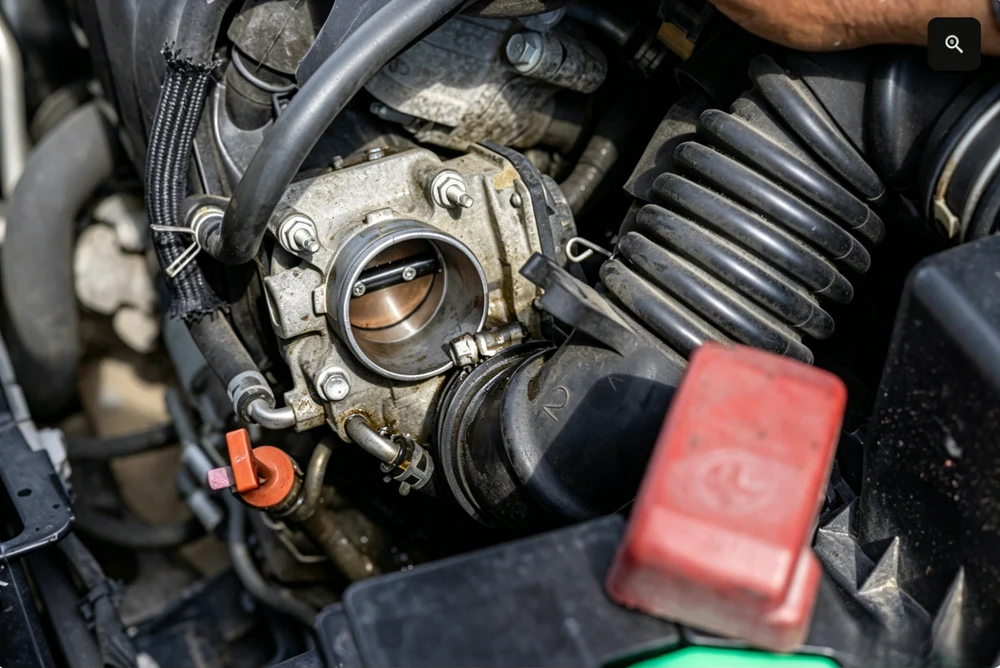
Throttle Body Warning Signs: Technical Diagnostic Guide to Carbon Buildup vs. Component Failure
Introduction: The Critical Role of Air Metering in Modern Combustion
In modern internal combustion engines, the electronic throttle body serves as the primary gatekeeper of air induction, regulating the exact mass volume of air entering the intake manifold. Operating under direct commands from the Engine Control Module (ECM), this precision component balances the delicate air-fuel ratio required for optimal thermodynamic efficiency. When drivers encounter a rough idle, hesitating acceleration, or sudden drops in engine performance, checking for throttle body warning signs is the first step in troubleshooting the intake system.
Faced with expensive component replacement costs, vehicle owners and fleet technicians must answer a vital diagnostic question: Is the assembly permanently broken, or does it simply require a deep manual cleaning? Relying on guesswork often leads to replacing functional sensors and housings unnecessarily. By utilizing systematic diagnostic procedures and analyzing real-time scanner data, technicians can accurately separate surface contamination from critical electrical failures.
Symptom Analysis: Differentiating Surface Contamination from Mechanical Failure
The physical symptoms of a carbon-clogged butterfly valve and a failing electronic actuator motor often overlap. However, a close look at how the vehicle behaves under specific driving loads can reveal the true root cause of the issue.
1. Unstable Idle Speed and Engine Shaking
-
Carbon Buildup Profile: Over tens of thousands of miles, oil vapors from the positive crankcase ventilation (PCV) system condense inside the throttle bore. This forms sticky carbon deposits that physically restrict airflow around the butterfly valve when closed. The ECM struggles to compensate for this restriction, resulting in minor RPM fluctuations and rough idling.
-
Electronic Failure Profile: If the internal Throttle Position Sensor (TPS) develops worn electrical contacts, it sends erratic voltage signals to the ECM. This sensor failure causes sudden, dramatic RPM spikes or drops because the engine management system can no longer verify the valve’s actual physical position.
2. Hesitation and Delayed Acceleration Response
-
Carbon Buildup Profile: Heavy grime accumulation creates mechanical resistance, causing the spring-loaded valve plate to drag slightly when opening. This mechanical friction results in a minor lag between the driver pressing the accelerator pedal and the engine responding.
-
Electronic Failure Profile: A complete failure of the internal drive gear or a malfunction in the actuator motor circuit will break communication between the pedal position sensor and the throttle plate. This results in a complete lack of throttle response or triggers a total loss of engine power.
3. Check Engine Light (CEL) and Limp Mode Activation
The illumination of the check engine light on the instrument cluster indicates that the ECM has detected an operational reading outside of normal parameters. While severe carbon buildup can occasionally trigger generic airflow codes, the sudden activation of “Limp Mode”—which limits engine power and restricts vehicle speed—strongly points to a critical electronic or circuit failure that requires immediate attention.
The Air Induction Loop: System Architecture
To properly diagnose the intake system, it helps to understand how air flows through the induction components and communicates with the vehicle’s engine management network:
[Ambient Air Input] --> [Air Filter Housing]   --> [Mass Airflow Sensor (MAF)]
                                                              |
                                                              v
   [ECM Processing] <-- [TPS Position Data]   <-- [ELECTRONIC THROTTLE BODY]
          |
          v
[Actuator Command]  --> [Intake Manifold]     --> [Engine Combustion Chamber]
As air passes through the throttle plate, the TPS constantly monitors the valve’s exact angle and sends this data back to the ECM. The ECM uses this information to continuously adjust fuel injection timing, maintaining a clean and efficient burn.
Diagnostic Decision Matrix: Buildup vs. Electrical Breakdown
When troubleshooting throttle body warning signs, comparing specific symptoms against diagnostic scan tool data helps pinpoint whether the issue is caused by simple dirt or a bad component.
| Operational Symptom | Root Cause: Carbon Buildup | Root Cause: Electronic Failure | Recommended Service Action |
| Slightly Rough Idle / Hunting RPM |
🟢 High Probability |
🟡 Low Probability |
Clean throttle bore and perform an idle relearn procedure. |
| Sudden Limp Mode Activation |
🔴 Low Probability |
🟢 High Probability |
Inspect TPS voltage curves and check actuator circuits. |
| Acceleration Lag / Intermittent Hesitation |
🟢 Medium Probability |
🟢 Medium Probability |
Compare the accelerator pedal position against the actual throttle opening percentage. |
| DTCs P0121, P0507, or P2111 |
🟢 High Probability |
🟢 High Probability |
Clear diagnostic trouble codes and monitor for jumping live data values. |
Advanced Diagnosis: Utilizing Live Data Stream Analysis
Using an OBD2 diagnostic scan tool (such as a THINKSCAN 689BT professional system) allows you to read real-time data streams and see exactly what is happening inside the component without removing it from the engine.
[Connect Scanner to OBD2 Port] --> [Select Live Data Stream] --> [Monitor TPS Percentage]
                                                                        |
                                                                        v
[Smooth Voltage Curve = Dirty Component] <-- [Execute Pedal Sweep Test] --> [Jumping/Erratic Values = Bad Actuator]
The Step-by-Step Live Data Diagnostic Procedure
-
Retrieve Diagnostic Trouble Codes (DTCs): Connect the scanner to the vehicle’s OBD2 port and check for saved fault codes. Codes like P0507 indicate the idle speed is higher than expected (often due to dirt blocking the valve), while code P2111 indicates the throttle actuator is physically stuck open or experiencing an electrical failure.
-
Monitor the Throttle Position Sensor (TPS) Percentage: Access the live data menu and select the TPS graph. With the engine off but the ignition on, slowly press the accelerator pedal down to the floor and release it.
-
Analyze the Voltage Graph for Smoothness: Watch the digital line graph on the scanner screen as you sweep the pedal.
-
Indications of a Dirty Throttle Body: The percentage values should climb and fall in a smooth, unbroken line. If the data line is smooth but the engine idles poorly, carbon deposits are likely restricting baseline airflow.
-
Indications of a Bad Throttle Body: If the graph line jumps erratically, glitches, freezes, or drops out entirely during the sweep, the sensor track is damaged. This confirms an electrical failure that a simple cleaning cannot fix.
-
Repair Decisions: Cost-Effective Cleaning vs. Complete Replacement
Once your diagnostic data clarifies the root cause, you can confidently choose the right repair path and avoid guessing with new parts.
ℹ️ Technical Note: Many electronic throttle bodies require a professional “Idle Relearn” procedure after being cleaned or replaced. This process resets the ECM’s internal memory, allowing it to re-calculate the valve’s resting position now that the carbon restriction has been removed.
The Cleaning Service Route
-
Average Cost: $10 to $50 for materials.
-
Applicability: Recommended when live data sweeps are smooth but the throttle bore shows visible carbon ring buildup. Cleaning the bore with a specialized throttle plate spray and a soft microfiber towel can quickly restore smooth idle performance and sharp acceleration.
The Replacement Service Route
-
Average Cost: $250 to $800 depending on vehicle make and model.
-
Applicability: Required when scan tools reveal broken actuator gears, shorted internal motors, or erratic TPS voltage readouts.
⚠️ WARNING: Never spray aerosol cleaners directly into the electronic actuator housing or manually force a motorized throttle plate open on modern drive-by-wire vehicles. Forcing the plate by hand can strip the delicate internal plastic gears, turning a simple cleaning job into an expensive component replacement.
Frequently Asked Technical Questions
Is it safe to drive a vehicle with a failing throttle body? Operating a vehicle with a compromised throttle system is not recommended and poses a significant safety hazard. If the actuator fails completely while driving, the engine can stall suddenly or drop into Limp Mode without warning, leaving you stranded in traffic.
What unusual sounds point to a bad throttle body actuator? When the internal electric stepper motor or drive gears wear out, they often emit distinct noises. Listen near the engine bay with the ignition on for high-pitched whining, buzzing, or clicking sounds as the valve plate tries to calibrate its position.
How often should you clean the intake throttle plate? As a general maintenance rule, checking and cleaning the throttle bore every 75,000 miles helps prevent rough idling and performance drops. However, small commuter vehicles, hybrid models, and cars driven primarily on long highway trips may easily go past 100,000 miles before requiring an intake cleaning.
Conclusion and Final Diagnostic Verdict
Paying attention to early throttle body warning signs can prevent minor performance hiccups from turning into expensive roadside breakdowns. Rather than guessing and replacing parts blindly, using a professional OBD2 scan tool to check fault codes and live data streams lets you pinpoint the exact cause of the issue. Catching carbon deposits early means a quick, inexpensive cleaning is all it takes to keep your engine running smoothly and efficiently for miles to change.
✍️ Author: Bejenaru Alexandru Ionut – [email protected]

Recommendation: Looking for a professional bi-directional diagnostic tool with full system coverage? Use code DIAGNOZABAM for 10% off.
Transparency note: Affiliate link. Purchasing through it costs you nothing extra. View Thinkcar Deal →