
The Whispering Steering Rack: Warning Signs, Hidden Mechanics, and Advanced Diagnostics
It all started with a strange clicking noise while turning the wheel. At first, it was barely noticeable—a faint vibration transmitted through the steering column that any driver might ignore on a daily commute. But over the following weeks, the steering became progressively heavier, the feedback inconsistent, and the car began to drift subtly on uneven road surfaces.
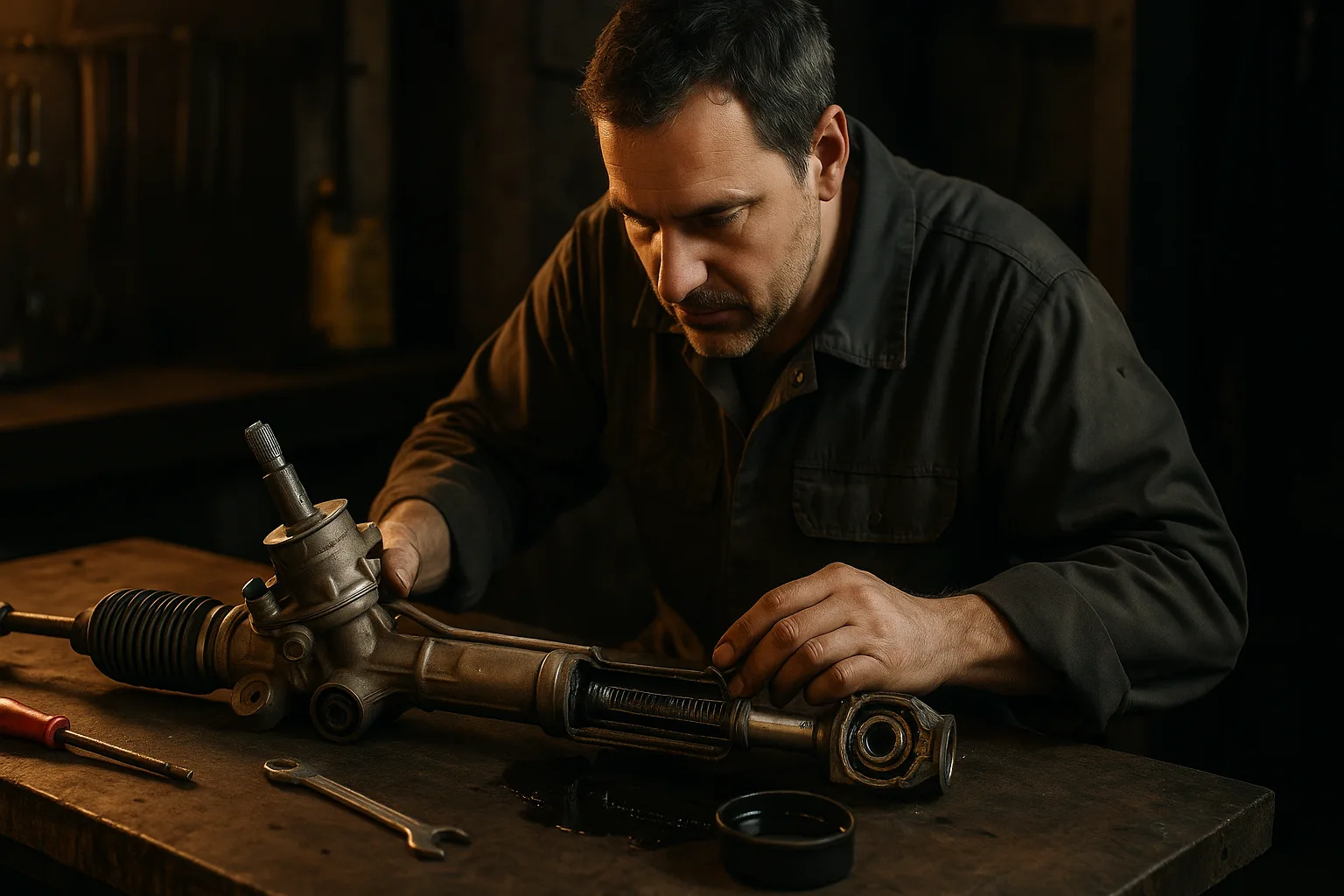
At a small independent garage in Romania, a seasoned mechanic leaned over the lifted vehicle on the hydraulic hoist, pointed a flashlight into the subframe, and said calmly:
“Your steering rack is speaking to you… but you didn’t listen.”
The steering rack is one of the most underestimated mechanical and electronic components in modern automobiles. Hidden beneath the engine bay and crossmember, it serves as the critical translation unit between driver input and vehicle direction, converting every micro-movement of your hands into exact angular motion at the front road wheels.
Inside the housing, dozens of finely tuned components—including the rack shaft, pinion gear, high-pressure hydraulic seals, pressure valves, and in modern systems, electric servo motors—work under extreme mechanical stress and high operational hydraulic pressure.
The Hidden Mechanics: How a Steering Rack Operates Under Load
To understand why steering rack failures are so dangerous, one must first look at the physics taking place beneath the chassis. Whether your vehicle utilizes a traditional hydraulic power steering system (HPS), an electro-hydraulic system (EHPS), or a modern electronic power steering setup (EPS), the basic mechanical principle relies on a rack-and-pinion gear set.
[Driver Steering Input] ➔ [Steering Column / Shaft] ➔ [Pinion Gear Engagement] ➔ [Lateral Motion of Toothed Rack] ➔ [Tie Rod Ends] ➔ [Steering Knuckles & Wheels]
When you turn the steering wheel, the rotational motion is transferred down the steering shaft to the pinion gear. The teeth of the pinion mesh directly with the horizontal teeth of the rack bar. As the pinion rotates, it forces the rack bar left or right, which in turn pushes or pulls the tie rods connected to your wheel hubs.
In hydraulic setups, a rotary valve attached to the pinion senses torsion on the shaft and directs pressurized hydraulic fluid from the power steering pump to either side of a internal piston. This fluid pressure assists in sliding the rack bar, making parallel parking and low-speed maneuvers effortless.
In modern Electronic Power Steering (EPS) systems, an electric motor mounted directly on the steering column or on the rack housing delivers torque assistance based on signals from position and torque sensors. Regardless of the assistance method, the mechanical rack bar bears the entire structural load of keeping your wheels pointed in the right direction.
Early Warning Signs of Steering Rack Degradation
When internal tolerances begin to degrade, the steering system doesn’t usually fail instantaneously without warning. Instead, the vehicle gives distinct mechanical and operational clues that alert attentive drivers to impending trouble.
1. Knocking or Clicking Noises During Turns
A distinct metallic clicking, popping, or clanking sound when negotiating low-speed turns, entering driveways, or executing parking maneuvers indicates excessive clearance between the rack and pinion teeth, worn inner tie rod ball joints, or loose mounting bushings.
2. Fluid Stains Beneath the Front Axle
Small red, clear, or amber fluid droplets under the front crossmember are often dismissed by drivers as harmless air conditioning condensation. However, power steering fluid leaks from deteriorated end seals or torn dust boots signal a breach in hydraulic integrity that will eventually starve the system of lubrication.
3. Morning Stiffness (Cold-Start Resistance)
A steering wheel that feels excessively stiff or heavy when starting the car first thing in the morning, only to smooth out as the engine warms up, indicates hardened internal seals or fluid bypass occurring inside the valve body.
4. Low-Speed Vibrations and Center Play
Micro-vibrations creeping into the steering wheel at low speeds, combined with a “dead zone” or loose feeling in the center-line position, indicate mechanical wear on the central teeth of the rack shaft—the area that receives the vast majority of straight-line driving wear.
Anatomy of a Failure: What Happened Under the Hood
In the case of the driver from our story, the workshop technician discovered a single torn rubber dust boot deep within the steering rack assembly. Over time, road grit, salt, and water entered through the tear, contaminating the inner polished shaft and tearing the delicate high-pressure internal oil seal.
Power steering fluid had been leaking slowly for weeks, causing the system’s hydraulic pressure to drop below operational standards. Without adequate fluid film lubrication, the steel gears inside began scraping directly against one another, metal against metal. With each turn of the wheel, precision-machined gear teeth were ground down a little further.
“This is how control disappears,” the mechanic noted quietely. “Not in an instant—but in silence.”
Modern Steering Diagnosis: Integrating Electronic Scan Tools
In modern vehicles, steering rack issues are no longer purely mechanical. Today’s Electric Power Steering (EPS) systems and electronically controlled hydraulic systems rely on complex networks of sensors—including Steering Angle Sensors (SAS), Torque Sensors, and Vehicle Speed Sensors—communicating continuously over the CAN-bus network.
When diagnosing steering hesitation, heavy feedback, or warning lights on the dashboard, relying solely on visual inspections is often insufficient. Workshops and advanced DIY mechanics require accurate digital diagnostics to pinpoint whether a problem is mechanical, hydraulic, or electronic.
This is where a professional, full-system diagnostic tool like the ThinkCar ThinkScan 689BT becomes an indispensable asset in the garage.
How the ThinkCar ThinkScan 689BT Solves Steering Diagnostic Challenges
-
Full Electronic Power Steering (EPS) Module Access: Unlike basic OBD2 code readers that only check engine parameters, the ThinkCar ThinkScan 689BT communicates directly with the dedicated EPS module to read and clear manufacturer-specific Diagnostic Trouble Codes (DTCs).
-
Real-Time Live Data Monitoring: The scanner allows technicians to graph live sensor data, such as real-time steering angle position, driver input torque (Nm), electric motor current draw (Amperes), and steering speed. Spikes in motor current draw often reveal mechanical binding in the rack long before a complete mechanical lockup occurs.
-
Steering Angle Sensor (SAS) Reset & Calibration: Following any steering rack replacement, tie rod adjustment, or wheel alignment, the vehicle’s Steering Angle Sensor must be recalibrated. The ThinkCar ThinkScan 689BT provides built-in special functions to execute SAS recalibration quickly and accurately.
-
Bidirectional Active Testing: With bidirectional capabilities, technicians can send active commands to test steering relays, illuminate warning indicators, and test electronic assistance modes wirelessly via Bluetooth while working around the vehicle.
Technical Comparison: Rebuilding vs. Replacing the Steering Rack
When diagnostic checks with equipment like the ThinkCar ThinkScan 689BT confirm internal mechanical scoring, electrical motor failure, or severe pressure loss, vehicle owners face two distinct repair pathways:
| Parameter / Feature | Complete Unit Replacement (New / OEM) | Steering Rack Rebuild / Remanufacturing |
| Component Scope | Entire housing, valves, rack shaft, pinion, and sensors | New internal seals, o-rings, Teflon rings, bushings, and polished shaft |
| Cost Efficiency | Higher upfront component cost | Cost-effective alternative for rare, vintage, or expensive OEM units |
| Service Life | Maximum factory-rated longevity and reliability | Dependent on shaft condition, honing quality, and machining tolerances |
| Labor Time | Fast installation (followed by wheel alignment & SAS calibration) | Requires complete unit tear-down, ultrasonic cleaning, lathe work, and pressure testing |
| Diagnostic Requirement | Full SAS calibration & fault clearing via scanner | Full SAS calibration & hydraulic pressure testing |
Essential Workshop Tips to Prevent Steering Rack Wear
To avoid costly replacements and ensure long-term steering precision, workshop experts recommend adhering to these crucial preventative maintenance practices:
-
Regularly Inspect Fluid Condition and Level: For hydraulic systems, routinely check the reservoir. Healthy power steering fluid is clear red or amber. Dark, cloudy, or burnt-smelling fluid indicates thermal breakdown and suspended metallic debris that will score internal seals.
-
Avoid Holding Full Steering Lock: Never force and hold the steering wheel at maximum lock (turned all the way to the left or right stop) for more than two seconds. Holding full lock causes extreme pressure spikes inside hydraulic control valves, straining pump vanes and blowing out end seals.
-
Be Mindful of Potholes, Speed Bumps, and Curbs: Severe lateral impacts from striking curbs during parking or hitting deep potholes at speed transfer violent kinetic energy directly through tie rods into the rack housing, bending shafts and damaging internal teeth.
-
Inspect Dust Boots at Every Oil Change: Rubber bellows/boots protect the precision-ground inner rack shaft from water and road grime. Replacing a torn $15 dust boot immediately can save you from a $1,000 steering rack replacement down the road.
-
Perform Diagnostic Scans During Servicing: Using a scan tool like the ThinkCar ThinkScan 689BT during routine maintenance allows you to check for latent EPS fault codes and verify steering sensor calibration before minor electrical glitches turn into system shutdowns.
-
Address Steering Play and Fluid Leaks Immediately: Never ignore free play in the steering wheel or minor fluid spots on your garage floor. Rebuilding or replacing a worn steering unit at the first sign of play prevents secondary damage to the power steering pump, tires, and suspension geometry.
Conclusion
The secrets of the steering rack serve as a vital reminder for every vehicle owner: even the smallest loss of precision or hydraulic pressure within the steering geometry can mean the difference between effortless safety and severe danger on the road.
Whether you are diagnosing complex electronic steering codes with an advanced tool like the ThinkCar ThinkScan 689BT or simply listening closely for subtle clicking noises during morning maneuvers, paying attention to your steering system pays dividends in safety, performance, and peace of mind.
The steering rack is not merely another mechanical component under the chassis—it is the ultimate bridge between man and machine.
✍️ Author: Bejenaru Alexandru Ionut – [email protected]
🔗 Internal link: https://diagnozabam.ro/sfaturi

Recommendation: Looking for a professional bi-directional diagnostic tool with full system coverage? Use code DIAGNOZABAM for 10% off.
Transparency note: Affiliate link. Purchasing through it costs you nothing extra. View Thinkcar Deal →
