

eSIM Explained: How It Works and Which Phones Support It
The physical SIM card has barely changed since the 1990s. It’s a small plastic chip. You pop it out of a tray. You insert it into a slot. You hope you don’t lose it. eSIM technology breaks that pattern entirely. It replaces the removable card with a digital profile built into the phone’s hardware. For travelers and multi-network users, it’s one of the more practical shifts in mobile connectivity.
What Is eSIM?
eSIM (embedded SIM) is a digital chip soldered directly into the phone’s circuitry. It is not a removable physical card. Instead of inserting a plastic SIM, you activate your plan digitally. Typically, this means scanning a QR code from your carrier — in-store, by email, or through an app.
Once scanned, the phone downloads the carrier’s network profile onto the embedded chip. The connection activates within minutes. No physical card. No waiting for delivery. No tray-opening tool required.
ℹ️ Technical Note: The eSIM chip itself stays permanently fixed inside the device. What changes when you switch carriers is the software profile on that chip — the carrier identity, authentication keys, and network credentials. The hardware never changes.
How eSIM Activation Works
The activation flow is deliberately simple. It’s designed to take a few minutes from start to finish.
[Carrier issues QR code]
    (in-store, via email, or in-app)
         |
         v
[User scans QR code with phone camera]
         |
         v
[Phone downloads carrier profile to eSIM chip]
         |
         v
[Network authentication & registration]
         |
         v
[Mobile plan active — calls, texts, data ready]
A key feature sets eSIM apart from traditional SIM cards: multi-profile support. A single eSIM chip can store several carrier profiles at once. Usually only one is active for cellular service at a time. But you can switch between profiles in the phone’s settings. No new physical card needed for each network.
Advantages of eSIM
- No physical card required — eliminates the need to source, insert, or store a plastic SIM. It also removes the risk of a damaged or bent SIM tray.
- Multiple mobile plans on one device — useful for anyone juggling a personal and work number. Also handy for a local plan alongside a home carrier while abroad.
- Improved security — there’s no physical card to remove. An eSIM can’t be physically extracted, lost, or stolen the way a traditional SIM can be pulled from a locked phone.
- Frees up internal space — without a SIM tray and slot mechanism, manufacturers can use that space differently. That often means a larger battery, extra components, or a thinner chassis.
ℹ️ Technical Note: The security advantage is more nuanced than “can’t be removed.” Switching an eSIM profile to a new device requires carrier-side authentication. This is unlike simply transferring a card. As a result, unauthorized SIM swapping — a common fraud vector — becomes meaningfully harder to pull off.
Disadvantages and Limitations
- Not universally supported — many budget and mid-range smartphones still lack eSIM hardware entirely. This is especially true outside flagship lineups.
- Device switching is less straightforward — moving a physical SIM between two phones takes seconds. Transferring an eSIM profile usually requires re-scanning a QR code. Sometimes it needs a carrier-assisted transfer, which can mean extra steps or even a support call.
- Carrier support varies by market — adoption is uneven worldwide. In some regions, including Romania, eSIM availability is limited to specific carriers. Support also depends heavily on the phone model.
⚠️ WARNING: Before relying on eSIM for a trip or carrier switch, verify support carefully. Check both your specific phone model and your destination carrier. Partial or regional support is common, and wrong assumptions can leave you without service.
eSIM Support in Romania
In Romania, eSIM availability is currently limited to a handful of carriers. Orange, Vodafone, and Digi all offer eSIM provisioning. However, the rollout and self-service activation process differs between them. Compatibility depends on two separate factors: whether the carrier supports eSIM issuance, and whether the phone model has the embedded chip and software needed to use it.
eSIM Compatible Phones
Support for eSIM has expanded steadily across major manufacturers. It remains concentrated in flagship and upper-mid-range models rather than entry-level devices.
| Brand | eSIM-Compatible Models |
|---|---|
| Apple | All iPhone models from the iPhone XS onward |
| Samsung | Galaxy S20, S21, S22, S23, S24 series; Galaxy Z Flip and Z Fold series |
| Pixel 3 and all newer Pixel models | |
| Huawei / Honor | Flagship models only (e.g., Honor Magic Pro series) — budget and “Lite” variants typically lack eSIM hardware |
ℹ️ Technical Note: Manufacturers tend to reserve eSIM hardware for flagship and premium tiers first. They gradually extend it to mid-range lineups as chipsets become cheaper to produce. Always check the exact model number. Don’t assume an entire product line supports it — “Pro” and “Lite” variants of the same generation often differ here.
Who Benefits Most from eSIM
- Frequent travelers — switching to a local data plan abroad becomes simple. No hunting for a SIM shop, no juggling a tiny ejected card.
- Dual-number users — keep a personal and work line active on the same device. No physical dual-SIM tray needed.
- Anyone prioritizing device durability — fewer moving parts and openings can mean marginally better resistance to dust and water.
- Users concerned about SIM-swap fraud — the added authentication layer makes unauthorized carrier transfers harder to pull off.
Conclusion
eSIM technology replaces a decades-old physical standard with something faster and more flexible. It’s also arguably more secure against certain types of fraud. Its main constraint isn’t the technology itself — it’s adoption. Carrier support and device compatibility still vary significantly by region and price tier. As more manufacturers extend eSIM support beyond flagship models, and carriers streamline self-service activation, the shift continues. eSIM is positioned to become the default, not the alternative, for how phones connect to mobile networks.
✍️ Author: Bejenaru Alexandru Ionut – [email protected]
🔗 Internal link: https://diagnozabam.ro/sfaturi
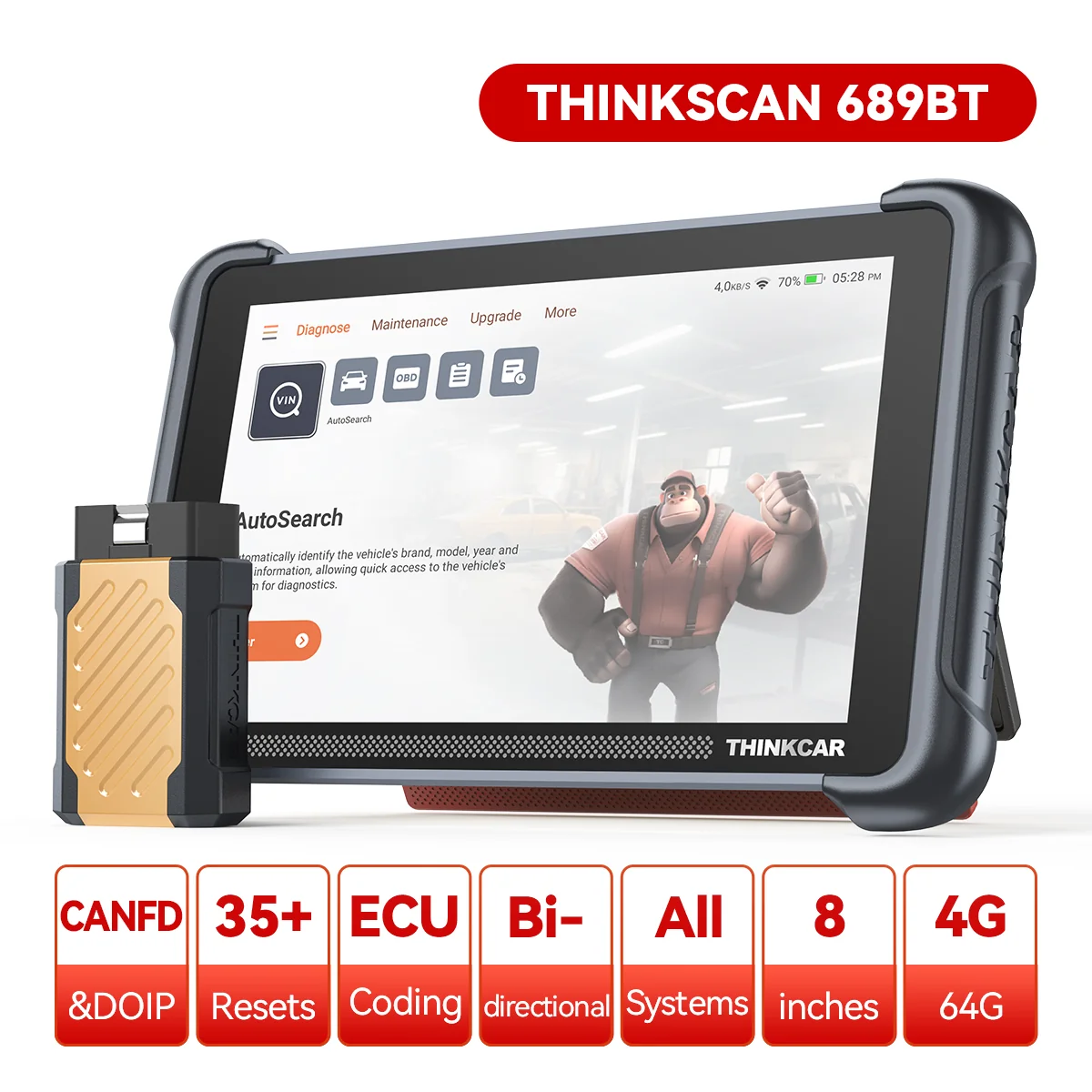
Recommendation: Looking for a professional bi-directional diagnostic tool with full system coverage? Use code DIAGNOZABAM for 10% off.
Transparency note: Affiliate link. Purchasing through it costs you nothing extra. View Thinkcar Deal →
