

ITP Tires in Romania: What Inspectors Check and How to Avoid Failing
There’s a specific group of drivers who arrive at the ITP with a freshly serviced car, on time, documentation in order — and still fail the inspection. Not because of the engine, the brakes, or the exhaust system. Because of the tires. What looks like a minor oversight at the tire shop can turn a routine RAR visit into a wasted day and an unplanned expense. Tires are systematically checked at every periodic technical inspection, and the criteria are clear, standardized, and non-negotiable.
What Inspectors Actually Check on Tires
RAR inspectors follow a standardized protocol for tire verification. This is not a cursory glance — each of the following points is an independent ground for failing the inspection.
1. Dimensional Compliance with the CIV
The first check is the simplest and the most frequently overlooked. The dimensions of the tires fitted to the vehicle must match exactly the specifications listed in the vehicle’s registration document (CIV — Cartea de Identitate a Vehiculului). If the manufacturer approved size 205/55 R16 for that model, fitting 215/55 R16 tires — even though the difference appears minor — can constitute grounds for failure, depending on the degree of deviation from the approved specification.
ℹ️ Technical Note: Some vehicles have multiple approved tire dimensions listed in the CIV, covering different trim and equipment variants. Check all relevant fields in the CIV before concluding that a mounted size is non-compliant.
2. Load and Speed Index
Printed on the sidewall of every tire are two critical values: the load index (maximum load capacity per wheel, expressed as a number) and the speed index (maximum safe operating speed, expressed as a letter).
These values cannot be lower than those specified by the vehicle manufacturer. Fitting tires with a lower load or speed index than the minimum required is grounds for failing the ITP — and in real driving conditions, a direct safety risk.
How to read a tire marking:
205/55 R16 91V

205  → section width (mm)
55   → aspect ratio (%)
R    → radial construction
16   → rim diameter (inches)
91   → load index (615 kg per wheel)
V    → speed index (max. 240 km/h)
3. Physical Condition of the Tire
Inspectors carry out a visual and tactile check of the entire accessible surface of each tire — tread band, sidewalls, shoulder area. Any of the following defects constitutes an automatic fail:
- Cuts — incisions that penetrate the rubber structure or reach the cord layer
- Cracks — material degradation from aging or use in improper conditions
- Bulges / Hernias — localized swelling on the sidewall, indicating that the internal cord structure has failed and internal pressure is deforming the rubber outward
⚠️ WARNING: A sidewall bulge is not a cosmetic defect. It is a structural failure that can develop into a blowout at motorway speeds. No tire with a bulge passes the ITP, and no tire with a bulge should be on a vehicle in circulation — regardless of inspection status.
4. Minimum Tread Depth
The legal minimum for passenger cars is 1.6 mm tread groove depth. Below this value, the tire’s ability to evacuate water from the road surface drops dramatically, wet braking distances increase significantly, and the risk of aquaplaning becomes real at highway speeds.
| Vehicle type | Legal minimum tread depth |
|---|---|
| Passenger cars | 1.6 mm |
| Light commercial vehicles | 1.6 mm |
| Heavy vehicles | 1.0 mm |
ℹ️ Technical Note: The Tread Wear Indicator (TWI) is a physical marker molded into the tire’s grooves at exactly 1.6 mm depth. When the tread surface reaches the level of these indicators, the tire has reached its legal limit. No gauge is required — if the TWI markers are flush with the surrounding tread surface, the tire must be replaced before the ITP.
Common Mistakes That Lead to ITP Failure
Different Tire Sizes on the Same Axle
Fitting tires of different dimensions on the left and right wheels of the same axle is prohibited and constitutes an automatic fail. Beyond the inspection, this configuration directly affects vehicle dynamics — particularly during braking and cornering — and can cause long-term differential damage.
Winter Tires in Summer Conditions
Winter tires are engineered for temperatures below 7°C. At higher temperatures, the soft compounds specific to winter tires overheat, wet braking distances increase, and wear rate accelerates substantially. Some vehicle manufacturers explicitly exclude the use of winter tires outside the cold season in their technical specifications — an inspector who identifies this mismatch can flag it as a non-compliance.
Worn Second-Hand Tires “Just to Pass the ITP”
The strategy of temporarily mounting a less-worn set of second-hand tires solely to pass the inspection is both illegal and ineffective. Inspectors are trained to identify tires with asymmetric wear patterns, invisible sidewall cracking, and artificially re-grooved tread — a fraudulent practice where worn tires are mechanically deepened to simulate legal tread depth, explicitly prohibited under RAR regulations.
What You Actually Risk with Non-Compliant Tires
At the ITP
The vehicle fails the inspection. You receive a written refusal detailing the deficiencies. You are required to fix the problems and return for a re-inspection — at additional cost, with a new booking.
In Traffic
If stopped by traffic police with non-compliant tires:
- Fine — the amount varies by severity of the infringement and can be substantial
- Registration certificate seized — the vehicle cannot legally circulate until the deficiencies are corrected
- Liability in the event of an accident — non-compliant tires can be cited as an aggravating factor in determining fault
On the Road
The safety risks exist independently of any administrative sanction:
- Increased braking distances — especially on wet surfaces
- Elevated aquaplaning risk below legal tread depth
- Blowout risk at speed — in the case of sidewall bulges or cut cord layers
- Increased fuel consumption — tires with incorrect pressure or a compound unsuited to the season increase rolling resistance
How to Prepare Correctly Before the ITP
[Step 1] Pull out the CIV — identify the approved dimensions and indexes
         |
         v
[Step 2] Check the markings on each tire sidewall
         (dimensions, load index, speed index)
         |
         v
[Step 3] Check tread depth — TWI markers or tread depth gauge
         |
         v
[Step 4] Full visual inspection — bulges, cuts, sidewall cracking
         |
         v
[Step 5] Check tire pressure — under-inflation accelerates wear
         and degrades dynamic behavior
         |
         v
[Step 6] If any point raises questions → visit a tire shop before ITP
ℹ️ Technical Note: Tire pressure should always be checked cold — after at least 3 hours of rest or fewer than 3 km driven. Pressure in warm tires is higher and does not reflect the correct reference value. Manufacturer-recommended pressures are found on the sticker inside the driver’s door frame or in the vehicle’s technical manual.
Expert Recommendation: The Right Investment, Not the Wrong Economy
A quality mid-range tire — from a manufacturer with documented independent test results — costs significantly less than the fine for non-compliant tires, less than a second ITP booking, and incomparably less than the consequences of an accident caused by degraded rubber.
Minimum criteria for a correct tire choice:
- Dimensions and indexes matching the CIV specification
- Season-appropriate compound (summer, winter, or all-season with M+S / 3PMSF marking)
- Tread depth above 3 mm — below this value, wet performance drops sharply even if the tire is technically legal
- No visible physical damage on the sidewall or tread band
Official RAR regulations on tire technical requirements are available at rarom.ro.
Conclusion
Tires are the only physical interface between the vehicle and the road surface. Treating them as an administrative formality to get through the ITP is a judgment error with potentially serious consequences — from inspection failure and traffic fines to real safety risks at speed. A 15-minute check before booking the ITP — dimensions, indexes, tread depth, physical condition — eliminates most unpleasant surprises and confirms that the vehicle is genuinely road-safe, not just administratively compliant.
✍️ Author: Bejenaru Alexandru Ionut – [email protected]
🔗 Internal link: https://diagnozabam.ro/sfaturi
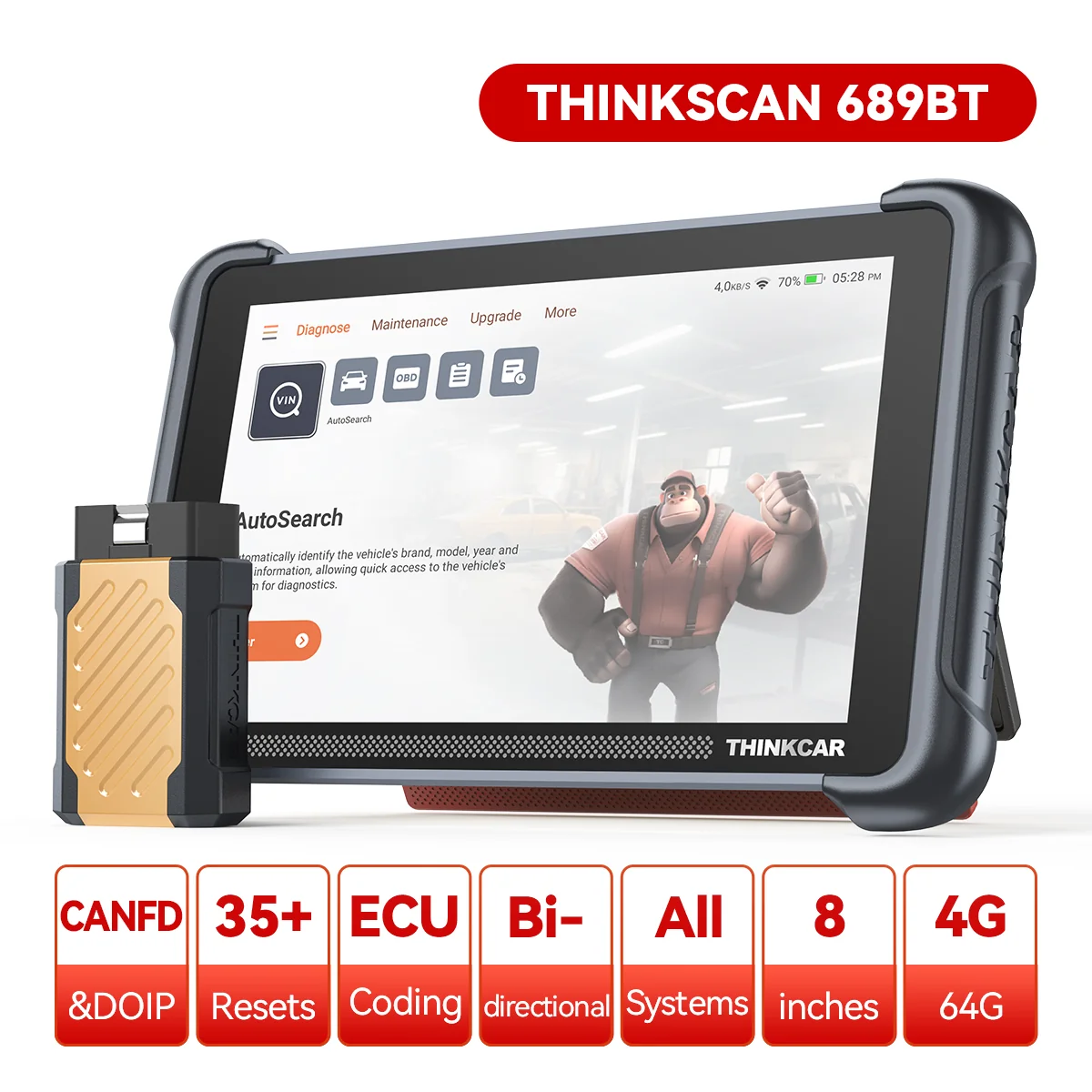
Recommendation: Looking for a professional bi-directional diagnostic tool with full system coverage? Use code DIAGNOZABAM for 10% off.
Transparency note: Affiliate link. Purchasing through it costs you nothing extra. View Thinkcar Deal →
