
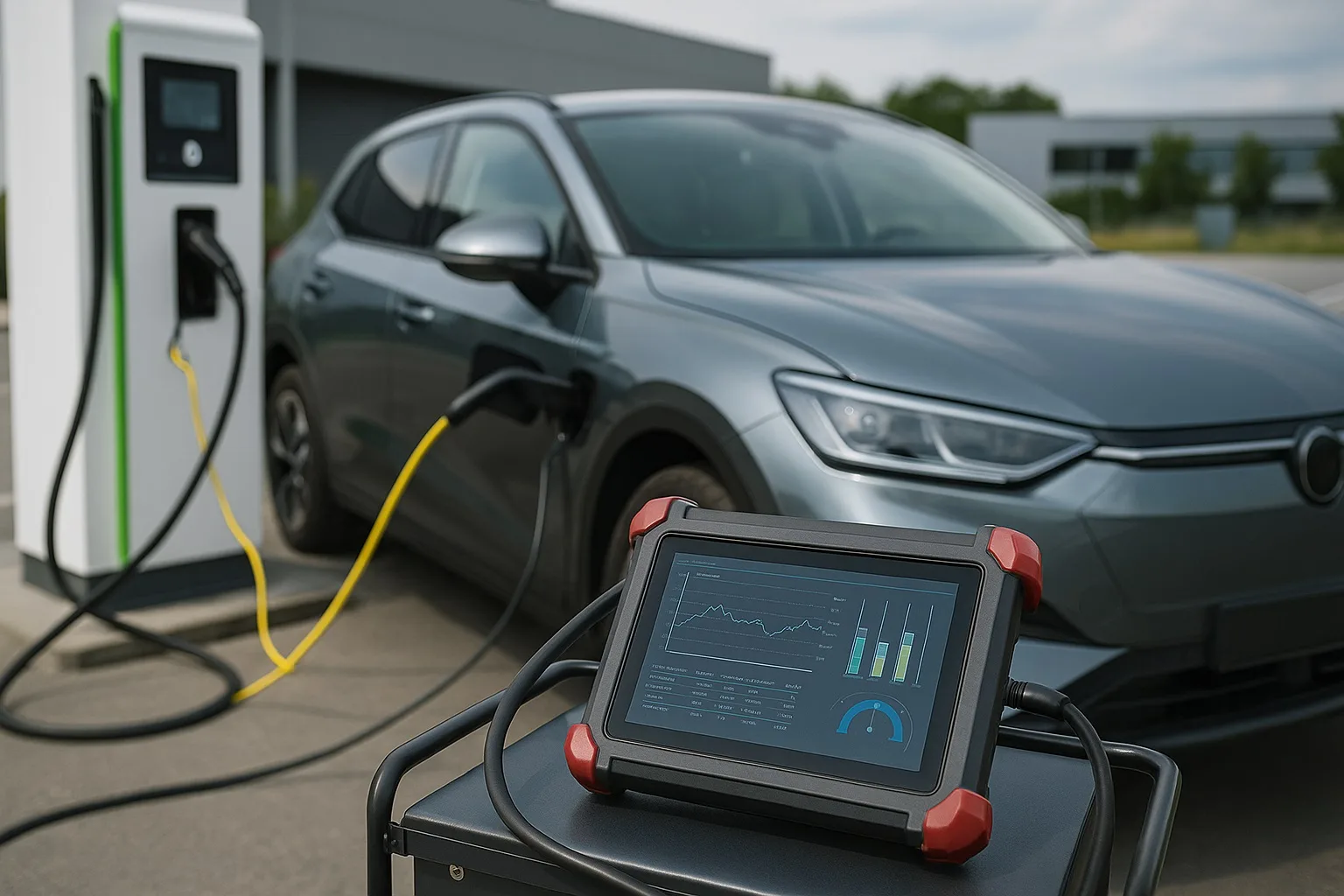
The EU Is Cracking Down on Weak EV Batteries: What Changes From 2025
The European Union is fundamentally changing how electric car batteries get approved for sale. This is no longer left to manufacturer goodwill. Mandatory tests are coming, with clear pass-or-fail thresholds.
The news lands at a moment when EV sales keep climbing across Europe. More drivers are buying electric cars every year. More of them are asking a simple question: how safe and durable is the battery sitting under the floor?
These requirements are not an isolated EU initiative. They come from a global technical regulation negotiated under UNECE, and they connect directly to the Euro 7 standards and the EU Battery Regulation. A shared testing framework is being built, rolled out progressively across several major markets, not just Europe.
Why These Tests Are Appearing Now
Until now, EV batteries were tested differently by every manufacturer. Each one relied on its own internal validation methods. Consumers had no objective reference point.
That created two real problems:
- Some manufacturers fitted lower-quality batteries, with no legal barrier stopping them.
- Drivers had no reliable way to check a battery’s true health, especially when buying a used EV.
The new testing framework tackles both issues through common, verifiable, and mandatory technical standards at type approval.
ℹ️ Technical Note: The framework is built on UN GTR 22, a global technical regulation adopted at UNECE level, gradually transposed into EU law through the Euro 7 standards and the dedicated battery regulation.
What the Tests Actually Check
The tests cover both immediate safety and long-term durability. They are not limited to a single lab scenario.
1. Resistance to Extreme Temperatures
The battery must perform correctly in both freezing cold and extreme heat. The battery management system (BMS) is tested directly under these conditions.
The tests simulate:
- Startup and operation at very low temperatures, typical of northern winters.
- Extended operation at high temperatures, typical of southern summers.
- How the battery’s cooling and heating system behaves under thermal stress.
A battery that suddenly loses capacity at -15°C, or overheats at 40°C, fails the test.
2. Fast-Charging Behavior
Fast charging is the most demanding scenario for a lithium battery. High currents generate heat and electrochemical stress on the cells.
The tests check:
- Correct voltage limiting during charging, to prevent overcharging.
- Discharge limiting, to avoid cell damage.
- How the electronic system reacts to repeated fast-charging cycles.
3. Vibration and Impact Safety
A battery mounted on a vehicle is under constant vibration from driving. In a crash, the risk gets much higher.
The mandatory tests include:
- Extended vibration simulations, similar to driving on rough roads.
- Controlled short-circuit tests, to check the protection system’s response.
- Enclosure (REESS) checks against fire exposure and mechanical shocks.
⚠️ WARNING: A battery that fails vibration and impact tests can trigger fires that are extremely hard to extinguish after a crash. That’s why these thresholds are becoming mandatory, not optional.
4. Long-Term Capacity Durability
This is the genuinely new element. It’s no longer just about immediate safety — it’s also about how well the battery holds up over time.
| Period | Mileage | Maximum Accepted Capacity Loss |
|---|---|---|
| 5 years | 100,000 km | under 20% |
| 8 years | 160,000 km | under 30% |
In practice, an approved battery guarantees a minimum level of range even after years of heavy use.
What This Means for Drivers
For someone driving an electric car daily, these rules aren’t a bureaucratic footnote. They directly change the ownership experience.
- Safer trips. Battery fire risk drops significantly, especially in crash scenarios.
- Longer, clearer warranties. Manufacturers will have to declare real battery degradation thresholds.
- Transparency at resale. Battery health will be available as standardized information, useful when buying a used EV.
- Possibly higher prices. Extra testing and better materials raise battery production costs.
For someone buying a used electric car, that last point matters enormously. The battery’s real condition no longer depends solely on the seller’s word.
Industry Reaction
The industry is split, as usual when new mandatory rules show up.
Some manufacturers see the tests as a costly challenge. Investment in retooling and extra validation isn’t negligible, especially for smaller producers.
Other manufacturers see it differently. For them, common standards are an image advantage. A customer who knows the battery passed strict testing trusts the final product more.
Battery suppliers are already moving in that direction. They’re working on:
- Non-flammable electrolytes, which drastically cut thermal risk in case of a fault.
- Solid-state batteries, with higher energy density and much lower fire risk compared to classic lithium-ion cells.
These technologies aren’t yet mainstream, but the new testing rules are accelerating their adoption.
What This Means for Mobile Diagnostics and Roadside Mechanics
For mechanics who work roadside rather than in a shop, information about an approved battery has direct practical value.
A battery certified against the new degradation thresholds gives a clear reference point. If a vehicle shows range loss well beyond the declared limit, the issue is no longer “normal for an aging battery.” It’s a real fault, and one that can be documented.
This transparency helps with faster field diagnostics:
- The battery’s real state can be compared against the manufacturer’s guaranteed minimum threshold.
- Abnormal degradation caused by a BMS or cooling system fault becomes easier to spot.
- Customers get an objective explanation, based on a standard rather than a guess.
For a mobile mechanic working directly on the road, this kind of clear technical reference makes the difference between a justified intervention and an unfounded suspicion.
Rollout Timeline
These rules aren’t appearing overnight — they’re phased in as UNECE standards get transposed into EU law.
- Since 2023, new type approvals already have to meet the updated version of the battery safety tests.
- From September 2025, all type approvals, including older ones, must fully comply with the new requirements.
- From 2025, the declarative phase of the EU Battery Regulation also begins, with carbon footprint thresholds and recycling requirements.
- From 2026, battery information becomes available on a label, and from 2027 through a digital passport accessible via QR code.
In practice, 2025 is the turning point. From then on, no new model approved in the EU can skip these tests.
Conclusion
The new tests for electric car batteries are a necessary step, not just a bureaucratic one. Crash safety, fast-charging behavior, and resistance to extreme temperatures become mandatory thresholds, not marketing options.
For drivers, this means real, added trust in EV technology. For the industry, it means higher short-term costs but a more mature market long-term. For those diagnosing these vehicles daily, it means a clear technical reference instead of vague guesswork.
Through these rules, the electric car market becomes safer and more transparent. That matters for everyone, from the manufacturer down to the mechanic working roadside.
✍️ Author: Bejenaru Alexandru Ionut – [email protected]
🔗 Internal link: https://diagnozabam.ro/sfaturi

Recommendation: Looking for a professional bi-directional diagnostic tool with full system coverage? Use code DIAGNOZABAM for 10% off.
Transparency note: Affiliate link. Purchasing through it costs you nothing extra. View Thinkcar Deal →
