Which Truck Diagnostic Tools Actually Work on Modern Diesel Trucks? A Deep Technical Breakdown
Introduction: The Inadequacy of Generic OBD2 in the Diesel Realm
For years, automotive hobbyists and light-duty mechanics relied on standard, inexpensive code readers to decipher check engine lights. However, attempting to troubleshoot a modern diesel transport vehicle or a high-output pickup with a generic automotive scan tool is an exercise in futility. The electronic and mechanical architecture of contemporary diesel engines—governed by strict environmental mandates and intricate multiplexed communication networks—demands specialized diagnostic hardware.
When multiple warning indicators illuminate a commercial dashboard, cheap readers routinely report a deceptive “No Fault Codes Found” status. This diagnostic blind spot exists because basic scanners only query the primary Powertrain Control Module ($PCM$) via standard passenger-car protocols, leaving vast, multi-layered vehicle sub-networks completely unaddressed.
       [ Basic OBD2 Scanner ]                   [ Foxwell Heavy-Duty Platform ]
                 │                                              │
        (Limited OBD2 Protocol)                       (J1939 / J1708 Protocols)
                 │                                              │
                 ▼                                              ▼
    • Engine Controller Only ($PCM$)              • Complete Powertrain Module ($PCM$)
    ❌ No ABS Access                              • Advanced Anti-Lock Braking ($ABS$)
    ❌ No Transmission Diagnostics                • Transmission Control Matrix ($TCM$)
    ❌ No Aftertreatment Matrix                   • SCR / DPF Emissions Control Unit
    ❌ No Live Telemetry Stream                   • Real-Time Sensor Stream Calibration
Why Basic Architecture Fails on Commercial Diesel Platforms
Modern heavy-duty and medium-duty diesel trucks do not utilize a centralized, single-processor electronics layout. Instead, they operate as a distributed network of highly specialized Electronic Control Units ($ECUs$) communicating across robust physical buses.
Critical operating errors, safety interruptions, and performance limitations are rarely isolated to simple engine sensors. Instead, severe drivability issues often originate within auxiliary control domains:
-
The Anti-Lock Braking Module ($ABS$): Manages roll stability, electronic braking distribution, and traction parameters. A single wheel-speed sensor discrepancy can disable safety systems without throwing a generic engine code.
-
The Transmission Control Module ($TCM$): Oversees complex shifting behaviors, clutch pack pressures, and torque converter lockup constraints, frequently triggering a “limp mode” safety state when tolerances are breached.
-
The Emissions Aftertreatment Controller: A dedicated processing unit that monitors the Selective Catalytic Reduction ($SCR$) and Diesel Particulate Filter ($DPF$) arrays, maintaining operational compliance with global environmental regulations.
When an emission component fails or a sensor drifts out of its calibrated operational window, the aftertreatment controller commands the engine management computer to initiate an engine derate protection mode. Because a basic scanner cannot access the specific emissions module network, the technician remains blind to the underlying cause of the power reduction.
What Do Professional Truck Shops Use? The Commercial Elite
To accurately diagnose commercial multi-brand fleets, professional repair facilities utilize comprehensive commercial vehicle diagnostic systems rather than simple hand-held code readers. These industrial-grade setups combine high-bandwidth vehicle communication interfaces ($VCIs$) with enterprise-level software suites to achieve true dealer-level operational access.
                  [ Enterprise Commercial Fleet Software Platforms ]
                                          │
         ┌────────────────────────────────┼────────────────────────────────┐
         ▼                                ▼                                ▼
 [ Jaltest Multi-Brand ]         [ JPRO Fleet Software ]         [ Foxwell HD Ecosystem ]
 • Global Fleet Coverage         • Rapid Fleet Triage            • Dedicated Hardware VCIs
 • Detailed Wire Diagrams        • Comprehensive Bus Scan        • Advanced Android Core
 • Comprehensive Guided Fixes    • Live Component Test           • Cost-Effective Fleet Access
1. Jaltest Multi-Brand Diagnostics
Widely considered the industry benchmark for mixed fleets, this European-developed system provides extensive diagnostic coverage across commercial trucks, agricultural equipment, and specialized construction machinery. It features deeply integrated wiring diagrams, component locations, and interactive guided troubleshooting routines.
2. JPRO Commercial Fleet Software
The leading fleet triage tool in North America, JPRO excels at performing rapid, comprehensive vehicle-wide scans. It displays a unified look at the entire vehicle network within seconds, capturing inter-module communication issues across heavy-duty protocols.
3. Foxwell Professional HD Series
As a direct answer to overly expensive software platforms, the Foxwell Heavy-Duty Ecosystem provides independent repair shops and advanced fleet owners with field-ready alternative hardware. Tools running on these dedicated platforms mirror the parameter resets, component tests, and diagnostic depth of higher-end corporate scanners without requiring restrictive or expensive contracts.
The Modern Solution: High-Capability DIY vs. Enterprise Fleet Platforms
The diagnostic tool market is no longer binary. Independent owner-operators and small delivery fleet managers do not necessarily need to invest thousands of euros in costly shop computers. A distinct segment of advanced DIY tools and mid-range professional scanners has emerged to bridge the gap perfectly.
                          [ Selecting the Correct Diagnostic Tier ]
                                              │
           ┌──────────────────────────────────┴──────────────────────────────────┐
           ▼                                                                     ▼
 [ Advanced DIY / Mid-Range Scanner ]                        [ Enterprise Fleet System ]
 • Fleet Size: 1 - 5 Vehicles                                • Fleet Size: Large Commercial Fleet / Shop
 • Solution: Foxwell HD500 Handheld                          • Solution: Foxwell GT75TS HD Wireless Tablet
 • Cost Profile: Affordable, One-Time Purchase               • Cost Profile: Full Commercial Workshop Diagnostic
To determine which tier aligns with your operational profile, consider this structural comparison matrix:
| Functional Diagnostic Capabilities | Foxwell Entry-Level / DIY Tier | Foxwell Pro Fleet / Shop Tier |
| Primary Hardware Example | Foxwell HD500 / NT710 HD | Foxwell NT809HD / GT75TS HD |
| Inter-Module Communication Scan | Complete Reading of All On-Board Modules | Total Network Mapping & Topology Diagrams |
| Bi-Directional Component Actuation | Supported for Main Systems (Valves, Relays) | Unlimited Actuation Across All Sub-Modules |
| Forced DPF Regeneration Execution | Included Across Major Diesel Engines | Advanced Regeneration with Live Sensor Overrides |
| Heavy-Duty Protocol Support | Native Integration of Core J1939 Systems | Deep Protocol Analysis (J1939, J1708, J1587) |
| Software Maintenance Model | Free Lifetime Updates / Low-Cost Renewals | Full Workshop Support with Regular Software Updates |
| Module Programming Capabilities | Restricted to Basic Reset Operations | Full ECU Re-Flashing & Parameter Alteration |
Brand-Specific Diagnostic Ecosystems: Cummins, Duramax, and Powerstroke
An experienced diesel technician understands that diagnostic priorities change completely depending on the engine badge under the hood. Each engineering platform possesses unique failure modes and requires specific controller interactions.
                       [ Specialized Diesel Platform Focus Areas ]
                                           │
         ┌─────────────────────────────────┼─────────────────────────────────┐
         ▼                                 ▼                                 ▼
   [ Cummins Systems ]              [ Duramax Systems ]            [ Powerstroke Systems ]
   • Turbo Actuator Position        • DPF Soot Accumulation        • Injector Contribution Data
   • Grid Heater Circuitry          • SCR Delivery Pressures       • Turbo Vane Duty Cycles
   • 68RFE Pressure Matching        • Fuel Rail Pressure Steps     • Transmission Reset Logic
Cummins Powertrain Diagnostics
Engineers working on Cummins platforms frequently focus on variable geometry turbocharger ($VGT$) parameters. Swapping a turbocharger requires precise electronic calibration of the turbocharger actuator relative to the exhaust gear sector.
Additionally, diagnosing intake grid heater relay failures and matching line pressures within heavy-duty transmissions represent daily service requirements. Utilizing a specialized tool like the Foxwell NT809HD allows mechanics to skip complex command-line scripts and run these actuator calibrations directly from an intuitive touchscreen interface.
Duramax Electronic Troubleshooting
Duramax diagnostic routines are heavily focused on complex emission controls. Technicians regularly investigate diesel particulate filter blockage issues caused by interrupted background regenerations.
Monitoring the Selective Catalytic Reduction fluid dosing pressures, checking heater circuit continuity inside the diesel exhaust fluid ($DEF$) tank, and verifying high-pressure fuel rail performance are vital steps for keeping these trucks out of limp mode. A full-system diagnostic tool running specialized software can instantly pull up live graphing data to see if the pressure drops align with factory specifications.
Powerstroke Control Strategies
Ford Powerstroke management networks place a heavy emphasis on individual cylinder performance data. Technicians rely on deep-level diagnostic functions to execute an injector contribution test, which isolates minute rotational speed drops to identify failing fuel injectors.
Other common procedures include monitoring variable geometry turbocharger vane position duties, troubleshooting complex high-pressure oil delivery systems on older variants, and performing transmission adaptive learning resets after a transmission rebuild.
Deep Technical Focus: Forced DPF Regeneration Logic
One of the most requested features on a modern diesel scan tool is the ability to command a forced diesel particulate filter ($DPF$) regeneration. When a truck is driven primarily on short, low-speed delivery routes, the exhaust gas temperature ($EGT$) fails to reach the ambient levels ($~350^circtext{C} – 450^circtext{C}$) required for passive regeneration. Consequently, soot accumulates until the pressure differential across the filter element exceeds safe operating limits.
 [ Scanner Sends Command ] ──► [ Check Safety Interlocks ] ──► [ Engine Changes Operation ]
                               - No Critical Engine Codes      - Retards Injection Timing
                               - Coolant Temp > 75°C           - Increases Idle RPM
                               - Safe Exhaust Area Clear       - Post-Injects Fuel to EGT
                                                                       │
                                                                       ▼
                                                         [ Hydrocarbon Oxidation ]
                                                         - Exhaust Temp Hits 600°C+
                                                         - Safely Burns Soot to Ash
When executing a forced DPF regeneration via a bidirectional control scan tool—such as the heavy-duty Foxwell HD500—the engine management controller executes a highly controlled safety sequence:
-
Interlock Verification: The engine computer checks critical inputs: engine coolant temperature must be above a specific threshold (typically $>75^circtext{C}$), no active safety-critical codes can be present, and the vehicle must be stationary with the parking brake set.
-
Thermal Management Activation: The engine computer retards main injection timing and commands precise post-injection pulses. This sends unburned hydrocarbons directly into the Diesel Oxidation Catalyst ($DOC$).
-
Exhaust Temperature Exothermic Reaction: The fuel oxidizes within the catalyst, driving exhaust temperatures upward past $600^circtext{C}$. This intense thermal energy burns trapped soot particulate matter, converting it into trace amounts of fine ash.
⚠️ Critical Service Warning: A forced DPF regeneration is a diagnostic procedure, not a permanent cure for an underlying mechanical issue. If a truck suffers from a drifting DPF differential pressure sensor, a leaking exhaust pipe, or an upstream engine oil-burning issue, a manual regeneration will only clear the symptoms temporarily. The filter will likely plug up again within days unless the root cause is resolved.
Understanding Heavy-Duty Networks: The J1939 Communication Protocol
The foundational element that separates simple consumer scan tools from real heavy-duty truck scanners is native hardware support for the SAE J1939 protocol. Passenger cars communicate using the ISO 15765 CAN framework over a standard 16-pin OBD2 port layout. In contrast, medium and heavy-duty vehicles utilize a specialized commercial data bus architecture accessed via heavy-duty 6-pin (older J1708/J1587) or 9-pin (modern J1939) Deutsch connectors.
               [ SAE J1939 Architecture Frame Structure ]
 ┌───────────────┬────────────────────────────┬────────────────────────┐
 |  Identifier   |   Parameter Group Number   |   8-Byte Data Field    |
 |   (29-Bit)    |          (PGN)             |     (SPN Payloads)     |
 └───────────────┴────────────────────────────┴────────────────────────┘
The SAE J1939 network standard relies on a high-speed, 250kbps or 500kbps Controller Area Network ($CAN$) backbone utilizing 29-bit identifiers instead of standard 11-bit fields. Data is organized around distinct parameters:
-
Parameter Group Numbers ($PGNs$): Unique 18-bit values that categorize specific functional data packets transmitted across the vehicle network (e.g., transmission configurations or complete engine fluid states).
-
Suspect Parameter Numbers ($SPNs$): Specific data points contained within a $PGN$ frame that map to precise physical variables, such as oil temperature, boost pressure, or component fault codes.
If your diagnostic hardware interface lacks the internal transceiver circuitry to process 29-bit identifiers or decode J1939 frame architectures, it cannot communicate with the vehicle’s modules. This hardware limitation is why basic car scanners cannot establish a data link with medium or heavy-duty commercial equipment, regardless of physical adapter pin configurations.
This protocol barrier is precisely why investing in a dedicated tool like the Foxwell HD500 makes technical sense; it includes integrated hardware transceivers designed specifically to read heavy-duty commercial networks natively.
Final Summary: Choosing the Right Tool for the Job
Investing in the wrong diagnostic tool results in costly downtime, unnecessary component swapping, and ongoing frustration. To avoid these issues, select your scanner based on your actual operational requirements and fleet profile:
                              [ Diagnostic Needs Matrix ]
                                           │
         ┌─────────────────────────────────┼─────────────────────────────────┐
         ▼                                 ▼                                 ▼
 [ Light-Duty Pickups ]          [ Commercial Medium Duty ]        [ Multi-Brand Fleet Shop ]
 • Handheld Solution             • Rugged Specialized Tablet       • Wireless Enterprise Tablet
 • Focus: Foxwell HD500          • Focus: Foxwell NT809HD          • Focus: Foxwell GT75TS HD
 • Full Module Regen & ABS       • Multi-Protocol J1939 Mapping    • Advanced Coding & Calibrations
-
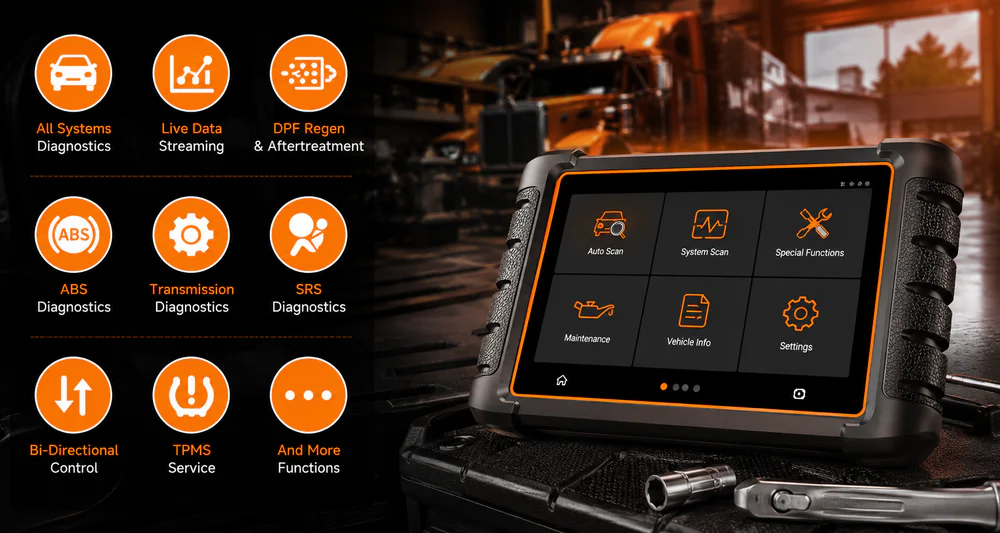
For Light-Duty Pickups & Owner-Operators: The Foxwell HD500 is an exceptional entry point. It provides full-system diagnostics, live sensor streams, ABS monitoring, and forced DPF regeneration handling in a rugged, standalone handheld form factor.
-
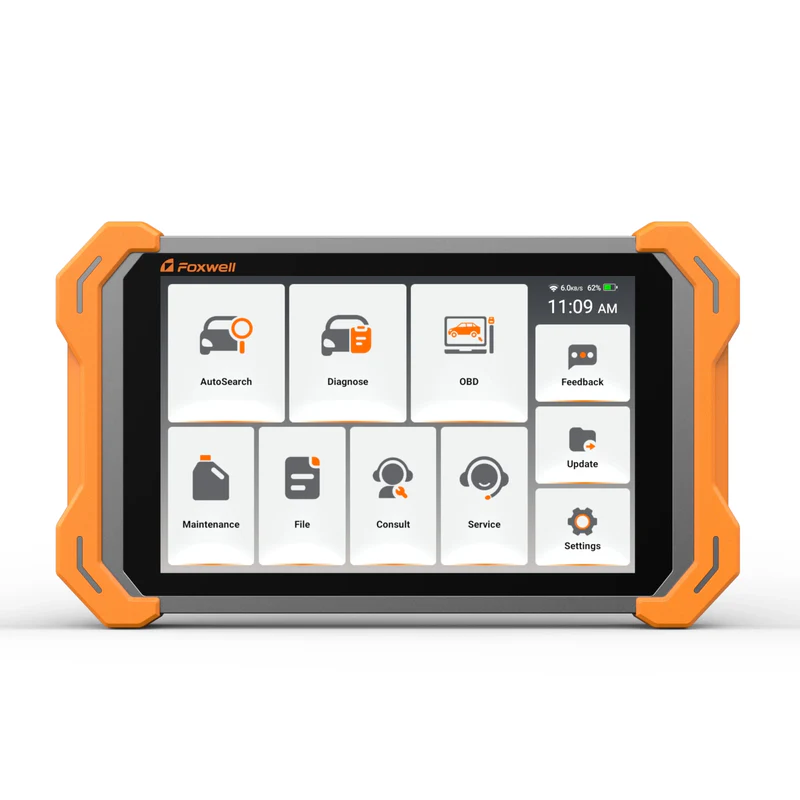
For Commercial Medium & Heavy-Duty Trucks: Stepping up to the Foxwell NT809HD provides an Android-based touchscreen workspace. This tablet brings advanced bidirectional controls, J1939/J1708 protocol access, and comprehensive module component testing directly to the vehicle bay.
-
For High-Volume Multi-Brand Fleet Workshops: The flagship Foxwell GT75TS HD represents the ultimate workshop tier. Operating as a wireless diagnostic computer with an industrial VCI, it delivers deep OEM-level adaptations, component calibrations, and system fluid resets needed to keep heavy commercial machinery moving.
Source: Which Truck Diagnostic Tools Actually Work on Modern Diesel Trucks?
✍️ Author: Bejenaru Alexandru Ionut – [email protected]
🔗 Internal link: https://diagnozabam.ro/sfaturi
Looking for the Pro version to handle multi-application service resets across a vast range of car makes?
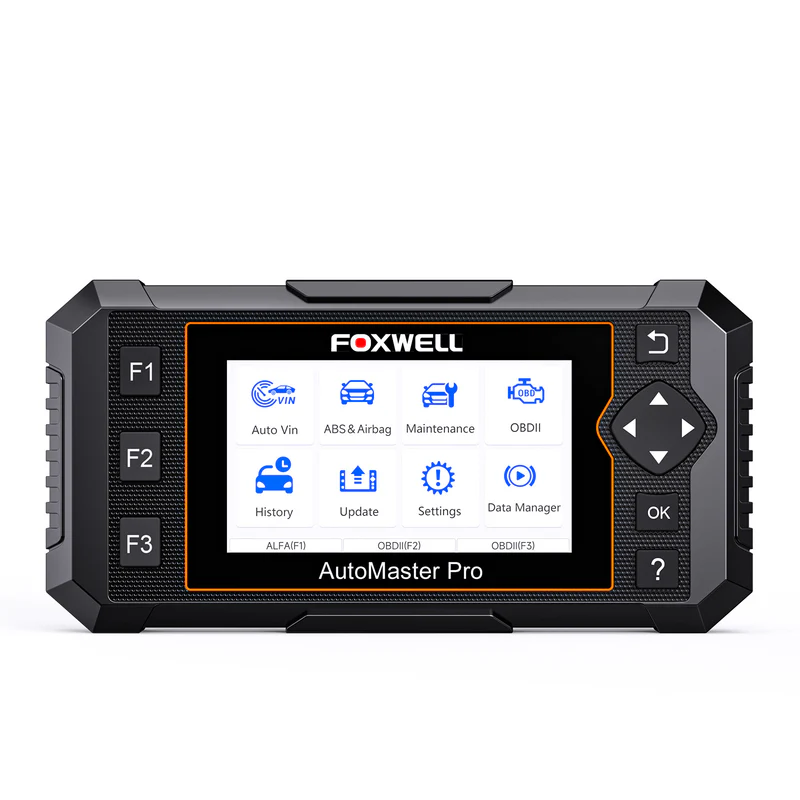
Take your workshop to the next level with wireless diagnostics, advanced ECU coding, and full bi-directional control: