
A Bold New Dawn for Maranello
For decades, the soul of a Ferrari has been explicitly linked to the acoustic violence of internal combustion—the high-pitched wail of a naturally aspirated V12 or the sharp, twin-turbocharged bark of an award-winning V8. However, global automotive engineering is shifting rapidly toward electrification, and Maranello has officially chosen its path. With the global debut of the Ferrari Luce, the Italian manufacturer makes it undeniable: entering the electric vehicle (EV) sector does not require a transition into silent, emotionless, or predictable commuter platforms.
The name Luce translates directly from Italian as “Light.” Ferrari intends this vehicle to be understood exactly as its moniker implies: a bright, unyielding beacon illuminating a completely new technological era. Rather than adapting an existing platform or leaning on a restrictive hybrid powertrain setup, the Luce drops internal combustion entirely, leveraging a clean-sheet architecture packed with a high-voltage quad-motor powertrain, cutting-edge thermal management, and raw performance metrics that challenge the elite tier of modern hypercars.
Design Evolution: The Intersection of Luxury Lounge and Shooting Brake
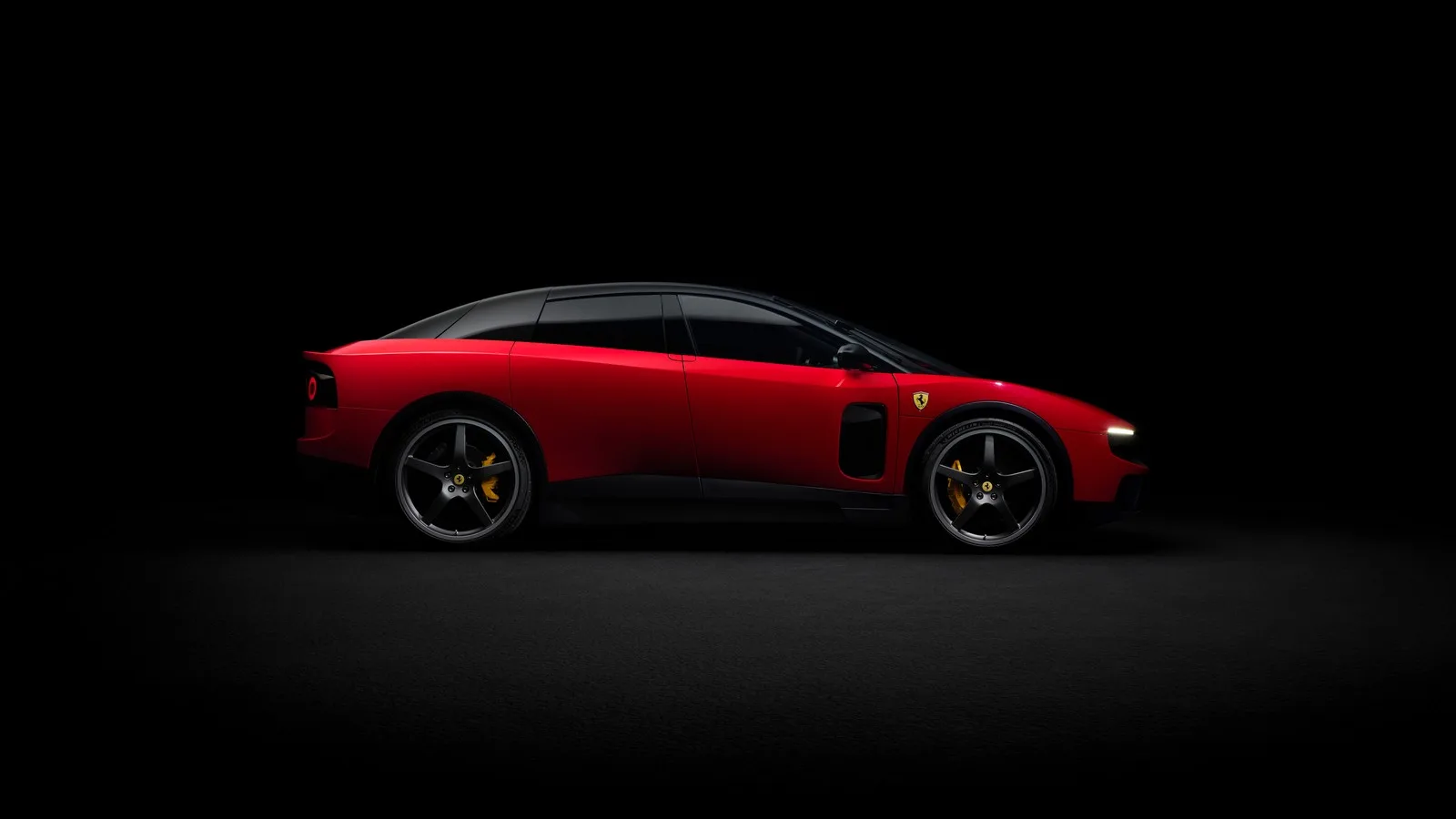
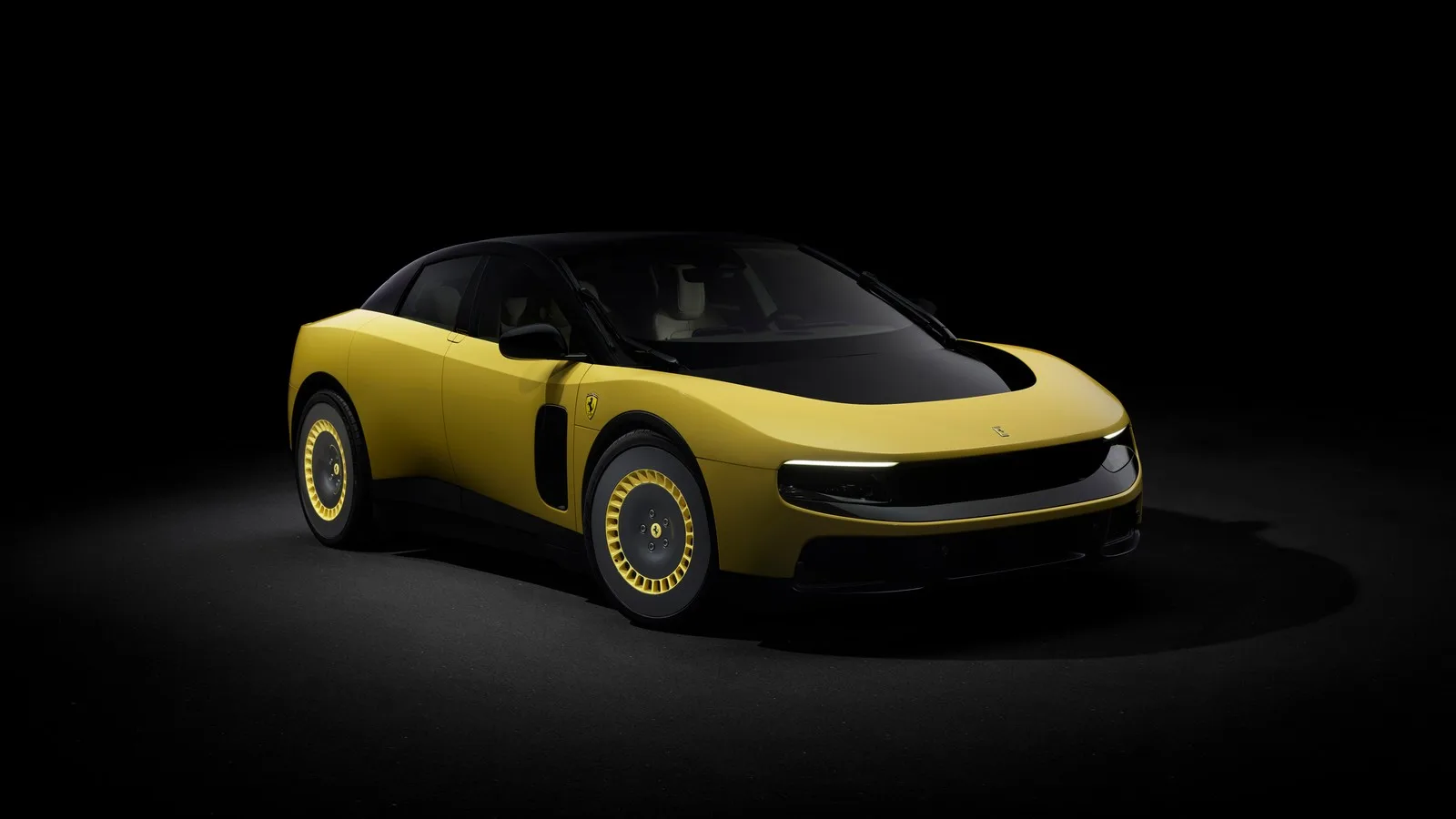
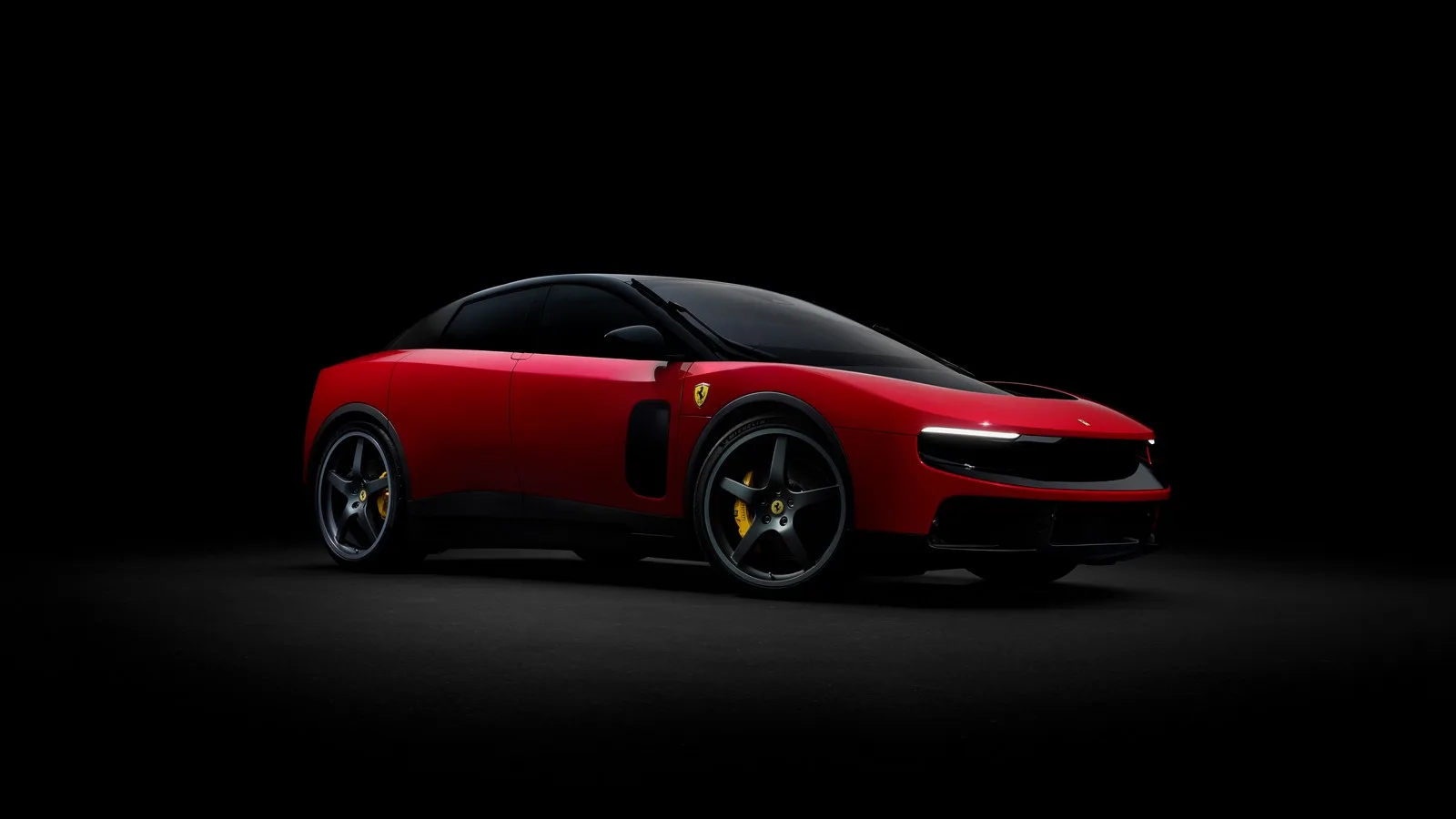
Visually, the Ferrari Luce completely rejects established supercar design languages. Measuring an imposing 5.03 meters in length, nearly 2 meters in width, and 1.54 meters in height, its physical footprint is larger than any road-going production vehicle to ever leave the factory gates at Maranello. Yet, despite these expansive dimensions, it completely avoids the high-riding, bulky proportions of a traditional SUV.
Instead, the exterior architecture walks a sophisticated tightrope between a high-end luxury saloon, a long-distance Gran Turismo, and a futuristic, aerodynamic Shooting Brake. The bodylines are exceptionally clean, featuring smooth, continuous surfaces where traditional creases and disruptive panels have been meticulously engineered out. The lighting arrays are integrated flush into the bodywork, effectively disappearing into the carbon-composite shell when the vehicle is powered down.
The Design Coalition
The aesthetic blueprint of the Luce was co-developed through an elite creative partnership. Legendary designers Sir Jony Ive and Marc Newson spearheaded the visual philosophy, collaborating directly with Ferrari’s Chief Design Officer, Flavio Manzoni.
This cross-industry partnership ensured that the Luce does not look like a retro-inspired homage to the past. It is an uncompromised leap forward, balancing high-fashion minimalism with hardcore functional aerodynamics:
-
Active Aerodynamic Matrices: Front and side grilles utilize computer-controlled, moving vanes that adjust dynamically based on real-time cooling demands and high-speed drag coefficient optimization.
-
Counter-Opening Doors: The elimination of the traditional B-pillar combined with rear-hinged coach doors creates a cavernous opening, allowing flawless egress into the high-end cabin.
-
Advanced Ground Effects: The smooth underbody channels high-velocity airflow into an aggressive, multi-stage rear diffuser, locking the heavy grand tourer to the tarmac without requiring massive, unsightly fixed wings.
The Digital Sanctuary: Inside the High-Voltage Cabin
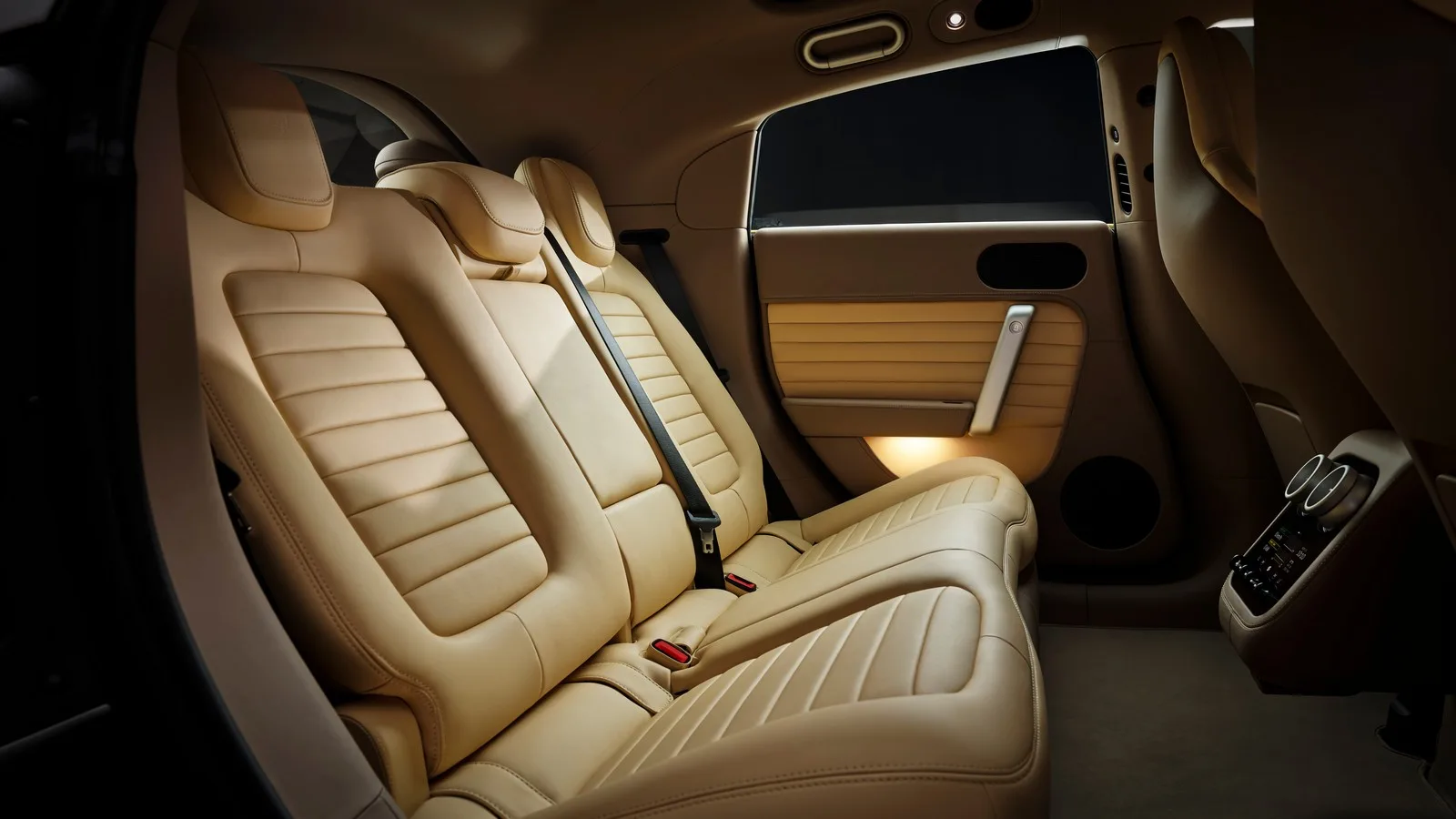
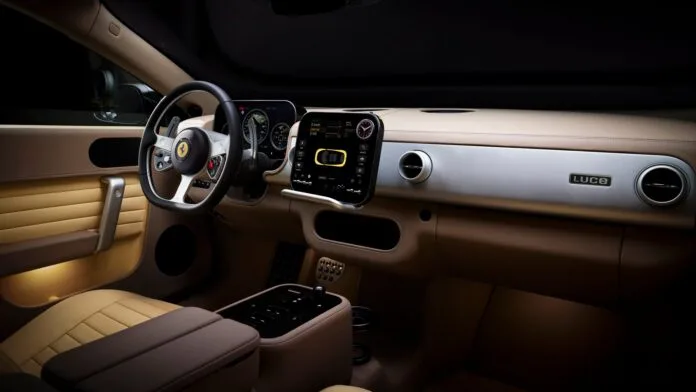
Step across the illuminated sills, and the interior layout immediately showcases the spatial benefits of a dedicated electric platform. Because there is no mechanical transmission tunnel or exhaust routing cutting through the floorboard, the engineering team has extracted an unprecedented amount of cabin volume. The Luce can be configured as either a highly exclusive 4-seater with independent rear buckets or a highly versatile 5-seater lounge configuration.
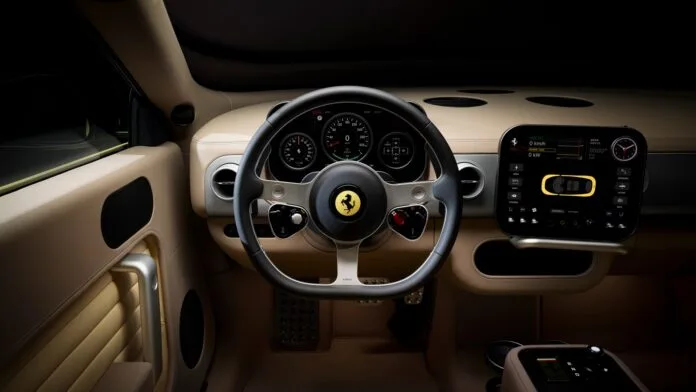
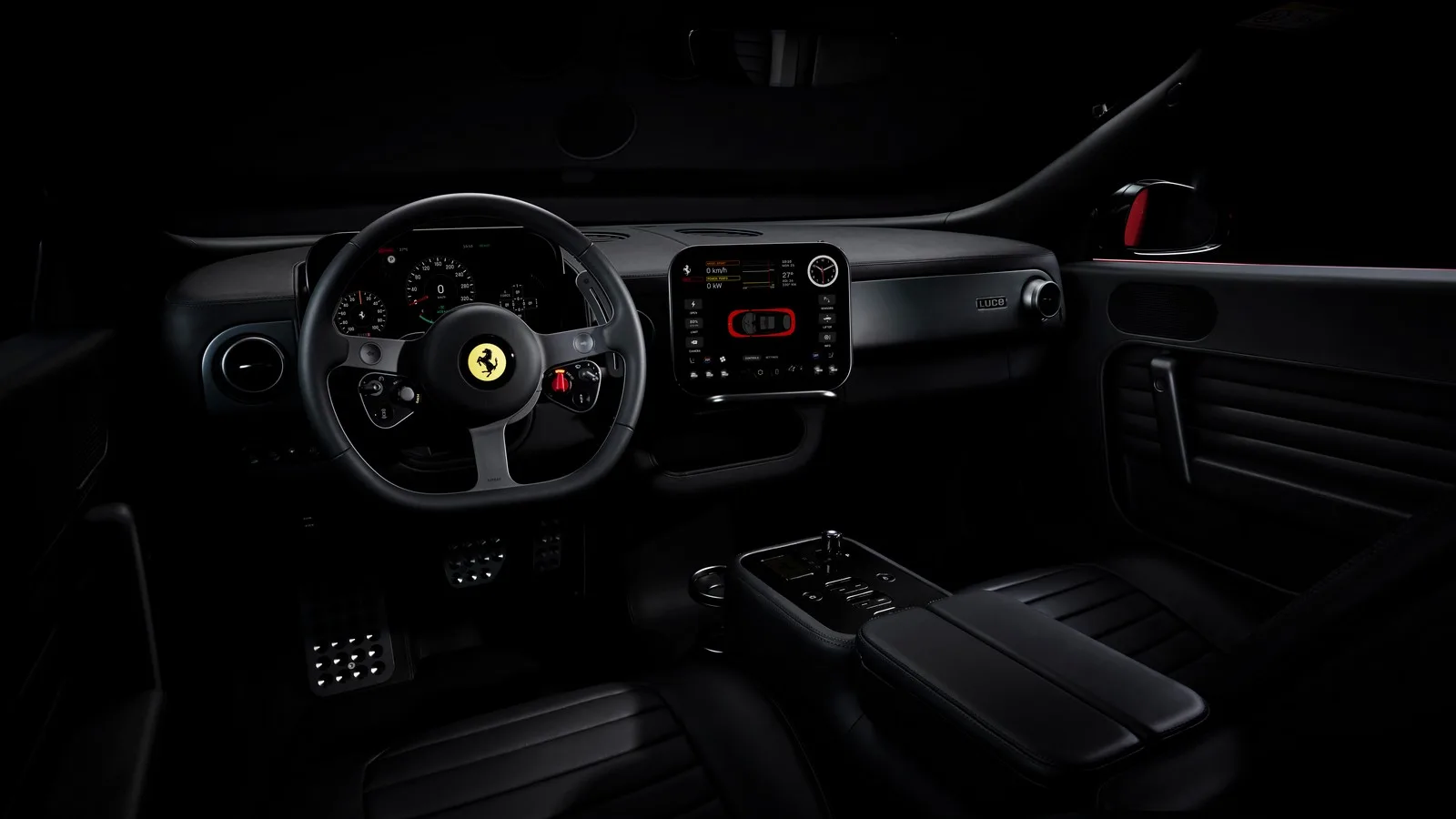
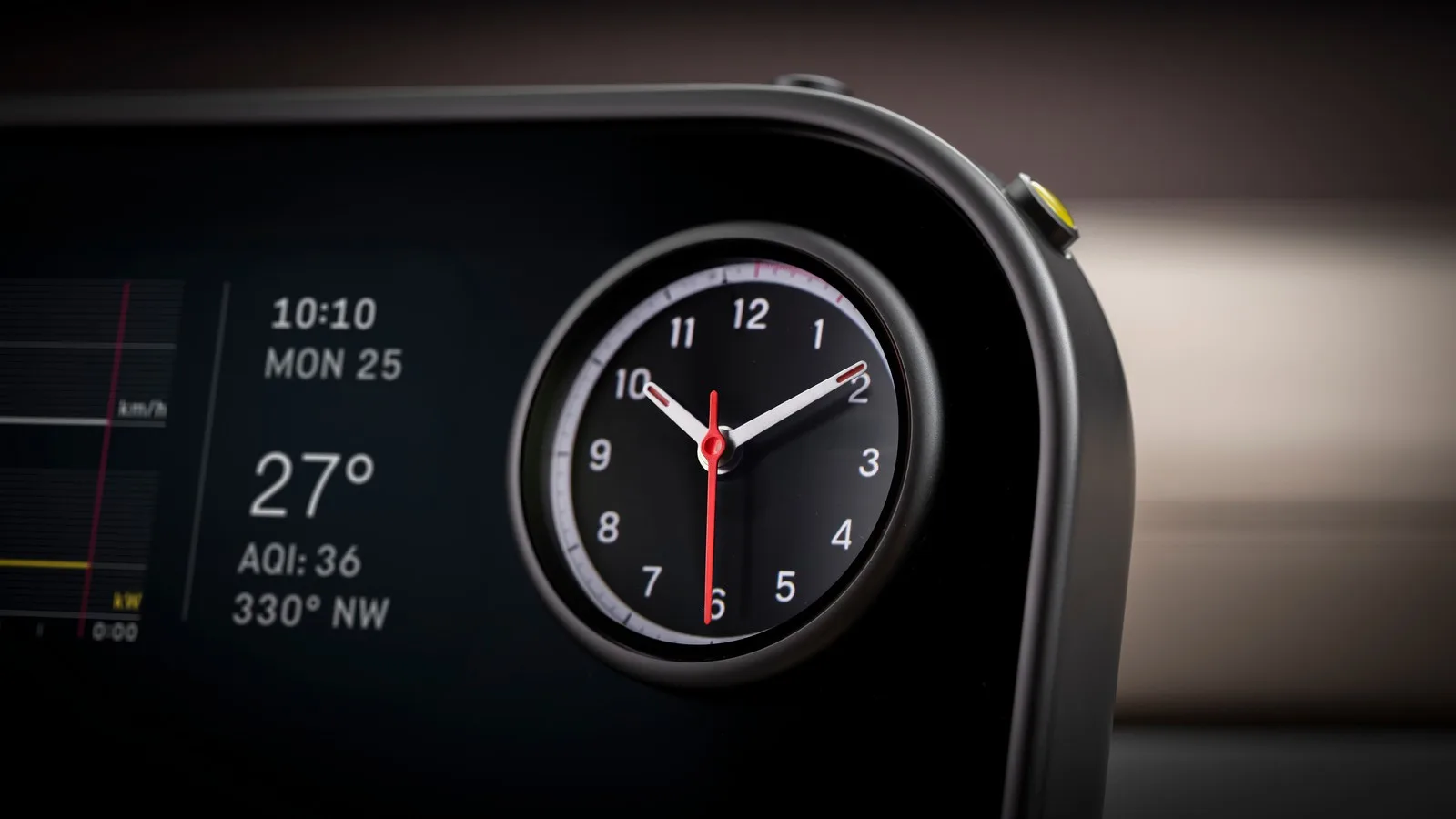
The driving position remains distinctively driver-centric, yet completely modernized. High-definition digital displays span across the dashboard geometry, encased in premium materials including machined billet aluminum, sustainable fine-grain leathers, and structural sheets of chemically strengthened Gorilla Glass.
Ferrari’s iconic steering-wheel-mounted Manettino dial survives the electric transition. Rather than adjusting exhaust valves and fuel maps, it is calibrated to manage complex sub-surface electronics: altering individual wheel regeneration rates, modifying torque-vectoring sharpness, and remapping the throttle sensitivity across varying traction conditions.
                   [ Ferrari Luce Premium Cabin Architecture ]
                                        │
       ┌────────────────────────────────┼────────────────────────────────┐
       ▼                                ▼                                ▼
 [ 3,000-Watt Audio System ]    [ Executive Rear Lounge ]     [ Structural Gorilla Glass ]
 • 21-Speaker Tailored Matrix   • Dual Dedicated Displays     • Ultra-High Impact Resistance
 • Acoustic Acoustic Waveguides • Individual Climate Zones    • Integrated Heads-Up Tech
The rear passenger compartment approaches executive-limousine levels of comfort. Passengers are treated to dedicated infotainment touchscreens, multi-zone climate automation, and multi-profile massage chairs. To ensure the physical sensation of speed is not entirely lost in the quiet electric cabin, Ferrari integrates a bespoke 3,000-Watt audio system utilizing 21 high-fidelity speakers. This system delivers an engineered acoustic signature that translates electric motor harmonics into a deep, visceral cabin soundscape that mirrors the vehicle’s rapid acceleration curves.
Technical Architecture: Quad-Motor Muscle and 800-Volt Charging
Underneath the minimalist bodywork sits an engineering masterclass in high-performance EV packaging. The structural backbone of the Luce is an advanced aluminum-and-carbon-fiber spaceframe that houses a massive 122 kWh (gross) lithium-ion battery pack. The battery cells are strategically positioned extremely low within the floorboard and beneath the rear seat structures, driving the center of gravity significantly lower than a traditional front-engine V12 grand tourer.
The propulsion system relies on a sophisticated quad-motor layout, meaning every single wheel is assigned its own independent, software-controlled electric motor. Together, this network unleashes a staggering 772 kW of total system power, equivalent to 1,050 horsepower, backed by an immediate 990 Nm of maximum torque.
                           [ 772 kW / 1,050 HP Quad-Motor Network ]
                                              │
                     ┌────────────────────────┴────────────────────────┐
                     ▼                                                 ▼
          [ Front Axle Twin Motors ]                       [ Rear Axle Twin Motors ]
          • Power Output: 210 kW                           • Power Output: 620 kW
          • Peak Torque:  280 Nm                           • Peak Torque:  710 Nm
By pushing a massive 620 kW chunk of power strictly to the rear wheels, Ferrari preserves its signature rear-biased driving dynamics, allowing the vehicle to rotate beautifully out of corners while the front axle uses its 210 kW capability to pull the vehicle straight with laser-like precision.
Performance Specifications & Dynamic Metrics
Despite carrying a substantial curb weight of 2,260 kg due to the massive capacity of its long-range battery pack, the physics-defying power of the quad-motor array propels the Luce directly into hypercar performance territory.
| Performance & Engineering Parameters | Official Manufacturer Specification Metrics |
| Total System Power Output | 772 kW / 1,050 Horsepower |
| Combined Maximum Torque | 990 Nm (Immediate Application) |
| Acceleration (0 – 100 km/h) | 2.5 Seconds Flat |
| Acceleration (0 – 200 km/h) | 6.8 Seconds |
| Maximum V-Max Top Speed | 310 km/h (Electronically Governed) |
| Battery Energy Capacity | 122 kWh Gross Litium-Ion Matrix |
| Maximum Estimated WLTP Range | Up to 530 Kilometers |
| Peak DC Fast-Charging Rate | 350 kW via 800-Volt Architecture |
| DC Charging Velocity | 70 kWh Replenished in 20 Minutes |
| On-Board AC Charger Capacity | 22 kW Multi-Phase Internal Inverter |
| Braking Hardware Configuration | Carbon Ceramic (390mm Front / 372mm Rear) |
| Wheel and Tire Packaging | 23-Inch High-Load Front / 24-Inch Rear Alloys |
For drivers navigating dense urban environments or requesting extended range profiles, the digital management system allows the driver to restrict maximum power deployment down to efficient 320 kW or 460 kW limits via the steering wheel controls, lowering the maximum speed ceiling to a sustained 260 km/h.
Dynamic Chassis Management: Command and Control
Managing 1,050 horsepower alongside a 2.26-tonne curb weight requires highly advanced chassis hardware. The Luce handles its immense mass through a highly integrated, centralized processing unit that coordinates every physical asset simultaneously:
-
Active Electronic Suspension: Continuous, high-frequency valve adjustment adapts to road surface variations within milliseconds. To optimize high-speed aerodynamics and stability, the suspension system automatically drops the ride height by 10 mm as the vehicle crosses higher speed thresholds.
-
Four-Wheel Independent Steering: The rear wheels steer counter to the front wheels at low speeds to virtually shorten the long wheelbase for effortless tight turns, shifting to parallel steering at high velocities to provide rock-solid highway lane changes.
-
Real-Time Torque Vectoring: Because each wheel has its own motor, the onboard computer doesn’t use mechanical brakes to control slips. Instead, it instantly increases or decreases power to an individual tire within microseconds, pulling the heavy GT through tight corners with zero understeer.
-
High-End Anchors: Tucked inside the massive 23-inch front and 24-inch rear alloy wheels is a heavy-duty carbon-ceramic braking network featuring massive 390 mm front discs and 372 mm rear units, backed by a seamless blended regenerative braking program.
Market Positioning, Pricing, and Ownership Outlook
While official price sheets have not been formally locked down by the executive board in Maranello, initial dealership allocations and insider reports suggest an entry-level market positioning hovering around the €500,000 baseline. For Ferrari’s ultra-high-net-worth client database, this financial premium is a completely expected entry point for a low-volume, flagship technological pioneer.
To give owners peace of mind regarding the long-term reliability of this massive technological leap, Ferrari includes its signature 7-year comprehensive maintenance program. This structural warranty schedule covers routine system checks, high-voltage software calibration sweeps, and cooling system maintenance, ensuring that the first pure electric stallion remains a reliable, devastatingly fast asset for the long road ahead.
Source: Ferrari Luce: Maranellos erster Elektro-Ferrari geht all-in mit 800 Volt!
✍️ Author: Bejenaru Alexandru Ionut – [email protected]
🔗 Internal link: https://diagnozabam.ro/sfaturi
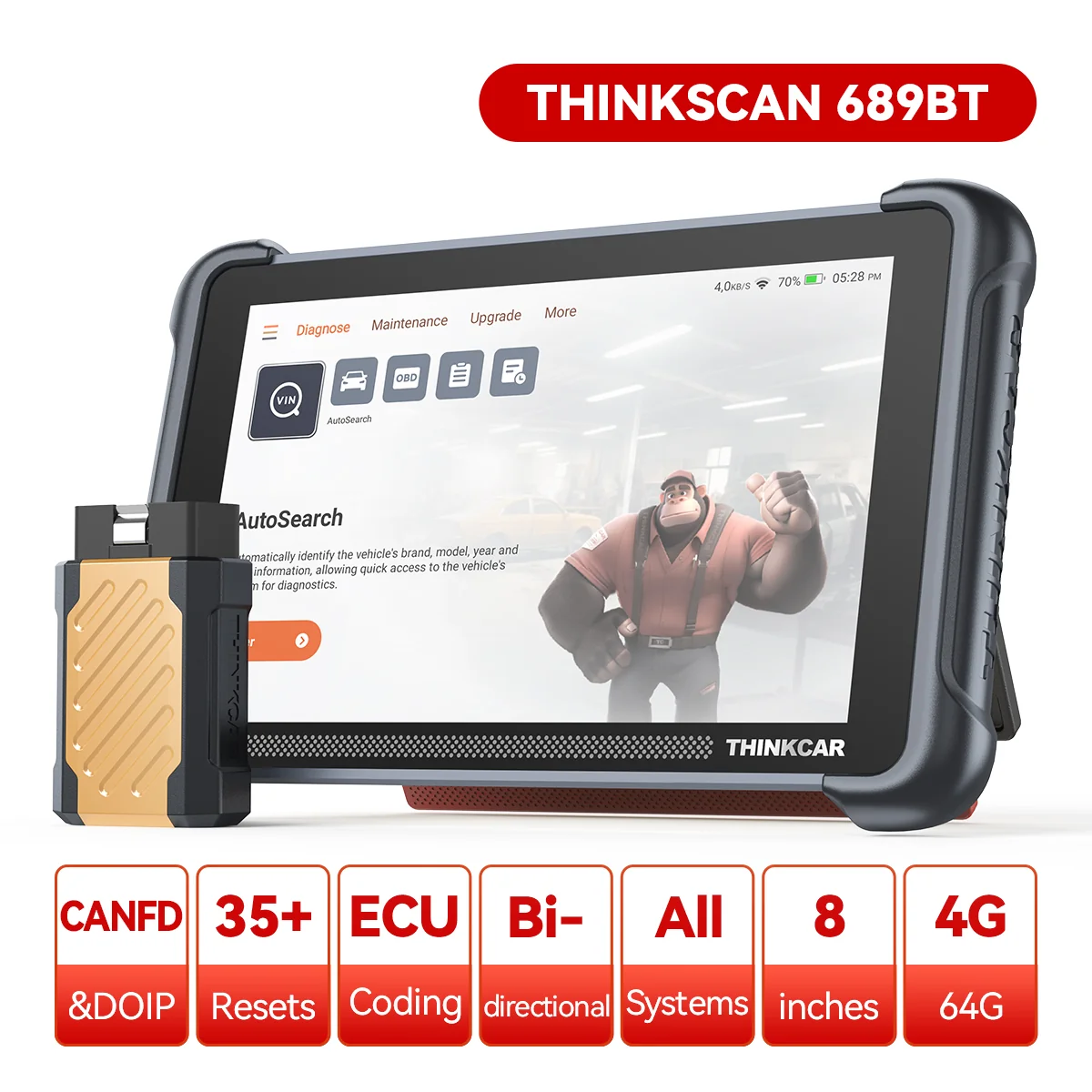
Recommendation: Looking for a professional bi-directional diagnostic tool with full system coverage? Use code DIAGNOZABAM for 10% off.
Transparency note: Affiliate link. Purchasing through it costs you nothing extra. View Thinkcar Deal →